How to Choose a Water Filter: 2026 Expert Guide
Overwhelmed by filter options? This step-by-step guide helps you choose the perfect water filter based on your water quality, budget, and lifestyle. Whether you need the best whole house water filter, best reverse osmosis system, best water softeners, best under sink filter, or best countertop filter, we'll help you find the right solution.
Why This Guide Matters
Not all water filters are created equal. A $20 Brita pitcher won't remove lead or PFAS, while a $2,000 whole-house system is overkill if you just want better-tasting water. Browse our water filter pitcher reviews for affordable options or check out best home water filters for comprehensive protection. This guide helps you:
- Identify what's actually in your water using proper testing methods
- Match filter technology to your specific contaminants
- Avoid overpaying for features you don't need
- Choose a filter that fits your lifestyle and budget
Over 21 million Americans get water from systems that violate health-based standards. Even compliant systems may contain PFAS, chloramine, and disinfection byproducts at levels that concern health researchers. Choosing the right filter is one of the most impactful health decisions you can make for your household.
Step 1: Test Your Water (Essential First Step)
Why Testing First Saves Money
You can't choose the right filter without knowing what you're filtering. A $300 RO system is excessive if you only have chlorine taste issues. Conversely, a $30 Brita won't help if you have lead contamination. Testing costs $15-300 but can save you thousands by preventing the wrong purchase.
City Water: Check Your Annual Water Quality Report
Your water utility publishes an annual Consumer Confidence Report (CCR) showing tested contaminant levels. Residents in cities like Chicago, Phoenix, and Las Vegas face different contaminant profiles.
Well Water: Professional Lab Testing Required
Test for bacteria, nitrates, arsenic, lead, hardness, pH, and TDS at minimum. Comprehensive tests cost $150-300 but are essential for well water owners.
Order Water Test KitRed Flags That Require Immediate Testing:
- • Home built before 1986 (lead pipes) — see our lead removal guide
- • Metallic taste or rusty/brown water — likely iron contamination
- • Rotten egg smell (sulfur/bacteria)
- • Near industrial areas, farms, or military bases (PFAS risk)
- • Frequent stomach issues after drinking water
Step 2: Identify Your Priorities
Water Quality
What matters most?
- Taste only: Simple carbon filter
- Health concerns: RO or certified removal
- Specific contaminant: Match to filter type
Budget
Consider 5-year costs:
- Under $100/year: Pitcher filters
- $100-300/year: Faucet/under-sink
- $300-500/year: RO systems
- $500+/year: Whole-house
Lifestyle
Your situation:
- Renting: Portable/pitcher
- Own home: Under-sink/whole-house
- Large family: High capacity needed
- DIY-averse: No-install options
Step 3: Choose Your Filter Type
Filter Type Decision Tree
Need Whole Home Filtration?
Choose whole-house systems if you have contamination throughout your home. For specific contaminants, see our guides on how to remove lead from water or fluoride removal.
- • Well water with sediment, iron, or sulfur
- • Hard water damaging appliances
- • Want filtered water at every tap (including shower)
- • Own your home and willing to invest $1,000-3,000
Need Maximum Contaminant Removal?
Choose reverse osmosis if you have:
Need Good Filtration Without Installation?
Choose pitcher filters or countertop systems if you:
- • Rent your home — see our apartment filter guide
- • Have basic chlorine/taste concerns only
- • Want the cheapest option ($20-100)
- • Don't mind refilling regularly
Want Convenient, Hidden Filtration?
Choose under-sink filters if you:
- • Want better filtration than pitchers
- • Don't want countertop clutter
- • Can handle basic DIY installation
- • Budget $100-400
Step 4: Match Filter to Your Contaminants
| Contaminant | Best Filter Type | Why |
|---|---|---|
| Chlorine | Carbon (any type) | Even basic pitchers remove 95%+ chlorine |
| Lead | RO or NSF 53 carbon | RO removes 99%, certified carbon removes 95%+ |
| PFAS | RO or NSF P473 carbon | RO is most effective, special carbon also works |
| Fluoride | RO or activated alumina | Carbon doesn't remove fluoride — RO is best |
| Arsenic | RO | RO removes 99%+ of both arsenic types |
| Iron/Manganese | Whole-house oxidation filter | Prevents staining throughout home |
| Hard Water | Water softener | Ion exchange removes calcium/magnesium |
| Bacteria/Viruses | UV or RO | UV kills, RO filters out microorganisms |
| Nitrates | RO only | Carbon cannot remove nitrates — RO is required |
| Microplastics | RO or 0.5μm carbon block | Physical filtration needed for particle removal |
Not Sure What You Need?
Take our interactive quiz to get personalized filter recommendations based on your water test results, budget, and home setup.
Take the Filter QuizOur Top Picks by Category
Based on extensive testing and thousands of verified customer reviews, here are our top recommendations for each filter category. Each pick balances performance, value, and ease of use.
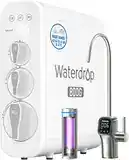
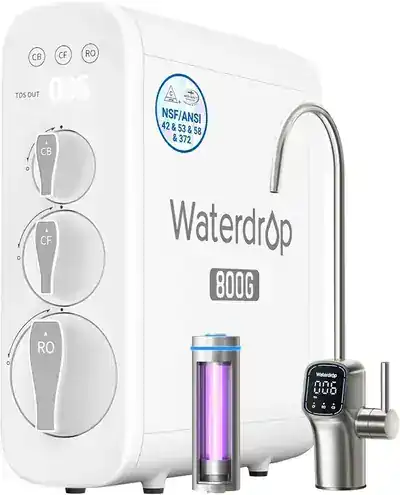
Waterdrop G3P800
800 GPD tankless RO with UV sterilization. Removes 99.9% of contaminants including lead, PFAS, fluoride, and arsenic. Smart TDS monitoring.
- • 3:1 pure-to-drain ratio (industry-leading efficiency)
- • NSF 42, 53, 58, 372, 401 certified
- • ~$0.06/gallon over 5 years
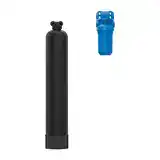
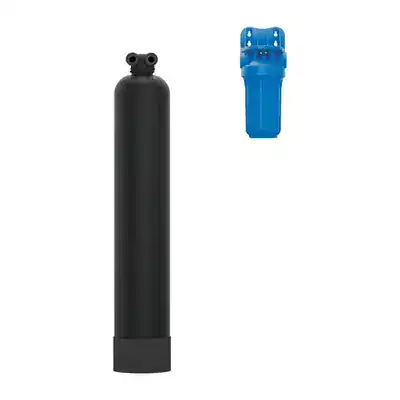
SpringWell CF1
4-stage whole-house filtration for city water. Removes chlorine, chloramine, PFAS, pesticides, and heavy metals from every tap in your home.
- • 1,000,000 gallon capacity (9+ years for average family)
- • 9 GPM flow rate — no pressure drop
- • Lifetime warranty with 6-month money-back guarantee
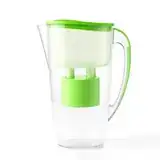
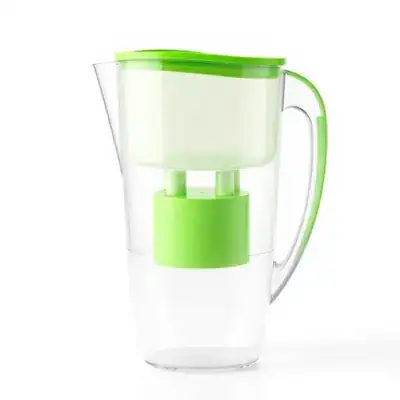
Clearly Filtered Pitcher
The most powerful pitcher filter available. Removes 365+ contaminants including fluoride, lead, PFAS, and pharmaceuticals — performance rivaling under-sink systems.
- • Removes fluoride, lead, PFAS (99%+) — no other pitcher does this
- • 100-gallon filter life (~4 months)
- • Perfect for apartment renters
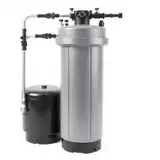
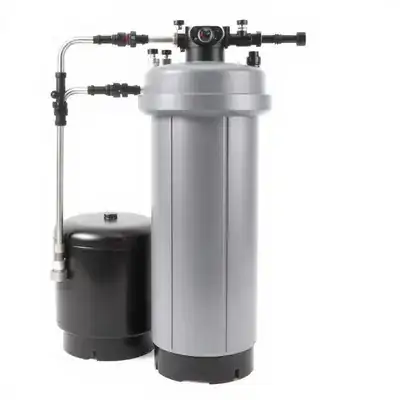
Aquasana Rhino Well Water
Complete well water treatment with UV disinfection. Handles iron, sediment, bacteria, and chemical contaminants in a single integrated system.
- • 500,000-gallon capacity with UV sterilization
- • Sub-micron post-filter for cyst removal
- • Professional installation recommended
Understanding Filtration Technology
Different filtration technologies work in fundamentally different ways. Understanding these differences helps you match the right technology to your specific contaminants. Water quality varies dramatically by region — residents in Flint face different challenges than those in Phoenix or Boston.
Activated Carbon Filtration
Carbon filtration uses adsorption — contaminants stick to the surface of activated carbon media. Granular Activated Carbon (GAC) is used in pitchers and basic systems, while Carbon Block (compressed carbon) provides finer filtration and is used in under-sink and whole-house systems. Carbon excels at chlorine, VOCs, and taste/odor removal.
Removes Well
- • Chlorine & chloramine (catalytic carbon)
- • VOCs & pesticides
- • Sediment (carbon block)
- • Some heavy metals (certified blocks)
Does NOT Remove
- • Fluoride, nitrates, TDS
- • Dissolved minerals
- • Bacteria (unless combined with UV)
- • Arsenic at low levels
Reverse Osmosis (RO)
RO forces water through a semi-permeable membrane with pores as small as 0.0001 microns — small enough to block virtually all contaminants. Modern tankless systems like the Waterdrop G3P800 produce water on-demand with minimal waste. RO is the gold standard for removing lead, arsenic, fluoride, and PFAS.
Removes 95-99%
- • Lead, arsenic, fluoride, nitrates
- • PFAS, pharmaceuticals, microplastics
- • Bacteria, viruses, cysts
- • TDS, dissolved minerals, salts
Considerations
- • Produces wastewater (1:1 to 4:1 ratio)
- • Removes beneficial minerals (add remineralization)
- • Higher upfront cost ($200-600)
- • Requires periodic membrane replacement
Ion Exchange (Water Softeners)
Ion exchange swaps hardness minerals (calcium, magnesium) with sodium or potassium ions. This prevents scale buildup, protects appliances, and improves soap performance. Essential for homes with hard water above 7 GPG. See our water softener reviews for top picks.
UV Disinfection
UV systems use ultraviolet light at 254nm wavelength to destroy the DNA of bacteria, viruses, and parasites, rendering them unable to reproduce. UV is essential for well water that tests positive for coliform bacteria. It kills 99.99% of microorganisms without adding chemicals to the water.
Budget Considerations (5-Year Total Cost of Ownership)
The cheapest filter to buy is rarely the cheapest to own. Factor in replacement filters, maintenance, and installation costs over 5 years to find the true best value.
| Filter Type | Initial Cost | Annual Filter Cost | 5-Year TCO | Cost/Gallon |
|---|---|---|---|---|
| Pitcher Filter | $25-45 | $40-80 | $225-445 | $0.15-0.30 |
| Faucet Filter | $20-40 | $30-60 | $170-340 | $0.10-0.20 |
| Under-Sink Carbon | $100-300 | $40-100 | $300-800 | $0.05-0.12 |
| Reverse Osmosis | $200-600 | $50-120 | $450-1,200 | $0.03-0.08 |
| Whole-House | $800-3,000 | $100-400 | $1,300-5,000 | $0.01-0.04 |
| Water Softener | $500-2,500 | $50-150 (salt) | $750-3,250 | $0.005-0.02 |
💡 Pro Tip: Best Value by Use Case
- • Best value for drinking water: Under-sink RO at $0.03-0.08/gallon — better quality than bottled water at 1/10th the price
- • Best value for whole home: Whole-house carbon at $0.01-0.04/gallon — protects plumbing, appliances, and every tap
- • Best value on a tight budget: Faucet filter at $0.10-0.20/gallon — best cost-to-performance for basic needs
Installation Requirements
No Installation Required
- Pitcher filters — Just fill and wait
- Gravity dispensers — Set on counter
- Some countertop RO — Plug and play
Easy DIY Installation (1-2 hours)
- Faucet filters — Screw onto tap
- Shower filters — Replace showerhead
- Basic under-sink filters — Connect to cold line
Moderate DIY (2-4 hours)
- RO systems — Drill hole, connect lines
- Multi-stage under-sink systems
Professional Installation Recommended
- Whole-house systems — Main line integration
- Water softeners — Electrical + plumbing
- Well water treatment systems
Typical cost: $150-500 for professional installation
Common Mistakes to Avoid When Choosing a Water Filter
❌ Mistake #1: Buying Without Testing
Over 60% of filter buyers purchase based on marketing claims rather than their actual water quality. This leads to either overspending on unnecessary filtration or, worse, using a filter that doesn't address their real contaminants. Always start with a comprehensive water test.
❌ Mistake #2: Ignoring Replacement Filter Costs
A $30 pitcher with $8 filters every 2 months costs more per gallon over 5 years than a $300 under-sink system with $40 annual filters. Always calculate 5-year total cost of ownership before purchasing. See our filter maintenance guide for replacement schedules.
❌ Mistake #3: Assuming All Filters Remove Lead
Standard carbon pitchers (like basic Brita) do NOT remove lead. Only NSF 53-certified filters or RO systems provide verified lead reduction. If lead is your concern, check for specific NSF 53 or NSF 58 certification — marketing claims alone are insufficient.
❌ Mistake #4: Using a Single Solution for Multiple Problems
Well water with bacteria, iron, and hard water needs multi-stage treatment — no single filter handles all three. Pair a water softener with an iron filter and UV disinfection. Match each treatment stage to its specific contaminant.
Choosing by Water Source
City/Municipal Water
City water is disinfected but may contain chlorine taste, disinfection byproducts, aging pipe contaminants, and emerging pollutants like PFAS.
Recommended Setup:
- • Basic: Under-sink carbon filter ($100-200)
- • Comprehensive: Under-sink RO ($200-500)
- • Whole home: Carbon + softener ($1,500-3,000)
Private Well Water
Well water is untreated and unmonitored. Test annually for bacteria, nitrates, and metals. Treatment depends entirely on test results.
Typical Setup:
- • Stage 1: Sediment pre-filter (5-20 micron)
- • Stage 2: Iron/manganese filter or softener
- • Stage 3: UV disinfection
- • Stage 4: Point-of-use RO for drinking
Our Top Filter Picks by Category
Frequently Asked Questions
Continue Reading
More on How Water Filters Work
Understanding filtration technologies explained
Deep dive — Water Filter Cost Comparison
Annual costs across all filter types
Walkthrough — Water Testing Kits Guide
Test your water before buying a filter
Maintenance guide — Filter Replacement Guide
When and how to replace filter cartridges
More on Water Filter Health Benefits
Health advantages of filtered water
Our picks for Filters for Renters
No-installation options for apartments