Types of bacteria and germs in water
- Total coliform: a group of mostly harmless bacteria used as a warning sign that something is getting in.
- E. coli: a sign of human or animal waste. Most strains are harmless, but some cause serious illness.
- Protozoa such as Giardia and Cryptosporidium: larger germs that resist chlorine; filters certified for "cyst reduction" remove them.
- Iron and sulfur bacteria: nuisance bacteria that cause slime and odors; see iron and sulfur.
Health effects and the EPA limit
- EPA limit: zero E. coli in public water, with total coliform triggering repairs. See EPA's Revised Total Coliform Rule.
- Symptoms: diarrhea, cramps, nausea and vomiting are most common.
- Higher risk: babies, older adults, pregnant people and anyone with a weak immune system.
- Private wells aren't regulated, so testing is up to you. See the EPA private wells page.
How to test for bacteria
- Use a certified lab and its sterile bottle; ask for total coliform and E. coli.
- Sample carefully: remove the aerator, run cold water a few minutes, don't touch the inside of the cap.
- Get it to the lab fast, usually within 24 to 30 hours, kept cool.
- Test yearly, and after floods, repairs or any change in the water.
Step-by-step instructions are in how to test water for bacteria.
What to do after a positive test
- If E. coli is positive, boil drinking and cooking water or use bottled water right away.
- Inspect the well: look for a loose or missing cap, cracked casing, and water pooling around the wellhead.
- Shock chlorinate the well and plumbing. Follow our shock chlorination guide.
- Retest one to two weeks later, after the chlorine is flushed out.
- If bacteria return, add continuous treatment such as UV.
UV only works on clear water. Iron, manganese, hardness or cloudy water can shield germs from the light, so test for those first and add a sediment filter ahead of the UV lamp.
Well UV system to compare
This whole-house system pairs filtration with a UV stage for wells that need ongoing protection. Fix the source and test for iron and hardness before ordering.
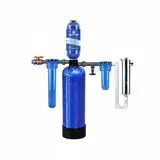
Aquasana Rhino Well Water with UV
Aquasana Rhino Well Water with UV
A whole-house well-water filter with a UV stage, sized to treat every tap. UV works only on clear water, so test for iron, manganese and hardness first; it doesn't replace fixing a well defect or shock chlorinating after contamination.
Compare sizing, treatment options and ongoing costs in our best well water filters guide.
Compare more options in our best UV water purifiers and whole-house UV filters guides. Wondering about RO? Read does reverse osmosis remove bacteria.
Bacteria treatment options compared
| Method | Treats | Watch out for |
|---|---|---|
| Repairing the well | Stops the source | Often the real fix; check cap, casing and grading |
| Shock chlorination | Kills bacteria in the well and pipes | One-time; retest 1–2 weeks later |
| UV disinfection | Continuous protection at every tap | Needs clear water and an annual lamp change |
| Continuous chlorination | Ongoing protection | Needs a contact tank and carbon to remove taste |
| Boiling | Emergency drinking water | Not a long-term solution |
| Carbon filters | Not designed for bacteria | Can grow bacteria if not changed |
See the full plan in our well water bacteria treatment guide.
Bottom line
Test your well every year. If bacteria show up, boil water, fix the source, shock chlorinate and retest; add UV if the problem returns. Compare full rankings in our best well water filters guide and see the other common water contaminants.