Comprehensive Water Testing Guide 2026
Complete protocol for testing your water quality, from sample collection to treatment selection
Water testing is the foundation of water quality management. Whether you rely on well water or municipal supply, comprehensive testing reveals exactly what's in your water and guides treatment decisions. Without testing, you're guessing—and guessing wrong can mean exposing your family to invisible contaminants like arsenic, lead, bacteria, and PFAS.
This guide covers everything from basic screening to advanced laboratory analysis, helping you choose the right testing method for your situation and budget. Understanding your water composition allows you to choose appropriate filtration systems, protect your health, and comply with local regulations.
Over 21 million Americans receive water from systems that violate health-based quality standards. Even compliant systems may contain chloramine, disinfection byproducts, and microplastics at levels that concern researchers. Testing is the only way to know what you're actually drinking—and what treatment you truly need.
Why Comprehensive Testing Matters
Health Protection
- • Detect harmful bacteria and pathogens
- • Identify toxic heavy metals (lead, arsenic)
- • Find cancer-causing chemicals (PFAS, VOCs)
- • Discover developmental toxins for children
- • Prevent waterborne illness outbreaks
Financial Benefits
- • Avoid over-treating water unnecessarily
- • Choose the right filtration system first time
- • Protect plumbing and appliances from damage
- • Prevent costly emergency treatments
- • Increase property value with documentation
Legal & Regulatory
- • Well water testing often legally required
- • Home sale disclosures in many states
- • Rental property compliance requirements
- • Documentation for health claims
- • EPA Safe Drinking Water Act compliance
Ongoing Monitoring
- • Track seasonal contamination changes
- • Verify treatment system effectiveness
- • Detect emerging contaminant threats
- • Monitor aquifer health over time
- • Catch problems before they escalate
Testing Methods: Complete Comparison
At-Home Test Strips ($15-30)
Advantages
- • Instant results (5-10 minutes)
- • Very affordable
- • Good for basic screening and monitoring
- • Easy to use, no expertise needed
- • Retest frequently without cost concern
Limitations
- • Only tests basic parameters (pH, hardness, chlorine)
- • Less accurate than lab tests
- • Can't test for bacteria, lead, or VOCs
- • Not legally defensible
- • User error affects accuracy
Best for: Quick screening, monitoring filter system performance, checking pH and hardness, routine verification between lab tests.
Mail-In Lab Kits ($100-300)
Advantages
- • EPA-certified laboratory analysis
- • Tests 50-200+ contaminants
- • Accurate, reliable results
- • Detailed written reports with treatment recommendations
- • Convenient sample collection at home
Limitations
- • 1-3 week turnaround time
- • Sample collection procedure is critical
- • Shipping delays possible
- • One-time snapshot only
- • Sample degradation if shipping is delayed
Best for: Comprehensive annual testing, new home purchases, suspected contamination, choosing filtration systems, health concerns.
Top Services:
- • Tap Score: $290 for Advanced City Water Test (120+ contaminants)
- • Safe Home Premium: $200 for Well Water Kit (lead, bacteria, pesticides)
- • SimpleWater: $135 for Essential Test (50+ parameters)
Professional Lab Testing ($200-500+)
Advantages
- • Highest accuracy and precision
- • State-certified, legally defensible results
- • Custom test panel design
- • Expert consultation available
- • Chain of custody maintained
Limitations
- • Most expensive option
- • Requires lab visit or courier pickup
- • Longer turnaround (1-4 weeks)
- • Multiple sample bottles may be needed
- • Professional sampling sometimes required
Best for: Legal disputes, serious health concerns, commercial properties, well drilling permits, real estate transactions, regulatory compliance.
Testing Method Cost Comparison
| Feature | Test Strips | Mail-In Lab | Professional Lab |
|---|---|---|---|
| Cost | $15-30 | $100-300 | $200-500+ |
| Contaminants Tested | 5-10 | 50-200+ | Custom panels |
| Turnaround | 5-10 minutes | 1-3 weeks | 1-4 weeks |
| Accuracy | Low-Moderate | High | Highest |
| Bacteria Testing | ❌ | ✅ | ✅ |
| Lead/Heavy Metals | ❌ | ✅ | ✅ |
| PFAS Testing | ❌ | ⚠️ Add-on ($200+) | ✅ |
| Legally Defensible | ❌ | ⚠️ Varies | ✅ |
What to Test For: Priority-Based Parameters
Priority 1: Health & Safety (Test Annually)
Bacteria & Microorganisms
- • Total Coliform: Pathway indicator for contamination
- • E. coli: Fecal contamination, immediate health risk
- • Enterococci: Additional pathogen indicator
- • Frequency: Well water—annually minimum
Heavy Metals
Nitrates & Nitrites
- • Source: Fertilizer runoff, septic systems
- • Risk: Blue baby syndrome in infants
- • MCL: 10 mg/L for nitrate
- • Treatment: RO systems
Fluoride
- • MCL: 4.0 mg/L (SMCL: 2.0 mg/L)
- • Risk: Dental/skeletal fluorosis at high levels
- • Source: Natural geology, water treatment additive
- • Treatment: RO or activated alumina
Priority 2: Water Quality & Aesthetics
Hardness & Minerals
- • Calcium & magnesium
- • TDS (Total Dissolved Solids)
- • pH and alkalinity
- • Sodium & chloride
Iron & Manganese
- • Staining & taste issues
- • Appliance damage
- • Iron filter sizing
- • Softener compatibility
Sulfur & Odor
- • Hydrogen sulfide
- • Sulfate levels
- • Chlorine/chloramine
- • Turbidity
Priority 3: Emerging & Regional Contaminants
Emerging Contaminants
- • PFAS ("forever chemicals")
- • Microplastics
- • Pharmaceuticals
- • Disinfection byproducts (THMs, HAAs)
Regional Concerns
- • Radon (granite geology)
- • VOCs (industrial areas)
- • Pesticides (agricultural regions)
- • Uranium (certain aquifers)
Proper Sample Collection Protocol
Accurate test results depend entirely on proper sample collection. Poor technique is the #1 cause of false positives and unreliable results. Follow these protocols carefully—improper collection wastes money and can lead to unnecessary treatment purchases.
Bacteria Sample Collection
- Use only sterile containers from the lab (do not substitute)
- Remove faucet aerator and clean the spout
- Run cold water for 2-3 minutes at full flow
- Open container without touching the inside or cap
- Fill to the indicated line—do not overfill
- Cap immediately and label with date/time/location
- Keep sample cold (not frozen) during transport
- Deliver to lab within 24 hours (6 hours is ideal)
Chemical & Lead Sample Collection
- For lead: Collect "first-draw" sample (first water in the morning, no flushing)
- For chemicals: Run water 2-3 minutes to get fresh supply water
- Use containers provided by the lab for each parameter
- Some containers contain preservatives—do not empty them
- Fill to the correct level and seal tightly
- Label all bottles clearly with date, time, and tap location
- Ship or deliver within the holding time specified by the lab
- Keep samples cool during transport (ice packs, not direct ice)
⚠️ Common Sample Collection Mistakes
- • Using non-sterile containers: Bacteria from the container contaminates results, causing false positives
- • Running water before first-draw lead test: Flushes out lead that has accumulated overnight, causing false negatives
- • Delayed shipping: Bacteria samples degrade after 24-48 hours; chemical samples may lose volatile compounds
- • Hot water sampling: Unless specifically testing hot water, always collect cold water samples from the kitchen faucet
Recommended Treatment Systems Based on Results
Your test results dictate the right treatment approach. Here are our research-based picks matched to common contamination scenarios. For comprehensive selection guidance, see our water filter choosing guide.
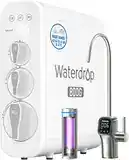
Waterdrop G3P800
If your tests show lead, arsenic, fluoride, PFAS, or nitrates, this 800 GPD tankless RO system removes 99.9% of contaminants. Smart TDS monitoring confirms treatment effectiveness.
- NSF 42, 53, 58, 372, 401 certified
- 3:1 pure-to-drain ratio
- UV sterilization stage
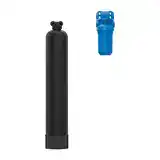
SpringWell CF1
If tests reveal high chlorine/chloramine, sediment, or VOCs throughout your home, this 4-stage whole-house system treats every tap including showers.
- 1,000,000 gallon capacity
- 9 GPM flow rate
- Lifetime warranty
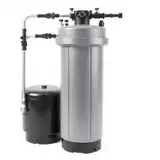
Aquasana Rhino Well Water
If well tests show bacteria, iron, or multiple contaminants, this complete system with UV disinfection handles the full spectrum of well water challenges.
- UV sterilization for bacteria
- Sub-micron post-filter
- 500,000 gallon capacity
Quick Treatment Selection by Test Result
| If Your Test Shows… | Recommended Treatment | Est. Cost |
|---|---|---|
| Bacteria (coliform, E. coli) | UV purification + shock chlorination | $300-800 |
| Lead, arsenic, nitrate | Reverse osmosis system | $200-600 |
| High hardness (>120 mg/L) | Water softener | $800-2,500 |
| Iron & manganese | Iron/manganese filter | $800-2,000 |
| Chlorine taste/odor | Carbon filter | $50-300 |
| Multiple contaminants | Whole-house filtration | $1,000-3,000 |
| PFAS ("forever chemicals") | RO or NSF P473 carbon | $200-600 |
| Sediment, turbidity | Sediment pre-filter | $50-200 |
Need help interpreting your specific results? See our detailed results interpretation guide for contaminant-by-contaminant analysis.
City-Specific Testing Considerations
Water quality varies dramatically by location. Here are testing priorities for major metropolitan areas based on known contamination histories and infrastructure challenges:
Chicago, IL
Priority: Lead (widespread lead service lines), chromium-6, chloramine byproducts
Phoenix, AZ
Priority: Hardness, arsenic, chromium-6, high TDS from Colorado River water
Flint, MI
Priority: Lead, copper, THMs, bacteria — still recovering from water crisis
Las Vegas, NV
Priority: Very hard water, arsenic, perchlorate, disinfection byproducts
Related Testing Resources
When to Test
Complete calendar and trigger-based testing schedule for well water, city water, and special situations.
View ScheduleInterpreting Results
Understand your water quality report and what the numbers mean for treatment decisions.
Read GuideContaminant ID
Identify contaminants by visual clues, smell, and taste before testing.
Learn MoreFrequently Asked Questions
Continue Reading
Read: Water Filter Buying Guide
Complete guide to choosing the right filter
Deep dive — How Water Filters Work
Understanding filtration technologies explained
More on Water Filter Cost Comparison
Annual costs across all filter types
Water Testing Kits Guide: complete how-to
Test your water before buying a filter
Keep it running: Filter Replacement Guide
When and how to replace filter cartridges
Deep dive — Water Filter Health Benefits
Health advantages of filtered water
Ready to Test Your Water?
Use our complete testing guide to protect your family's health and choose the right water treatment system.