Water Contaminant Identification Guide 2026
Learn to recognize water contaminants by sight, smell, taste, and health symptoms
Critical Warning: Many dangerous contaminants like lead, arsenic, nitrates, PFAS, and radon are completely invisible, odorless, and tasteless. While this guide helps identify detectable issues, laboratory testing is the only reliable way to ensure water safety.
Use visual, taste, and odor clues as warning signs that testing is needed, not as confirmation of safety. When in doubt, test your water with a comprehensive laboratory analysis. Our water filter choosing guide helps you match treatment to your specific test results.
Visual Clues: What You Can See
Color changes, cloudiness, stains, and deposits provide immediate clues about water chemistry. These visual indicators can guide your testing priorities and help you communicate effectively with water treatment professionals. Residents in cities like Flint and Newark have experienced visible water quality changes that signaled serious underlying contamination.
Brown, Red, or Rusty Water
Likely Cause: Iron
- • Concentration: Visible at 0.3+ mg/L
- • Source: Natural groundwater or corroding iron/steel pipes
- • Types: Ferrous (dissolved, clear until exposed to air) or ferric (oxidized, immediately colored)
- • Staining: Orange/rust stains on fixtures, laundry, and appliances
- • Taste: Metallic, bitter flavor
Health & Treatment
Generally not a direct health concern, but indicates possible pipe corrosion (test for lead too) and may harbor iron bacteria.
Treatment Options:
- • Water softener (up to 3-5 mg/L)
- • Iron filter (5-15 mg/L)
- • Sediment filter for particulate iron
- • Chlorination for iron bacteria
Black or Purple Stains
Likely Cause: Manganese
- • Concentration: Visible at 0.05+ mg/L
- • Appearance: Black or purple discoloration, dark deposits in toilet tanks
- • Common: Often occurs alongside iron
- • Taste: Bitter or metallic flavor
- • Staining: Dark stains on sinks, toilets, and laundry
Health & Treatment
- • EPA secondary limit: 0.05 mg/L
- • High levels may affect neurological development in children
- • Can accumulate in the body over time
Treatment:
- • Oxidation filtration (greensand, birm)
- • Whole-house filter with manganese media
- • RO system for drinking water
Cloudy or Milky Water
Harmless: Air Bubbles
- • Test: Clears from bottom to top within minutes
- • Cause: Temperature change or pressure release in pipes
- • Action: None needed—completely safe to drink
Treatment by Cause:
Sediment/Turbidity
Clay, silt, or sand. Install sediment filter.
Bacteria
Microorganisms. Install UV purification.
High TDS
Excessive minerals. Consider RO system.
Methane Gas
Natural gas—serious safety hazard. Contact professionals immediately.
Green or Blue Stains
Likely Cause: Copper Corrosion
- • Appearance: Blue-green stains on fixtures and porcelain
- • Source: Corroding copper pipes due to acidic water
- • pH Factor: Usually indicates pH below 6.5
- • Taste: Bitter or metallic flavor
Health & Treatment
- • EPA action level: 1.3 mg/L
- • High levels cause nausea and vomiting
- • Acidic water may also leach lead from solder
Treatment:
- • Acid neutralizer (calcite or soda ash) to raise pH
- • RO system at point of use for drinking water
- • Test for lead simultaneously—corrosive water affects both metals
White Residue, Scale, or Film
Likely Cause: Hard Water
- • Minerals: Calcium and magnesium carbonate
- • Scale: White crusty buildup on fixtures and inside pipes
- • Film: Soap scum in shower, spots on dishes
- • Levels: Hard at 120+ mg/L (7 gpg), very hard at 180+ mg/L
Impact & Treatment
- • Not a direct health hazard
- • Damages water heaters and appliances (reduces lifespan 25-40%)
- • Reduces soap and detergent effectiveness
- • Increases energy bills from scale insulation
Treatment:
- • Salt-based water softener (most effective)
- • Salt-free conditioner (scale prevention only)
- • RO for drinking water only
Smell & Taste: Odor-Based Detection
Your nose and taste buds can detect certain contaminants at very low concentrations—often below levels that cause visible changes. Here's how to interpret what your senses are telling you. If you detect any unusual taste or odor, order a comprehensive water test to confirm the cause.
🥚 Rotten Egg Smell (Hydrogen Sulfide)
Characteristics
- • Strong sulfur odor
- • Noticeable at 0.5+ ppm
- • May corrode metal pipes
- • Can tarnish silver
Sources
- • Sulfate-reducing bacteria
- • Natural sulfur deposits
- • Decaying organic matter
- • Water heater anode rod
Treatment
- • Chlorination injection
- • Oxidation filter
- • Aeration system
- • Replace anode rod (if hot water only)
Diagnostic tip: If the smell is only in hot water, the water heater's magnesium anode rod is likely reacting with sulfate in the water. Switching to an aluminum/zinc anode rod often solves the problem.
Characteristics
- • Chemical, pool-like smell
- • Typical in city water
- • Normal: 0.5-2 mg/L
- • Strong at 4+ mg/L
Sources
- • Municipal water treatment
- • Seasonal increases after main breaks
- • Higher in summer months
- • Well water: shock chlorination residual
Treatment
- • Activated carbon filter
- • Catalytic carbon (for chloramine)
- • Whole-house carbon filter
- • Letting water sit (chlorine off-gasses)
⚡ Metallic Taste
Characteristics
- • Sharp metallic flavor
- • May be strongest in morning (first draw)
- • Can taste bitter or astringent
Possible Contaminants
Action
- • Test for heavy metals immediately
- • Check pH (corrosive water dissolves metals)
- • Install RO for drinking water
- • Acid neutralizer if pH is low
🌿 Musty, Earthy, or Fishy Smell
Characteristics
- • Earthy, moldy, or damp smell
- • Sometimes described as "swampy"
- • May vary seasonally
Sources
- • Algal blooms in reservoirs
- • Organic matter decomposition
- • Geosmin or MIB compounds
- • Bacteria in well or plumbing
Treatment
- • Activated carbon filter
- • Chlorination (if bacterial)
- • Well disinfection
- • Test for bacteria
Invisible Contaminants: Testing Required
The most dangerous contaminants in drinking water are the ones you cannot see, smell, or taste. These require laboratory testing—period. No amount of sensory evaluation can substitute for certified analysis. This is why comprehensive water testing is essential for every household.
Undetectable & Dangerous
- Lead: No taste, color, or odor. Causes irreversible neurological damage in children. Test if home built before 1986 — cities like Chicago have widespread lead service lines.
- Arsenic: Completely undetectable. Known carcinogen present naturally in many aquifers across the Western US. Common in Phoenix area groundwater.
- Nitrate: Invisible and tasteless. Causes blue baby syndrome. Common in agricultural areas and near septic systems.
- PFAS: "Forever chemicals" with no sensory indicators. Linked to cancer, immune suppression, hormonal disruption. Present in water serving over 200 million Americans.
- Radon: Radioactive gas dissolved in groundwater. Second leading cause of lung cancer. Common in granite geology areas.
Difficult to Detect
- VOCs: Some have faint chemical odor at high concentrations, but many are odorless. Include solvents, fuels, and industrial chemicals.
- Pesticides: Generally undetectable by senses at typical groundwater concentrations.
- Pharmaceuticals: Present at trace levels far below sensory detection thresholds.
- Microplastics: Invisible to naked eye. Increasingly found in both well and city water.
- Disinfection Byproducts: THMs and HAAs form when chlorine reacts with organic matter. Known carcinogens.
Recommended Treatment by Contaminant Type
Once you've identified potential contaminants through sensory clues and confirmed with laboratory testing, here are our research-based treatment picks for the most common contamination scenarios.
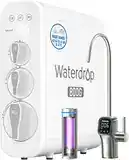
Waterdrop G3P800
Removes 99.9% of lead, arsenic, PFAS, fluoride, nitrates, and other invisible contaminants that can't be detected by sight, smell, or taste. Smart TDS monitoring confirms removal in real-time.
- NSF 42, 53, 58, 372, 401 certified
- 800 GPD tankless design
- UV sterilization for bacteria
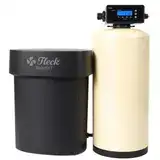
Fleck 5600SXT Water Softener
If you see white scale buildup, soap scum, and water spots, a water softener eliminates hard water minerals. The Fleck 5600SXT handles up to 48,000 grains with digital metered regeneration.
- Metered regeneration saves salt & water
- Handles iron up to 3-5 mg/L
- 12 GPM flow rate
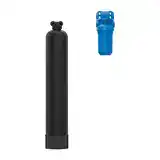
SpringWell CF1
If chlorine taste, chemical odors, or sediment affect your entire home's water, this 4-stage whole-house system eliminates these issues from every tap including showers and baths.
- 1,000,000 gallon capacity
- Removes chlorine, chloramine, VOCs
- Lifetime warranty
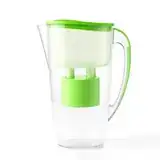
Clearly Filtered Pitcher
For apartment renters or those on a budget, this pitcher removes 365+ contaminants including fluoride, lead, and PFAS — performance rivaling under-sink systems at a fraction of the cost.
- Removes fluoride, lead, PFAS (99%+)
- No installation needed
- 100-gallon filter life
Quick Diagnostic: What Should I Test For?
| Symptom | Test For | Urgency |
|---|---|---|
| Brown/rusty color | Iron, manganese, lead | Moderate |
| Rotten egg smell | Hydrogen sulfide, sulfate bacteria | Moderate |
| Blue-green stains | Copper, pH, lead | High |
| Persistent cloudiness | Bacteria, turbidity, TDS | High |
| White scale/residue | Hardness, TDS | Low |
| Metallic taste | Iron, copper, lead, pH | High |
| Chlorine/chemical smell | Chlorine, chloramine, THMs | Low |
| Musty/earthy smell | Bacteria, geosmin, algae | Moderate |
| Oily sheen on surface | Petroleum compounds, iron bacteria | High |
| GI illness after drinking | Bacteria, nitrate, parasites | Urgent |
| No symptoms (routine) | Comprehensive panel (bacteria, metals, chemicals) | Routine |
When to Test: Based on Symptoms
Test Annually (No Symptoms)
- • Bacteria (total coliform, E. coli)
- • Nitrate/nitrite
- • pH and hardness
- • Iron and manganese
See our full testing schedule for detailed protocols.
Test Immediately (Symptoms Present)
- • Any sudden change in color, taste, or odor
- • Cloudiness that doesn't clear
- • Illness in household members
- • After flooding or well repair
Order a comprehensive test kit for fastest results.
Emergency Response: When to Stop Drinking Your Water
Switch to bottled water immediately and contact your local health department if you observe any of the following:
- •Visible contamination after a flood or natural disaster — well water may be contaminated with sewage, agricultural runoff, or chemical spills
- •Multiple household members experiencing GI illness — suggests bacterial or parasitic contamination requiring immediate testing
- •Strong chemical or petroleum odor — may indicate fuel or industrial chemical contamination. Do not use water for any purpose
- •Water utility issues a boil water advisory — follow all instructions and boil water for at least 1 minute before use until the advisory is lifted
For ongoing protection, install a reverse osmosis system for drinking water and a whole-house filter for comprehensive home treatment.
Frequently Asked Questions
Continue Reading
Top-rated Reverse Osmosis Systems
Top-rated RO water filters
Best Water Softeners
Top water softening systems
Our picks for Whole House Water Filters
Complete whole-house filtration
See the best Well Water Filters
Specialized well water treatment
Read: Water Filter Buying Guide
Avoid common buying mistakes
State Water Quality Guide
Water quality by state
Protect Your Family's Health
Don't rely on visual clues alone. Get comprehensive laboratory testing to know exactly what's in your water.