Why chlorine is in tap water
Chlorine has been used to disinfect drinking water for more than a century. It kills bacteria and viruses at the plant, and a small residual keeps working as water travels to your home.
- Taste and smell are strongest close to the treatment plant and after a utility raises its dose.
- Private wells don't contain chlorine unless you add it, for example after shock chlorinating.
For tips on taste, see chlorine taste and smell in water.
Safety and the EPA limit
- EPA limit: 4 mg/L as a maximum residual for public water. See the EPA drinking water regulations.
- Byproducts: chlorine reacts with natural organic matter to form disinfection byproducts such as trihalomethanes, which have their own limits.
- Skin and hair: some people notice dryness; see what chlorine in water does to your body.
Chlorine or chloramine? Check first
More than one in five Americans gets water treated with chloramine, a longer-lasting mix of chlorine and ammonia. It smells less, but it doesn't boil off and ordinary carbon removes it slowly.
If your water quality report says chloramine, choose a filter whose listing names chloramine reduction, and read our chloramine removal guide. A filter built only for chlorine may let chloramine through.
Chlorine filters to compare
Pick by how much of the house you want to treat. Check that the listing names chlorine reduction and the filter's rated capacity.
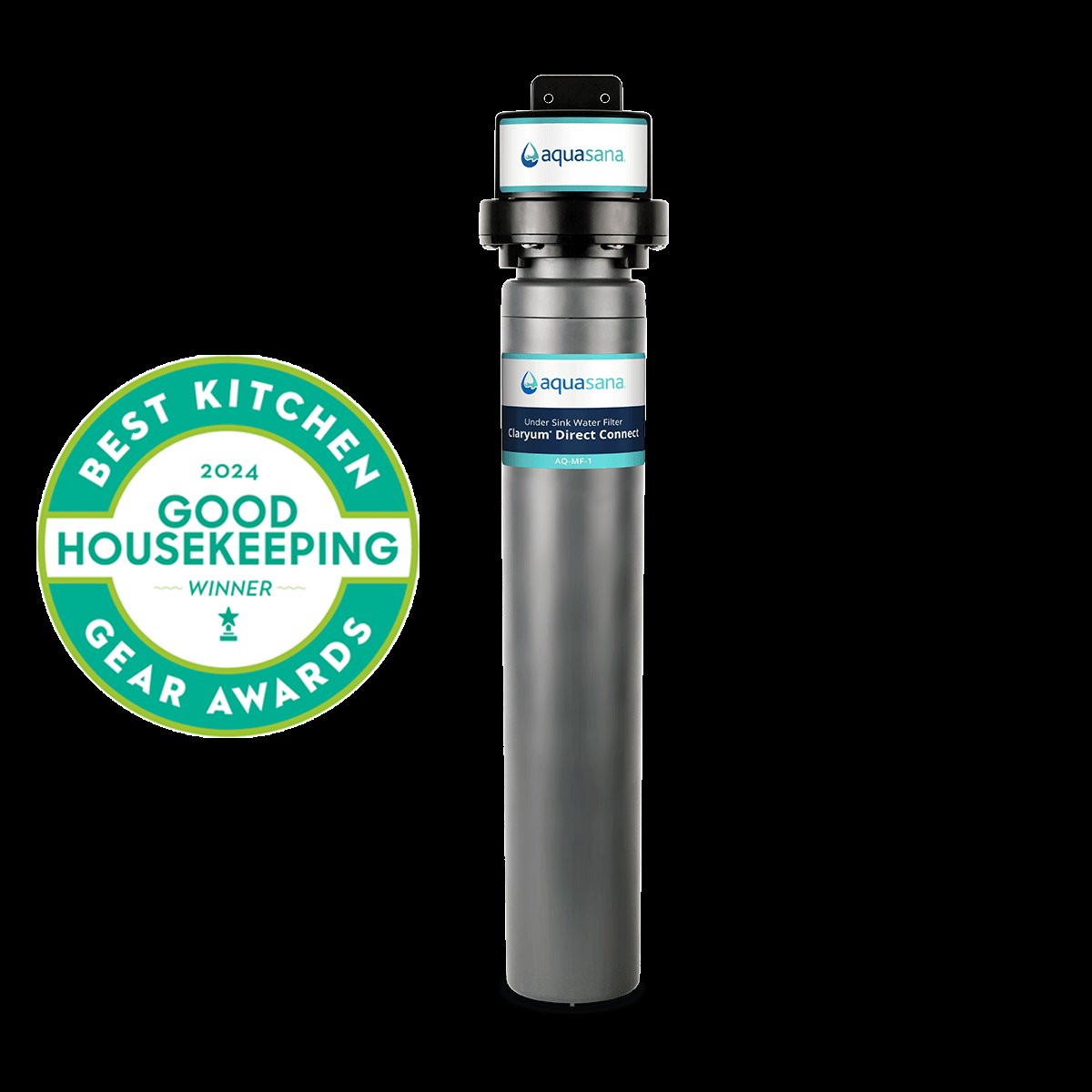
Aquasana Claryum Direct Connect (AQ-MF-1)
Aquasana Claryum Direct Connect (AQ-MF-1)
Aquasana's performance data sheet for this under-sink filter (AQ-MF-1) lists 96.06% chlorine and chloramine reduction under NSF/ANSI 42, plus lead, cyst and PFOA/PFOS reduction under NSF/ANSI 53.
Compare sizing, treatment options and ongoing costs in our best under-sink water filters guide.
Aquasana Rhino Whole House Water Filter
Aquasana Rhino Whole House Water Filter
Whole-house carbon filtration aimed at chlorine taste and odor at every tap and shower. Confirm your city uses chlorine rather than chloramine, and size it for your household's flow.
Compare sizing, treatment options and ongoing costs in our best whole house water filters guide.
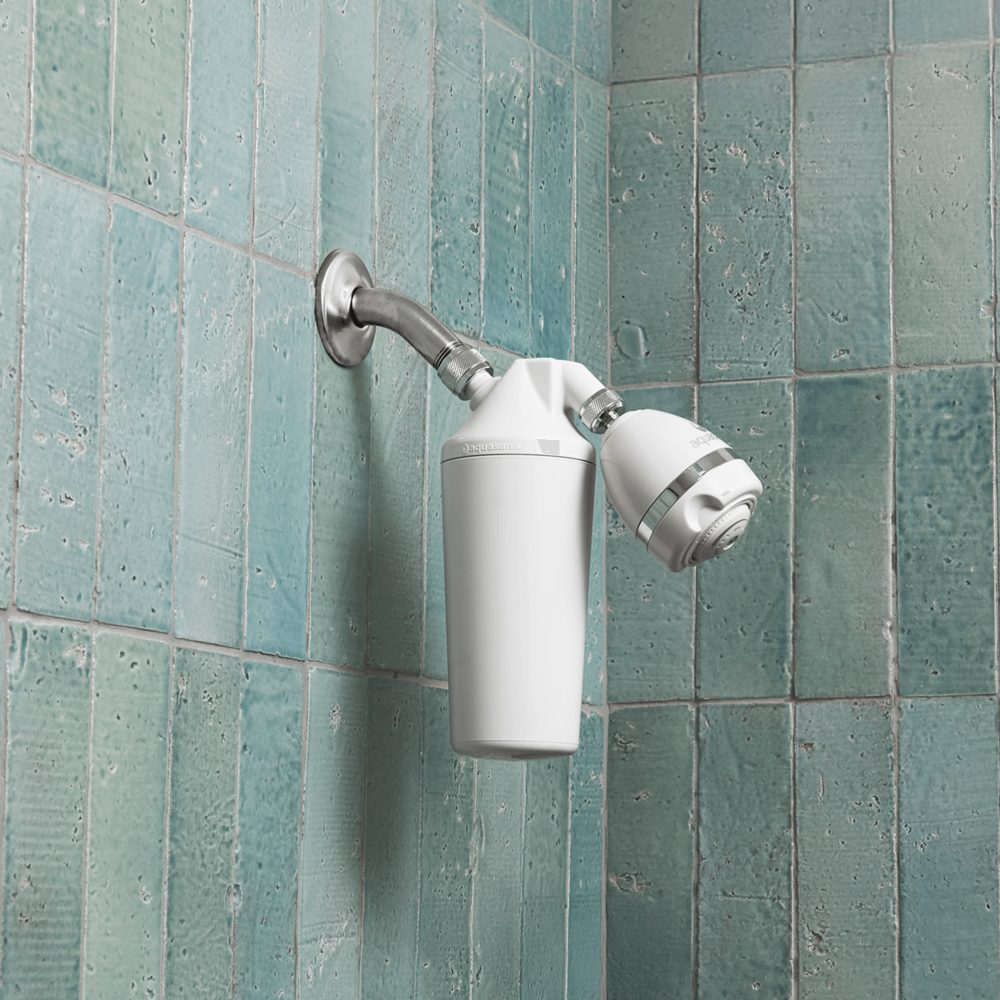
Aquasana Standard Shower Head Filter
Aquasana Standard Shower Head Filter
A simple shower filter for chlorine-treated water. Hot water makes any shower filter less effective than a drinking-water filter, so check replacement-filter costs.
Compare sizing, treatment options and ongoing costs in our best shower filters guide.
Chlorine removal options compared
| Method | Treats | Watch out for |
|---|---|---|
| Pitcher or faucet carbon filter | Drinking water | Small capacity; frequent filter changes |
| Under-sink carbon filter | One kitchen tap | Check that the listing names chlorine, and chloramine if needed |
| Whole-house carbon system | Every tap and shower | Higher upfront cost; size it for your flow |
| Shower filter | One shower | Hot water reduces performance |
| Boiling or letting water stand | Free chlorine only | Doesn't work well for chloramine |
| Reverse osmosis | Drinking water | Its carbon stages remove chlorine before the membrane |
Learn whether boiling helps in does boiling water remove chlorine, and test your level with our chlorine testing guide.
Bottom line
Chlorine is there to keep water safe, and removing it at home is easy with activated carbon. Confirm chlorine versus chloramine, then choose a kitchen, shower or whole-house filter. Compare full rankings in our best whole-house water filters guide and see the other common water contaminants.