Where lead in tap water comes from
Water usually leaves the treatment plant with little or no lead. It picks lead up on the way to your glass, as water sits against lead pipe, solder or older fittings. That's why two homes on the same street can get very different results.
| Source | What it is | Typical risk |
|---|---|---|
| Lead service line | The pipe from the water main to your home, common before 1986 | Highest. Often the largest single source of lead |
| Lead solder | Joins copper pipes; banned for drinking water since 1986 | Moderate, especially in newer solder joints |
| Brass or chrome-plated faucets | Older fixtures could contain up to 8% lead | Moderate. Lead-free now means a 0.25% weighted average |
| Galvanized steel pipe | Can collect lead from an upstream lead line | Low to moderate, can release lead in bursts |
| Faucet aerator | Traps flakes of lead from pipes upstream | Can spike results until cleaned |
EPA notes that lead pipes are more likely in older cities and in homes built before 1986. In homes without a lead service line, the usual culprits are brass faucets and lead solder. Learn more on the EPA's lead in drinking water page, and see our guide to copper in drinking water, which often comes from the same plumbing.
Construction, a pipe repair or a change in water treatment can shake lead loose. If your street has had water main or service line work, run cold water for several minutes, clean your aerators, and consider a retest.
Lead health effects and the EPA limits
Lead builds up in the body over time. Young children and pregnant people face the most risk because lead affects the developing brain and nervous system.
- Health goal: zero. EPA's goal for lead in drinking water is zero, because there is no known safe level of exposure.
- Action level: 15 parts per billion today. If more than 10% of tested homes exceed it, a utility must take extra steps. It is a trigger for action, not a safety line.
- Coming change: 10 parts per billion. EPA's Lead and Copper Rule Improvements lower the action level and require most water systems to replace lead service lines within 10 years. Most requirements start on November 1, 2027.
- Children: lead is linked to lower IQ, attention problems, slowed growth and hearing problems.
- Adults: lead is linked to high blood pressure, kidney problems and reproductive harm.
Lead in water has no taste, smell or color. If you're worried about exposure, talk to your doctor about a blood lead test. Read about warning signs in lead poisoning symptoms.
How to test your water for lead
- Check with your utility. Ask for its service line inventory and whether it offers free lead testing.
- Use a certified lab. Your state can list certified labs. Home strip tests can miss low levels.
- Take a first-draw sample. Let the water sit unused for at least six hours, then fill the bottle from the kitchen cold tap without running it first.
- Consider a flushed sample too. Comparing first-draw and flushed results can show whether lead comes from the faucet or the service line.
- Retest after changes. Test again after plumbing work and after installing a filter, sampling from the filtered tap.
Compare options in our water test kits guide and the step-by-step how to test water for lead.
What a lead certification really means
The lead claim under NSF/ANSI 53 (and NSF/ANSI 58 for RO) is tested with water spiked to 150 parts per billion lead. Since 2020, a filter must bring that down to 5 parts per billion or less to earn a new lead claim; the old pass line was 10.
- Look for both lead and particulate claims. EPA's consumer guide to lead filters suggests a filter certified for lead to 5 parts per billion plus NSF/ANSI 42 Class I particulate reduction.
- Check the certifier's listing. NSF, WQA, IAPMO and CSA all publish searchable listings. Look for your exact model and cartridge.
- Read the performance data sheet. It shows the pass line the product was tested against, its rated capacity in gallons and the operating conditions.
Lead filters to compare
These filters treat water at the kitchen tap, which is where lead from the faucet and plumbing ends up. Check the current listing for each before you buy.
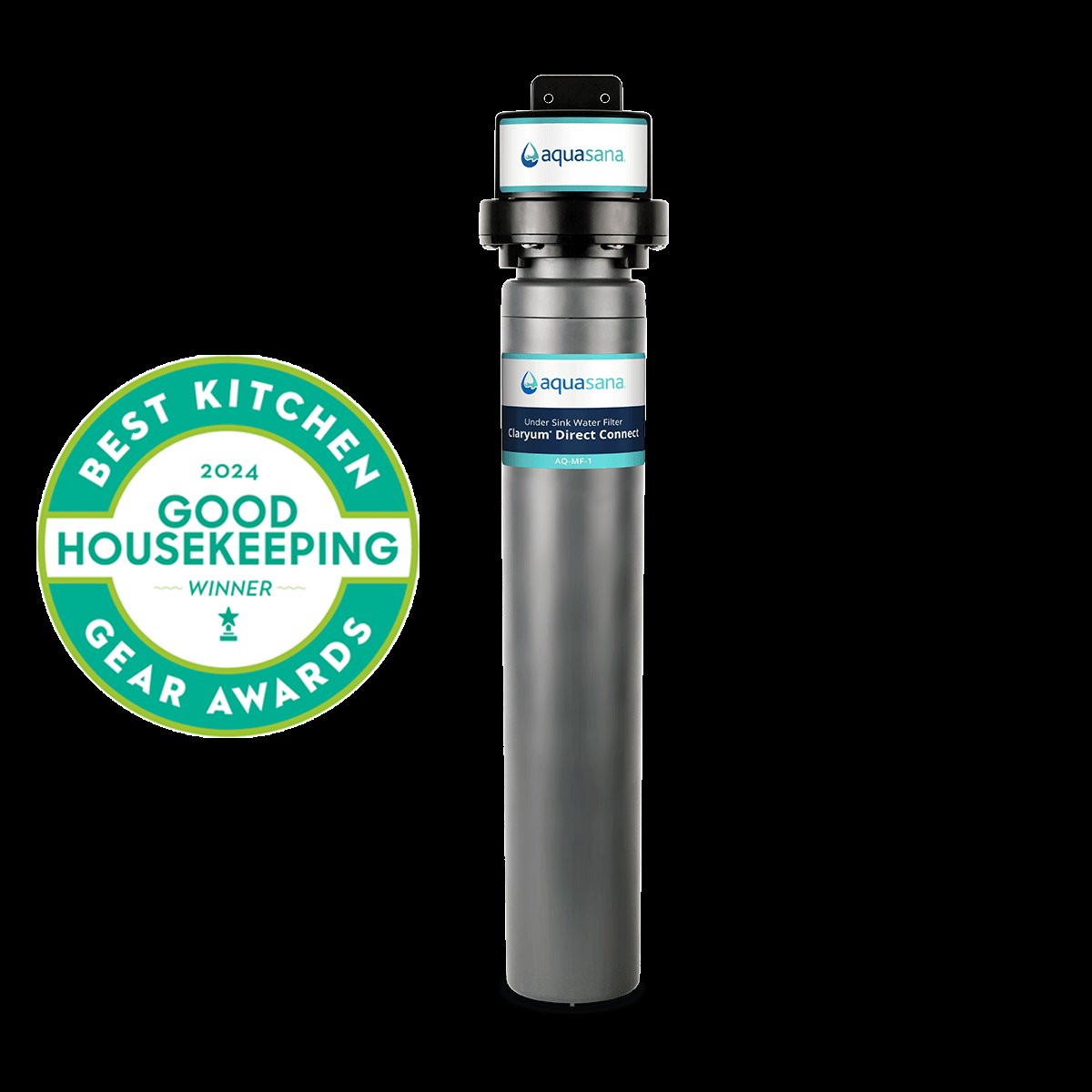
Aquasana Claryum Direct Connect (AQ-MF-1)
Aquasana Claryum Direct Connect (AQ-MF-1)
Best for: City water homes with older plumbing that want filtered water from the existing faucet
Aquasana's performance data sheet for this model shows over 99.3% lead reduction under NSF/ANSI 53, and the system is IAPMO certified to NSF/ANSI 42, 53 and 401. It connects to your existing faucet, so there's no extra hole to drill. The sheet lists the older 10 ppb lead pass line, so check the current listing if you want the 5 ppb criterion.
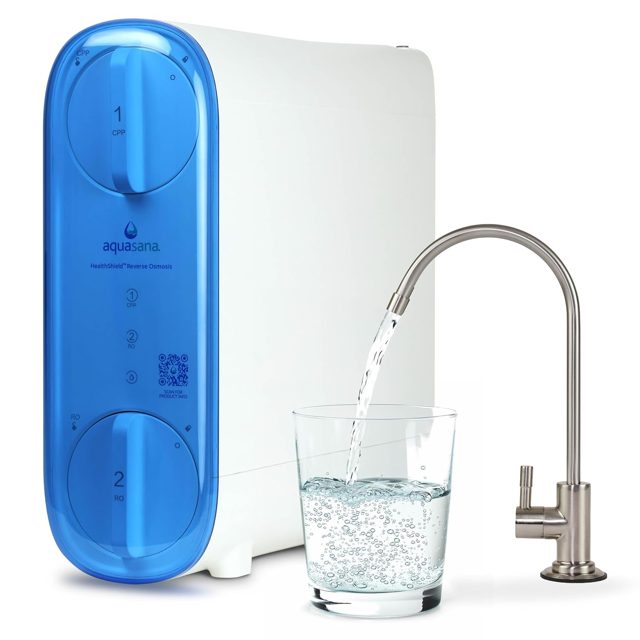
Aquasana Tankless Reverse Osmosis System (800 GPD)
Aquasana Tankless Reverse Osmosis System (800 GPD)
Best for: Homes that also want fluoride, arsenic or nitrate reduced
Aquasana's data sheet for this tankless RO system (AQ-HSRO800) shows 99.66% lead reduction at pH 6.5 and 99.56% at pH 8.5 under NSF/ANSI 53, meeting the newer 5 ppb pass line, plus fluoride and pentavalent arsenic reduction under NSF/ANSI 58. Choose it when lead isn't your only concern.
iSpring RCC7AK 6-Stage RO System
iSpring RCC7AK 6-Stage RO System
A lower-cost under-sink RO system with a remineralization stage. NSF's listing for this model names TDS reduction, so confirm any lead claim on the listing for the exact version you buy, and lab-test the RO tap after installing.
Compare sizing, treatment options and ongoing costs in our best reverse osmosis systems guide.
See every option in our best filter for lead guide, or compare water filter pitchers if you rent and can't change the plumbing.
Lead treatment options compared
| Method | Works on | Watch out for |
|---|---|---|
| NSF/ANSI 53 carbon block (under-sink or faucet) | Lead in dissolved and particle form | Change the cartridge on time; capacity is rated in gallons |
| Reverse osmosis (NSF/ANSI 58) | Lead plus fluoride, arsenic and nitrate | Slower, sends some water to drain, needs a dedicated faucet |
| Certified pitcher or dispenser | Lead, if the exact cartridge is certified | Small capacity; many cartridges have no lead claim |
| Distillation | Lead and most minerals | Slow and uses electricity |
| Whole-house filter | Mainly chlorine, taste and sediment | Sits before the faucet and plumbing that often add the lead |
| Boiling | Does not remove lead | Concentrates it slightly |
The lasting fix is replacing the lead service line and any lead plumbing. Until that's done, a certified filter at the tap is the practical protection. For a full plan, read how to remove lead from water, and see why boiling water doesn't remove lead.
Daily habits that lower lead exposure
- Use only cold water for drinking, cooking and baby formula. Hot water pulls more lead from pipes.
- Flush stagnant water. After water sits for hours, run the tap, shower or start laundry before drinking. Homes with a lead service line may need several minutes.
- Clean faucet aerators every few months to remove trapped lead particles.
- Change filter cartridges on time. A worn-out cartridge can stop reducing lead without any change in taste.
- Ask about replacement programs. Many utilities now help pay to replace the private side of a lead service line.
Bottom line
Lead comes from plumbing, so the answer starts at your own tap. Find out whether you have a lead service line, test a first-draw sample, use cold water, and install a filter certified for lead at the kitchen sink. Then retest from the filtered tap to confirm it works. Compare more systems in our best under-sink filters guide, and see the other common water contaminants.