Where nitrate in water comes from
Nitrate is a form of nitrogen. Plants need it, so it's in fertilizer and manure, and it's also released by septic systems. Rain and irrigation carry it down into groundwater.
- Private wells in farm country carry the most risk, especially shallow or older wells.
- Septic systems close to a well can raise nitrate even away from farms.
- Timing matters: levels often rise after spring fertilizing and heavy rain.
- Public water must meet the EPA limit and report nitrate in its annual water quality report.
Well owners with a baby at home should read nitrates in well water and baby safety.
Health effects and the EPA limit
- EPA limit: 10 mg/L nitrate as nitrogen, and 1 mg/L for nitrite. See the EPA drinking water regulations.
- Check the units: some labs report nitrate as the whole ion, where the same limit reads about 45 mg/L.
- Infants: babies under about six months can develop methemoglobinemia, or blue baby syndrome, which lowers the oxygen their blood can carry.
- Pregnancy and adults: some studies link long-term nitrate exposure to other health effects; that research is still developing. EPA summarizes it on its nutrient pollution health page.
How to test for nitrate
- Use a state-certified lab and ask for nitrate and nitrite reported as nitrogen.
- Time it right. Test in spring or after heavy rain to catch the high point.
- Add a bacteria test. High nitrate can point to septic or surface water getting into the well.
- Test the treated tap after installing a system, then once a year.
The EPA private wells page explains how to find a lab. Compare options in our water test kits guide.
RO systems to compare for nitrate
These under-sink RO systems treat drinking and cooking water. Choose one based on your test result, and plan to test the RO tap after installing it.
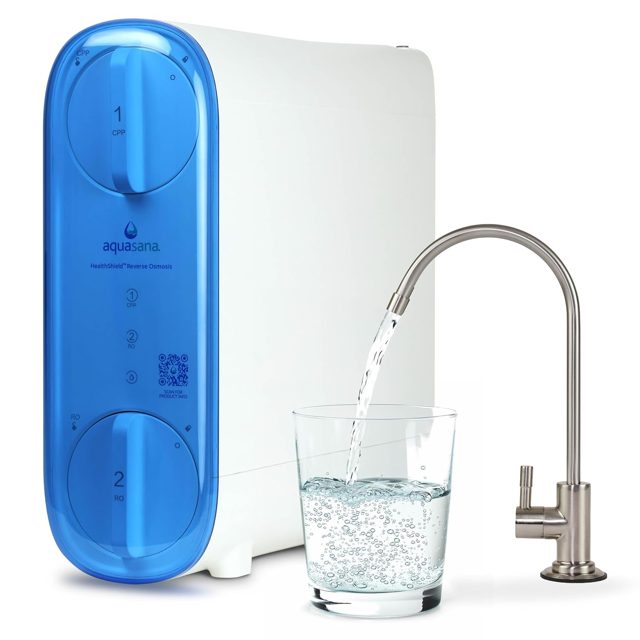
Aquasana Tankless Reverse Osmosis System (800 GPD)
Aquasana Tankless Reverse Osmosis System (800 GPD)
Aquasana's performance data sheet for this tankless model (AQ-HSRO800) lists 85.3% nitrate/nitrite reduction under NSF/ANSI 58 from a 30 mg/L test level, enough to bring that level under the 10 mg/L limit. The sheet rates it for water with up to 27 mg/L nitrate plus 3 mg/L nitrite, measured as nitrogen.
Compare sizing, treatment options and ongoing costs in our best reverse osmosis systems guide.

iSpring RCC7AK 6-Stage RO System
iSpring RCC7AK 6-Stage RO System
A lower-cost under-sink RO system with a remineralization stage. NSF's listing for this model names TDS reduction, not nitrate, so treat any nitrate result as unconfirmed and lab-test the RO tap after installing.
Compare sizing, treatment options and ongoing costs in our best reverse osmosis systems guide.
If your well tests far above 30 mg/L as nitrogen, a single RO system may not bring it under the limit. Talk to a local water treatment pro about whole-house anion exchange, and keep using tested water for formula until you've confirmed the result.
Read more in does reverse osmosis remove nitrates.
Nitrate treatment options compared
| Method | Treats | Watch out for |
|---|---|---|
| Under-sink reverse osmosis | Drinking and cooking water | Removes a large share, not all; test the RO tap |
| Nitrate-selective anion exchange | Whole house | Sulfate competes; needs salt and regular regeneration |
| Distillation | Small batches of drinking water | Slow and uses electricity |
| Carbon pitchers and fridge filters | Not designed for nitrate | Only trust a listing that names nitrate |
| Standard water softener | Hardness only | Does not remove nitrate |
| Boiling | Does not remove nitrate | Concentrates it as water evaporates |
For a step-by-step plan, read how to remove nitrates from water and our nitrate removal guide. If your test also shows nitrite, see nitrite in water.
Bottom line
If you're on a well near farms or a septic system, test for nitrate every year, and right away if you have a baby. Treat drinking water with an RO system that lists nitrate reduction, and confirm the result with a lab test. Learn more in nitrates in drinking water, compare full rankings in our best reverse osmosis systems guide, and see the other common water contaminants.