What microplastics are and where they come from
- Size: microplastics are under 5 millimeters; nanoplastics are under 1 micrometer.
- Sources: breaking-down bottles and bags, tire dust, paint, and fibers shed from synthetic clothing.
- In water: they reach rivers, lakes and groundwater, and can come from plastic pipes, bottles and caps.
Read more in microplastics in drinking water and microplastics in bottled water.
What the risk is
- No federal limit exists for microplastics in drinking water.
- California was the first state to define microplastics in drinking water and require testing and reporting. See the California State Water Board.
- WHO's 2019 review of microplastics in drinking-water found no clear evidence of harm at current levels, and called for more research.
- Newer research has found particles in human blood and tissue; what that means for health is still being studied. See microplastics in the bloodstream.
Why particle size matters
A filter can only stop particles bigger than its pores. RO membranes block particles far smaller than any microplastic. NSF/ANSI 42 particulate ratings go down to Class I, which covers particles from 0.5 to 1 micron, so a carbon block with that rating catches most microplastics. Loose granular carbon in basic pitchers isn't built to stop fine particles.
Only the tankless RO data sheet below names microplastics: it lists 99.61% reduction under NSF/ANSI 401. The Claryum sheet lists 99.9% particulate reduction under NSF/ANSI 42 without naming microplastics. Both tests use particles 0.5 to 1 micron across, so neither covers anything smaller.
Filters to compare for microplastics
Both systems treat drinking and cooking water at one tap.
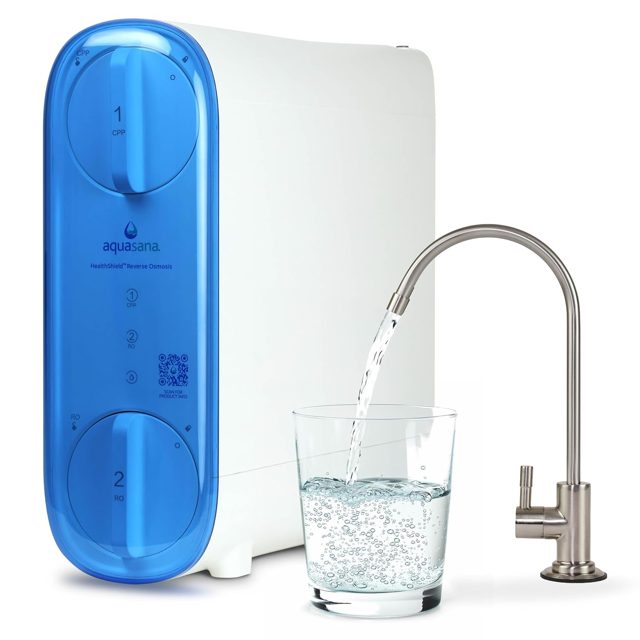
Aquasana Tankless Reverse Osmosis System (800 GPD)
Aquasana Tankless Reverse Osmosis System (800 GPD)
An under-sink tankless RO system whose membrane blocks particles far smaller than microplastics. Aquasana's data sheet (AQ-HSRO800) lists 99.61% microplastics reduction under NSF/ANSI 401, plus lead, fluoride and PFOA/PFOS reduction.
Compare sizing, treatment options and ongoing costs in our best reverse osmosis systems guide.
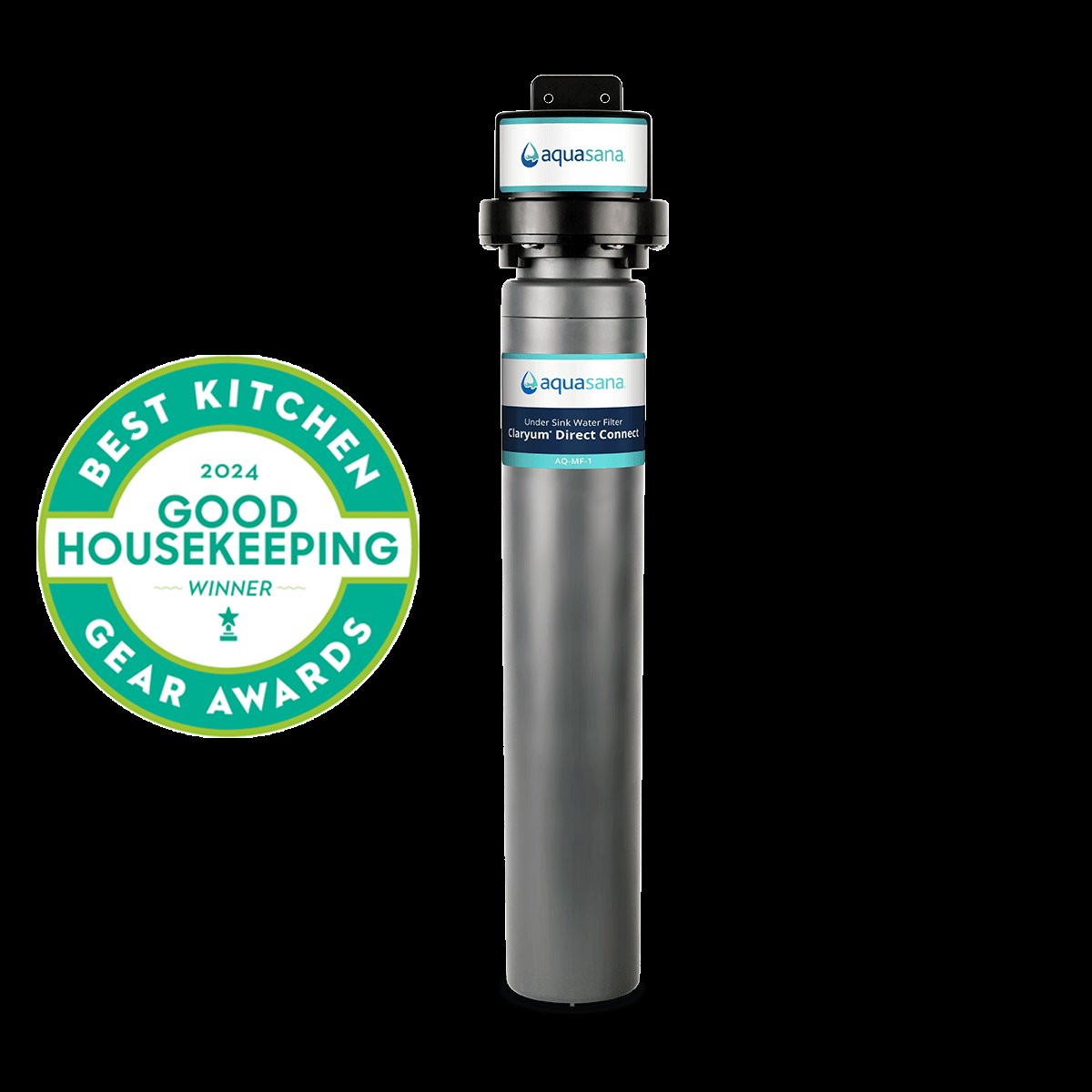
Aquasana Claryum Direct Connect (AQ-MF-1)
Aquasana Claryum Direct Connect (AQ-MF-1)
A compact under-sink carbon block. Aquasana's data sheet (AQ-MF-1) lists 99.9% particulate reduction under NSF/ANSI 42, plus lead, chlorine and PFOA/PFOS reduction, without RO wastewater.
Compare sizing, treatment options and ongoing costs in our best under-sink water filters guide.
For filtering methods and testing, see how to filter microplastics, how to remove microplastics from water and our microplastics testing guide.
Microplastics treatment options compared
| Method | Treats | Watch out for |
|---|---|---|
| Reverse osmosis | Drinking water | Most thorough; wastes some water |
| Carbon block, 0.5–1 micron | One kitchen tap | Check for a particulate or microplastics claim |
| Whole-house sediment filter | Larger particles at every tap | Usually too coarse for the smallest pieces |
| Granular carbon pitcher | Taste and odor | Not designed for fine particles |
| Boiling | Does not remove microplastics on its own | Only helps with extra filtering |
Bottom line
Microplastics are hard to avoid entirely, and their health effects aren't settled. A good RO system or tight carbon block cuts what's in your drinking water, and skipping single-use bottles helps too. Compare full rankings in our best reverse osmosis systems guide and see the other common water contaminants.