What PFAS are and how they reach tap water
PFAS are a family of thousands of chemicals built on a carbon-fluorine bond, one of the strongest in chemistry. That strength makes them useful in nonstick pans and stain-proof fabric, and it's also why they last for decades in soil, water and people.
- Firefighting foam used at military bases, airports and training sites is a leading source of groundwater PFAS.
- Factories that made or used PFAS can release them into rivers and nearby wells.
- Landfills and biosolids spread on farmland can leach PFAS into groundwater.
- Short-chain PFAS such as GenX replaced older types and move through water more easily.
For a fuller primer, read PFAS forever chemicals explained.
EPA PFAS limits and the 2026 changes
In April 2024, EPA set the first national PFAS limits for public water. In May 2026, it proposed changes: keep the PFOA and PFOS limits with an option to delay compliance from 2029 to 2031, and remove the other limits. These are proposals; the 2024 rule stays in place until EPA finalizes them.
| PFAS | 2024 limit | Status in late 2026 |
|---|---|---|
| PFOA | 4.0 ppt | Kept in EPA's May 2026 proposal; compliance could move to 2031 |
| PFOS | 4.0 ppt | Kept in EPA's May 2026 proposal; compliance could move to 2031 |
| PFHxS | 10 ppt | Proposed for removal in May 2026 |
| PFNA | 10 ppt | Proposed for removal in May 2026 |
| HFPO-DA (GenX) | 10 ppt | Proposed for removal in May 2026 |
| Mixtures (Hazard Index) | 1 (unitless) | Proposed for removal in May 2026 |
One part per trillion is roughly one drop in 20 Olympic-size swimming pools. Private wells aren't covered by these limits. For the current rule text, see the EPA PFAS drinking water page.
PFAS health effects
PFAS build up in the body and can take years to leave. Studies link exposure to some PFAS, including PFOA and PFOS, to:
- Harm during pregnancy, including lower birth weight
- Weaker vaccine response in children
- Higher risk of some cancers, including kidney and testicular cancer
- Higher cholesterol, and liver and thyroid effects
PFAS have no taste or smell, so you can't tell from a glass of water. Read more in PFAS health effects and signs of PFAS exposure from tap water.
How to test for PFAS
- City water: check your utility's annual water quality report, or ask for its PFAS monitoring results.
- Private well: use a state-certified lab that runs EPA Method 533 or 537.1. These read down to single-digit parts per trillion.
- Sample carefully: use the lab's bottles and avoid touching the inside of the cap. Many household products contain PFAS.
- Test the filtered tap too after installing a system, so you know your real result.
See our guides on how to test water for PFAS and PFAS testing options.
What PFAS filter claims mean
- PFOA/PFOS reduction (NSF/ANSI 53, 58 or protocol P473): the filter must cut a combined 1,500 parts per trillion down to 70 or less, matching EPA's old 2016 health advisory.
- Total PFAS reduction: a newer, broader claim under NSF/ANSI 53 and 58 that tests a mix of PFAS, including short-chain types. It's the stronger claim if you can find it.
- The 70 ppt pass line is above today's 4 ppt limit. Good filters often do far better than the pass line, but a test of your filtered water is the only proof.
- Check the certifier's listing from NSF, WQA, IAPMO or CSA for your exact model.
PFAS filters to compare
Both Aquasana systems below publish PFOA and PFOS results on their performance data sheets. Choose RO for the broadest reduction, or the carbon filter if you want full flow from your existing faucet.
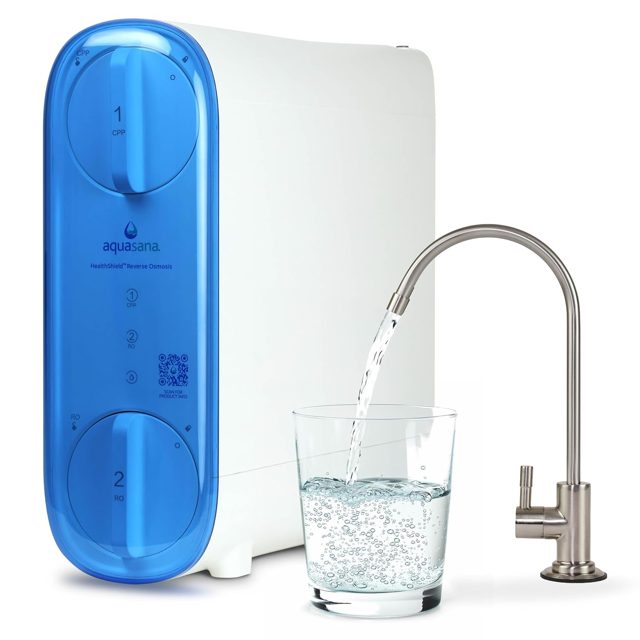
Aquasana Tankless Reverse Osmosis System (800 GPD)
Aquasana Tankless Reverse Osmosis System (800 GPD)
Best for: Homes near PFAS sources or with results above the EPA limits
Aquasana's data sheet for this tankless model (AQ-HSRO800) shows 99.67% PFOA and PFOS reduction under NSF/ANSI 53, plus lead, fluoride and arsenic V reduction. The RO membrane also helps with short-chain PFAS that carbon handles less well.
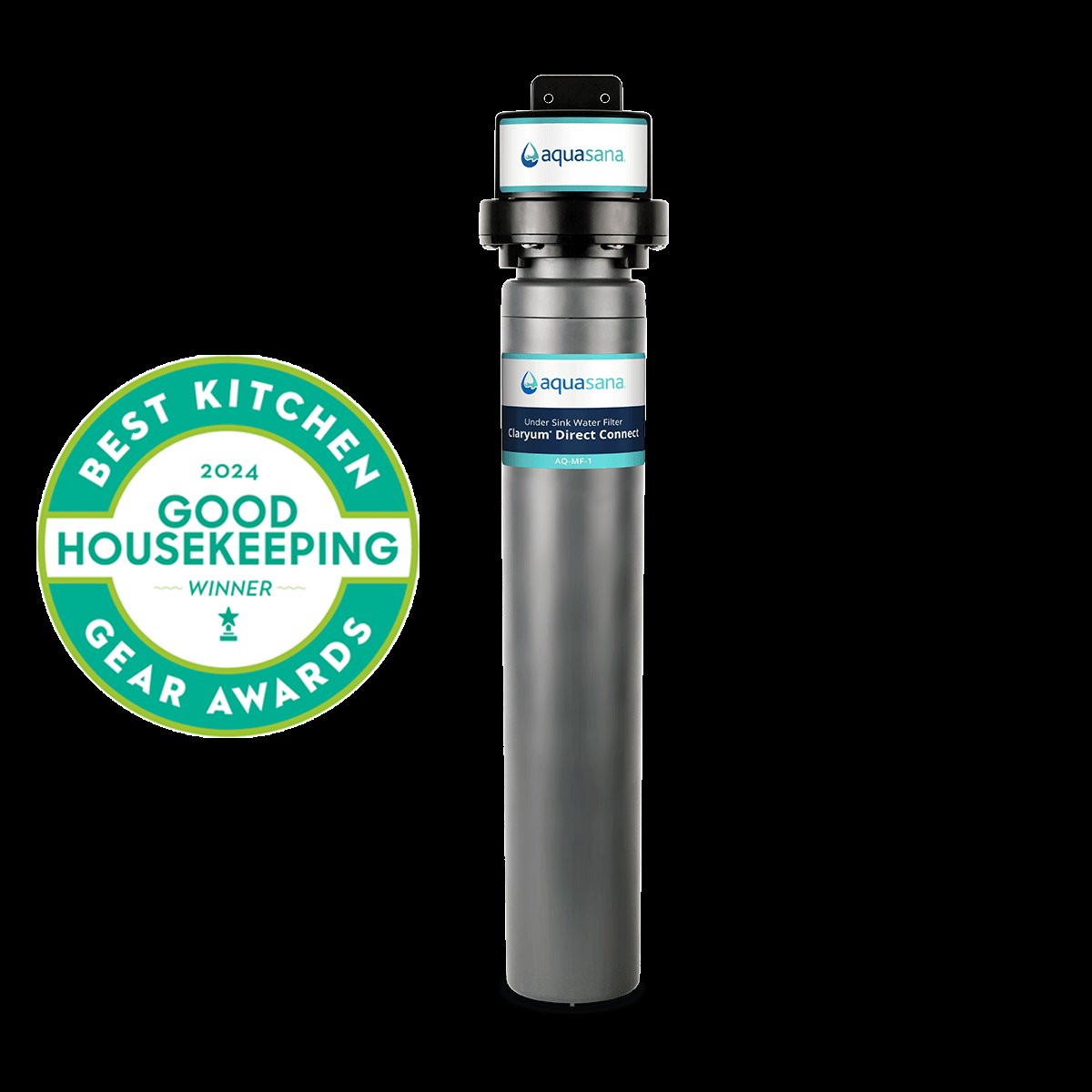
Aquasana Claryum Direct Connect (AQ-MF-1)
Aquasana Claryum Direct Connect (AQ-MF-1)
Best for: City water with PFOA or PFOS detected and no other RO-only concerns
Aquasana's data sheet shows 95.8% PFOA and PFOS reduction, and the system is IAPMO certified to NSF/ANSI 42, 53 and 401. It keeps minerals in and runs through your existing faucet, with no drain line or tank.
iSpring RCC7AK 6-Stage RO System
iSpring RCC7AK 6-Stage RO System
A lower-cost 6-stage RO system with a remineralization stage. NSF's listing for this model names TDS reduction, so confirm any PFAS claim on the listing for the exact version you buy, and test the RO tap after installing.
Compare sizing, treatment options and ongoing costs in our best reverse osmosis systems guide.
For more options, see the best PFAS filters and our best filter for PFAS guide.
PFAS treatment options compared
| Method | Works on | Watch out for |
|---|---|---|
| Reverse osmosis | Most PFAS, including short-chain types | Slower flow, sends some water to drain |
| Carbon block (under-sink) | PFOA, PFOS and many long-chain PFAS | Capacity is limited; change cartridges on schedule |
| Granular activated carbon (whole house) | Long-chain PFAS | Short-chain PFAS break through sooner; needs sizing from a test |
| Anion exchange resin | Many PFAS, including some short-chain types | Usually professionally designed; resin needs replacing |
| Pitchers | PFOA and PFOS, if the exact cartridge is certified | Small capacity; many cartridges have no PFAS claim |
| Boiling | Does not remove PFAS | Concentrates it slightly |
An overdue carbon cartridge can let PFAS through with no change in taste. Replace cartridges by the rated gallons or months, whichever comes first.
Learn more in does reverse osmosis remove PFAS, does boiling water remove PFAS and how to remove PFAS from water.
Bottom line
PFAS don't break down, so the fix is removing them before you drink. Find your PFAS results, pick an RO system or certified carbon block for the kitchen tap, change filters on time, and test the filtered water. Compare full rankings in our best reverse osmosis systems guide, and see the other common water contaminants.