What hard water is and what it does
As groundwater moves through limestone and chalk, it dissolves calcium and magnesium. Those minerals come out again as scale when water is heated or evaporates.
- Scale in pipes, water heaters, kettles and dishwashers.
- Spots and film on glasses, shower doors and fixtures; see hard water spots on dishes.
- Soap and shampoo lather poorly, and some people notice drier skin and hair.
Compare the two in hard water vs soft water.
How hard is your water?
| Rating | mg/L as calcium carbonate | Grains per gallon |
|---|---|---|
| Soft | 0–60 mg/L | 0–3.5 gpg |
| Moderately hard | 61–120 mg/L | 3.6–7 gpg |
| Hard | 121–180 mg/L | 7.1–10.5 gpg |
| Very hard | Over 180 mg/L | Over 10.5 gpg |
City water reports list hardness. On a well, a simple test strip or lab test works; test iron too, because it affects softener choice. One grain per gallon equals about 17.1 mg/L.
Hard water options compared
| Option | What it does | Watch out for |
|---|---|---|
| Salt-based water softener | Removes hardness at every tap | Needs salt, a drain and regular regeneration |
| Salt-free conditioner | Reduces scale buildup | Does not remove hardness; spots may remain |
| Reverse osmosis | Drinking water at one tap | Doesn't protect pipes; hardness shortens membrane life |
| Shower filter | Chlorine at one shower | Does not soften water |
| Magnetic or electronic descalers | Claimed scale reduction | Limited independent evidence |
A salt-free conditioner is scale control, not softening. If you want truly soft water with fewer spots and better lather, choose a salt-based softener. Read salt vs saltless water softeners before deciding.
Systems to compare for hard water
Pick by the result you want: softened water, or less scale without salt.
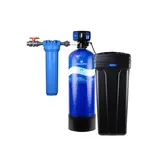
Aquasana SimplySoft 60,000 Grain Softener with LM Pre-Filter
Aquasana SimplySoft 60,000 Grain Softener with LM Pre-Filter
A salt-based softener that removes hardness at every tap. Size it for your household and hardness, and plan for salt, a brine tank and a drain.
Compare sizing, treatment options and ongoing costs in our best water softeners and conditioners guide.
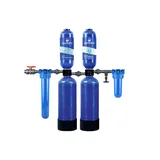
Aquasana Rhino Whole House Salt-Free Water Conditioner
Aquasana Rhino Whole House Salt-Free Water Conditioner
Salt-free scale control with no brine tank or drain line. It reduces scale buildup but does not remove hardness, so compare it with a softener if you want truly soft water.
Compare sizing, treatment options and ongoing costs in our best water softeners and conditioners guide.
See more in our salt-free conditioners guide and water softener vs water filter. Thinking about RO? Read RO vs water softener.
Sizing a softener
- Find daily grains: people in the home × about 75 gallons × hardness in grains per gallon.
- Add iron: on a well, many sizing guides add a few grains for each ppm of iron.
- Aim for about a week between regenerations to balance salt use and resin life.
Work through it with our water softener sizing guide, then see how to soften hard water and the softener installation guide.
Bottom line
Measure your hardness, then choose the result you want. A salt-based softener removes hardness; a salt-free conditioner only reduces scale. Compare full rankings in our best water softeners guide and see the other common water contaminants.