Best Water Filters for Renters: No-Installation Solutions
Renting doesn't mean you have to settle for poor water quality. This comprehensive guide covers the best portable, countertop, and faucet-mount filters that require zero installation, won't damage property, and can move with you. Compare costs, performance, and find the perfect solution for your apartment or temporary housing.
Why Renters Need Special Water Filters
Traditional under-sink filters and whole-house systems require permanent installation that's often prohibited by lease agreements. Renter-friendly filters offer excellent water quality without drilling, plumbing modifications, or landlord approval. Over 44 million American households rent their homes, and many face water quality challenges from aging building infrastructure.
Our Top Picks for Renters
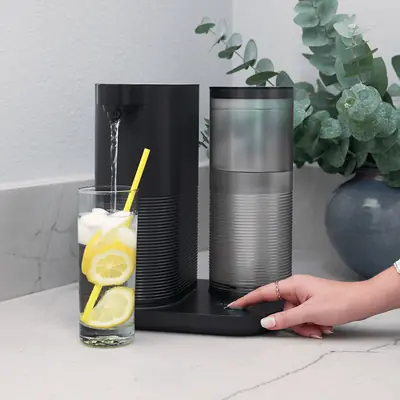
Aquasana Clean Water Machine
Premium countertop water purifier using Claryum technology. Removes 77+ contaminants including lead, mercury, PFAS, and pesticides. No installation required — simply plug in, fill the reservoir, and enjoy clean water in minutes. NSF certified and backed by Aquasana's industry-leading filtration technology.
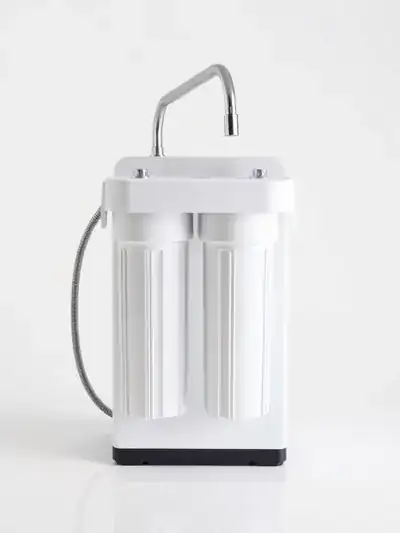
Aquasana AQ-5200
If your landlord approves a simple under-sink installation, the AQ-5200 removes 99% of lead, 96% of chlorine, and 73 other contaminants. Claryum filtration technology with NSF 42, 53, 401, and P473 certifications. Compact design fits under most kitchen sinks without taking counter space.
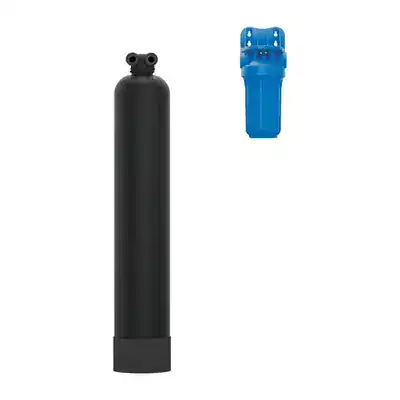
SpringWell CF1 Whole House System
While not renter-friendly for installation, the SpringWell CF1 is the gold standard for when you eventually purchase a home. It provides whole-house filtration removing chlorine, chloramine, PFAS, and VOCs from every tap. If you're a renter planning to buy soon, this is worth bookmarking for your future home.
Types of No-Installation Water Filters
1. Water Pitcher Filters
Advantages
- • Cheapest option ($20-$60)
- • Zero setup required
- • Fits in refrigerator
- • Perfect for small spaces
- • Take with you when you move
Limitations
- • Limited contaminant removal
- • Small capacity (6-10 cups)
- • Slow filtration (5-10 min)
- • Can't remove heavy metals well
- • Frequent filter replacement
2. Faucet-Mount Filters
Advantages
- • Installs in seconds (no tools)
- • Direct from tap (no refilling)
- • Switch between filtered/unfiltered
- • Affordable ($30-$100)
- • Good flow rate
Limitations
- • Doesn't fit all faucet types
- • Moderate contaminant removal
- • Visible on faucet (aesthetics)
- • Slower than tap water
- • Filter changes every 2-3 months
3. Countertop Filters
Advantages
- • No installation (sits on counter)
- • Excellent filtration (RO available)
- • Large capacity (tanks available)
- • Fast filtration rate
- • Removes 95-99% contaminants
- • Take with you when moving
Limitations
- • Higher cost ($150-$600)
- • Takes counter space
- • Needs water source nearby
- • Some models require electricity
4. Portable/Travel Filters
Advantages
- • Ultra-portable (bottles, straws)
- • Perfect for travel
- • No power needed
- • Very affordable ($15-$80)
- • Works anywhere
Limitations
- • Very small capacity (16-32 oz)
- • Limited filtration capability
- • Not ideal for home use
- • Filters clog quickly
Cost Comparison: First Year & Beyond
Understanding total cost of ownership is crucial for renters who may move frequently. Here's a complete breakdown of upfront costs, filter replacements, and 1-year, 3-year totals.
| Filter Type | Initial Cost | Filter/Year | Year 1 Total | Year 3 Total |
|---|---|---|---|---|
| Water Pitcher | $25-40 | $60-100 | $85-140 | $205-340 |
| Faucet Mount | $30-100 | $40-80 | $70-180 | $150-340 |
| Countertop (Carbon) | $150-300 | $60-120 | $210-420 | $330-660 |
| Countertop RO | $300-600 | $80-150 | $380-750 | $540-1050 |
| Portable Bottle | $20-80 | $40-100 | $60-180 | $140-380 |
💰 Best Budget Option
Water Pitcher: Lowest year-1 cost at $85-140. Ideal for students and tight budgets.
⚖️ Best Value (Long-Term)
Countertop Carbon: Higher upfront but comparable 3-year cost with superior filtration.
🏆 Best Performance
Countertop RO: Highest cost but removes 95-99% of contaminants. Worth it for health.
Hidden Costs to Consider
- • Moving costs: Pitcher and portable filters are lightest; countertop RO systems can weigh 15-30 lbs
- • Storage space: Countertop filters take up valuable real estate in small apartments
- • Water waste: RO systems waste 2-4 gallons per gallon filtered (not ideal for water-billed apartments)
- • Filter availability: Some brands require subscription or special orders
Common Contaminants in Rental Properties
Older rental properties, especially those built before 1986, often have water quality issues due to aging infrastructure. Here's what you might be drinking and which filter type removes it. Understanding your building's plumbing age is the first step to choosing the right filtration system.
Lead (from old pipes and fixtures)
Neurotoxic metal especially dangerous for children. Pre-1986 buildings likely have lead solder. The EPA action level is 15 ppb, but no level of lead is considered safe. Learn more about lead contamination.
Chlorine & Chloramines (municipal treatment)
Disinfectants that affect taste and smell. May form harmful byproducts like THMs. Chloramine is harder to remove than chlorine and requires catalytic carbon. See our chlorine removal guide.
PFAS "Forever Chemicals"
Industrial contaminants linked to cancer, thyroid disease, and immune system damage. The new EPA standard is just 4 parts per trillion. Found in water supplies serving over 110 million Americans. Read about PFAS contamination.
Heavy Metals (arsenic, chromium-6, mercury)
Toxic metals from natural deposits or industrial pollution. Chromium-6 affects over 200 million Americans at levels above EWG health guidelines. Check heavy metals guide.
Microplastics and Sediment
Microscopic plastic particles found in 94% of US tap water samples. Aging pipes in rental buildings may also release rust, sediment, and pipe scale. Carbon block and RO filters are most effective at capturing particles down to 0.5 microns.
💡 Testing Recommendation
Before choosing a filter, test your water to identify specific contaminants. Home test kits cost $30-50 and give results in minutes. Laboratory tests ($100-200) provide comprehensive analysis. This ensures you select the right filter technology and don't waste money on unnecessary features.
Water Quality Risks by Building Age
The age of your rental building significantly impacts water quality. Older buildings have more infrastructure risks that affect what comes out of your tap. Understanding these risks helps you choose the appropriate level of filtration for your specific situation.
| Building Era | Primary Risks | Recommended Filter |
|---|---|---|
| Pre-1950 | Lead pipes, lead solder, galvanized steel corrosion, high metal levels | Countertop RO (essential) |
| 1950-1986 | Lead solder, copper pipe corrosion, possible asbestos cement pipes | Countertop carbon or RO |
| 1986-2000 | Copper leaching, chlorine byproducts, aging fixtures | Faucet mount or countertop |
| 2000+ | Chlorine taste, PFAS (from water supply), microplastics | Pitcher or faucet mount |
Note: The 1986 Safe Drinking Water Act amendments banned lead pipes and limited lead in solder to 0.2%. Buildings constructed before this date have elevated lead risk. The 2014 Reduction of Lead in Drinking Water Act further tightened standards.
Setup Guide: No Tools Required
One of the biggest advantages of renter-friendly filters is the zero-installation setup. Every option below can be set up in under 5 minutes with no tools, no drilling, and no plumbing modifications whatsoever.
Water Pitcher (30 seconds)
- Remove pitcher from box
- Rinse pitcher and filter with water
- Insert filter into reservoir
- Fill with tap water and wait 10 minutes
- Discard first batch (primes filter)
- Refill and enjoy filtered water
Faucet Mount (2 minutes)
- Remove faucet aerator (if present)
- Select correct adapter for your faucet type
- Attach adapter to faucet
- Twist filter onto adapter until secure
- Run water for 5 minutes to flush system
- Switch to filtered mode and use
Note: Won't fit pull-out spray faucets or non-standard shapes. Check compatibility before buying.
Countertop Filter (5 minutes)
- Place unit on counter near outlet (for electric models)
- Fill reservoir with tap water OR connect diverter to faucet
- Plug in unit (if applicable)
- Run first batch through and discard (priming)
- Fill storage tank or dispense as needed
Pro tip: Place on a tray to catch any drips and protect countertop.
✓ Landlord-Friendly Checklist
- ✓ No drilling into walls or cabinets
- ✓ No permanent plumbing modifications
- ✓ No damage to fixtures (adapters are removable)
- ✓ Takes seconds to uninstall when moving
- ✓ No risk of water damage or leaks
Apartment-Specific Water Filtration Tips
High-Rise Buildings
High-rise apartments often use rooftop water tanks that can harbor bacteria, sediment, and biofilm. Water sits in these tanks for hours or days, increasing contamination risk. A countertop RO system or carbon filter is highly recommended for high-rise residents.
Additionally, the long pipe runs from rooftop to lower floors increase exposure to pipe materials, potentially leaching copper, lead, or zinc into your water supply.
Studio & Small Spaces
For studio apartments with limited counter space, a refrigerator pitcher or faucet-mount filter maximizes space efficiency. If counter space allows, compact countertop units like the Aquasana Clean Water Machine have a small footprint while delivering superior filtration.
Consider wall-mounted faucet filters or slim pitcher designs specifically engineered for small refrigerator door shelves.
Shared Housing & Roommates
For shared apartments, a countertop or faucet filter serves multiple people more efficiently than individual pitchers. Split the cost with roommates — a $200 countertop filter shared 3 ways is just $67 each, cheaper than individual pitchers over a year.
Choose a system with high daily capacity (1+ gallons) to handle multiple users without constant refilling.
Temporary Housing & Sublets
For short-term stays (3-6 months), a water pitcher is the most cost-effective choice. The low upfront cost and zero setup make it ideal for temporary situations. Avoid investing in expensive countertop systems unless you plan to move the filter to your next residence.
Portable bottle filters are also excellent for temporary housing, especially when paired with a basic pitcher for home use.
Quick Decision Guide
Choose a Water Pitcher if you:
- ✓ Are a student or on a tight budget ($100-200/year)
- ✓ Live in a dorm or studio apartment
- ✓ Primarily want to improve taste and remove chlorine
- ✓ Use less than 1 gallon of filtered water per day
- ✓ Have municipal water with no major contaminants
Choose a Faucet Filter if you:
- ✓ Want on-demand filtered water (no refilling)
- ✓ Have a standard threaded faucet (check compatibility)
- ✓ Need moderate contaminant removal (chlorine, some lead)
- ✓ Prefer not to use counter space
- ✓ Budget is under $200 for year 1
Choose a Countertop Filter if you:
- ✓ Have serious contaminant concerns (lead, PFAS, arsenic, chromium-6)
- ✓ Want the best possible filtration without installation
- ✓ Can afford $300-600 upfront investment
- ✓ Have counter space available
- ✓ Plan to stay in rental for 1+ years (better ROI)
- ✓ Have a family or use 2+ gallons filtered water daily
Still Unsure?
Start by testing your water to identify specific contaminants. This will help you choose the right filter technology and avoid overspending on features you don't need.
For most renters with typical city water, we recommend starting with the Aquasana Clean Water Machine countertop filter for the best balance of performance, portability, and value. Upgrade to RO if testing reveals heavy metals or PFAS.
Explore Our Top Picks
Best Countertop Filters
Top-rated countertop systems for renters
Best Water Pitchers
Budget-friendly pitcher filter reviews
Best Faucet Filters
Top faucet-mount filter systems
Best RO Systems
Complete reverse osmosis guide
Best Portable Filters
Travel and on-the-go filtration
Apartment Filter Guide
Complete apartment filtration solutions
Frequently Asked Questions
Related Articles
Best Water Filter Pitchers
The simplest filter option for any apartment
Best Faucet Filters
Easy faucet-mount filters, no tools needed
See the best Countertop Filters
No-plumbing countertop filtration systems
Our picks for Water Dispensers
Countertop dispensers for apartments
Best Shower Filters
Renter-friendly shower filtration
Best Budget Water Filters
Affordable filters under $50
Understanding Water Quality Science
Water quality is determined by a complex interplay of dissolved minerals, organic compounds, and potential contaminants that vary significantly by geographic region and water source. Municipal water treatment facilities use multi-stage processes including coagulation, sedimentation, sand filtration, and chemical disinfection to meet EPA Safe Drinking Water Act standards. However, these treatment processes can introduce disinfection byproducts such as trihalomethanes and haloacetic acids, which form when chlorine reacts with naturally occurring organic matter in the source water.
Private well water faces different challenges, as it bypasses municipal treatment entirely and may contain naturally occurring contaminants like arsenic, radon, and heavy metals that leach from surrounding geological formations. The Environmental Protection Agency recommends annual testing for coliform bacteria, nitrates, total dissolved solids, and pH levels for all private wells. Additional testing for volatile organic compounds, pesticides, and heavy metals should be conducted if you live near agricultural areas, industrial sites, or old mining operations. Understanding your specific water chemistry is the critical first step in selecting the most effective filtration system for your household needs.
Total dissolved solids (TDS) measurements provide a general indicator of water purity but should not be the sole basis for filtration decisions. Water with high TDS from beneficial minerals like calcium and magnesium may actually be healthier than ultra-purified water. The World Health Organization has noted that demineralized water may have adverse health effects due to the absence of essential minerals. This is why many advanced filtration systems, particularly reverse osmosis units, now include remineralization stages that add back beneficial minerals after removing contaminants. The ideal approach balances contaminant removal with mineral retention, targeting specific harmful substances identified through comprehensive water testing while preserving the natural mineral content that contributes to both taste and health benefits.
Filtration Technology Comparison
Modern water filtration leverages several distinct technologies, each with unique strengths for addressing specific water quality challenges. Activated carbon filtration, the most common residential method, uses adsorption to capture chlorine, volatile organic compounds, and taste-affecting chemicals. Granular activated carbon (GAC) filters provide good flow rates but may allow channeling, while carbon block filters compress carbon particles for more consistent contact time and finer filtration down to 0.5 microns. Catalytic carbon represents the latest advancement, specifically engineered to break down chloramines through a catalytic reaction rather than simple adsorption.
Reverse osmosis systems force water through a semipermeable membrane with pore sizes as small as 0.0001 microns, effectively removing dissolved solids, heavy metals, and most microorganisms. Modern RO systems achieve 95-99 percent rejection rates for contaminants like lead, arsenic, fluoride, and PFAS compounds. The primary considerations for RO systems include water waste ratios (typically 3:1 to 4:1 for standard systems, improved to 1:1 in premium tankless models), storage tank requirements, and the need for pre-filtration to protect the delicate membrane from sediment and chlorine damage.
Ion exchange technology, used in both water softeners and specialized contaminant removal systems, swaps problematic ions in the water with benign alternatives. Water softeners exchange calcium and magnesium ions for sodium ions, preventing scale buildup in plumbing and appliances. Specialized ion exchange resins can target specific contaminants like lead, nitrates, or perchlorate. Ultraviolet purification provides chemical-free disinfection by disrupting the DNA of bacteria, viruses, and protozoa at wavelengths around 254 nanometers. UV systems are particularly valuable for well water and as a final treatment stage in multi-barrier systems, though they do not remove chemical contaminants or improve taste.