Best Under Sink Water Filters of November 2026
High-capacity under-counter filters from $89. Remove lead, chlorine, PFAS, and chemicals for pure drinking water.
Find the best under sink filter for your kitchen. High-capacity, under-counter systems starting from $89 for purified drinking and cooking water. Remove lead, chlorine, PFAS, and chemicals. Compare top brands in our Aquasana review. For more comprehensive filtration, see our best reverse osmosis system. Comparing all filter types? Check our complete home water filters guide. For renters, check our best countertop filter guide. Want filtered water at every tap? See our whole house filter guide, or start smaller with faucet filters. Fighting scale too? Pair it with one of the best water softeners.
Quick Comparison: Top Under-Sink Filters
Compare the top five side by side
| Ranking | Filter Type | Price | Capacity | Warranty | |
|---|---|---|---|---|---|
| Claryum carbon | Check price | See listing | 10 years | ||
| Sediment + GAC + carbon block | $97 | 10,000 gal / 12 months | 1 year | ||
| Carbon | $43.99 | 12 months | See listing | ||
| Carbon inline | $91.88 | See listing | 1 year cartridge | ||
| 5-stage reverse osmosis | $179.99 | 50 GPD | See listing |
Prices checked on Nov 19, 2026. Amazon prices change often, so confirm the price on the listing.
Detailed Reviews & Analysis
What each filter does well, and where it falls short
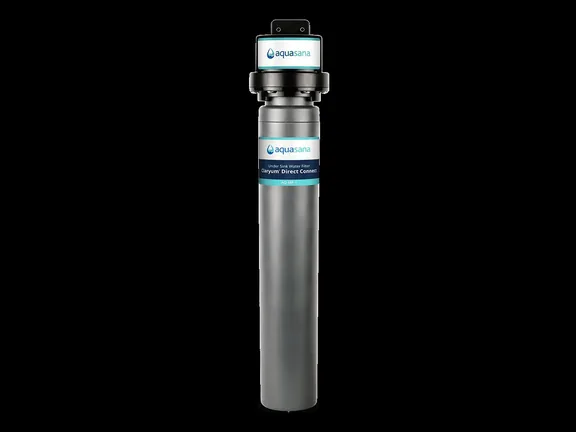
Claryum Direct Connect (AQ-MF-1)
Aquasana
Best For:
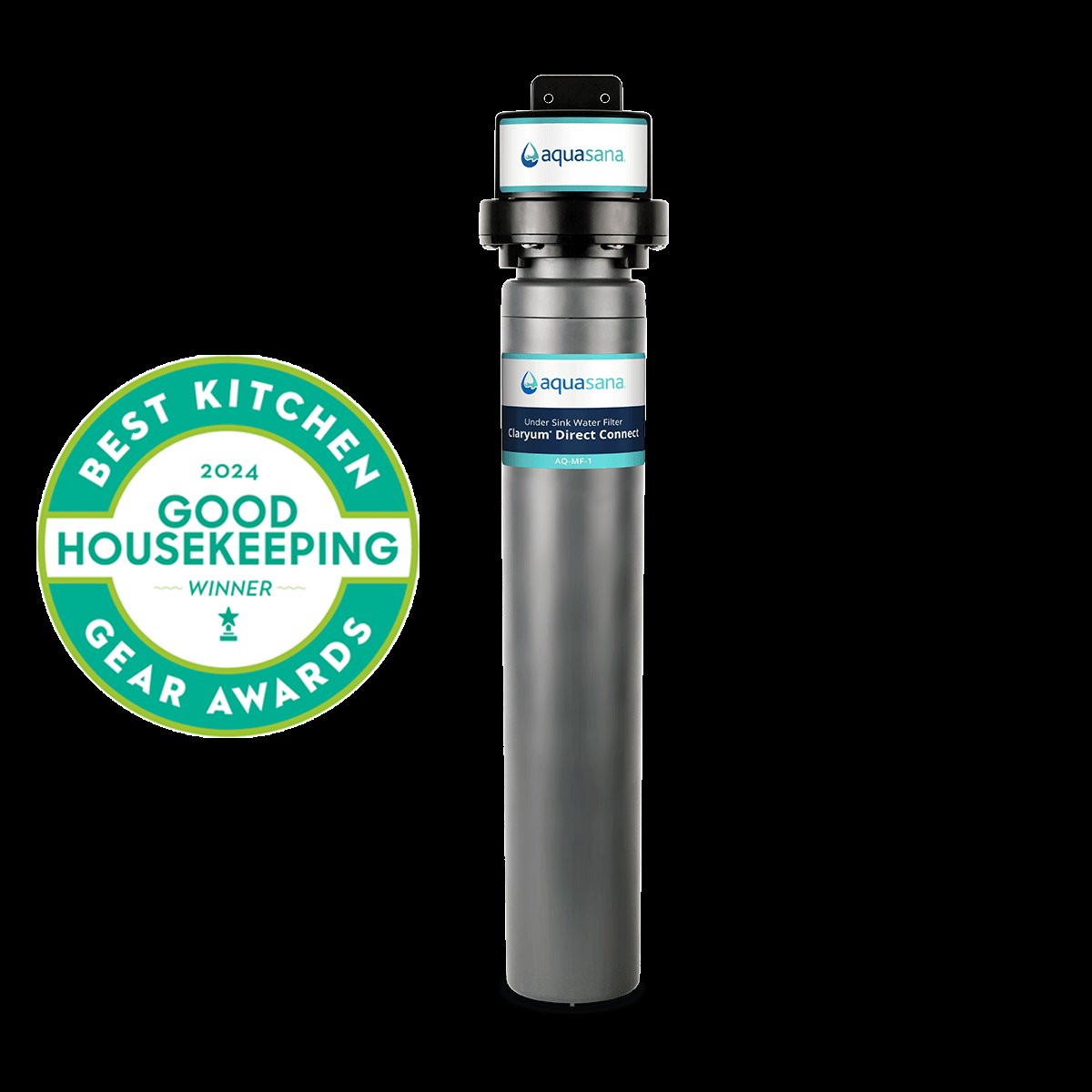
Homeowners wanting the simplest install: it connects to your existing faucet line with no extra faucet or drilling.
Aquasana
Claryum Direct Connect (AQ-MF-1)
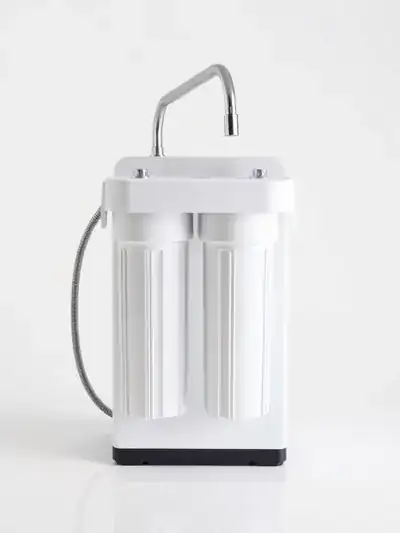
Our top under-sink pick. A single Claryum cartridge that connects straight to your existing kitchen faucet line, so there is no second faucet to mount. It keeps healthy minerals because it is carbon filtration, not reverse osmosis.
Claryum carbon
See listing
See listing
Pros
- Uses your existing faucet
- No drilling
- Single cartridge swaps
Cons
- Not reverse osmosis
- Does not reduce TDS
- Check fit under your sink
Price
US31 3-Stage Under Sink Filter
iSpring
Best For:
Budget shoppers who want a dedicated filtered faucet and cheap standard size cartridges.
iSpring
US31 3-Stage Under Sink Filter
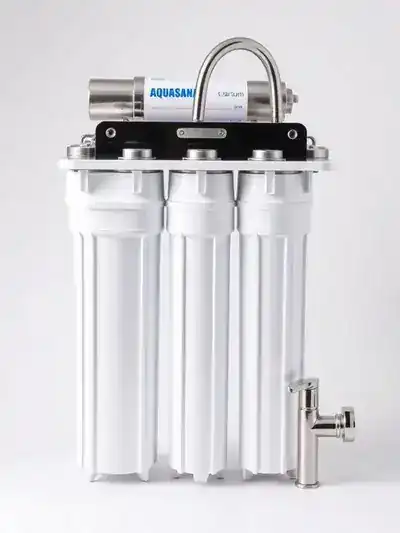
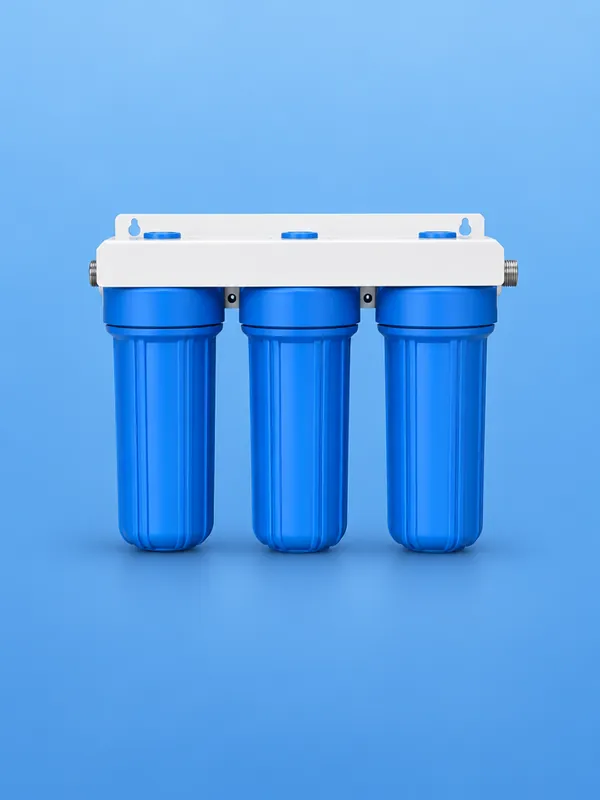
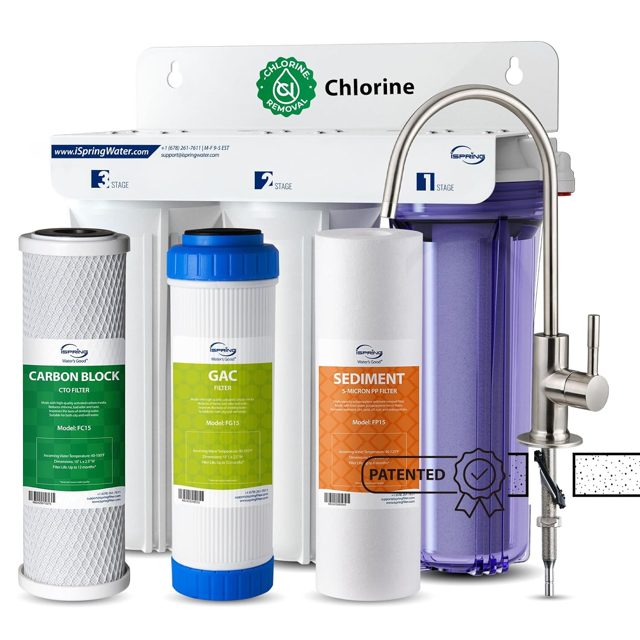
Sediment, GAC and carbon block cartridges in standard 2.5 x 10 inch housings, with a brushed nickel faucet and a clear first housing so you can see when it needs changing. iSpring rates it for 10,000 gallons or about 12 months.
Sediment + GAC + carbon block
See listing
10,000 gal / 12 months
Pros
- Low price
- Standard 10" cartridges
- Clear first stage housing
Cons
- Needs a faucet hole
- Not reverse osmosis
- Three cartridges to change
Price
10UA Under Sink Water Filter
Waterdrop
Best For:
Renters and small kitchens that want a compact filter on the cold line with quick twist cartridge swaps.
Waterdrop
10UA Under Sink Water Filter
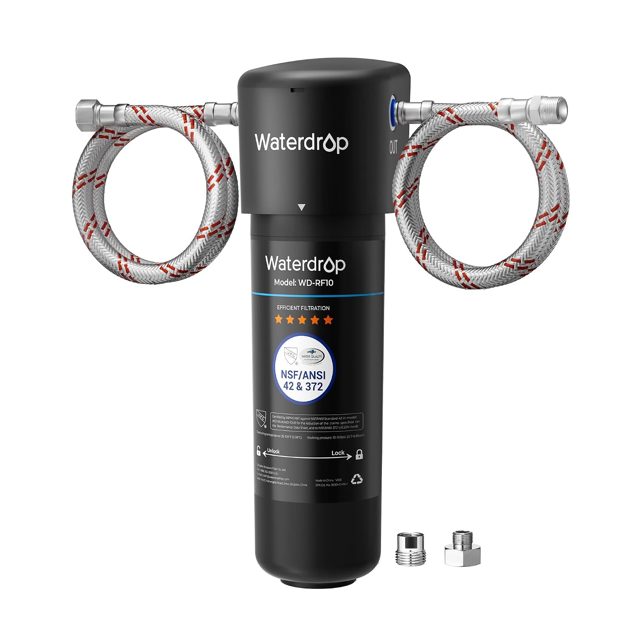
A compact single cartridge that connects to the cold water line with push fittings and a twist and lock cartridge. Waterdrop lists NSF/ANSI 42 certification and about 12 months per cartridge.
Carbon
See listing
12 months
Pros
- Very low price
- Compact
- Twist and lock swaps
Cons
- Cold water only
- Single stage
- Not reverse osmosis
Price
10K Direct Connect Under Sink Filter
Woder
Best For:
Anyone wanting an inline filter on the main faucet line, like our top pick, at a lower price.
Woder
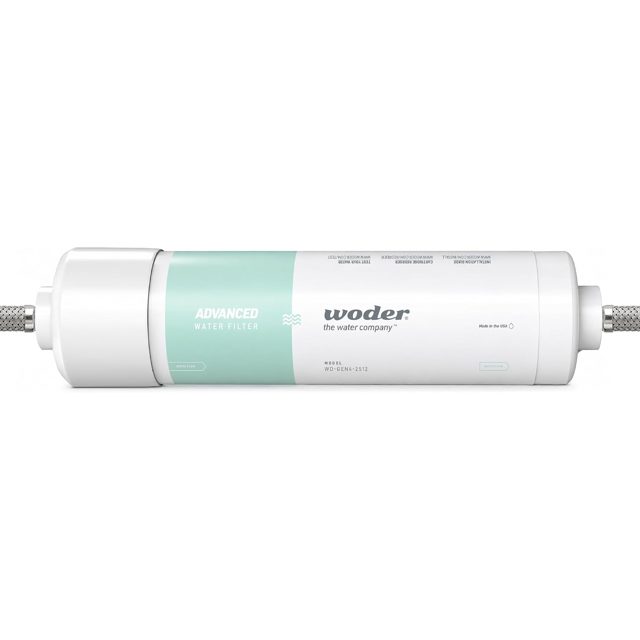
10K Direct Connect Under Sink Filter
A slim inline cartridge that connects to the cold supply valve and faucet stem with no drilling. Woder lists WQA certification to NSF/ANSI 42 and 372, with other claims from independent lab tests.
Carbon inline
See listing
See listing
Pros
- No drilling
- Uses your existing faucet
- Slim inline design
Cons
- Single stage
- Not reverse osmosis
- Whole unit is the cartridge
Price
ROES-50 5-Stage Reverse Osmosis
APEC
Best For:
Homes that need reverse osmosis under the sink for dissolved solids, fluoride or arsenic.
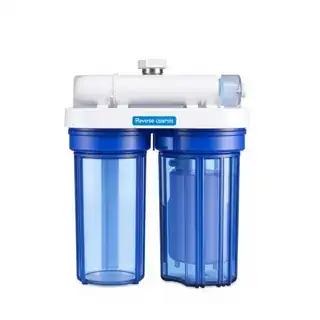
A 50 gallon per day, five stage reverse osmosis system with a tank, brushed nickel faucet and color coded quick connect tubing. APEC suggests filter changes every 6 to 24 months.
5-stage reverse osmosis
50 GPD
50 GPD
Pros
- Reverse osmosis treatment
- Tank and faucet included
- Color coded tubing
Cons
- Sends some water to drain
- Tank takes cabinet space
- Removes minerals too
Price
Complete Cost Analysis
A transparent look at upfront price, annual upkeep, and 5-year total cost for the top under sink filters
Initial Investment
Note: Professional installation may add $100-$500 depending on system complexity.
Annual Operating Costs
Filter Replacements
Annual cartridge costs
Maintenance
Cleaning and upkeep
Water Usage
Minimal to none
Compare to $600+ per year for bottled water
5-Year Total Cost of Ownership
$NaN
$NaN + $750 (5yr)
$847
$97 + $750 (5yr)
$793.99
$43.99 + $750 (5yr)
- Start drinking clean water today.

- Better Health
- Enhanced Focus
- Healthier Skin
- Better Taste
- Better Coffee & Tea
- Less Plastic Waste
- Longer Appliance Life
Recommended Multi-Stage Filtration
Sediment Filter
Removes rust and particles
Carbon Block
Reduces chlorine and chemicals
Final Carbon
Polishes for superior taste
Find the Right Filter for Your Water
Test your tap water first so you know exactly which contaminants your under-sink filter needs to remove.

Test Your Water
Not sure what's in your tap water? Get a comprehensive water testing kit to identify contaminants.
Take the Filter Finder Quiz
Answer a few questions and get personalized filter recommendations for your needs.
How We Research Under-Sink Filters
Certification listings, manufacturer data sheets, published test reports and owner feedback behind every pick.
How We Research Our Picks
Independent research from public certification records and manufacturer data
Certification check
We look up each system's claims in the public NSF, IAPMO and WQA certification listings and note exactly which contaminants are covered.
Performance data sheets
We read the manufacturer's performance data sheet for reduction percentages, rated capacity and flow, rather than relying on marketing copy.
Install and upkeep
We compare space, plumbing and drain needs, filter change intervals and how easy replacement cartridges are to find.
Cost of ownership
We add the purchase price to several years of replacement filters so cheap-upfront systems with expensive cartridges stand out.
Contaminants we compare claims for
What matters most in our ranking
- • Certified reduction claims for the contaminants most homes face
- • Flow and capacity that fit the household
- • Installation and maintenance effort
- • Long-term cost and the manufacturer's warranty terms
Always confirm a product's current certification listing before buying, and test your own water first so you pay only for the treatment you need.
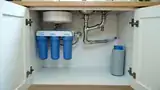
Under-Sink Filter Buying Guide
Filter types, capacity, flow rate, and certifications explained without the jargon.
Under Sink Water Filter Guide
Get purified water directly from your kitchen tap with under sink filtration systems.
5-Year Cost Analysis
Total cost of ownership vs RO, pitchers, and countertop systems — plus hidden costs and money-saving tips.
Total Cost of Ownership Comparison
| System Type | Initial Cost | Annual Filters | 5-Year Total |
|---|---|---|---|
| Under-Sink Filter | $150-300 | $60-100 | $450-800 |
| RO System | $250-600 | $80-150 | $650-1,350 |
| Water Pitcher | $25-50 | $120-180 | $625-950 |
| Countertop Filter | $100-250 | $70-120 | $450-850 |
Hidden Costs to Consider
- •Installation: DIY free, professional $100-200
- •Faucet hole drilling: May require $50-100 if not DIY
- •Water pressure impact: May need pressure boost in some homes
- •Space under sink: May need to relocate garbage disposal
- •TDS meter: $15-30 for water quality monitoring
Money-Saving Tips
- •Buy replacement filters in bulk (save 15-20%)
- •DIY install saves $100-200 immediately
- •Monitor filter life with TDS testing to maximize usage
- •Compare to pitcher costs: under-sink saves long-term
- •Choose systems with widely available generic filters
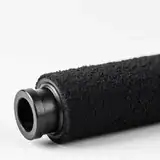
Maintenance Schedule & Troubleshooting
When to swap each filter stage, plus quick fixes for low pressure, leaks, and cloudy water.
Regular Maintenance Tasks
- • Replace sediment pre-filter
- • Check for leaks around connections
- • Test water quality with TDS meter
- • Replace main carbon filters
- • Sanitize system with vinegar rinse
- • Inspect tubing for wear or cracks
- • Check faucet for mineral buildup
- • Clean dedicated faucet aerator
- • Replace O-rings if dripping
- • Reset filter change indicator
Common Issues & Solutions
Replace clogged filters. If new, check for kinked tubing. Consider pressure boost pump if under 40 PSI.
Filter exhausted early due to heavy chlorine or sediment. Replace filters and consider upgrading to higher capacity.
Hand-tighten fittings, replace worn O-rings. Apply Teflon tape to threaded connections. See our installation guide.
Air bubbles normal after filter change. Flush 5 gallons. If persistent, check for bacterial growth - sanitize system.
Measure cabinet height before buying. Compact models available. May need to relocate garbage disposal or use countertop alternative.

Under-Sink Filters by Region & Water Quality
Best picks for lead cities, hard water, well water, and municipal chlorine — matched to your local supply.
Best for Lead Removal
Critical for older homes in Chicago, Philadelphia, and Boston with lead service lines.
- ✓NSF 53 certified carbon block required
- ✓Multi-stage systems offer redundancy
- ✓Test water quarterly with certified kits
Best for Hard Water Cities
Phoenix, Las Vegas, and Southwest cities with high mineral content.
- ✓RO systems best for extreme hardness
- ✓Standard carbon filters won't soften
- ✓Consider whole-house softener + under-sink
Best for Well Water
Rural areas need robust filtration for iron, arsenic, and bacteria.
- ✓Multi-stage with sediment pre-filter essential
- ✓RO systems recommended for arsenic
- ✓Annual water testing mandatory
Best for Municipal Chlorine
Most US cities add chlorine - simple carbon filters work great for taste improvement.
- ✓Basic carbon block sufficient for chlorine removal
- ✓More affordable than RO systems
- ✓Compare to faucet mount for rental homes
You've got under sink filter questions, we have answers.
What's the difference between under-sink and countertop filters?
Under-sink filters hide beneath cabinet, connect to cold water line, require installation but offer higher capacity (500-800 gal vs 200-300 gal). Countertop filters sit on counter, attach to faucet, zero installation but take counter space. Under-sink better for permanent homes, countertop for renters. See our countertop filter guide for comparisons.
Do under-sink filters remove lead?
Most quality under-sink filters are NSF 53 certified for lead removal (95%+ reduction). Look for models specifically certified for lead if this is a concern. Carbon block filters more effective than granular for lead. RO systems remove 98-99% of lead. Learn more about how to remove lead from water and see our lead removal filter guide.
How hard is under-sink filter installation?
Moderate DIY difficulty. Requires: drilling hole for faucet, connecting to cold water line with tee valve, basic plumbing tools. Takes 1-2 hours for first-timers. Many opt for professional install ($100-150) for warranty and leak protection. Renters: get landlord approval first. For easier options, consider faucet filters.
How often do under-sink filters need replacing?
Pre-filters: 6 months. Main filters: 6-12 months or 500-800 gallons. Actual lifespan depends on water quality and usage. Hard water and heavy sediment reduce filter life. Most systems have indicator lights. Budget $50-100 annually for replacement filters.
Can I install under-sink filter myself?
Yes, most systems designed for DIY. Need: adjustable wrench, drill (for faucet hole), Teflon tape, 1-2 hours. Follow included instructions carefully. Turn off water first. Test for leaks after installation. If unsure, hire plumber ($100-200) for peace of mind and warranty compliance.
Related Resources
Top Under-Sink Reviews
Filter Comparisons
Related Articles
Our picks for Water Filters for Apartments
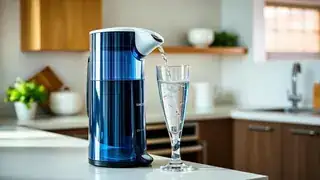
Buying guide: Water Filter Pitchers
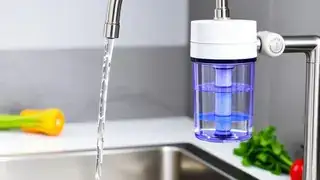
See the best Faucet Filters
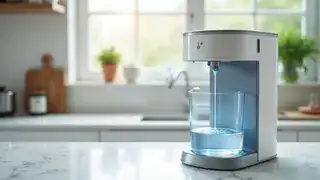
Our picks for Countertop Filters
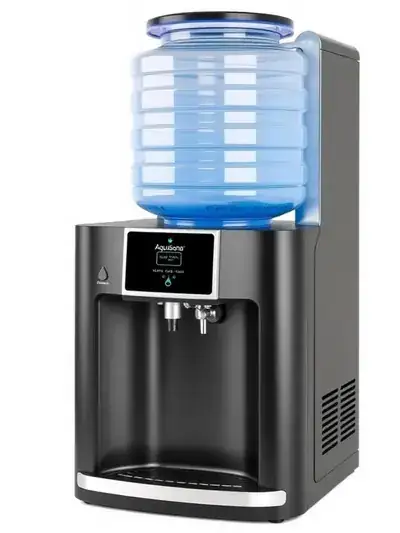
Best Water Dispensers
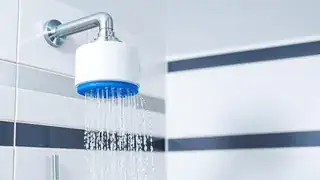
Our picks for Shower Filters
Side-by-side: Brita vs PUR Pitchers
See the best Budget Water Filters
Lead Removal Filters

Filtering for PFAS Removal Filters
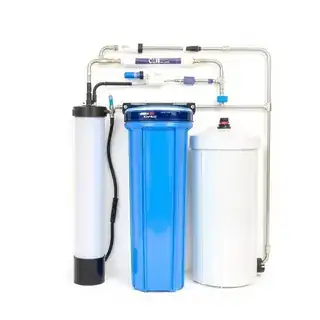
Read: Water Filter Cost Comparison
More on Water Filter Buying Guide
Water Testing Kits
Deep dive — Local Water Quality