What turbidity is
Turbidity is how cloudy water looks because of tiny particles floating in it, such as clay, silt, algae or rust. It's measured in NTU; clear tap water is usually well under 1 NTU.
For loose grit and particles you can see, read sediment in tap water.
Common causes of cloudy water
| What you see | Likely cause | What to do |
|---|---|---|
| Milky white, clears from the bottom up | Air bubbles | Harmless; no action needed |
| Brown or orange after a main break | Rust and sediment stirred up in city pipes | Run cold water; call utility if it persists |
| Cloudy after heavy rain | Surface water or silt entering a well | Test for bacteria; inspect the well |
| Gritty sand in fixtures | Worn well screen or pump set too low | Spin-down filter; call a well pro |
| Cloudy hot water only | Water heater sediment or anode | Flush the water heater |
| White flakes or film | Hardness minerals | See hard water solutions |
White flakes and spots are covered in hard water solutions.
Safety and the EPA limits
- Public water: filtered systems must stay at or below 0.3 NTU in at least 95% of monthly samples and never exceed 1 NTU. See EPA's surface water treatment rules.
- Why it matters: particles can shield bacteria, viruses and parasites from disinfection.
- Wells: cloudiness after rain can mean surface water is getting in. Test for bacteria.
A filter doesn't make unsafe water safe. If cloudy well water tests positive for bacteria, fix the well and disinfect before relying on filtration.
Filters to compare for cloudy water
Match the filter to what you're treating: every tap, or just drinking water.
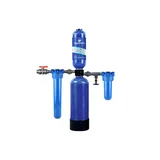
Aquasana Rhino Whole House Water Filter
Aquasana Rhino Whole House Water Filter
Whole-house filtration with a sediment pre-filter ahead of the carbon, for city water that's occasionally cloudy or gritty. It won't fix a well that pulls sand; add a spin-down filter first.
Compare sizing, treatment options and ongoing costs in our best whole house water filters guide.
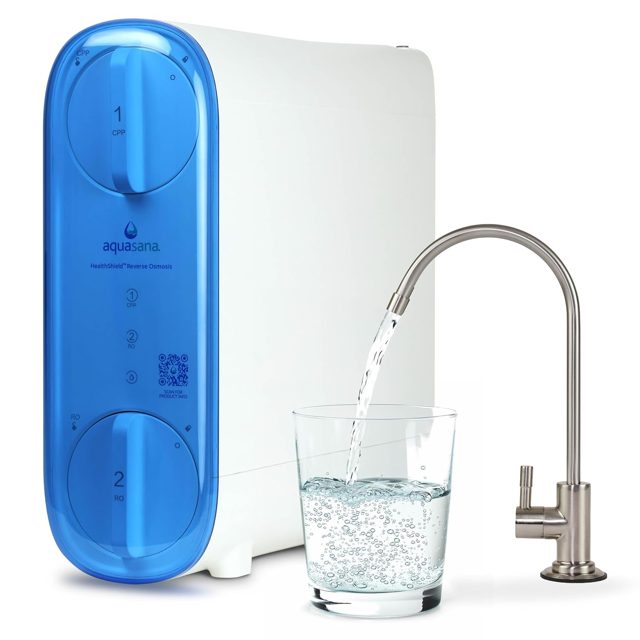
Aquasana Tankless Reverse Osmosis System (800 GPD)
Aquasana Tankless Reverse Osmosis System (800 GPD)
Aquasana's performance data sheet for this tankless RO system (AQ-HSRO800) doesn't list turbidity by name. It lists 99.61% reduction of fine particles (0.5 to 1 micron) under NSF/ANSI 42 and 99.995% cyst reduction under NSF/ANSI 53, plus lead and fluoride reduction, for drinking and cooking water.
Compare sizing, treatment options and ongoing costs in our best reverse osmosis systems guide.
Compare staged sediment options in our whole-house sediment filters guide, and learn how they pair with carbon in carbon vs sediment filters.
Bottom line
Check the glass first: air clears, particles don't. For lasting cloudiness, add a sediment filter, and test a cloudy well for bacteria. Compare full rankings in our best whole-house water filters guide and see the other common water contaminants.