How medicines get into water
- Wastewater: the body passes part of every medicine, and treatment plants don't remove all of it before releasing water into rivers.
- Downstream utilities that draw from those rivers can carry traces through to the tap.
- Septic systems can carry traces into nearby wells.
- Flushed pills and farm animal drugs add more.
Keeping drugs out of drains helps: use a pharmacy or police take-back program instead of flushing.
What the risk is
- No federal limit: EPA has not set drinking water limits for pharmaceuticals.
- WHO view: the World Health Organization's pharmaceuticals in drinking-water report found trace levels very unlikely to pose an appreciable risk, while calling for more research.
- Open questions: long-term exposure to mixtures, and effects on pregnant people and young children, are still being studied.
- Wildlife: hormones in water are a clearer concern for fish.
The NSF/ANSI 401 standard
NSF/ANSI 401 tests filters against 15 emerging compounds, including common medicines, BPA, the insect repellent DEET and two flame retardants. Here are the medicine results from the Aquasana data sheets below.
| Compound | Type | Claryum Direct Connect | Tankless RO |
|---|---|---|---|
| Ibuprofen | Pain reliever | 95.4% | 94.80% |
| Naproxen | Pain reliever | 96.4% | 95.59% |
| Carbamazepine | Anti-seizure drug | 98.6% | 98.46% |
| Phenytoin | Anti-seizure drug | 95.6% | 95.49% |
| Atenolol | Blood pressure drug | 94.2% | 94.74% |
| Trimethoprim | Antibiotic | 96.7% | 96.15% |
| Estrone | Hormone | 96.5% | 95.63% |
| Meprobamate | Anti-anxiety drug | 94.7% | 94.64% |
Results above come from Aquasana's own performance data sheets for the Claryum Direct Connect (AQ-MF-1) and Tankless RO (AQ-HSRO800). They are not our own lab results.
Filters to compare for pharmaceuticals
Both systems below are tested to NSF/ANSI 401. They treat drinking and cooking water at one tap.
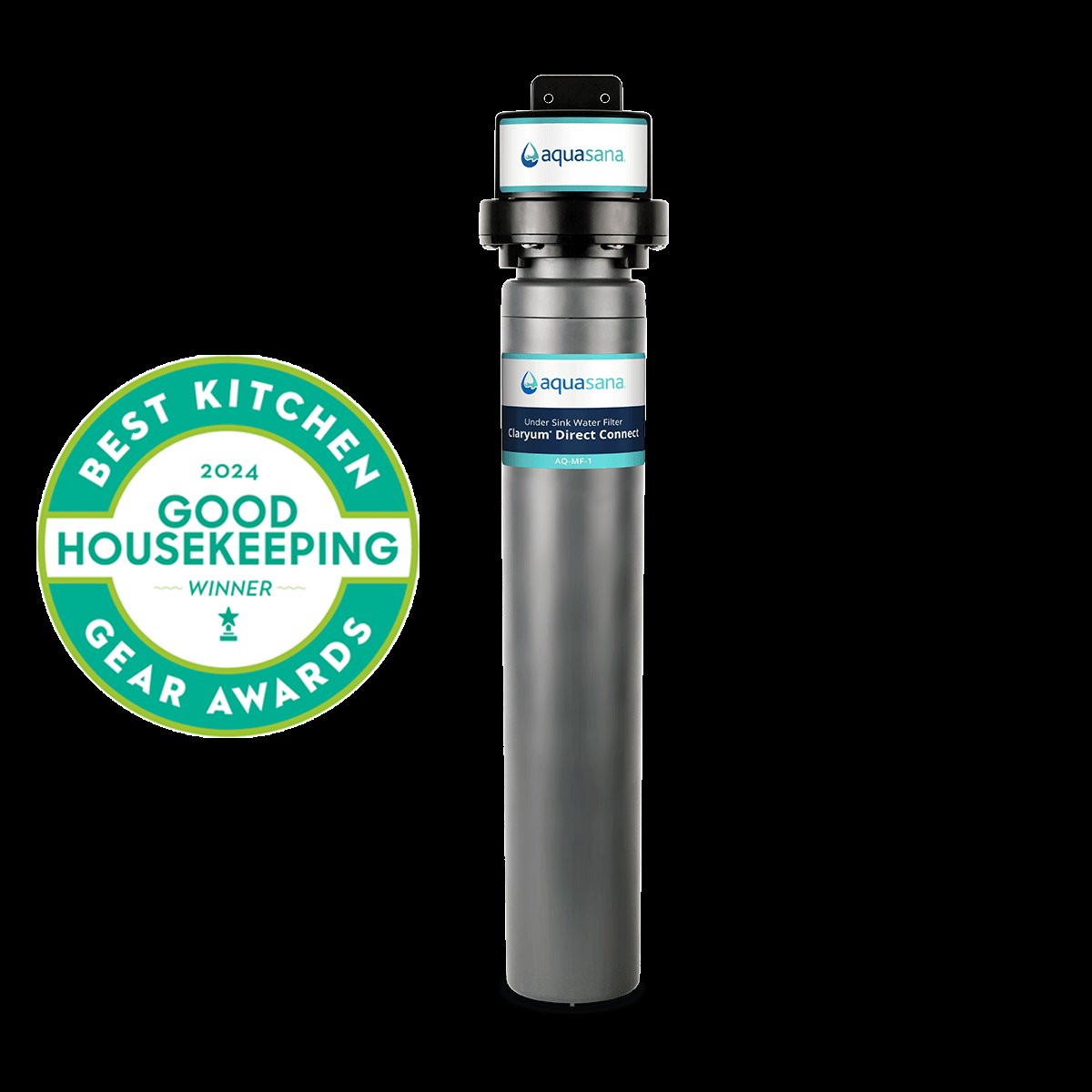
Aquasana Claryum Direct Connect (AQ-MF-1)
Aquasana Claryum Direct Connect (AQ-MF-1)
Aquasana's performance data sheet for this under-sink filter (AQ-MF-1) lists NSF/ANSI 401 results for all 15 compounds, including 95.4% ibuprofen and 98.6% carbamazepine, plus lead, chlorine and PFOA/PFOS reduction.
Compare sizing, treatment options and ongoing costs in our best under-sink water filters guide.
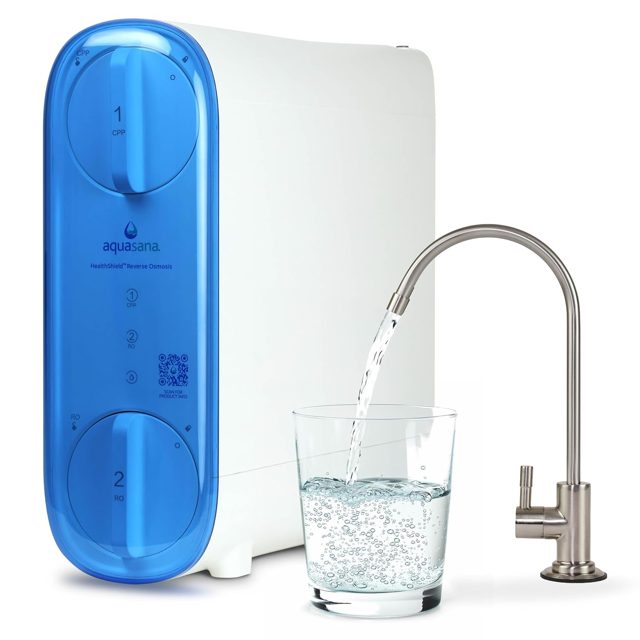
Aquasana Tankless Reverse Osmosis System (800 GPD)
Aquasana Tankless Reverse Osmosis System (800 GPD)
Aquasana's performance data sheet for this tankless RO system (AQ-HSRO800) lists NSF/ANSI 401 results for all 15 compounds, including 94.80% ibuprofen and 98.46% carbamazepine, and its RO membrane also reduces fluoride, nitrate and arsenic V.
Compare sizing, treatment options and ongoing costs in our best reverse osmosis systems guide.
Compare more certified options in our best under-sink water filters and best reverse osmosis systems guides.
Bottom line
Trace medicines in tap water are common in some areas but at very low levels. If you want them out, an NSF/ANSI 401 certified carbon or RO filter is a simple fix. Related concerns are covered in microplastics in water and pesticides in water, and you can see the other common water contaminants.