Where pesticides in water come from
- Farm runoff carries herbicides like atrazine into rivers and shallow groundwater.
- Lawns, golf courses and roadsides add weed killers in towns and suburbs.
- Spills and mixing sites near a well can cause very high local levels.
- Timing: levels usually peak after spring application and heavy rain.
Read more in atrazine in drinking water and glyphosate in drinking water.
EPA limits for common pesticides
| Pesticide | EPA limit | Common use |
|---|---|---|
| Atrazine | 3 ppb | Corn and sorghum herbicide |
| Simazine | 4 ppb | Herbicide for crops and orchards |
| Alachlor | 2 ppb | Corn and soybean herbicide |
| Lindane | 0.2 ppb | Older insecticide |
| 2,4-D | 70 ppb | Lawn and crop weed killer |
| Glyphosate | 700 ppb | Widely used weed killer |
These are enforceable limits for public water. See the full list in the EPA drinking water regulations. Health effects vary by chemical; for atrazine, see atrazine health effects.
How to test for pesticides
- Read your water quality report if you're on city water; detected pesticides are listed.
- On a well, use a certified lab and choose a panel matched to local crops and lawn care.
- Test in late spring or early summer to catch the high point.
- Add nitrate. Wells affected by farm runoff often have nitrates too.
Start with the EPA private wells page and our water test kits guide.
Filters to compare for pesticides
Both data sheets below name atrazine, simazine, 2,4-D and lindane in their NSF/ANSI 53 VOC testing. They treat drinking and cooking water at one tap.
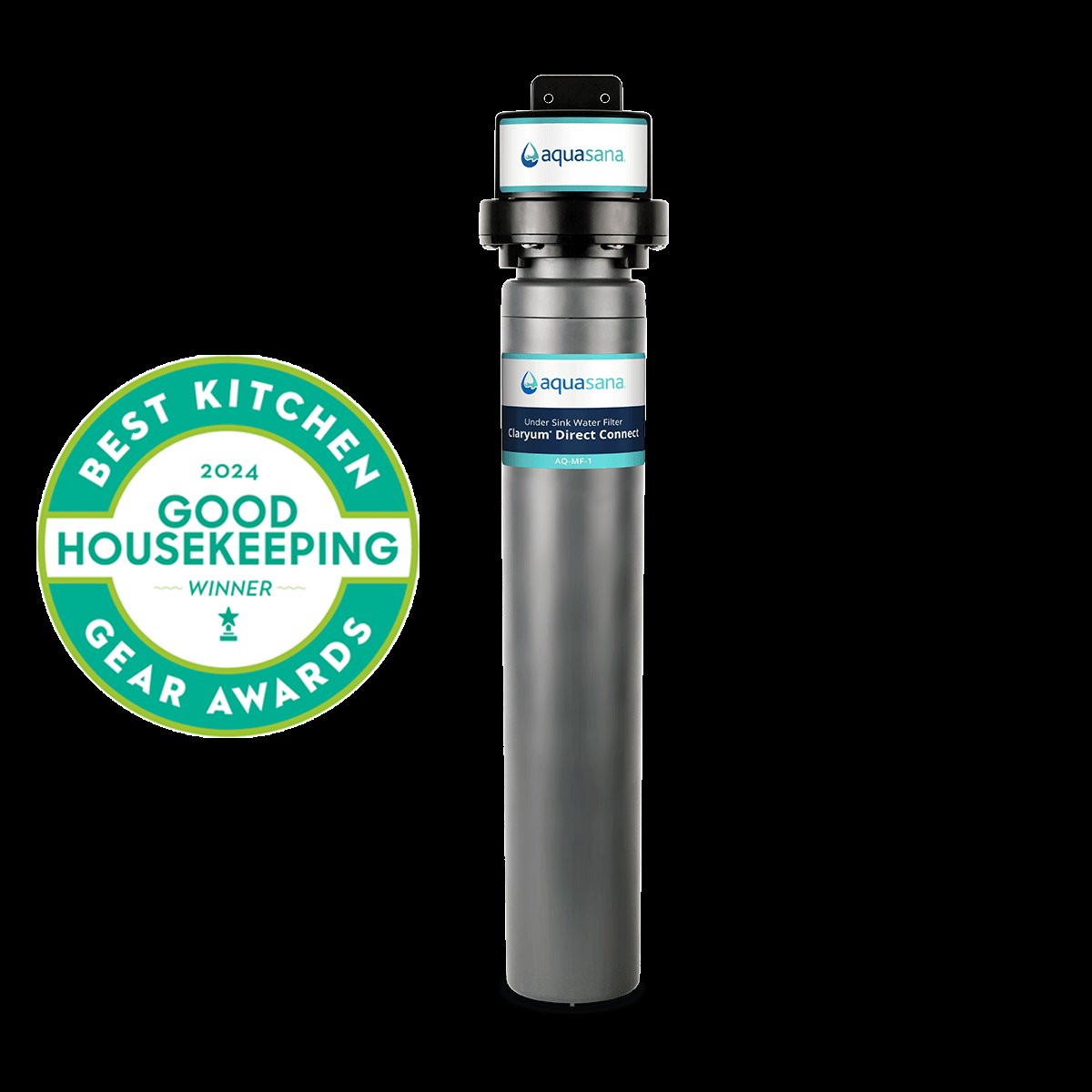
Aquasana Claryum Direct Connect (AQ-MF-1)
Aquasana Claryum Direct Connect (AQ-MF-1)
Aquasana's performance data sheet for this under-sink filter (AQ-MF-1) lists over 97% atrazine and simazine reduction, 98% 2,4-D and over 99% lindane, plus 98.6% metolachlor under NSF/ANSI 401.
Compare sizing, treatment options and ongoing costs in our best under-sink water filters guide.
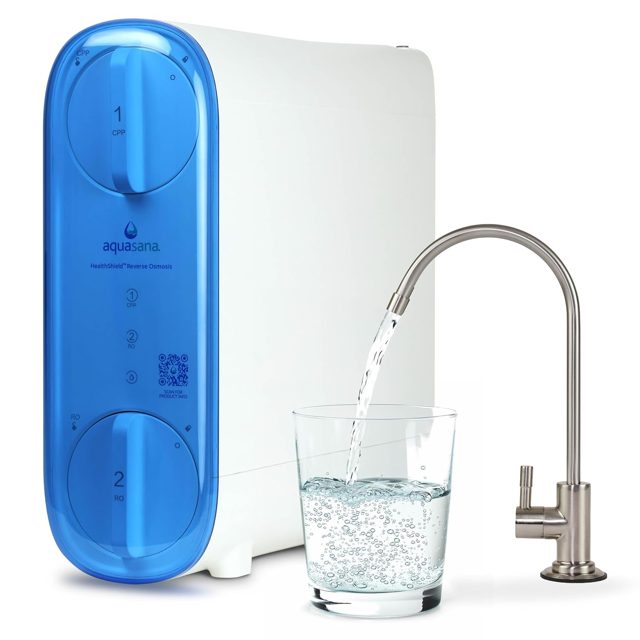
Aquasana Tankless Reverse Osmosis System (800 GPD)
Aquasana Tankless Reverse Osmosis System (800 GPD)
Aquasana's performance data sheet for this tankless RO system (AQ-HSRO800) lists the same atrazine, simazine, 2,4-D and lindane reductions, plus 98.48% metolachlor under NSF/ANSI 401. Its RO membrane also reduces nitrate, which often shows up in the same wells.
Compare sizing, treatment options and ongoing costs in our best reverse osmosis systems guide.
Glyphosate is not on either data sheet. If it's your main concern, look for a listing that names glyphosate and confirm with a lab test of the filtered tap.
Pesticide treatment options compared
| Method | Treats | Watch out for |
|---|---|---|
| Certified carbon block filter | Many herbicides and insecticides | Check the listing names your pesticide |
| Reverse osmosis | Drinking water | Carbon stages and membrane work together |
| Whole-house carbon | Every tap | Change media on schedule |
| Basic pitchers | Varies | Many are only certified for chlorine taste |
| Boiling | Does not remove pesticides | Can concentrate some |
Bottom line
Test for the pesticides used near you, at the right time of year. Treat drinking water with a carbon or RO system whose listing names them, and retest. Well owners should also compare well water filters, and you can see the other common water contaminants.