Best Water Filters for PFAS (Forever Chemicals) Removal
Remove PFOA, PFOS, and other forever chemicals with certified filtration systems. Price range: $150 - $5,000
Recommended Products
Explore Our Top Picks
Understanding PFAS: The Science Behind Forever Chemicals
PFAS—per- and polyfluoroalkyl substances—represent one of the most challenging classes of water contaminants ever identified. Unlike organic pollutants that degrade over time, PFAS molecules are held together by carbon-fluorine bonds, the strongest bonds in organic chemistry. This extraordinary stability is precisely what makes them so useful in consumer products like non-stick cookware, stain-resistant fabrics, and firefighting foam—and precisely what makes them so dangerous in drinking water. Cities like Philadelphia and Newark have documented significant PFAS contamination in municipal supplies.
The PFAS family includes over 12,000 individual compounds, but two have received the most regulatory attention: PFOA (perfluorooctanoic acid, or C8) and PFOS (perfluorooctane sulfonate). These legacy chemicals were phased out of production in the United States by 2015, but they persist indefinitely in groundwater, soil, and human blood serum. Replacement chemicals like GenX (HFPO-DA), marketed as safer alternatives, are now also under scrutiny after researchers detected them in drinking water supplies downstream of manufacturing facilities.
The EPA's April 2024 final rule established the first-ever legally enforceable federal limits for PFAS in drinking water. The Maximum Contaminant Levels (MCLs) set PFOA and PFOS at 4 parts per trillion (ppt) each—extraordinarily low limits reflecting the severity of health concerns. For context, 4 ppt equals approximately one drop of water in 20 Olympic-sized swimming pools. Additionally, the rule set a combined hazard index for PFHxS, PFNA, PFBS, and GenX at 1.0 (unitless), meaning utilities must evaluate the cumulative risk of these compounds together. Understanding the broader landscape of PFAS contamination is critical for choosing the right filter.
| PFAS Compound | Chain Length | EPA MCL (2024) | Health Advisory (2022) | Primary Sources |
|---|---|---|---|---|
| PFOA | C8 (long-chain) | 4 ppt | 0.004 ppt | Non-stick cookware, food packaging |
| PFOS | C8 (long-chain) | 4 ppt | 0.02 ppt | AFFF firefighting foam, stain repellents |
| PFNA | C9 (long-chain) | 10 ppt (HI) | N/A | Industrial processing aids |
| PFHxS | C6 (short-chain) | 10 ppt (HI) | N/A | Metal plating, firefighting foam |
| GenX (HFPO-DA) | C6 (short-chain) | 10 ppt (HI) | N/A | PFOA replacement in manufacturing |
| PFBS | C4 (short-chain) | 2,000 ppt (HI) | N/A | PFOS replacement chemical |
PFAS Health Effects: What the Research Shows
The scientific evidence linking PFAS exposure to health effects has grown substantially since 2020. The C8 Science Panel, established under the DuPont settlement, studied 69,000 residents exposed to PFOA-contaminated drinking water near Parkersburg, West Virginia, and identified six "probable links" to disease. Subsequent research has expanded this list considerably.
Established Health Effects
- • Kidney cancer (PFOA classified "carcinogenic" by IARC, 2023)
- • Testicular cancer (strongest evidence for PFOA)
- • Thyroid hormone disruption
- • Elevated cholesterol (LDL increase at very low exposures)
- • Immune system suppression (reduced vaccine response)
- • Pre-eclampsia and pregnancy complications
Emerging Concerns
- • Liver damage and non-alcoholic fatty liver disease
- • Ulcerative colitis and inflammatory bowel disease
- • Decreased fertility in both men and women
- • Developmental delays in children
- • Endocrine disruption at low concentrations
- • Possible links to breast cancer (under study)
PFAS Contamination Hotspots Across the US
PFAS contamination is not evenly distributed—it concentrates around specific industrial and military sites. The Environmental Working Group has identified over 2,800 locations in all 50 states with known PFAS contamination. If you live near any of these sources, testing your water is critical regardless of whether your utility reports PFAS levels.
Military Installations
Over 700 military bases used AFFF (aqueous film-forming foam) for fire training and suppression. The DoD has identified 687 installations with known or suspected PFAS releases. Communities near bases in Phoenix, Colorado Springs, and Fayetteville, NC have documented groundwater contamination exceeding 1,000 ppt—250x the EPA limit.
Industrial Manufacturing
Facilities using PFAS in manufacturing processes—particularly semiconductor, textile, and chrome plating operations—have created contamination plumes affecting nearby communities. The Chemours facility in Fayetteville, NC discharged GenX into the Cape Fear River, contaminating drinking water for 350,000 residents downstream. Similar contamination affects communities near Chicago industrial corridors.
Airports & Fire Training
Commercial airports conducted regular fire training exercises using AFFF for decades. Contamination plumes from airports in cities like Las Vegas and Boston have migrated into municipal water supplies. The FAA phased out PFAS-containing foam in 2021, but legacy contamination persists in soil and groundwater for decades.
Wastewater & Landfills
Wastewater treatment plants and landfills act as secondary PFAS sources. Consumer products containing PFAS (carpets, food packaging, clothing) release compounds into wastewater during washing and disposal. Landfill leachate can contain PFAS concentrations 100-1,000x higher than drinking water limits, contaminating surrounding groundwater.
PFAS-Certified Filter Comparison
Certified PFAS Removal Systems
| Product | Price | Certifications | Filter Life |
|---|---|---|---|
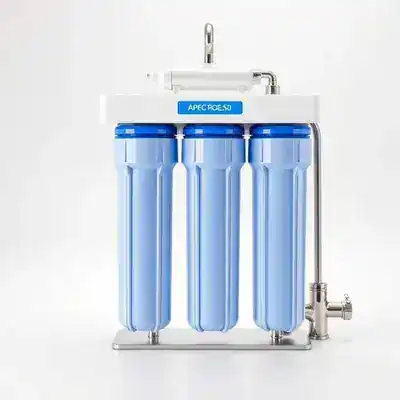
#1 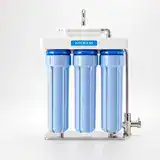 APEC ROES-50 | $199 | NSF 58, NSF 53, WQA | 12 months |
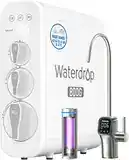
#2 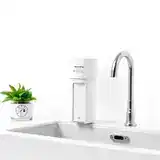 Waterdrop G3 | $599 | NSF 58, NSF 53, NSF 42 | 24 months |
#3 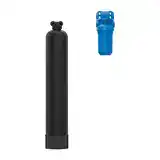 SpringWell CF1 | $959 | NSF 42, NSF 53 | 36 months |
Complete Cost Analysis
A transparent look at upfront price, annual upkeep, and 5-year total cost for the top pfas removal systems
Initial Investment

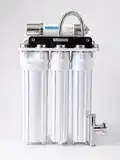
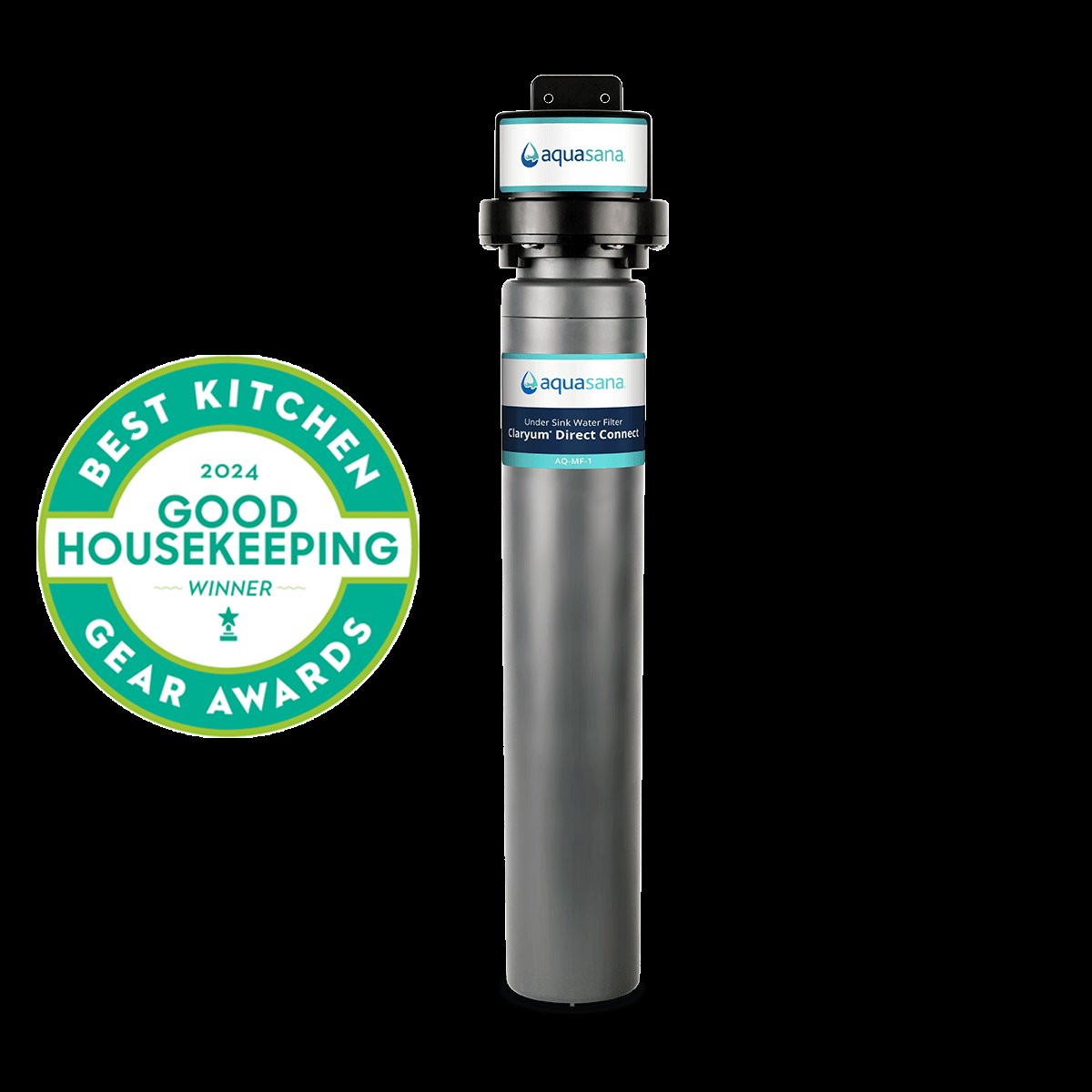
Note: Professional installation may add $100-$500 depending on system complexity.
Annual Operating Costs
Filter Replacements
Annual cartridge costs
Maintenance
Cleaning and upkeep
Water Usage
Minimal to none
Compare to $600+ per year for bottled water
5-Year Total Cost of Ownership
$999
$249 + $750 (5yr)
$1,049
$299 + $750 (5yr)
$1,099
$349 + $750 (5yr)
How Each Filtration Technology Removes PFAS
Not all filtration methods are equally effective against PFAS. The carbon-fluorine bond's extraordinary strength means PFAS molecules resist most conventional water treatment processes. Understanding the specific removal mechanisms helps you choose the right technology for your contamination level and budget. For lead and arsenic, the technology requirements differ significantly from PFAS removal.
Reverse Osmosis: The Gold Standard (95-99% Removal)
RO membranes use semi-permeable thin-film composite (TFC) polyamide sheets with pore sizes of approximately 0.0001 microns (0.1 nanometers). PFAS molecules, even the smallest short-chain variants, are significantly larger than these pores—PFOS has a molecular diameter of roughly 1.2 nanometers, more than 10x the RO pore size. This size exclusion mechanism makes RO inherently effective against virtually all PFAS compounds regardless of chain length.
The key advantage of RO for PFAS removal is that it works through physical size exclusion rather than chemical adsorption. Unlike carbon filters that can become saturated and release accumulated PFAS, an intact RO membrane maintains consistent rejection rates throughout its lifespan. Combined with carbon pre- and post-filters, a quality reverse osmosis system provides the most comprehensive PFAS protection available for residential use.
RO System PFAS Performance Specifications
- • PFOA removal: 97-99.9% (verified by independent lab testing)
- • PFOS removal: 96-99.5% (slightly lower due to molecular geometry)
- • Short-chain PFAS (GenX, PFBS): 90-97% (smaller molecules, still effective)
- • Combined PFAS mixture: 95%+ average removal across all compounds
- • Water waste ratio: 1:1 to 3:1 (modern tankless systems are most efficient)
Activated Carbon: Adsorption-Based Removal (70-95%)
Granular activated carbon (GAC) and carbon block filters remove PFAS through adsorption—PFAS molecules adhere to the carbon surface through hydrophobic and electrostatic interactions. The effectiveness depends heavily on the carbon type, contact time, bed depth, and PFAS concentration. Coconut shell-based carbon generally outperforms coal-based carbon for PFAS adsorption due to its micropore distribution.
Carbon block filters certified to NSF P473 typically achieve 70-95% removal of PFOA and PFOS. However, a critical limitation is competitive adsorption: when multiple contaminants are present (common in real-world water), PFAS molecules compete with chlorine, iron, and other organic compounds for adsorption sites. As the carbon saturates, shorter-chain PFAS are displaced first, potentially increasing their concentration in filtered water—a phenomenon called "chromatographic peeling."
For carbon-based PFAS removal, replacement schedules are critical. Unlike chlorine or lead filtration where gradual capacity reduction occurs, PFAS breakthrough can be sudden. Replace carbon filters at or before the manufacturer's recommended interval—never extend their life when PFAS is a primary concern. Quality pitcher filters and under-sink systems with NSF P473 provide reliable performance when maintained properly.
Ion Exchange Resins: Targeted PFAS Capture (90-99%)
Anion exchange resins represent a newer approach to PFAS removal, particularly effective for short-chain compounds that carbon struggles with. Single-use (non-regenerable) anion exchange resins using quaternary ammonium functional groups selectively bind PFAS anions through electrostatic attraction. This mechanism is less susceptible to competitive adsorption than carbon, maintaining consistent performance even in complex water matrices.
The primary drawback is cost: single-use resins are consumed during treatment and must be disposed of as hazardous waste due to concentrated PFAS. Regenerable resins exist but require specialized brine solutions and create secondary waste streams. Currently, ion exchange is most commonly used in municipal treatment and point-of-entry whole-house systems rather than countertop or apartment-friendly formats.
NSF P473 PFAS Filtration
Pre-Filter
Protects RO membrane
RO Membrane
Removes 90%+ PFAS
GAC Post-Filter
Additional PFAS adsorption
How We Research Our Picks
Independent research from public certification records and manufacturer data
Certification check
We look up each system's claims in the public NSF, IAPMO and WQA certification listings and note exactly which contaminants are covered.
Performance data sheets
We read the manufacturer's performance data sheet for reduction percentages, rated capacity and flow, rather than relying on marketing copy.
Install and upkeep
We compare space, plumbing and drain needs, filter change intervals and how easy replacement cartridges are to find.
Cost of ownership
We add the purchase price to several years of replacement filters so cheap-upfront systems with expensive cartridges stand out.
Contaminants we compare claims for
What matters most in our ranking
- • Certified reduction claims for the contaminants most homes face
- • Flow and capacity that fit the household
- • Installation and maintenance effort
- • Long-term cost and the manufacturer's warranty terms
Always confirm a product's current certification listing before buying, and test your own water first so you pay only for the treatment you need.
10-Year Total Cost of Ownership: PFAS Filtration Systems
Choosing a PFAS filter isn't just about upfront cost—filter replacement frequency and media costs vary dramatically between technologies. Because PFAS filters require more frequent replacement than standard filters, ongoing costs significantly impact the total investment. Compare these figures against the cost of bottled water alternatives—a family spending $1,500/year on bottled water would save substantially with any home filtration option.
| System Type | Initial Cost | Annual Filters | 5-Year Total | 10-Year Total | Cost/Gallon |
|---|---|---|---|---|---|
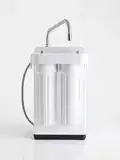
| RO Under-Sink (Tankless) | $350-500 | $80-120 | $750-1,100 | $1,150-1,700 | $0.03-0.05 |
| RO Under-Sink (Tank) | $200-350 | $60-100 | $500-850 | $800-1,350 | $0.02-0.04 |
| Carbon Block Under-Sink | $80-200 | $60-120 | $380-800 | $680-1,400 | $0.03-0.06 |
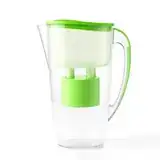
| Pitcher (NSF P473) | $35-90 | $60-120 | $335-690 | $635-1,290 | $0.06-0.12 |
| Whole-House Carbon | $2,000-4,000 | $200-500 | $3,000-6,500 | $4,000-9,000 | $0.01-0.03 |
| Whole-House IX Resin | $3,000-6,000 | $500-1,200 | $5,500-12,000 | $8,000-18,000 | $0.02-0.06 |
| Bottled Water (family of 4) | $0 | $1,500-2,500 | $7,500-12,500 | $15,000-25,000 | $0.75-1.50 |
The PFAS Crisis
PFAS (Per- and polyfluoroalkyl substances) are "forever chemicals" that don't break down in the environment or human body.
Health risks include:
- • Increased cancer risk (kidney, testicular)
- • Thyroid hormone disruption
- • Immune system suppression
- • Developmental delays in children
- • Liver damage and cholesterol issues
EPA Advisory Level: 4 ppt (parts per trillion) for PFOA and PFOS combined
Top PFAS Removal Technologies
Best Overall: Reverse Osmosis + CarbonOur #1 Pick
Why it works: Combines RO membrane filtration with activated carbon to remove virtually all PFAS compounds. This dual-mechanism approach is why every major water quality organization recommends RO for PFAS-affected households.
Recommended: Waterdrop G3P800, APEC ROES-PH75, or iSpring RCC7AK (~$200-500)
5-Year Total Cost
Best Budget: Activated Carbon FiltersBest Value
Why it works: High-quality granular or block carbon adsorbs PFAS molecules effectively. NSF P473 certified models have been independently verified to remove at least 70% of PFOA and PFOS.
Note: Must be NSF P473 certified specifically for PFAS
Options: ZeroWater, Clearly Filtered, Berkey
Best Whole House: Multi-Stage Systems85-95% Removal
Why it works: Combines sediment, carbon block, and specialized PFAS media for comprehensive protection. Ideal for families concerned about dermal exposure during bathing and showering, or for homes with well water near contamination sources.
Investment: $2,000-5,000 installed
How to Test Your Water for PFAS: Step-by-Step
PFAS testing is more complex and expensive than standard water testing because of the extremely low detection limits required (parts per trillion). Standard home water test kits do NOT test for PFAS—you need specialized laboratory analysis. Here's how to navigate the process and what to expect from results.
Choose a Certified Laboratory
Use labs certified under EPA Method 533 or 537.1 for PFAS analysis. The EPA maintains a list of certified labs. Costs range from $200-400 for a comprehensive panel testing 18-40+ PFAS compounds. Budget options testing only PFOA/PFOS cost $100-150 but may miss emerging contaminants like GenX.
Collect Samples Properly
PFAS testing requires special collection bottles (provided by the lab—typically HDPE, not glass). Do NOT use containers that have been washed with PFAS-containing products. Collect a "first draw" sample after water has sat in pipes for 6+ hours, plus a "flushed" sample after running water 2 minutes. This helps identify whether PFAS is from your plumbing or the source water.
Interpret Your Results
Compare individual compounds against EPA MCLs: PFOA and PFOS at 4 ppt each. Calculate the hazard index for the remaining four regulated compounds. If any value exceeds limits, install filtration immediately. Even if results are below MCLs, many health experts recommend filtration if any PFAS is detected, as health advisories suggest effects at levels below enforceable limits.
Certification Requirements
NSF/ANSI P473 Certification
The ONLY certification specifically for PFOA and PFOS removal. Look for this on any PFAS filter. Requires at least 70% reduction of both compounds from a challenge concentration of 1,500 ppt.
NSF/ANSI 53 (Health Effects)
Certifies reduction of health-related contaminants, including some PFAS compounds when combined with P473. Also covers lead, VOCs, and cyst reduction.
NSF/ANSI 58 (RO Systems)
For reverse osmosis systems that effectively remove PFAS through membrane filtration. Covers TDS reduction and contaminant rejection.
Warning:
Avoid filters claiming PFAS removal without NSF P473 certification. Many carbon filters are ineffective against forever chemicals. Verify certifications independently on the NSF International database.
PFAS Filter Maintenance: Why Timing Is Critical
Maintaining PFAS filtration systems requires stricter adherence to replacement schedules than standard filters. The phenomenon of "chromatographic peeling" means that an overused carbon filter can actually release concentrated PFAS back into your filtered water—making your water worse than unfiltered. This is the single most important maintenance concept for PFAS filtration.
Replace Filters on Schedule—Never Extend
PFAS-certified filters must be replaced more frequently than standard filters:
- • Carbon pitchers (Clearly Filtered, ZeroWater): Every 2-3 months or 100-150 gallons
- • Under-sink carbon blocks: Every 6 months or 500-750 gallons
- • RO membranes: Every 2-3 years (pre/post carbon every 6-12 months)
- • Whole-house carbon tanks: Every 6-12 months depending on flow volume
- • Ion exchange resin beds: Per manufacturer spec or when PFAS detected in output
Saturated filters can release accumulated PFAS back into your water at higher concentrations than the source water.
Annual Testing Protocol
PFAS levels in source water can change seasonally and as contamination plumes migrate. Test your water annually—both unfiltered source water and filtered output—to verify your system's performance. Lab testing costs $200-400 for comprehensive PFAS panel. This investment is essential for families in high-risk areas near military bases, airports, or industrial sites.
If your filtered water shows any detectable PFAS, replace filter media immediately regardless of the gallons used. Some cities with the worst tap water have PFAS levels high enough to require more frequent filter changes than manufacturer recommendations.
What NOT to Buy: Filters That Don't Remove PFAS
Many consumers purchase filters believing they provide PFAS protection when they do not. The following popular filter types are NOT effective against PFAS unless they carry specific NSF P473 certification for the exact model you're purchasing.
❌ Standard Brita/PUR Pitchers
Basic Brita Standard and PUR Basic models use simple carbon mesh that reduces chlorine taste but has no PFAS capability. Only Brita Elite and specific PUR Plus models have P473 certification.
❌ Basic Faucet-Mount Filters
Most faucet-mount filters use granular carbon that reduces chlorine and some sediment but lacks the density and contact time needed for PFAS adsorption. Check certifications carefully.
❌ UV Purification Systems
UV filters use ultraviolet light to kill bacteria and viruses—they do not affect chemical contaminants. PFAS molecules are completely unaffected by UV radiation at any intensity used in residential systems.
❌ Water Softeners
Water softeners use cation exchange to remove calcium and magnesium—they do not remove PFAS. In fact, softened water may carry PFAS through the system unchanged.
Frequently Asked Questions
Related Articles
Test Your Water for PFAS
Know what you're dealing with. Professional PFAS testing identifies all forever chemicals in your water and guides your filtration choices.