Best Filtered Water Bottles: Which Type Fits Your Water?
A filter bottle can mean better-tasting tap water at the gym or safe water from a mountain stream, but not the same bottle. See what carbon, hollow-fiber, purifier and UV bottles each remove, which one suits your water, and how to keep the filter working.
Choose the bottle for the water you will fill it with
Treated tap water, backcountry streams and travel water need different filters.
- Decide where you will refill: tap, stream or travel tap.
- Check what the filter is designed or certified to remove.
- Note the filter's gallon rating and replacement cost.
Quick answer
For treated tap water at work, school or the gym, a carbon filter bottle improves taste. For hiking and camping, choose a hollow-fiber filter, which is designed to remove bacteria and protozoa from streams and lakes. For travel where viruses are a concern, choose a bottle sold as a purifier or add chemical disinfection. No filter bottle is a substitute for a home filter for lead, PFAS, fluoride or nitrate.
The four types of filter bottle
| Type | How it works | Designed for | Not for |
|---|---|---|---|
| Carbon | Activated carbon in the straw or lid | Chlorine taste in treated tap water | Untreated or unsafe water |
| Hollow fiber | Tiny membrane fibers (about 0.1 to 0.2 microns) | Bacteria and protozoa in streams and lakes | Viruses and dissolved chemicals |
| Purifier (press-style) | You press water through a purifier cartridge | Travel water that may carry viruses | Large volumes; cartridges wear faster |
| UV-C cap | A light in the cap disinfects the water | Disinfecting clear water | Chemicals, sediment and taste; cloudy water |
Examples of each type include carbon bottles from Brita, hollow-fiber bottles such as the LifeStraw Go, press purifiers such as the Grayl GeoPress, and UV-C bottles such as LARQ. Check each maker's current claims and testing for the exact model.
Match the bottle to your water
Gym, office and school
You are refilling from treated city water, so the goal is taste. A carbon bottle is enough. If your home water has a lead concern, deal with it at home with a certified lead filter.
Hiking and camping
A hollow-fiber filter is the usual choice for clear streams and lakes. Collect from the clearest water you can, and see our portable water filter guide for squeeze and gravity options.
International travel
Where tap water may carry viruses, a filter alone may not be enough. Use a bottle sold as a purifier, or combine a filter with chemical disinfection or boiling, and follow health advice for your destination.
Emergencies
A filter bottle is a useful backup during a boil-water notice or outage, but follow official advice. Our emergency filter guide covers what to keep at home.
What to check before you buy
- What it is designed or certified to remove. Look for named contaminants and the standard or protocol it was tested against, not just "removes 99%".
- Filter life. The gallon or liter rating and the month limit, and the price of a replacement.
- How you drink. Straw, squeeze or press. Squeeze and press bottles let you fill other containers too.
- Size and weight. Matters most for hiking and travel.
- Cleaning. Whether parts are dishwasher-safe and how the filter is cleaned or backflushed.
Picks
Open each deal for today's price.
Turn a regular bottle into a trail filter
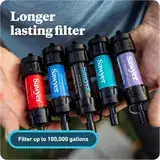
Sawyer Mini Water Filter
Sawyer Mini Water Filter
A small hollow-fiber filter you can drink through, squeeze from its pouch or thread onto many standard disposable bottles. It targets bacteria and protozoa, not viruses or chemicals, so pair it with chemical or UV treatment where viruses are a concern.
Better water to fill up with at home
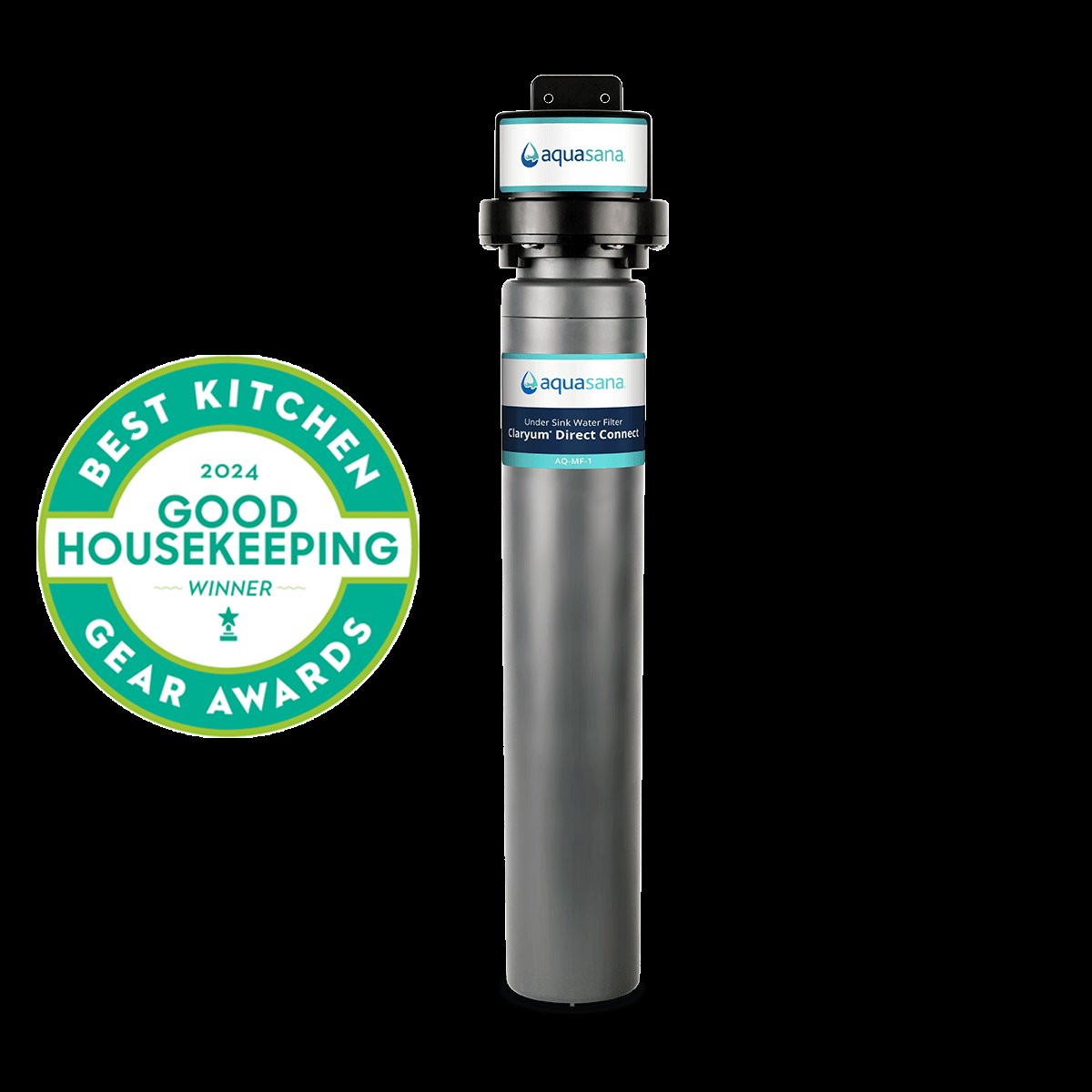
Aquasana Claryum Direct Connect (AQ-MF-1)
Aquasana Claryum Direct Connect (AQ-MF-1)
If you mainly refill your bottle at home, an under-sink filter improves the water at the source for every glass and bottle. It connects to your existing cold line and keeps your current faucet.
Compare sizing, treatment options and ongoing costs in our best under-sink water filters guide.
Care and filter replacement
- Wash the bottle often. Warm soapy water for the bottle, lid and mouthpiece, then let everything dry fully.
- Clean the filter the maker's way. Many filters cannot go in the dishwasher. Hollow-fiber filters can often be backflushed to restore flow.
- Keep hollow-fiber filters from freezing. Ice can damage the fibers without any visible sign.
- Replace on schedule. Use the gallon or month limit, whichever comes first. Slower flow or a returning chlorine taste are signs a carbon filter is spent.
Filter bottle vs home filter
A filter bottle is for when you are away from home. For everyday drinking water, a home filter has a bigger cartridge, costs less per gallon, and can be certified for more contaminants, including lead and PFOA/PFOS on some models.
Compare water filter pitchers, under-sink filters or reverse osmosis for home, and see whether bottled water is safer than tap.
Bottom line
Pick a filter bottle by the water you will fill it with: carbon for treated tap water, hollow fiber for the trail, and a purifier or extra disinfection for travel where viruses are a concern. Replace the filter on schedule, and rely on a certified home filter for everyday drinking water.