Best Budget Water Filters: Cheap Picks That Match Your Water
You do not need an expensive system to get better tap water. Find the low-cost pitcher, faucet or under-sink filter that is certified for what is actually in your water, learn what budget filters cannot do, and see when it is worth spending more.
Buy for your water, not the price tag
A cheap filter is a good buy only if it is certified for the problem you have.
- Read your utility's water report or test your tap first.
- Match the certification on the exact cartridge to that problem.
- Add up a year of replacement filters before you choose.
Quick answer
For chlorine taste on city water, an inexpensive pitcher or faucet filter certified to NSF/ANSI 42 is enough. If you are worried about lead from old pipes, pick a filter certified to NSF/ANSI 53 for lead. For a busy kitchen, a small under-sink filter costs more at first but needs fewer filter changes. If your water has fluoride, nitrate, arsenic or comes from a private well, a budget carbon filter is the wrong tool.
Start with what is in your water
The cheapest mistake to avoid is buying a filter for a problem you do not have, or missing the one you do. If you are on city water, your utility publishes a yearly water quality report (often called a Consumer Confidence Report) listing what it found. You can look up your area on our local water quality page.
The report covers the water leaving the treatment plant, not what your own pipes add. If your home was built before 1986 or you are not sure what your service line is made of, test the water at your tap for lead. Our home water testing guide explains which tests are worth paying for.
Budget picks by need
These are low-cost options for common situations on treated city water. Prices change often, so open each deal for today's price, and check the current certification listing for the exact filter cartridge before you buy.
Renters who want filtered water on tap
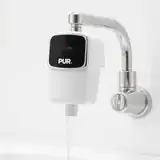
PUR FM-3700 Faucet Mount Filter
PUR FM-3700 Faucet Mount Filter
Filtered water on demand from a standard kitchen faucet in a few minutes, with no plumbing. Check that your faucet is compatible first (pull-out and sprayer faucets usually are not), and confirm which contaminants the included filter is certified for.
A pitcher with published lead and PFOA/PFOS claims
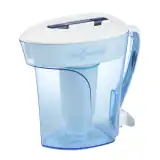
ZeroWater 10-Cup Pitcher
ZeroWater 10-Cup Pitcher
Certified for lead, chromium-6, mercury and PFOA/PFOS, with a TDS meter in the box. Budget for frequent filter changes, especially if your water has a high mineral content.
A pitcher with a broad reduction list
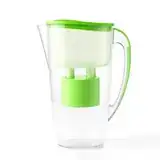
Clearly Filtered Water Pitcher with Affinity Filter
Clearly Filtered Water Pitcher with Affinity Filter
No installation and works for renters. It costs more than a basic pitcher; compare its published reduction list with your water report, and budget for regular filter changes.
Long-term value for a busy kitchen
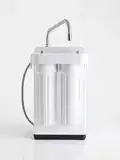
Aquasana AQ-5200 Claryum 2-Stage Under-Sink Filter
Aquasana AQ-5200 Claryum 2-Stage Under-Sink Filter
Two twist-off cartridges under the sink, typically changed about every six months depending on use. It costs more up front than a pitcher, but its dedicated faucet keeps filtered and unfiltered water separate and you change filters less often.
Want more options in one format? Compare our full water pitcher, faucet filter and under-sink filter guides.
What the certifications mean
Price does not tell you what a filter removes. Independent certification does. Look for the standard number and the specific contaminant on the box, and confirm it in the certifier's online listing for that exact cartridge.
| Standard | What it covers | What to check |
|---|---|---|
| NSF/ANSI 42 | Taste and odor, such as chlorine | Enough for taste on treated city water; not a health claim |
| NSF/ANSI 53 | Health-related contaminants, such as lead, some VOCs, cysts and PFOA/PFOS | The listing must name the contaminant you care about |
| NSF/ANSI 401 | Selected emerging compounds, such as some pharmaceuticals and pesticides | Only the listed compounds are covered |
| NSF/ANSI 58 | Reverse osmosis systems | Needed for claims like fluoride, nitrate or arsenic reduction |
| NSF/ANSI 372 | Lead-free materials | About what the product is made of, not lead removal |
Our filter certifications guide explains how to look up a listing.
What budget filters do well, and what they miss
Usually handled
- Chlorine taste and odor on city water
- Lead, when the cartridge is certified for it
- PFOA and PFOS, when named in the certification
- Some VOCs and pesticides, when listed
Work out the real yearly cost
The cheapest filter to buy is not always the cheapest to own. Replacement cartridges are where most of the money goes, so compare a full year:
Yearly cost = price of one replacement filter × number of changes per year
To find the number of changes, divide the water you filter in a year by the filter's gallon rating, then check it against the maker's month limit and use whichever gives more changes. As an example with round numbers: if your household filters 1 gallon a day and a cartridge is rated for 40 gallons, you would change it about 9 times a year. A cartridge rated for 100 gallons would need about 4 changes.
Hard or high-mineral water can wear some filters out sooner than the rating, so watch for slower flow. See our budget filter cost comparison for pitchers, faucet filters and under-sink filters side by side.
Budget filter mistakes to avoid
- Trusting the brand instead of the cartridge. One pitcher can take filters with very different certifications.
- Reading 372 as a lead claim. It covers materials only.
- Stretching filters past their rating. A worn-out filter may stop doing what it is certified for. Our pitcher filter replacement guide covers the schedule.
- Using a tap-water filter on untreated water. Carbon pitchers and faucet filters are made for treated city water, not wells, streams or boil-water notices.
- Ignoring faucet fit. Faucet-mount filters do not fit most pull-out or sprayer faucets.
When it is worth spending more
- Your test shows something carbon cannot handle: look at reverse osmosis systems.
- You are on a private well: start with our guide to the best water filter for well water.
- You want filtered water at every tap and shower: compare whole house water filters, or see what premium systems add.
- Renting and moving soon: stay with a pitcher or faucet filter; see our renter-friendly filters.
Bottom line
A budget filter is a smart buy when it is certified for what is in your water and you keep up with the cartridges. Check your water first, read the certification for the exact filter, and compare a year of replacements. If your water needs more than carbon can give, put the money toward the right treatment instead of a second cheap filter.