How to Remove Arsenic from Water
Comprehensive guide to removing arsenic from well water and tap water using proven filtration methods, testing procedures, and regional contamination data.
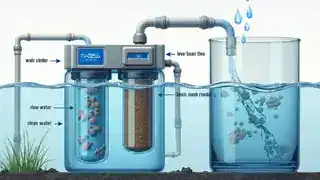
Arsenic Health Alert
Arsenic is a Class A carcinogen with no safe level of exposure. Long-term consumption of water containing arsenic above EPA's 10 ppb limit significantly increases risk of:
- Cancers: Bladder, lung, skin, kidney, and liver cancer
- Cardiovascular disease: Heart disease, stroke, high blood pressure
- Developmental issues: Reduced IQ in children, pregnancy complications
- Skin problems: Darkening, lesions, and keratosis
- Neurological damage: Peripheral neuropathy, cognitive decline
If you have a private well in a high-risk area, test your water immediately. Even levels below 10 ppb pose long-term health risks, especially for children and pregnant women.
Understanding Arsenic in Water
What is Arsenic?
Arsenic is a naturally occurring element found in bedrock and soil. It dissolves into groundwater as water percolates through arsenic-containing rock formations.
Two Types of Arsenic:
- Arsenic V (Arsenate): Oxidized form, easier to remove with standard filters
- Arsenic III (Arsenite): Reduced form, requires pre-oxidation before filtration
Most natural groundwater contains Arsenic III, which converts to Arsenic V when exposed to oxygen or chlorine.
High-Risk Regions
Arsenic contamination is highly regional, concentrated in areas with specific geological formations:
New England
Maine, New Hampshire, Vermont - bedrock geology
Southwest
Arizona, Nevada, New Mexico - volcanic deposits
Mountain States
Montana, Wyoming, Idaho - mining areas
Other Areas
Parts of California, Texas, Oklahoma, Michigan
EPA Standards & Health Limits
| Arsenic Level (ppb) | Risk Category | Action Required |
|---|---|---|
| <5 ppb | Low Risk | Monitor annually, no immediate action |
| 5-10 ppb | Moderate | Install point-of-use filter, test every 6 months |
| 10-50 ppb | High | Install RO system immediately, stop drinking unfiltered water |
| >50 ppb | Critical | Install whole-house + point-of-use filtration, seek alternative water source |
EPA Maximum Contaminant Level (MCL): 10 ppb for public water systems. However, there is no "safe" level—any detectable arsenic poses long-term health risks.
Arsenic Removal Methods Compared
Reverse Osmosis (RO) - Most Effective
How It Works
Forces water through semi-permeable membrane with pore size of 0.0001 microns. Removes arsenic molecules (both Arsenic III and V), along with 95-99% of all dissolved contaminants.
Effectiveness
- ✓ Arsenic III removal: 95-98%
- ✓ Arsenic V removal: 98-99%
- ✓ Works on all arsenic levels
- ✓ Removes other contaminants too
Best for: High arsenic levels (>20 ppb), private wells, households with children/pregnant women, complete contamination removal
Cost: $200-600 upfront, $50-100/year maintenance
Iron-Based Adsorptive Media
How It Works
Iron oxide (rust) media adsorbs arsenic through chemical bonding. Water passes through filter tank filled with iron-coated granules that attract and bind arsenic molecules.
Effectiveness
- ✓ Arsenic V removal: 85-95%
- ✓ Arsenic III removal: 60-70% (needs pre-oxidation)
- ✓ Good for moderate levels
- ✗ Requires pH 6.5-8.5
Best for: Whole-house well water treatment (10-30 ppb), already oxidized water (mostly Arsenic V)
Cost: $800-2,000 system, $200-400 media replacement every 1-2 years
Activated Alumina
How It Works
Aluminum oxide media with high surface area adsorbs arsenic. Works through ion exchange - arsenic ions stick to alumina surface as water flows through.
Effectiveness
- ✓ Arsenic V removal: 90-95%
- ✓ Arsenic III removal: 70-80% (with oxidation)
- ✗ pH sensitive (6.0-8.0)
- ✗ Requires frequent backwashing
Best for: Municipal water treatment plants, industrial applications (less common for home use)
Cost: $600-1,500 system, higher maintenance
Anion Exchange
How It Works
Resin beads exchange chloride or sulfate ions for arsenic ions. Similar to water softeners but targets arsenic instead of calcium/magnesium.
Effectiveness
- ✓ Arsenic V removal: 90-95%
- ✗ Arsenic III removal: Poor (needs oxidation)
- ✗ Competes with sulfate, TDS
- ✗ Requires salt regeneration
Best for: Low-sulfate water with Arsenic V, large households needing high flow rates
Cost: $1,000-2,500 system, ongoing salt costs
Testing for Arsenic
When to Test
- Private well owners: Test at least once when first using well, then annually
- High-risk areas: Test every 6 months if in New England, Southwest, or Mountain states
- After treatment: Test filtered water 2 weeks after installation, then every 6 months
- Nearby changes: Test after construction, mining, or geological events near your well
Testing Options
Certified Lab Test (Recommended)
Most accurate method. Provides total arsenic and speciation (III vs V).
- ✓ Total arsenic measurement
- ✓ Arsenic III/V speciation
- ✓ EPA-certified results
- ✓ Legally defensible
Cost: $30-80
Home Test Kits
Quick screening but less accurate. Good for monitoring between lab tests.
- ✓ Fast results (5-30 min)
- ✓ Inexpensive screening
- ✗ Less accurate (±20%)
- ✗ May miss low levels
Cost: $15-30
How to Collect Sample
- Use cold water tap: Run cold water for 30 seconds to clear standing water from pipes
- Fill sample bottle: Use lab-provided sterile bottle, fill to indicated line without touching inside
- Label and date: Write collection date, time, and location (which tap/well)
- Ship immediately: Send to lab within 24 hours (48 hours max with ice pack)
- Request speciation: Ask for Arsenic III and V breakdown, not just total arsenic
Best Filters for Arsenic Removal
Point-of-Use Reverse Osmosis Systems
Best for drinking water protection. Install under kitchen sink for 95-99% arsenic removal.
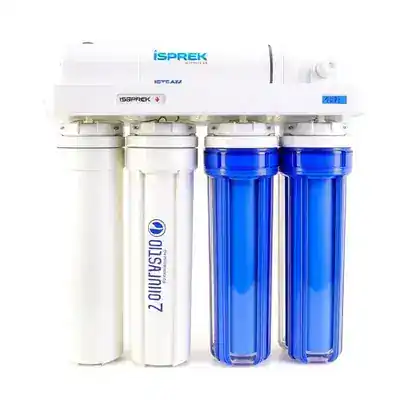
iSpring's alkaline upgrade is awesome - you get all the RO purification plus it adds healthy minerals back in and raises the pH. The 75 GPD flow is noticeably faster than cheaper systems. Installation is a bit involved with 6 stages, but the instructions are solid. Great middle-ground between basic RO and expensive tankless systems.
RO + Alkaline
75 GPD
6-12 months
6-Stage
Pros
- Alkaline remineralization filter
- NSF certified components
- 75 GPD high flow
Cons
- 6th stage adds cost
- Complex installation
- Wastewater ratio 3:1
Price
Aquasana's RO system with remineralization - removes 95% of fluoride and other contaminants, then adds healthy minerals back. The Claryum tech means you get RO-level purity with better-tasting water than plain RO. Installation is moderate difficulty. Filters last 6-12 months depending on usage. Great middle-ground if you want RO purification but don't like the flat taste of pure RO water.
RO + Claryum Remineralization
50 GPD
6-12 months
4-Stage
Pros
- RO purification + remineralization
- Claryum selective filtration
- Removes fluoride and heavy metals
Cons
- Higher price than basic RO
- Produces wastewater
- Moderate installation complexity
Price
The Claryum RO takes their proven filtration tech and adds reverse osmosis for maximum contaminant removal. 5-stage system handles everything from sediment to VOCs to heavy metals. The remineralization stage ensures water doesn't taste flat. Good flow rate at 75 GPD. More expensive than basic RO, but you're getting Aquasana's superior build quality and comprehensive filtration.
5-Stage RO + Claryum
75 GPD
6-12 months
5-Stage
Pros
- 5-stage comprehensive filtration
- 75 GPD faster flow
- Remineralization included
Cons
- Premium pricing
- Requires under-sink space
- Professional install recommended
Price
Whole-House Well Water Systems
For comprehensive protection at every tap. Ideal for private wells with moderate-to-high arsenic.
Installation & Maintenance
Point-of-Use RO System
Installation (1-2 hours)
- Turn off cold water supply valve under sink
- Drill hole in sink or countertop for dedicated faucet
- Connect feed line to cold water valve
- Install RO unit and storage tank under sink
- Connect drain line to sink drain
- Mount faucet and connect tubing
- Turn water on, check for leaks
- Fill and drain tank 2-3 times before drinking
Maintenance Schedule
- • Sediment pre-filter: Every 6-12 months
- • Carbon pre-filters: Every 6-12 months
- • RO membrane: Every 2-3 years
- • Post-carbon filter: Every 12 months
- • Test filtered water: Every 6 months
Whole-House System
Installation (Professional Recommended)
- Install after pressure tank, before water enters home
- Mount filter tank on concrete pad or wall brackets
- Connect inlet/outlet plumbing
- Install bypass valve for maintenance
- Add pre-oxidation if Arsenic III present
- Set up automatic backwash timer (if applicable)
- Test system for proper flow rate
- Verify arsenic removal with lab test
Maintenance Schedule
- • Iron oxide media: Replace every 6-18 months
- • Backwash cycle: Weekly or as needed
- • Pre-filter: Replace every 3-6 months
- • Check pressure: Monthly
- • Professional inspection: Annually
Cost Comparison: 5-Year Total
| Solution | Initial Cost | Annual Maintenance | 5-Year Total |
|---|---|---|---|
| Under-Sink RO System | $200-400 | $60-100 | $500-900 |
| Arsenic Pitcher Filter | $40-80 | $80-120 | $440-680 |
| Whole-House Iron Media | $1,200-2,500 | $200-400 | $2,200-4,500 |
| Activated Alumina System | $600-1,500 | $150-300 | $1,350-3,000 |
| Bottled Water (4 people) | $0 | $1,200-2,000 | $6,000-10,000 |
Note: Costs vary by water quality, usage, and local labor rates. Whole-house systems protect all water uses but cost more. Point-of-use systems protect drinking water affordably.
Which Arsenic Filter is Right for You?
Choose RO System if:
- Arsenic level >20 ppb (high contamination)
- Children, pregnant women, or immunocompromised in household
- Want maximum protection (95-99% removal guaranteed)
- Need to remove other contaminants too (lead, nitrates, etc.)
- Only need drinking/cooking water protection
Choose Whole-House System if:
- Private well water with 10-30 ppb arsenic
- Want arsenic-free water at all taps (shower, laundry, etc.)
- High water usage household (4+ people)
- Already have Arsenic V (oxidized) in water
- Budget allows for higher upfront cost
Explore Our Top Picks
Best Whole House Filters
Solve water problems at every tap
Best Well Water Filters
Iron, bacteria, and sediment removal
Best Under-Sink Filters
Drinking water protection
Best Water Softeners
Hard water scale prevention
Best Shower Filters
Chlorine-free showers for skin and hair
Best Water Pitchers
Affordable taste improvement
Water Test Kits
Diagnose your water problems
Related Resources
Frequently Asked Questions
Related Water Quality Issues
Water quality issues often overlap. Understanding these connections helps you choose the right filtration solution.
Lead Removal
Why This Matters:
Like arsenic, lead is a toxic heavy metal that requires NSF 53 certified filtration or reverse osmosis for effective removal.
Lead often co-occurs with arsenic in older plumbing and certain geological formations. Both are heavy metals requiring certified filtration.
Learn more about Lead RemovalNitrate Removal
Why This Matters:
RO systems that remove arsenic also eliminate nitrates (>95% removal). Both contaminants are common in agricultural well water.
Nitrates and arsenic frequently contaminate agricultural well water together from fertilizer runoff and natural deposits.
Learn more about Nitrate RemovalIron Removal
Why This Matters:
Iron-based media filters remove both arsenic and iron simultaneously. Iron can enhance arsenic removal through adsorption.
Iron oxide media used for arsenic removal also filters iron. Iron presence can actually help arsenic filtration through co-precipitation.
Learn more about Iron RemovalPFAS Removal
Why This Matters:
Reverse osmosis systems remove both arsenic (95-99%) and PFAS (90-99%). Similar health concerns require similar advanced filtration.
Like arsenic, PFAS (forever chemicals) require specialized filtration. RO systems certified for arsenic also remove most PFAS compounds.
Learn more about PFAS Removal