How to Remove Hard Water Stains: Complete Surface-by-Surface Guide
Vinegar for light film, CLR or a pumice stone for baked-on scale — the exact method, dwell time and tool for every surface in your home.
Clean the stain, then check why it returns
Choose surface-safe cleaning first. Recurring deposits are a reason to investigate the water, not buy a filter blindly.
- Distinguish white mineral scale from blue-green or rust-colored staining.
- Measure hardness before choosing preventive treatment.
- For confirmed hardness, compare softening with conditioning; they are not interchangeable.
Quick Cleaning Reference
Light Stains (weekly maintenance):
- • White vinegar + water (50/50)
- • Lemon juice
- • Dish soap + warm water
Heavy Buildup (monthly deep clean):
- • CLR or Lime-A-Way
- • Bar Keepers Friend
- • Phosphoric acid cleaners
Identify your stain first
Three stains look similar and need three different fixes. Match the color before you buy a cleaner.
White or gray and chalky
- Cause:
- Calcium carbonate (limescale)
- Vinegar test:
- Fizzes and starts dissolving within seconds of a vinegar drop
- What fixes it:
- Acidic cleaner — white vinegar, CLR, or citric acid
Blue-green or turquoise
- Cause:
- Copper carbonate from acidic water (pH below 6.5)
- Vinegar test:
- No reaction to vinegar
- What fixes it:
- Calcite or magnesium oxide neutralizer, not a softener
Brown or rusty
- Cause:
- Iron or tannins carried in the supply
- Vinegar test:
- No reaction to vinegar; lifts with an iron remover
- What fixes it:
- Oxidizing or air-injection iron filter before any softener
Understanding Hard Water Stains
Hard water stains are mineral deposits—primarily calcium carbonate (CaCO₃) and magnesium—left behind when water evaporates. Unlike dirt or soap scum that sits on surfaces, these minerals chemically bond to materials, making them increasingly difficult to remove over time.
The severity of staining directly correlates to your water hardness level:
Hardness level vs. staining severity
Test your water, then find the level that matches. Anything at 7 grains per gallon or higher leaves visible residue.
- Soft0-3 GPGLittle or no visible spotting
- Slightly hard3-7 GPGLight spotting, wipes off easily
- Moderately hard7-10 GPGNoticeable film within days
- Hard10-15 GPGHeavy deposits, weekly scrubbing
- Very hard15+ GPGRapid crust on glass and fixtures
The science behind removal is straightforward: calcium and magnesium deposits are alkaline (basic). Acidic cleaners—vinegar, citric acid, phosphoric acid, hydrochloric acid—dissolve these minerals through a neutralization reaction. The key is matching cleaner strength to buildup severity while protecting the underlying surface.
Surface-by-Surface Removal Guide
Glass
Shower doors, mirrors, windows
Vinegar 50/50, sit 5-15 min; CLR for crusted buildup
Pumice stone or any pad coarser than 0000 steel wool
Chrome
Faucets, showerheads, handles
Vinegar-soaked wrap, 30-60 min, then a soft brush
Abrasive scrubbers — a scratched finish cannot be repaired
Porcelain and ceramic
Toilets, sinks, tubs
CLR or borax paste, sit 1-2 hrs; wet pumice on rings
Dry pumice — it scratches the glaze permanently
Stainless steel
Fridge, oven, sink, range hood
Vinegar spray, wipe with the grain, dry right away
Steel wool or circular wiping motions
Tile and grout
Shower walls, floors, backsplashes
Baking soda paste in grout, vinegar mist, sit 15-30 min
Stiff pads that gouge grout lines once the seal is gone
Natural stone
Granite, marble, travertine
pH-neutral stone cleaner or mild dish soap and warm water
Vinegar, CLR, or Lime-A-Way — they etch stone on contact
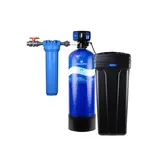
Aquasana SimplySoft 60,000 Grain Softener with LM Pre-Filter
Aquasana SimplySoft 60,000 Grain Softener with LM Pre-Filter
For recurring mineral deposits, salt-based ion exchange removes the calcium and magnesium that cause hardness. Size SimplySoft to your measured hardness and household demand; it prevents new hardness buildup rather than cleaning existing stains.
Compare sizing, treatment options and ongoing costs in our best water softeners and conditioners guide.
Glass Surfaces (Shower Doors, Mirrors, Windows)
Glass is one of the most affected surfaces because water droplets evaporate slowly, concentrating minerals. Left untreated, calcium deposits can actually etch glass permanently.
Light to Moderate Stains:
- 1. Mix equal parts white vinegar and distilled water in spray bottle
- 2. Spray generously on glass surface
- 3. Let sit 5-15 minutes (longer for heavier buildup)
- 4. Scrub with non-abrasive sponge or microfiber cloth
- 5. Rinse with clean water
- 6. Squeegee dry to prevent new spots
- 7. Finish with glass cleaner for streak-free shine
Heavy/Stubborn Buildup:
- 1. Apply undiluted white vinegar or CLR directly to glass
- 2. Cover with plastic wrap to prevent evaporation
- 3. Let sit 30-60 minutes
- 4. Use plastic razor blade scraper at 45° angle to remove deposits
- 5. Re-apply cleaner and scrub with fine steel wool (0000 grade only)
- 6. Rinse thoroughly and dry immediately
- 7. Apply Rain-X or similar coating to prevent future buildup
Chrome Fixtures (Faucets, Showerheads, Handles)
Chrome plating is relatively soft and scratches easily. Avoid abrasive cleaners or scrubbers—once scratched, chrome cannot be repaired.
Faucet Cleaning Method:
- 1. Soak cloth or paper towel in white vinegar
- 2. Wrap around faucet, covering all affected areas
- 3. Secure with rubber band or plastic bag
- 4. Leave for 30-60 minutes (or overnight for severe buildup)
- 5. Remove and scrub with soft brush or old toothbrush
- 6. Rinse thoroughly with clean water
- 7. Dry immediately with soft cloth
- 8. Apply chrome polish for added protection
Showerhead Cleaning:
- 1. Remove showerhead if possible (use adjustable wrench with cloth protection)
- 2. Submerge in container of white vinegar for 2-4 hours
- 3. Use toothpick or needle to clear individual spray holes
- 4. Scrub exterior with soft brush
- 5. Rinse thoroughly and reinstall
- 6. For fixed showerheads: fill plastic bag with vinegar, secure over showerhead with rubber band
Porcelain & Ceramic (Toilets, Sinks, Tubs)
Porcelain is durable but can absorb stains if the glaze is compromised. Regular cleaning prevents permanent discoloration.
Toilet Bowl Deep Cleaning:
- 1. Turn off water supply valve (behind toilet)
- 2. Flush to drain most water from bowl
- 3. Use plunger to push remaining water down drain
- 4. Apply CLR, Lime-A-Way, or borax/vinegar paste directly to stains
- 5. Let sit 1-2 hours (overnight for severe rings)
- 6. Scrub with toilet brush, focusing on water line
- 7. For stubborn rings: use pumice stone (wet first) in gentle circular motion
- 8. Turn water back on, flush several times to rinse
Sink and Tub Cleaning:
- 1. Spray vinegar solution generously over entire surface
- 2. For drain area buildup: pour 1/2 cup baking soda, follow with 1/2 cup vinegar
- 3. Let fizz and sit for 15-30 minutes
- 4. Scrub with non-abrasive sponge
- 5. For textured tub surfaces: use soft brush to reach crevices
- 6. Rinse thoroughly
- 7. Dry with towel to prevent immediate re-spotting
Stainless Steel Appliances
Stainless steel shows water spots prominently. Always wipe following the grain direction to avoid visible scratches.
- Daily maintenance: Wipe with damp microfiber cloth, dry immediately
- Light spots: Spray with vinegar solution, wipe with grain, dry thoroughly
- Stubborn deposits: Make paste of baking soda and water, apply gently with cloth, rinse, dry
- Protection: Apply stainless steel polish or mineral oil to repel water
- Avoid: Abrasive cleaners, steel wool, circular wiping motions
Tile and Grout
Grout is porous and absorbs minerals, making it the most challenging surface to clean. Sealed grout resists staining better.
Tile and Grout Cleaning:
- 1. Spray entire surface with vinegar solution
- 2. For grout: apply baking soda paste directly to grout lines
- 3. Spray additional vinegar over baking soda (will fizz)
- 4. Let sit 15-30 minutes
- 5. Scrub grout with stiff brush or old toothbrush
- 6. Wipe tiles with sponge
- 7. Rinse thoroughly with clean water
- 8. Consider applying grout sealer after cleaning to prevent future absorption
Natural Stone (Granite, Marble, Travertine)
⚠️ Warning: Acid Damage Risk
Never use vinegar, CLR, Lime-A-Way, or other acidic cleaners on natural stone. These acids etch and permanently damage marble, granite, travertine, and limestone. Even brief contact causes visible dulling.
Safe alternatives for natural stone:
- pH-neutral stone cleaners (specifically formulated)
- Mild dish soap and warm water
- Stone-specific hard water stain removers
- Professional stone restoration for severe buildup
Cleaner Comparison Guide
| Cleaner | Active Ingredient | Strength | Best For | Avoid On |
|---|---|---|---|---|
| White Vinegar | Acetic acid (5%) | Mild | Light buildup, maintenance | Natural stone, brass |
| Lemon Juice | Citric acid | Mild | Light stains, deodorizing | Natural stone |
| CLR | Lactic, gluconic acids | Medium | Moderate to heavy buildup | Stone, aluminum, brass |
| Lime-A-Way | Sulfamic acid | Medium-Strong | Heavy calcium, rust | Stone, enamel, brass |
| Bar Keepers Friend | Oxalic acid | Medium | Stainless steel, porcelain | Gold, silver, stone |
| Pumice Stone | Abrasive (physical) | Strong | Toilet rings, heavy deposits | Glass, chrome, fiberglass |
Prevention: Stop Stains Before They Start
Removing hard water stains is a constant battle without addressing the source. Here are prevention strategies from least to most effective:
Daily Habits (Free)
- Squeegee shower glass after every use
- Wipe down faucets with dry cloth after use
- Dry stainless steel immediately after water contact
- Empty standing water from fixtures and containers
- Improve ventilation to speed drying in bathrooms
Protective Coatings ($20-$50)
- Rain-X for glass: Creates hydrophobic barrier, water beads and runs off
- Ceramic coatings: Professional-grade protection lasting 6-12 months
- Chrome polish: Adds protective layer to faucets
- Grout sealer: Prevents mineral absorption in grout lines
Water Treatment (Most Effective)
For permanent prevention, treat your water at the source:
- Salt-Based Water Softener: Completely eliminates minerals. No more stains, period. $800-$2,500 installed.
- Salt-Free Conditioner: Helps control scale while leaving calcium and magnesium in the water; mineral spotting can remain. Compare equipment and installation costs separately.
- Electronic Descaler: Alters mineral behavior to reduce sticking. Less proven, $150-$400.
- See our complete hard water treatment guide for detailed comparisons.
5-Year Cost Comparison: Cleaning vs. Prevention
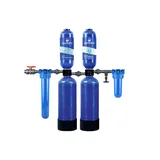
Aquasana Rhino Whole House Salt-Free Water Conditioner
Aquasana Rhino Whole House Salt-Free Water Conditioner
Choose the Rhino salt-free conditioner when scale control without salt is your goal. It does not remove hardness minerals or guarantee spot-free glass, so SimplySoft is the more appropriate option when mineral staining is the main problem.
Compare sizing, treatment options and ongoing costs in our best water softeners and conditioners guide.
| Approach | Initial Cost | Annual Cost | 5-Year Total | Time Investment |
|---|---|---|---|---|
| Weekly cleaning only | $0 | $100-$200 (products) | $500-$1,000 | 2-4 hours/week |
| Protective coatings | $50-$100 | $50-$100 | $300-$600 | 1-2 hours/week |
| Salt-free conditioner | $500-$1,500 | $0 | $500-$1,500 | 30 min/week |
| Salt-based softener | $800-$2,500 | $100-$200 (salt) | $1,300-$3,500 | 15 min/week |
The math: A water softener costs more upfront but saves hundreds of hours in cleaning time over 5 years while also protecting appliances and plumbing. For homes with very hard water (15+ GPG), the softener often pays for itself in appliance life extension alone.
Common Mistakes to Avoid
Aquasana SimplySoft 60,000 Grain Softener with LM Pre-Filter
Aquasana SimplySoft 60,000 Grain Softener with LM Pre-Filter
Salt-based hardness removal. Size the softener for your household and plan for salt, a brine tank and a drain.
Compare sizing, treatment options and ongoing costs in our best water softeners guide.
- Using abrasives on chrome: Steel wool, Scotch-Brite, and even baking soda scrubbing can scratch chrome permanently
- Acid on natural stone: Even "mild" vinegar etches marble and granite
- Letting cleaners dry: Apply, work, rinse—don't let chemical cleaners evaporate on surfaces
- Mixing cleaners: Never combine bleach with acids (vinegar, CLR)—produces toxic chlorine gas
- Ignoring buildup: Light deposits clean easily; heavy scale may require replacement
- Dry scrubbing with pumice: Always wet pumice stones—dry use scratches porcelain
- Wrong cleaner strength: Start mild, increase strength only if needed
When Professional Help Is Needed
Consider professional cleaning or restoration when:
- Shower glass is permanently etched: May need professional polishing or replacement
- Stone surfaces are damaged: Stone restoration specialists can resurface
- Plumbing is severely scaled: Descaling or pipe replacement needed
- Grout is beyond cleaning: Regrouting may be more practical than cleaning
- DIY methods haven't worked: Professional-grade tools and chemicals may be needed
Key Takeaway
Hard water stain removal is a repetitive battle that only ends when you treat the source. For homes with moderately hard to very hard water (10+ GPG), investing in a water softener or conditioner eliminates the problem permanently while protecting your plumbing, appliances, and fixtures from hidden scale damage.
Explore Our Top Picks
Best Whole House Filters
Solve water problems at every tap
Best Well Water Filters
Iron, bacteria, and sediment removal
Best RO Systems
Maximum contaminant removal
Best Under-Sink Filters
Drinking water protection
Best Shower Filters
Chlorine-free showers for skin and hair
Best Water Pitchers
Affordable taste improvement
Water Test Kits
Diagnose your water problems
Related Resources
Frequently Asked Questions
Related Articles
Deep dive — Chlorine Taste Removal
Eliminate chlorine taste and odor with carbon filters
Metallic Taste Fix
Diagnose and remove iron, copper, and zinc tastes
Rotten Egg Smell Removal
Treat hydrogen sulfide and sulfur odors in well water
Deep dive — Brown Water Solutions
Fix discolored water from iron, rust, or sediment
More on Sediment & Sandy Water Fix
Remove sand, silt, and sediment with filtration
Buying guide: Whole House Filters
Comprehensive home filtration systems
Blue-Green Stains vs White Scale: Diagnosing the Difference
While most people lump every fixture stain into the "hard water" bucket, the actual cause matters because the fix is different. White or grayish chalky deposits around faucets, on shower doors, and inside kettles are calcium carbonate (limescale)—a direct sign of hard water with calcium levels above 7 grains per gallon (120 mg/L). Blue-green or turquoise stains in sinks, tubs, and around drains tell a completely different story: they are copper carbonate deposits caused by acidic water (pH below 6.5) slowly dissolving copper plumbing. Both problems can appear in the same home, but they require separate solutions.
To distinguish between them, run a simple at-home test. Drop white vinegar onto a stain: limescale will fizz and dissolve within seconds, while copper-based blue-green stains will not react. For a more precise diagnosis, use a basic water test kit to measure pH, total hardness, and copper levels. Homes with copper staining often need a neutralizing filter (calcite or magnesium oxide media) rather than a softener. Homes with both issues frequently install a neutralizer upstream of a whole-house softener for complete protection.
Hard Water Buildup in Appliances: Hidden Costs
Hard water buildup quietly destroys appliances long before you see surface stains. A water heater operating in 15 gpg water loses roughly 24% of its efficiency per year as scale insulates the heating element—translating into an extra $80–$200 annually on energy bills for a typical family of four. Tankless water heaters are even more vulnerable: a single millimeter of scale on the heat exchanger can trigger error codes and shorten lifespan from 20 years to under 7. Dishwashers, washing machines, ice makers, and coffee equipment all suffer similar premature wear, with manufacturers like Bosch and Miele explicitly voiding warranties for damage caused by water above 10 gpg.
The cumulative 5-year cost of untreated hard water in a single-family home typically ranges from $1,800 to $4,500 when you tally extra detergent, replacement appliances, plumbing repairs, and energy waste. A quality whole-house softener pays for itself in 18–36 months in homes with hardness above 10 gpg. For renters or apartments where a softener isn't an option, descaling appliances quarterly with citric acid, installing inline scale inhibitors on coffee machines, and using a shower filter with KDF media slows—but doesn't eliminate—the damage.
Salt-Free Conditioners vs Traditional Softeners
For homeowners concerned about sodium intake, septic systems, or local salt-discharge restrictions (common in California and Texas), salt-free conditioners using template-assisted crystallization (TAC) or nucleation-assisted crystallization (NAC) are an alternative. These systems don't remove calcium and magnesium—they convert them into microscopic crystals that pass through plumbing without bonding to surfaces. Independent testing shows TAC systems prevent 70–88% of new scale formation, compared to 99%+ with ion-exchange softeners. They won't make water "feel" soft, won't help with existing stains, and won't extend appliance life as dramatically, but they require no salt, no electricity, no drainage, and no backwashing.
For most US households dealing with both blue-green stains and white scale, the proven combination is a calcite neutralizer (raises pH to 7.2–7.6), followed by either a traditional softener (best results) or a TAC conditioner (eco-friendly compromise). Pair the system with a documented maintenance schedule and annual hardness re-testing to keep performance optimal.