Chlorine in Your Water: By the Numbers
Key stats on chlorine exposure and its health effects.
98%
of U.S. tap water is disinfected with chlorine or chloramine
50%+
of shower chlorine exposure is inhaled or absorbed
Our Top Picks for Chlorine Removal
SpringWell is our #1 brand for chlorine and chloramine removal — catalytic carbon, no-hassle install, and a lifetime warranty.
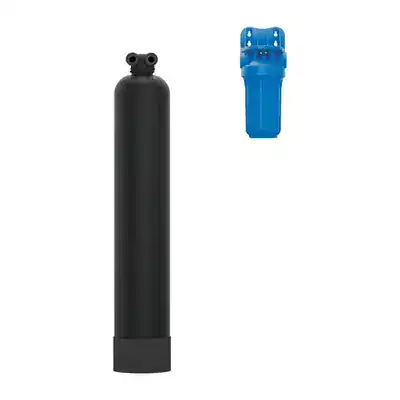
SpringWell CF1 Whole House Filter
Best for: Whole-home chlorine removal
- Removes 99% of chlorine, chloramine & DBPs
- 1,000,000 gallon capacity (no filter swaps)
- Lifetime warranty on tanks & valves
- Catalytic carbon — works on chloramine
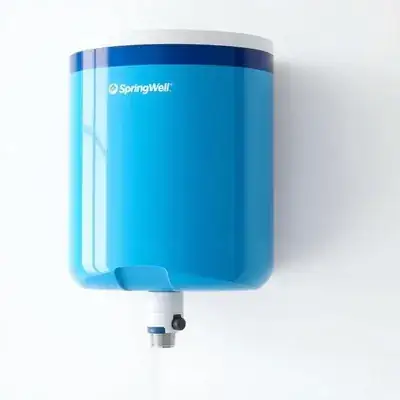
SpringWell CF + FutureSoft Combo
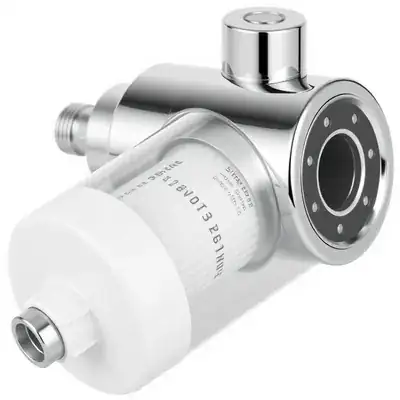
SpringWell SF2 Shower Filter
Why Your Water Tastes Like Chlorine
Municipal water systems add chlorine (or chloramine) to kill bacteria and viruses, making water safe to drink during its journey from the treatment plant to your tap. While this disinfection is essential for public health, it creates a chemical taste and smell that ranges from mildly unpleasant to strongly noticeable.
Chlorine levels of 0.5–2.0 ppm are typical in US tap water, with the EPA allowing up to 4 ppm. Most people can taste chlorine at concentrations above 0.5–1.0 ppm. People living closer to treatment plants typically experience stronger chlorine taste because the chemical hasn't had time to dissipate in the distribution system.
Beyond taste, chlorine reacts with natural organic matter to form disinfection byproducts (DBPs) — including trihalomethanes (THMs) and haloacetic acids (HAAs) — linked to bladder cancer with long-term exposure. Removing chlorine at the point of use eliminates both the taste issue and the health concern.
Chlorine vs. Chloramine: Know the Difference
About 20% of US water systems use chloramine instead of chlorine. Check your water utility's annual Consumer Confidence Report to find out which one your city uses.
Chlorine (Free Chlorine)
- ✅ Standard carbon filters remove 95%+
- ✅ Evaporates when water sits uncovered
- ✅ Easy and inexpensive to remove
- ⚠️ Creates THM disinfection byproducts
Chloramine (Combined Chlorine)
- ⚠️ Requires catalytic carbon or longer contact time
- ❌ Does NOT evaporate from sitting water
- ⚠️ More expensive and complex to remove
- ✅ RO systems remove it effectively
Health Effects of Chlorine in Water
At EPA-allowed levels (up to 4 ppm) chlorine is considered safe short-term, but long-term exposure raises legitimate concerns that justify filtration.
Ingestion Concerns
- DBPs (THMs): linked to bladder cancer with long-term exposure
- Gut health: kills beneficial gut bacteria
- Respiratory: chlorine vapor irritates airways
Skin & Hair Effects
- Dry skin: strips natural oils
- Eczema/psoriasis: worsens existing conditions
- Hair damage: brittleness, color fading, split ends
Chlorine Removal Solutions by Budget
Free: Let Water Sit (Off-Gassing)
Chlorine is a dissolved gas that naturally evaporates from water exposed to air. Fill a pitcher and leave it uncovered. Stirring or adding a few drops of lemon juice speeds it up.
Advantages
- ✅ Completely free
- ✅ No equipment needed
- ✅ Effective for free chlorine
Limitations
- ❌ Slow (30 min to 24 hours)
- ❌ Does NOT work for chloramine
- ❌ Only practical for small volumes
$25-40: Pitcher or Faucet Filter
Best for: individuals, renters, basic chlorine removal
Activated carbon pitcher filters and faucet-mount filters remove 95%+ of chlorine instantly. Pitchers filter a batch in 5–10 minutes; faucet filters work at full flow.
5-year cost: Pitcher $275–500 total. Faucet $220–440 total. The most affordable effective options.
Clearly Filtered Pitcher
Removes 365+ contaminants, NSF-tested
$150-300: Under-Sink Carbon Filter
Multi-stage carbon systems install under your sink and deliver filtered water at full flow. Higher capacity (500–1,000+ gallons per filter) and superior contaminant removal — also tackles lead and VOCs.
5-year cost: $300–600 total. Best value for households wanting broad contaminant protection.
SpringWell SUB Ultra Dual-Stage
Catalytic carbon — removes chlorine AND chloramine
Check Price at SpringWell$250-800: Reverse Osmosis System
Best for: chloramine removal, maximum taste improvement
RO systems remove 98%+ of chlorine AND chloramine, plus heavy metals, fluoride, and dissolved solids. If your city uses chloramine, RO is the most effective drinking-water solution.
SpringWell Moen RO System
4-stage RO with smart Moen faucet, 75 GPD
Check Price at SpringWell
$900-1,800: SpringWell Whole House Carbon
Best for: families, homeowners, total chlorine elimination
Treats every faucet, shower, and appliance in your home. SpringWell's catalytic carbon removes both chlorine and chloramine for up to 1,000,000 gallons — no filter swaps for years.
Check Price at SpringWellChlorine in Showers: The Hidden Exposure
Most people focus on drinking water chlorine, but shower exposure is actually more significant. During a 10-minute hot shower you absorb more chlorine through your skin — and inhale more chlorine vapor — than you would drinking 8 glasses of unfiltered water.
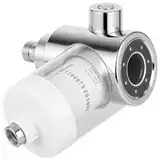
SpringWell SF2 Shower Filter
5-minute install, 12-month filter life
Shower filters with KDF media reduce chlorine by 90–99%. SpringWell's SF2 screws onto your existing shower arm — no plumber, no tools.
Noticeable benefits: reduced dry skin, less hair damage and color fading, fewer eczema flare-ups, softer hair, and no "pool" smell.
Check Price at SpringWellHow Activated Carbon Removes Chlorine
Activated carbon is the most effective and economical method for chlorine removal. Its millions of microscopic pores trap chlorine molecules through adsorption — chemical attraction to the carbon surface.
A single gram of activated carbon has 500–1,500 m² of surface area (roughly 2–6 tennis courts). That's why carbon filters remove chlorine instantly at 95–99% efficiency.
Carbon Block vs. GAC (Granular Activated Carbon)
Carbon Block
- • Compressed carbon, tighter pore structure
- • Removes more contaminants (lead, VOCs, cysts)
- • Slower flow rate
- • Best for: under-sink, health protection
GAC (Granular)
- • Loose carbon granules, open structure
- • Faster flow, lower pressure drop
- • More economical per cartridge
- • Best for: whole house systems
5-Year Cost Comparison
| Solution | Upfront | Annual | 5-Year Total | Chloramine? | Coverage |
|---|---|---|---|---|---|
| Let water sit | $0 | $0 | $0 | ❌ | Drinking only |
| Pitcher filter | $25-40 | $50-90 | $275-490 | ⚠️ | Drinking only |
| Faucet filter | $20-35 | $40-80 | $220-435 | ⚠️ | Kitchen tap |
| Shower filter | $25-99 | $30-50 | $175-310 | ⚠️ | Shower only |
| Under-sink carbon | $150-300 | $30-60 | $300-600 | ⚠️ | Kitchen tap |
| RO system | $200-800 | $50-80 | $450-1,200 | ✅ | Kitchen tap |
| SpringWell CF1 (Whole house) | $968+ | $0-100 | $968-1,500 | ✅ | Entire home |
✅ Effective | ⚠️ Partial (requires catalytic carbon) | ❌ Not effective
Frequently Asked Questions
Explore More
Best Well Water Filters
Complete well water treatment systems
Best Water Softeners
Hard water and scale prevention
Best Countertop Filters
No-install countertop filtration
Best Portable Filters
Travel & emergency filtration
Best Home Water Filters
Our master 2026 buyer's guide
Water Test Kits
Verify your chlorine levels
Related Articles
Buying guide: Water Filter Pitchers
Top-rated pitchers for chlorine and contaminant removal
Best Faucet Water Filters
Quick-install filters that attach to your kitchen faucet
Top-rated Under-Sink Water Filters
Multi-stage carbon systems for comprehensive kitchen filtration
See the best Shower Filters
Protect your skin and hair from chlorine damage
See the best Whole House Filters
Remove chlorine from every faucet in your home
Our picks for Reverse Osmosis Systems
Complete contaminant removal including chloramine