Why Is My Water Brown? Complete Diagnosis & Treatment Guide
Expert guide to identifying iron, rust, sediment, and manganese contamination with proven filtration solutions for well water and city water systems
Brown or rusty water is one of the most common water quality complaints in the United States, affecting an estimated 13 million households with private wells and millions more on aging municipal systems. While iron-caused discoloration is usually not a direct health hazard, it signals water chemistry problems that damage plumbing, ruin laundry, stain fixtures, and reduce appliance lifespans by 30-50%. Understanding the root cause is essential because the wrong treatment wastes money and fails to resolve the problem.
This comprehensive guide walks you through the diagnostic process—from identifying whether your brown water comes from iron, manganese, pipe corrosion, or municipal main disturbances—to selecting the right filtration system based on your specific water chemistry. We cover treatment options for every budget, from $50 sediment filters to professional-grade air injection systems that handle extreme iron concentrations above 10 ppm.
Main Causes of Brown Water
1. Iron in Well Water (Most Common)
Iron is naturally present in groundwater throughout the United States, with concentrations varying by geology and aquifer depth. When dissolved ferrous iron contacts oxygen—either at the faucet or through aeration—it oxidizes into ferric iron particles that turn water brown, orange, or rust-colored.
Three Types of Iron Contamination
Ferrous Iron (Clear Water Iron)
Dissolved in water, appears completely clear from the tap but turns brown or orange within minutes to hours when exposed to air. Most common in deep wells with low oxygen content. Concentration typically 0.5-15 ppm. Removed by oxidation followed by filtration or ion exchange in a water softener (up to 3 ppm).
Ferric Iron (Red Water Iron)
Already oxidized particles suspended in water, causing immediate brown or orange color directly from the tap. Common in shallow wells and where water contacts air before delivery. Visible as rust-colored sediment that settles in a glass. Removed by mechanical filtration (sediment filter, multimedia filter) without requiring oxidation.
Iron Bacteria
Living organisms that metabolize iron, creating slimy reddish-brown biofilm in pipes, toilet tanks, and wells. Produces a distinctive swampy or musty odor. Not directly harmful but harbors other bacteria and clogs plumbing. Requires shock chlorination to kill colonies, followed by ongoing treatment to prevent regrowth.
Iron Level Treatment Guide
- 0.3-3 ppm: Water softener (ion exchange) or standard oxidizing filter—most affordable option
- 3-7 ppm: Air injection (AIO) system or greensand filter—moderate cost, highly effective
- 7-15 ppm: Chemical injection (chlorine or hydrogen peroxide) with contact tank and multimedia filter
- 15+ ppm: Professional-grade chemical feed system with dual-stage filtration—consult a water treatment specialist
2. Corroded or Aging Pipes
Homes built before 1960 commonly have galvanized steel pipes that corrode internally over decades, releasing rust particles (iron oxide) into water. This corrosion accelerates in acidic water (pH below 7.0) and aggressive water with low mineral content. Pipe corrosion is the most common cause of brown water in older homes on municipal systems.
How to Identify Pipe Corrosion vs. Source Water Iron
- First-draw test: If water is brown after sitting in pipes overnight but clears after running 2-5 minutes, the pipes are the source—not the water supply
- Single-fixture test: If only one bathroom or specific fixtures produce brown water, localized pipe corrosion is likely
- Hot vs. cold: Brown hot water only indicates water heater issues, not pipe corrosion throughout the home
- Neighbor comparison: If neighbors on the same water main have clear water, your pipes are the problem
Lead Warning for Old Pipes
Homes built before 1986 may have lead solder on copper pipes or lead service lines. Corroded pipes that produce brown water may also release lead, which is invisible and tasteless. If your home has old plumbing and brown water, test for lead immediately—especially if children under 6 live in the home. Learn more in our lead contamination guide.
3. Municipal Water Main Work
When water utilities flush hydrants, repair mains, or increase flow rates, decades of accumulated iron and manganese deposits inside distribution pipes get disturbed and released into the water supply. This is temporary but can affect entire neighborhoods simultaneously.
Fire department hydrant testing, main breaks, and infrastructure upgrades all cause similar disruptions. The water is usually safe to drink (the utility maintains disinfection) but is aesthetically unpleasant. Most utilities issue advance notices for planned maintenance but cannot warn about emergency repairs.
Timeline: Brown water from main work typically clears within 2-6 hours. Run cold water taps closest to your water meter first for 15-30 minutes. Avoid running hot water until cold water clears completely—sediment entering your water heater causes long-term problems. Contact your utility if water remains brown after 24 hours.
4. Water Heater Sediment
Minerals (primarily iron and calcium) settle at the bottom of tank water heaters over time, forming a layer of sediment that can be inches thick in neglected units. When the burner heats the tank bottom, sediment gets stirred into the hot water supply, causing brown or yellow discoloration exclusively from hot water taps.
The sacrificial anode rod—designed to corrode instead of the tank—eventually degrades completely, releasing aluminum, magnesium, or zinc particles that can also discolor water. Severely corroded anode rods indicate the tank itself is beginning to rust and may need replacement.
Water Heater Maintenance Schedule
- Monthly: Drain 2-3 gallons from the drain valve to remove accumulated sediment
- Annually: Full tank flush—connect hose to drain valve, shut off cold supply, drain completely
- Every 3-5 years: Inspect and replace sacrificial anode rod ($20-50 part, $150-200 professional)
- Every 10-12 years: Replace the entire water heater to prevent tank failure and flooding
5. Manganese (Brown-Black Water)
Manganese frequently co-occurs with iron in well water and produces brown to black discoloration. While iron causes reddish-brown staining, manganese creates darker brown-to-black deposits. The EPA secondary standard for manganese is 0.05 ppm (aesthetic), but health concerns begin above 0.3 ppm, particularly for infants and children where neurological effects have been documented.
Manganese is more difficult to remove than iron because it requires higher pH (above 8.0) for effective oxidation. Standard iron filters may not fully address manganese without pH adjustment. Air injection systems and catalytic media filters (like Katalox Light or Filox) are specifically designed for combined iron and manganese removal.
For detailed treatment of manganese and black water, see our comprehensive black water diagnosis guide.
How to Diagnose Brown Water: Step-by-Step
Check Hot vs. Cold Water
Run cold water only. If cold is clear but hot is brown → water heater problem. If both are brown → continue diagnosis.
Check Multiple Fixtures
Run water at several taps simultaneously. If only one fixture is brown → localized pipe corrosion. If all fixtures → system-wide issue.
Check Duration
Let water run for 5-10 minutes. If it clears → pipe corrosion (first-draw effect). If it stays brown → source water issue (iron/manganese).
Check Neighbors (City Water)
If neighbors have brown water too → municipal main disturbance (temporary). If only your home → internal plumbing or well issue.
Test Your Water
Order a comprehensive water test including iron (ferrous + ferric), manganese, pH, hardness, bacteria, and lead. Results determine the exact treatment method needed. See our water test kit guide.
Treatment Solutions by Water Source
For Well Water (Iron & Manganese)
| Treatment Method | Iron Range | Manganese | Cost | Maintenance |
|---|---|---|---|---|
| Water Softener | 0.3-3 ppm | Up to 0.5 ppm | $600-1,500 | Salt refills, Iron OUT cleaning |
| Air Injection (AIO) | 3-10 ppm | Up to 3 ppm | $1,200-2,500 | Backwash cycle, media every 5-10 yr |
| Greensand Filter | 3-10 ppm | Up to 5 ppm | $1,000-2,000 | Potassium permanganate feed |
| Chemical Injection | 10+ ppm | Any level | $1,500-3,500 | Chemical refills, pump maintenance |
| Katalox Light Media | Up to 15 ppm | Up to 5 ppm | $1,500-2,500 | Backwash only, media lasts 7-10 yr |
For Municipal Water (Sediment & Rust)
Whole-House Sediment Filter
Cost: $50-150 installed
Filter life: 3-6 months depending on sediment load
What it removes: Rust particles, sand, dirt, and other suspended solids from all taps
Best for: Temporary brown water episodes, ongoing municipal sediment issues
Install a 5-micron spun polypropylene filter at the main water line entry point. For heavy sediment, use a dual-stage setup: 20-micron pre-filter followed by 5-micron final filter to extend cartridge life.
Whole-House Carbon + Sediment
Cost: $300-1,200 installed
Filter life: 6-12 months or 100,000-1,000,000 gallons
What it removes: Sediment, rust, chlorine, taste, odor, and some chemicals
Best for: Comprehensive city water treatment—addresses brown color plus chlorine taste and other contaminants simultaneously
Systems like the SpringWell CF1 and Aquasana EQ-600 provide whole-home filtration that eliminates brown water while improving overall water quality.
Recommended Filtration Systems
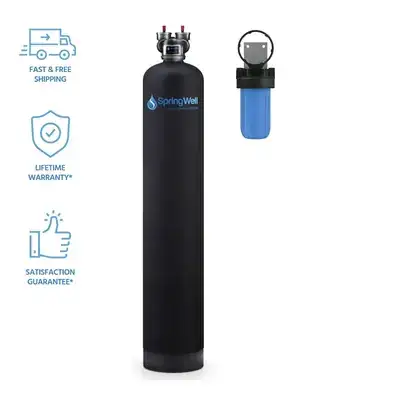
SpringWell WS1 Well Water Filter System
Air injection oxidizing system that removes up to 7 ppm iron, 1 ppm manganese, and 8 ppm hydrogen sulfide without chemicals. The oxidation chamber converts dissolved ferrous iron to filterable ferric particles, while the catalytic carbon media traps sediment and improves taste. Includes automatic backwash valve that cleans the media bed every 2-3 days.
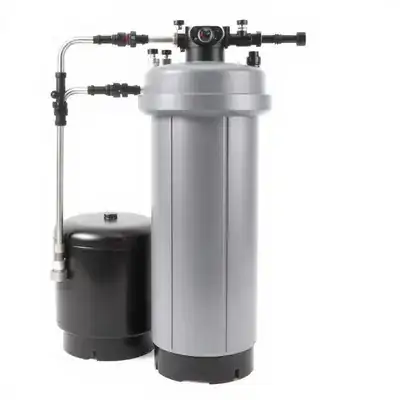
Aquasana Rhino EQ-1000 Whole House
1,000,000-gallon whole-house filtration system that removes sediment, rust, chlorine, and over 77 contaminants. The multi-stage design includes a 20-micron pre-filter for sediment, activated carbon for chemicals, and copper-zinc media for heavy metals. NSF certified under Standards 42, 44, 53, and P473 for verified performance.
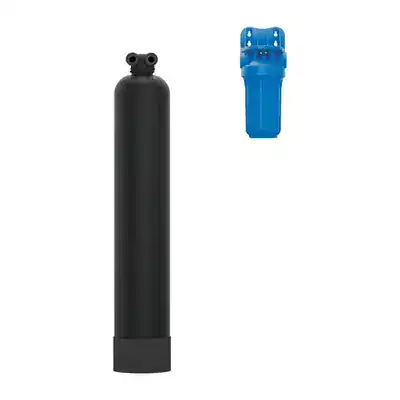
SpringWell CF1 Whole House Carbon Filter
Catalytic coconut shell carbon media system that removes sediment, chlorine, chloramine, PFAS, pesticides, and VOCs from every tap. Handles up to 9 GPM flow rate for homes up to 4 bathrooms. The upflow design prevents channeling and extends media life to 6-9 months between changes. An excellent all-around solution for city water brown discoloration combined with taste and chemical concerns.
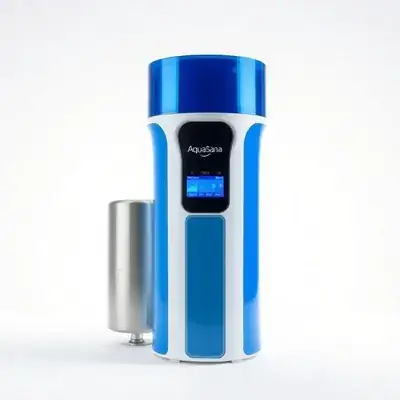
Aquasana EQ-600 Whole House Filter
600,000-gallon capacity whole-house system at a lower price point than the EQ-1000. Uses the same multi-stage filtration technology including sediment pre-filter, activated carbon, and copper-zinc oxidation media. Ideal for smaller homes (1-3 bathrooms) or moderate water usage. Handles sediment, rust, chlorine, and dozens of chemical contaminants.
5-Year Total Cost of Ownership
| Solution | Upfront | Annual Maintenance | 5-Year Total |
|---|---|---|---|
| Sediment Filter Only | $50-100 | $40-80 | $250-500 |
| SpringWell CF1 Carbon | $800-1,000 | $80-120 | $1,200-1,600 |
| Aquasana EQ-1000 | $900-1,100 | $100-150 | $1,400-1,850 |
| Air Injection Iron Filter | $1,200-2,500 | $50-100 | $1,450-3,000 |
| Pipe Replacement (if needed) | $2,000-15,000 | $0 | $2,000-15,000 |
Hidden cost of ignoring brown water: Premature water heater failure ($800-1,500), ruined laundry ($200-500/year in replacement clothes), fixture replacement ($500-2,000), and reduced home resale value. Investing in proper filtration typically pays for itself within 2-3 years.
Preventing Brown Water: Long-Term Strategies
For Well Water Owners
- Test water annually for iron, manganese, pH, and bacteria to catch changes early
- Maintain proper well cap seal to prevent surface water intrusion during storms
- Keep minimum 50-foot separation between well and septic system
- Install an iron filter sized for your actual iron levels (not undersized)
- Monitor pH—acidic water (below 6.5) accelerates iron dissolution from geology
- Shock chlorinate well annually to prevent iron bacteria colonization
- Consider a professional well inspection every 5 years
For City Water Users
- Install a whole-house sediment pre-filter at the main water entry point
- Flush water heater annually—drain 5-10 gallons to remove accumulated sediment
- Replace sacrificial anode rod every 3-5 years to prevent tank corrosion
- Consider upgrading old galvanized pipes to copper or PEX during renovations
- Sign up for utility notifications about planned maintenance and main flushing
- Keep a few gallons of filtered water on hand for water main disruptions
- Test for lead if you notice brown water and have pre-1986 plumbing
Explore Our Top Picks
Best Well Water Filters
Iron, manganese, and sediment removal systems
Best Whole House Filters
Complete home filtration for every tap
Best Water Softeners
Ion exchange systems for iron and hardness
Best Under-Sink Filters
Drinking water protection from contaminants
Best RO Systems
Maximum contaminant removal for drinking water
Water Test Kits
Test iron, manganese, lead, and bacteria
Related Resources
Frequently Asked Questions
Related Articles
Read: Chlorine Taste Removal
Eliminate chlorine taste and odor with carbon filters
More on Metallic Taste Fix
Diagnose and remove iron, copper, and zinc tastes
More on Rotten Egg Smell Removal
Treat hydrogen sulfide and sulfur odors in well water
Deep dive — Hard Water Stain Removal
Stop blue-green and white scale buildup
Sediment & Sandy Water Fix
Remove sand, silt, and sediment with filtration
Best Whole House Filters
Comprehensive home filtration systems