Why Is My Water Cloudy?
Separate harmless air bubbles from sediment, scale and water-source problems before choosing a filter.
By the Clean Water Hacks editorial team
Find the cause before buying treatment
A milky glass does not automatically mean you need a filter. Start with the glass test, compare hot and cold taps, and check for utility notices or recent well changes.
- If water clears from the bottom up, air bubbles are likely; no filter is needed for air alone.
- If particles settle or cloudiness persists, investigate the source and test before choosing equipment.
- Match treatment to confirmed sediment or hardness; ordinary filters are not a substitute for safe-water guidance.
Cloudy or milky water can be alarming, but in most cases it's completely harmless. The most common cause is tiny air bubbles suspended in water—similar to how a carbonated beverage appears cloudy before bubbles rise. However, cloudiness can also indicate sediment, mineral content, or less commonly, contamination issues that require attention. This comprehensive guide helps you diagnose the cause and find the right solution.
Quick Answer: Try the Glass Test
Fill a clear glass with cloudy water and observe for 2 minutes:
- Clears from bottom up: Air bubbles (harmless) → No treatment needed
- Clears from top down: Sediment settling → Install sediment filter
- Stays cloudy: Fine particles or precipitated minerals are possible → Investigate and test; appearance alone cannot identify the cause
- Has color, odor or a sudden change: Contact your utility or a qualified well professional; follow any water-use advisory
What Causes Cloudy Water?
Air Bubbles (Most Common)
Tiny air bubbles dissolved under pressure are released when water flows from the tap, creating a milky appearance. This is the same principle as carbonated water appearing cloudy before bubbles escape.
How to identify: Water clears from bottom to top within 1-2 minutes. Completely harmless.
Sediment/Particles
Sand, silt, clay, or pipe corrosion particles suspended in water. Common after plumbing work, main breaks, or in well water systems. Particles eventually settle to the bottom.
How to identify: Water clears from top down as particles settle. May have a gritty feel.
Hard Water Minerals
Dissolved calcium and magnesium can create a slightly hazy or cloudy appearance, especially in very hard water areas. More noticeable in hot water as minerals precipitate.
How to identify: Persistent light cloudiness, white scale on fixtures, spots on dishes.
Methane Gas (Well Water)
Methane dissolved in groundwater can create persistent cloudiness and a "fizzy" appearance. Common in wells near coal seams, landfills, or organic-rich soils.
How to identify: Water may sputter, appear effervescent, and cloudiness persists. Requires aeration treatment.
Common Causes by Water Source
| Water Source | Most Likely Cause | Other Possibilities | Recommended Action |
|---|---|---|---|
| Municipal Water | Air bubbles (pressure changes) | Main break sediment, chlorine reaction | Wait 2 min; if persists, contact utility |
| Well Water | Sediment, minerals | Bacteria, methane, surface intrusion | Test water; install sediment filter |
| Hot Water Only | Water heater sediment | Dip tube breakdown, mineral precipitation | Flush water heater; check dip tube |
| After Plumbing Work | Disturbed sediment, air in pipes | Pipe corrosion particles | Run water 10-15 min to flush |
Is Cloudy Water Safe to Drink?
Safe to Drink
- • Air bubbles: Completely harmless, clears in 1-2 minutes
- • Hard water minerals: Safe, just affects taste
- • After plumbing work: Usually safe after flushing
- • Temperature changes: Normal dissolved gas release
Test Before Drinking
- • Sudden onset: Especially with odor or color
- • Well water cloudiness: Could indicate contamination
- • After flooding/heavy rain: Surface water intrusion risk
- • Persistent cloudiness: Doesn't clear after several minutes
When to Be Concerned
While most cloudy water is harmless, certain situations warrant immediate attention and testing:
- Color changes: Yellow, brown, or green tint suggests contamination, not just cloudiness.
- Unusual odor: Rotten egg, musty, or chemical smells indicate specific contaminants.
- Illness symptoms: If family members experience gastrointestinal issues, test water immediately.
- Well water after storm: Heavy rain can wash contaminants into wells; test for coliform bacteria.
How to Diagnose the Cause of Cloudy Water
Step-by-Step Diagnosis Process
- 1Perform the Glass Test
Fill a clear glass and observe for 2 minutes. Note whether cloudiness clears from bottom up (air), top down (sediment), or not at all (dissolved minerals).
- 2Check Hot vs. Cold Water
If only hot water is cloudy, the issue is your water heater (sediment, dip tube, or mineral precipitation).
- 3Test Multiple Faucets
If only one faucet has cloudy water, the problem is localized (aerator, supply line). All faucets = source water issue.
- 4Check for Recent Events
Plumbing work, main breaks, heavy rain, or construction nearby can temporarily cause cloudiness.
- 5Test Water Quality
If cloudiness persists, test for turbidity, hardness, bacteria (well water), and TDS to identify the specific cause.
Understanding Turbidity
Turbidity is the technical measure of water cloudiness, expressed in NTU (Nephelometric Turbidity Units). It measures how much light is scattered by particles in water.
| Turbidity Level | Appearance | Safety | Treatment Needed |
|---|---|---|---|
| 0-1 NTU | Crystal clear | EPA compliant | None |
| 1-4 NTU | Slightly hazy | Generally safe | Sediment filter helpful |
| 4-10 NTU | Noticeably cloudy | May harbor bacteria | Sediment filter + testing |
| >10 NTU | Very cloudy/opaque | Don't drink until tested | Professional treatment |
How to Fix Cloudy Water: Treatment Solutions
Solution by Cause
Air Bubbles (No Treatment Needed)
If cloudiness clears in 1-2 minutes, no action required. This is completely normal and harmless, especially common in:
- • Cold weather (cold water holds more dissolved gas)
- • After pressure changes in municipal system
- • From aerators on faucets
- • New plumbing installations
Sediment Filtration
For particle-based cloudiness, install a sediment filter to remove sand, silt, rust, and other particulates.
- • Spin-down filter: $50-100, reusable
- • Cartridge filter (20 micron): $50-150
- • Backwashing filter: $400-1,000
- • Multi-stage system: $500-1,500
- • Under-sink sediment filter: $50-100
- • Faucet filter: $20-50
- • Filter pitcher: $25-50
See our whole-house filter guide for top recommendations.
Water Softener (For Hard Water Cloudiness)
If cloudiness is caused by dissolved calcium and magnesium, a water softener removes these minerals through ion exchange.
- • Removes calcium and magnesium
- • Prevents scale buildup
- • Clearer, softer water throughout home
- • Extends appliance lifespan
- • Equipment: $500-2,500
- • Installation: $200-500
- • Salt: $50-100/year
- • Best for: >120 ppm hardness
Water Heater Maintenance
If only hot water is cloudy, the issue is likely your water heater:
- Sediment buildup: Drain and flush the tank annually. Open drain valve and let water run until clear (10-20 gallons).
- Dip tube breakdown: Failing dip tubes (common in tanks from 1993-1997) release white plastic particles. Replace the dip tube ($20-50 part).
- Mineral precipitation: Very hard water causes mineral deposits when heated. Install a water softener upstream.
- Temperature too high: Excessively high temperatures (above 140°F) accelerate mineral precipitation. Keep at 120°F for most households.
Aeration System (For Methane)
If well water has persistent cloudiness with a "fizzy" appearance, methane gas may be present. Aeration systems release dissolved gases safely.
- • Sprays water to release dissolved gas
- • Vents gas safely outdoors
- • Repressurizes water for home use
- • Also removes radon, VOCs
- • Equipment: $1,500-3,500
- • Installation: $500-1,000
- • Venting required to outdoors
- • Professional installation recommended
Product Options for a Confirmed Treatment Need
Skip equipment for air bubbles alone. These options address broader city-water filtration or confirmed hardness—not unexplained contamination, methane or every type of fine sediment. Check the exact configuration, flow requirements and current deal before buying.
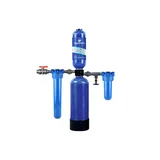
Aquasana Rhino Whole House Water Filter
Aquasana Rhino Whole House Water Filter
Consider whole-house filtration if your city water also needs chlorine taste-and-odor treatment. For particle-related cloudiness, verify the included pre-filter's micron rating and capacity; fine clay or persistent turbidity may need different sediment treatment. This is not a hardness-removal or disinfection system.
Compare sizing, treatment options and ongoing costs in our best whole house water filters guide.
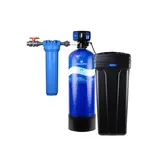
Aquasana SimplySoft 60,000 Grain Softener with LM Pre-Filter
Aquasana SimplySoft 60,000 Grain Softener with LM Pre-Filter
Consider ion-exchange softening when testing confirms hardness and white mineral deposits are part of the problem. The LM pre-filter does not replace a sediment system sized for heavy particle loads. Softening does not diagnose cloudiness or make microbiologically unsafe water safe.
Compare sizing, treatment options and ongoing costs in our best water softeners and conditioners guide.
Treatment Cost Comparison
| Solution | Upfront Cost | Annual Maintenance | Best For |
|---|---|---|---|
| No treatment (air bubbles) | $0 | $0 | Harmless air cloudiness |
| Sediment filter cartridge | $50-150 | $30-60 | Light sediment issues |
| Spin-down sediment filter | $75-200 | $0 (clean periodically) | Well water with heavy sediment |
| Backwashing sediment filter | $600-1,500 | $50-100 | Heavy sediment, automated |
| Water softener | $700-3,000 | $100-200 (salt) | Hard water cloudiness |
| Aeration system | $2,000-4,500 | $50-100 | Methane, radon removal |
Preventing Cloudy Water
For Municipal Water
- • Run water briefly after long periods of non-use
- • Clean faucet aerators monthly (sediment accumulates)
- • Know when main work is scheduled in your area
- • Install whole-house sediment filter for consistent clarity
- • Report persistent issues to water utility
For Well Water
- • Install pre-filter sediment system at well
- • Test water annually for turbidity and bacteria
- • Maintain proper well seal against surface water
- • Service pump and pressure tank regularly
- • Consider UV treatment if bacterial contamination is recurring
For Water Heaters
- • Flush tank annually to remove sediment
- • Check and replace anode rod every 3-5 years
- • Set temperature to 120°F (prevents excess mineral precipitation)
- • Install sediment filter on cold water inlet
- • Consider tankless heater to eliminate sediment issues
After Plumbing Work
- • Run cold water for 10-15 minutes after work
- • Run outdoor hoses first to avoid bringing debris indoors
- • Clean all faucet aerators after flushing
- • Wait for cold water to clear before running hot water
- • Replace supply lines if corrosion particles persist
Explore Our Top Picks
Best Well Water Filters
Iron, bacteria, and sediment removal
Best RO Systems
Maximum contaminant removal
Best Under-Sink Filters
Drinking water protection
Best Water Softeners
Hard water scale prevention
Best Shower Filters
Chlorine-free showers for skin and hair
Best Water Pitchers
Affordable taste improvement
Water Test Kits
Diagnose your water problems
Related Resources
Frequently Asked Questions
Why is my tap water cloudy or milky?
The most common cause is dissolved air bubbles (completely harmless), which make water appear milky white. Fill a glass and wait 1-2 minutes—if it clears from the bottom up, it's just air. Other causes include sediment, hard water minerals, or in rare cases, methane gas in well water. Sudden cloudiness with color or odor changes should be tested immediately.
Is cloudy water safe to drink?
If the cloudiness is from air bubbles (clears from bottom up in 1-2 minutes), it's completely safe. Mineral cloudiness from hard water is also safe but may taste off. Sediment cloudiness is usually harmless but indicates a filtration issue. However, sudden cloudiness accompanied by color changes, odor, or taste changes should be tested before drinking—it could indicate contamination.
How do I fix cloudy tap water?
Treatment depends on the cause: Air bubbles require no treatment (harmless, caused by pressure changes). Sediment requires a whole-house sediment filter or well maintenance. Hard water minerals are addressed with a water softener. Methane in well water needs an aeration system. If cloudiness persists after trying these solutions, contact your water utility or have well water professionally tested.
Why does my water turn cloudy when heated?
Hot water holds less dissolved gas than cold water. When heated, dissolved oxygen and other gases release as visible bubbles, making water appear cloudy. This is normal and harmless. Additionally, calcium and magnesium (hardness minerals) become less soluble in hot water and may precipitate as white particles. If your hot water is consistently cloudy, a water softener can help.
Why is only my hot water cloudy?
Hot water cloudiness is typically caused by: 1) Dissolved gases releasing from heated water (harmless, clears quickly), 2) Sediment buildup in water heater tank (flush the tank annually), 3) Calcium/magnesium precipitating at high temperatures (install water softener), or 4) Deteriorating water heater dip tube (white plastic particles—replace dip tube). Inspect your water heater if hot water cloudiness is persistent.
Can a water filter fix cloudy water?
Yes, depending on the cause. Sediment filters (5-20 micron) remove particles causing cloudiness. Whole-house filters address the issue at every tap. Carbon filters improve taste but don't remove mineral cloudiness. For hard water cloudiness, a water softener is more effective than filtration. Air bubble cloudiness doesn't require any treatment as it's completely harmless.
Why does my well water suddenly look cloudy?
Sudden well water cloudiness often indicates: disturbed sediment from pump issues or heavy water use, bacterial contamination (coliform), surface water intrusion after heavy rain, well pump or casing problems, or seasonal aquifer changes. Test immediately for bacteria and have the well inspected if cloudiness persists more than a few days or is accompanied by odor.
What does white cloudy water mean?
White or milky cloudiness is almost always dissolved air bubbles, which is completely harmless. To confirm: fill a glass and observe—air bubbles clear from bottom to top within 1-2 minutes. If cloudiness doesn't clear or settles as white sedite, it could be calcium carbonate from very hard water or, less commonly, clay particles from well water. Test hardness levels if bubbles aren't the cause.
How do I test what's causing cloudy water?
Start with a simple glass test: fill a glass and wait 2 minutes. Clears from bottom up = air bubbles (harmless). Clears from top down or settles = sediment (filter needed). Doesn't clear = dissolved minerals (test hardness). For well water, also test for bacteria, iron, and manganese. Home test kits cost $15-30; comprehensive lab tests run $100-200.
Is it normal for water to be cloudy after plumbing work?
Yes, temporarily cloudy water after plumbing work is normal. Air enters pipes during repairs, and sediment gets disturbed. Run cold water for 5-10 minutes to flush the lines. If cloudiness persists more than 24 hours, or water has an unusual color or smell, contact your plumber or water utility. Avoid hot water until cold water runs clear to prevent sediment from entering your water heater.
Related Water Quality Guides
Related Articles
Deep dive — Chlorine Taste Removal
Eliminate chlorine taste and odor with carbon filters
Metallic Taste Fix
Diagnose and remove iron, copper, and zinc tastes
Rotten Egg Smell Removal
Treat hydrogen sulfide and sulfur odors in well water
Deep dive — Brown Water Solutions
Fix discolored water from iron, rust, or sediment
Read: Hard Water Stain Removal
Stop blue-green and white scale buildup
More on Sediment & Sandy Water Fix
Remove sand, silt, and sediment with filtration