10 US Cities With the Worst Tap Water in 2026: Data-Based Rankings
Over 77 million Americans are served by water systems that violated federal safety standards. Using EPA enforcement data, EWG's tap water database, and SDWIS violation records, we ranked the 10 US cities with the most concerning water quality in 2026—and what residents can do about it. Our analysis covers lead service line density, PFAS detection levels, infrastructure age, and violation history to create the most comprehensive risk assessment available.
How We Ranked These Cities
Our rankings consider five factors: (1) total EPA Safe Drinking Water Act violations in the last 5 years, (2) number and severity of detected contaminants above health-based guidelines, (3) lead service line density per capita, (4) PFAS detection levels relative to new EPA limits, and (5) infrastructure age and investment deficit. Cities were weighted by population impact—a violation affecting 2 million people scores higher than one affecting 50,000.
Important caveat: "worst" doesn't necessarily mean "immediately dangerous." Many cities on this list still deliver water that meets EPA standards. However, EPA standards allow levels of contaminants that independent health organizations consider too high—for example, the EPA allows chromium-6 at 100 ppb while California's health goal is 0.02 ppb (5,000x stricter). We use health-based guidelines, not just legal compliance.
We also acknowledge significant data limitations. Some cities with potentially worse water quality aren't on this list because they don't test for certain contaminants, underreport violations, or lack modern monitoring equipment. Rural water systems and private wells are not included in EPA's SDWIS database at all, meaning millions of Americans drinking from unmonitored sources face unknown risks.
EPA Legal Limits vs. Health-Based Guidelines
Understanding the gap between what's legally allowed and what's actually safe is essential context for evaluating any city's water quality. EPA sets Maximum Contaminant Levels (MCLs) based on a balance between health protection, treatment feasibility, and cost. Health-based guidelines from organizations like EWG and California OEHHA set limits based solely on health outcomes, often resulting in dramatically lower thresholds.
| Contaminant | EPA Legal Limit | Health Guideline | Gap Factor | Health Risk |
|---|---|---|---|---|
| Lead | 15 ppb (action level) | 0 ppb (no safe level) | ∞ | Brain damage, developmental delays |
| Chromium-6 | 100 ppb (total chromium) | 0.02 ppb (CA goal) | 5,000x | Cancer (stomach, intestinal) |
| PFOS/PFOA | 4 ppt (2024 rule) | 1 ppt (some scientists) | 4x | Cancer, thyroid, immune effects |
| Arsenic | 10 ppb | 0.004 ppb (CA goal) | 2,500x | Cancer (skin, lung, bladder) |
| THMs | 80 ppb | 0.8 ppb (EWG) | 100x | Bladder cancer, reproductive issues |
| Nitrate | 10 ppm | 0.14 ppm (EWG) | 71x | Blue baby syndrome, cancer |
This gap means that a city can be "in compliance" with EPA standards while still serving water with contaminant levels hundreds or thousands of times higher than what independent health research recommends. For families with children, pregnant women, or immunocompromised members, the health-based guidelines represent the more appropriate safety threshold.
The 10 Worst US Cities for Tap Water Quality
Newark, New Jersey
Population: 311,000
Lead service lines (18,000+), legacy industrial contamination, aging infrastructure built in the 1800s
Newark's lead crisis became national news in 2019 when testing revealed lead levels exceeding 15 ppb in thousands of homes—triggering emergency water distribution and a $120 million line replacement program. By 2026, the city has replaced over 23,000 lead service lines, but legacy contamination persists in older buildings with internal lead plumbing. The city's water treatment plant, built in the 1890s, processes water from the Pequannock watershed that naturally contains organic matter, leading to elevated disinfection byproducts when chlorinated.
Jackson, Mississippi
Population: 153,000
Complete water system failure in 2022, boil-water notices lasting months, chronic underfunding
Jackson's water infrastructure crisis is arguably the worst in the nation. The O.B. Curtis water treatment plant failed completely in August 2022 after flooding, leaving 150,000+ residents without safe water for weeks. The system's chronic underfunding—decades of deferred maintenance on a system originally built for a larger population—means constant boil-water advisories, low pressure events, and bacterial contamination risks. EPA took enforcement action in 2023, but full remediation is estimated at $1+ billion.
Pittsburgh, Pennsylvania
Population: 302,000
Lead service lines (estimated 30,000+), aging combined sewer system, industrial legacy contamination
Pittsburgh's water challenges stem from its industrial heritage and aging infrastructure. The city estimates 30,000+ lead service lines remain, with replacement costs projected at $300 million over 15 years. The combined sewer system—which mixes stormwater with sewage—regularly overflows into the Allegheny, Monongahela, and Ohio rivers during heavy rain events. PFAS contamination from military installations and industrial sites in the watershed adds another layer of concern for the 302,000 residents served by PWSA.
Houston, Texas
Population: 2.3 million
PFAS detections from industrial and military sites, massive distribution system with uneven quality
Houston's scale makes its water quality challenges unique. Serving 2.3 million people through one of the nation's largest distribution networks, water quality varies significantly by neighborhood. Areas near the Houston Ship Channel and petrochemical corridor face elevated PFAS and industrial contamination. The city's reliance on surface water from Lake Houston and the Trinity River—both vulnerable to agricultural and urban runoff—means consistent detection of atrazine (herbicide), THMs, and HAAs across the system.
Flint, Michigan
Population: 100,000
Ongoing recovery from 2014 lead crisis, new pipes installed but trust remains low, elevated lead in some homes
Flint's 2014 lead crisis—caused by switching water sources without corrosion control treatment—remains the defining American water quality disaster. While the city has replaced over 10,000 lead service lines and returned to Detroit water, trust remains shattered. Routine testing still finds occasional elevated lead readings in homes with internal lead plumbing (which line replacement doesn't address). The crisis exposed systemic failures in EPA oversight and sparked nationwide attention to aging water infrastructure.
Phoenix, Arizona
Population: 1.6 million
Extremely hard water (300+ TDS), Colorado River contamination, high arsenic in some areas
Phoenix faces unique water quality challenges driven by its desert geography. The city's primary source—Colorado River water delivered via the Central Arizona Project—carries naturally high mineral content (300+ PPM TDS) and picks up agricultural runoff across its 1,400-mile journey. Naturally occurring arsenic in groundwater exceeds EPA limits in some wells, and radioactive contaminants (uranium, radium) from desert geology add complexity. The extreme heat also accelerates chlorine decay in the distribution system, requiring higher initial dosing that increases disinfection byproduct formation.
Milwaukee, Wisconsin
Population: 577,000
Lead service lines (70,000+), 1993 Cryptosporidium outbreak legacy, aging Great Lakes intake infrastructure
Milwaukee holds the dubious distinction of hosting the largest documented waterborne disease outbreak in US history—the 1993 Cryptosporidium contamination that sickened 400,000+ and killed 69 people. While treatment has been dramatically upgraded since then, the city's estimated 70,000+ lead service lines represent the highest total count of any city on this list. At current replacement rates of 1,000-2,000 lines per year, complete remediation won't be achieved until 2060+.
San Diego, California
Population: 1.4 million
Imported water from Colorado River with high TDS, recycled water integration, PFAS from military bases
San Diego imports approximately 85% of its water supply, primarily from the Colorado River and Northern California—both sources with elevated mineral content and agricultural contamination. The city's proximity to multiple military installations (Camp Pendleton, MCAS Miramar, Naval Base San Diego) has created significant PFAS contamination in groundwater wells, with some testing above 100 ppt—10-25x the new EPA limit. San Diego's innovative Pure Water recycling program is addressing supply concerns but introduces additional treatment complexity.
Pensacola, Florida
Population: 54,000
Severe PFAS contamination from NAS Pensacola military base, groundwater contamination affecting private wells
Pensacola exemplifies the military PFAS crisis affecting hundreds of communities nationwide. Decades of AFFF (aqueous film-forming foam) use at Naval Air Station Pensacola and Pensacola Regional Airport contaminated groundwater with PFAS concentrations reaching thousands of parts per trillion—far exceeding EPA's new 4-10 ppt limits. The contamination plume extends into residential neighborhoods, affecting private wells and raising concerns about municipal supply contamination. Remediation is underway but will take years and cost hundreds of millions.
Baltimore, Maryland
Population: 585,000
Lead service lines, combined sewer overflows, aging 19th-century infrastructure, chronic boil-water advisories
Baltimore's water infrastructure dates to the mid-1800s, making it among the oldest in the nation. The system suffers from chronic water main breaks (hundreds annually), combined sewer overflows during rain events, and an estimated 20,000+ lead service lines. The city's 2023 E. coli contamination event forced boil-water advisories affecting 1.8 million people across the metro area. A $4.3 billion consent decree with EPA requires massive infrastructure upgrades over 15 years, but progress has been slow and residents continue to face intermittent quality issues.
The Most Common Contaminants in US City Water
Across these 10 cities (and many others nationwide), several contaminants appear repeatedly. Understanding what they are and how to remove them is essential for protecting your family.
Found in 9/10 ranked cities
Health effects: Irreversible brain damage in children, kidney disease, cardiovascular issues. No safe level of exposure.
Best removal: Reverse osmosis (95-99%), NSF 53 certified carbon filters, distillation
Found in 7/10 ranked cities
Health effects: Cancer, thyroid disruption, immune suppression, reproductive issues. EPA limit: 4-10 ppt.
Best removal: Reverse osmosis, granular activated carbon (GAC), ion exchange resin
Found in 8/10 ranked cities
Health effects: Formed when chlorine reacts with organic matter. Linked to bladder cancer, reproductive issues.
Best removal: Activated carbon filtration, whole-house carbon systems
Found in 4/10 ranked cities
Health effects: Carcinogenic at levels far below EPA's total chromium standard. California health goal: 0.02 ppb.
Best removal: Reverse osmosis, strong base anion exchange, reduction/coagulation
Elevated in Southwest cities
Health effects: Cancer (skin, lung, bladder), cardiovascular disease, diabetes. EPA limit: 10 ppb.
Best removal: Reverse osmosis (95%+), specialized arsenic-removal media, distillation
Recommended Filters for Contaminated City Water
The right filter depends on your specific contaminants. Here are our recommendations based on the most common city water issues:
Lead Concerns (Newark, Pittsburgh, Milwaukee)
Recommended: Under-sink RO system or NSF 53 certified carbon block
RO removes 95-99% of lead. For budget protection, NSF 53 certified pitcher filters like ZeroWater remove lead to below detection limits.
See our top picksPFAS Contamination (Houston, San Diego, Pensacola)
Recommended: Reverse osmosis or NSF P473 certified filter
PFAS require either RO or specially designed activated carbon. Standard Brita filters do NOT remove PFAS. Look specifically for NSF P473 certification.
See our top picksDisinfection Byproducts (Most cities)
Recommended: Whole-house activated carbon + point-of-use carbon
Carbon is highly effective against THMs and HAAs. Whole-house systems protect bathing water too—DBP exposure through skin absorption and inhalation is significant.
See our top picksMultiple Contaminants (Comprehensive protection)
Recommended: Whole-house carbon + under-sink RO
The gold standard: whole-house carbon removes chlorine/DBPs from all water, then under-sink RO polishes drinking water to remove lead, PFAS, arsenic, and everything else.
See our top picksHow to Test Your City's Water Quality
Don't rely solely on your utility's annual report—it shows treatment plant output, not what arrives at your tap. Aging pipes between the plant and your home can add lead, copper, and bacteria. Here's how to get the real picture:
Check Your CCR
Search '[your city] water quality report' or request it from your utility. Note any contaminants approaching limits.
Read our guideSearch EWG Database
Enter your zip code at EWG.org to see contaminants above health guidelines (stricter than EPA legal limits).
Test Your Tap
Order a certified lab test ($30-200) to check what's actually coming out of YOUR faucet, not the treatment plant.
Read our guideChoose Targeted Filtration
Match your specific contaminants to the right filter technology. Don't over-buy or under-buy.
Read our guideThe US Water Infrastructure Crisis: By the Numbers
Estimated lead service lines still in use across the US
EPA's estimated cost to upgrade US water infrastructure over 20 years
Community water systems with current EPA violations
Americans served by water systems that violated safety standards
Average age of water mains in cities like Baltimore and Pittsburgh
Gallons of treated water lost daily through leaking infrastructure
The 2021 Bipartisan Infrastructure Law allocated $55 billion for water infrastructure—the largest federal investment in history. However, this covers only a fraction of the estimated $625 billion needed. Individual water filtration remains the most practical immediate solution for families in affected cities while infrastructure upgrades proceed over decades.
The math is sobering: at current replacement rates, eliminating all 9.2 million lead service lines in the US would take 30-50 years and cost $46-92 billion. Meanwhile, a family can install a certified reverse osmosis system for $200-500 that removes 99% of lead immediately. While systemic infrastructure investment is essential, individual filtration is the only reliable short-term solution.
What You Can Do Today to Protect Your Family
Whether your city is on this list or not, proactive water quality management is the most reliable way to protect your family. Here's a practical action plan organized by urgency and budget:
Immediate (Free-$50)
- Run cold water for 30 seconds before drinking (flushes standing water from lead pipes)
- Never cook with or drink hot tap water (hot water leaches more lead from pipes)
- Check your home's pipe material (look for dull gray pipes with scratches that reveal shiny metal = lead)
- Download your city's CCR and check EWG's database for your zip code
- Buy a certified pitcher filter for immediate basic protection ($20-50)
Short-Term ($50-500)
- Test your tap water with a certified lab kit ($30-200) to identify specific contaminants
- Install an under-sink RO or carbon system matched to your specific contaminants
- Add a shower filter for chlorine/DBP reduction during bathing
- Set up reminders for filter replacement schedules
Long-Term ($500-4,000+)
- Install a whole-house carbon filter for chlorine/DBP protection on all taps
- Combine whole-house + point-of-use RO for comprehensive protection
- Replace internal lead plumbing if present ($2,000-10,000)
- Advocate for municipal infrastructure investment at local government meetings
State-by-State Water Quality Resources
Check your state's specific water quality challenges and recommended filters:
View all states in our complete state water quality guide. See our best RO systems, under-sink filters, and pitcher filters for immediate protection.
Frequently Asked Questions
Recommended Products for Contaminated City Water
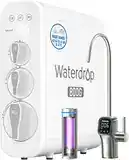
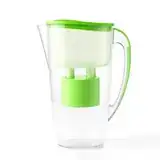
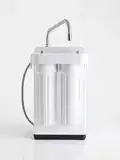
Explore Our Top Picks
Related Resources
More Buying Guides
Related Articles
See the best Lead Removal Filters
NSF-certified filters proven to remove lead
Top-rated PFAS Removal Filters
Filters certified to remove forever chemicals
Our picks for Budget Water Filters
Affordable filters under $50 that actually work
Best Emergency Water Filters
Reliable filters for disaster preparedness
Best Hard Water Filters
Top filters for calcium and magnesium removal
Deep dive — Sulfur Smell Removal Guide
Eliminate rotten egg smell from your water