Microplastics in Bottled Water: How Much, Why It Matters, How to Filter It
A 2024 Columbia study found 240,000 nanoplastic particles per liter in bottled water. That is 1,000 times more than previously thought. Here is the science and what to do about it.
240k
Nanoplastic particles per liter in bottled water
5.5
Particles per liter in tap water
99%+
Removed by reverse osmosis
The Scale of the Problem
Americans drink about 15 billion gallons of bottled water each year. For decades it was sold as cleaner than tap. Research from 2018 to 2024 changed that story, at least for microplastic contamination.
The 2024 Columbia and Rutgers study used stimulated Raman scattering to spot particles as small as 100 nanometers. 90% of plastic particles in bottled water turned out to be nanoplastics, small enough to cross the gut wall, blood brain barrier, and placenta.
Where the Plastic Comes From
The PET bottle
PET sheds particles during filling, storage and especially when exposed to heat or sunlight. Reusing a PET bottle 6 times raises particle shedding by 400%.
The bottling line
Plastic tubing, gaskets and caps add particles. Friction from opening and closing the cap is a major source of polypropylene fragments.
Source water
Many brands (Aquafina, Dasani) start with municipal water. Even purified bottled water picks up new plastics from the bottling process itself.
Health Effects: What We Know
Physical harm
- Gut inflammation and irritation
- Nanoplastics cross intestinal and placental barriers
- 4.5x heart attack and stroke risk when found in arterial plaque (NEJM 2024)
- Oxidative stress at the cellular level
How to Cut Your Exposure
Filter your tap water
One swap drops microplastic exposure 60 to 90x. A reverse osmosis system or carbon block filter handles it.
Switch to glass or stainless steel
Replace plastic bottles, food storage and cups. Never heat food in plastic.
Install a sub micron filter
Carbon block at 0.5 micron or smaller captures most particles. RO at 0.0001 micron removes almost everything. A countertop filter works well for renters.
Never leave bottles in heat
A hot car can quadruple particle shedding. If a bottle has been baking, toss it.
Reduce plastic in the kitchen
Wood cutting boards, metal utensils and beeswax wraps avoid daily particle exposure.
Which Filters Actually Work
| Filter | Pore | Micro | Nano |
|---|---|---|---|
| Reverse Osmosis | 0.0001 μm | 99%+ | 99%+ |
| Carbon Block 0.5μm | 0.5 μm | 95%+ | 50 to 70% |
| Whole House 1μm | 1 μm | 90%+ | 30 to 50% |
| Pitcher | 1 to 5 μm | 70 to 85% | 10 to 30% |
| Faucet Mount | 0.5 to 2 μm | 80 to 90% | 30 to 50% |
Our Recommendation
Install an under sink RO for drinking and cooking. Add a whole house sediment filter for shower water. Total cost runs $300 to $600.
Recommended Systems
Our top picks for removing microplastics at home.
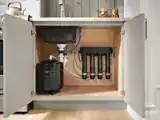
SpringWell Reverse Osmosis
4 stage under sink RO removes 99%+ of microplastics and nanoplastics.
View at SpringWell →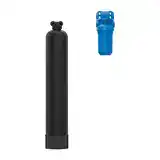
SpringWell CF1 Whole House
Sub micron carbon block filters microplastics at every tap.
View at SpringWell →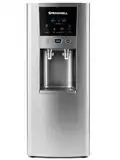
SpringWell Countertop Filter
No install countertop unit with multi stage carbon filtration.
View at SpringWell →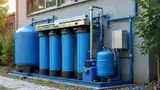
SpringWell Ultra Well Water
Whole house well filter combo for sediment, iron and microplastics.
View at SpringWell →Brand Rankings: How They Compare
| Brand | Avg /L | Max |
|---|---|---|
| Nestle Pure Life | 930 | 10,390 |
| Aquafina | 382 | 2,100 |
| Dasani | 335 | 1,845 |
| Evian | 256 | 1,292 |
| San Pellegrino | 74 | 253 |
| Filtered Tap (RO) | <1 | 2 to 5 |
Cost: Bottled vs Filtered
$2,750
Bottled water
$285
Pitcher filter
$550
RO system
A quality filter pays back in months versus daily bottled water.
The Environmental Cost
Bottled water
- 17 million barrels of oil per year in US
- Only 30% of PET bottles recycled
- 1 billion bottles trashed daily worldwide
- 450 years to decompose
Filtered tap
- One RO replaces 3,000+ bottles
- One pitcher cartridge replaces 300+ bottles
- 90%+ less transport emissions
- Many cartridges are recyclable