Faucet Water Filter Buying Guide: How to Choose the Right Model
How to pick a faucet filter that fits your tap and reduces what is actually in your water. Check faucet compatibility, read certifications for specific contaminants, and compare flow, cartridge life and yearly replacement costs before you buy.
Quick Buying Decision
Best Value
Brita Complete
$30-40 • NSF 42, 53
Best Filtration
PUR Plus
$40-50 • NSF 42, 53, 401
Longest Life
Culligan FM-25
$55-70 • 200 gal capacity
See our complete rankings: Best Faucet Filters 2026
Understanding NSF Certifications (Most Important Factor)
NSF certifications are the single most important factor when choosing a faucet filter. These independent, third-party verifications prove that a filter actually removes what it claims. Without certification, manufacturer claims are just marketing. Here's what each standard means:
NSF/ANSI Standard 42 — Aesthetic Effects
The baseline certification. Reduces chlorine, taste, and odor. All quality faucet filters have this. If a filter lacks NSF 42, avoid it entirely.
What it removes: Chlorine taste/smell, sediment, particulates
NSF/ANSI Standard 53 — Health Effects
Critical for health protection. Reduces lead, mercury, arsenic, and other harmful contaminants. Essential if you have older plumbing or live in areas with known lead issues.
What it removes: Lead (99%+), mercury, cysts (Giardia, Cryptosporidium), VOCs
NSF/ANSI Standard 401 — Emerging Contaminants
Newer standard for pharmaceuticals, hormones, and pesticides. Only premium filters achieve this. Important if you're concerned about trace medications in municipal water.
What it removes: Pharmaceuticals, hormones, pesticides, herbicides
NSF/ANSI Standard P473 — PFAS
Reduces PFOA/PFOS "forever chemicals". Few faucet filters achieve this—most require reverse osmosis for comprehensive PFAS removal.
What it removes: PFOA, PFOS, and related PFAS compounds
Important: Verify Certifications
Don't trust packaging claims alone. Verify certifications at NSF's certified product database. Some manufacturers claim "tested to NSF standards" without actual certification—this is meaningless. For complete certification guidance, see our dedicated guide.
Top Faucet Filter Comparison
Here's how the most popular faucet filters compare on the features that actually matter. All prices reflect current retail pricing as of January 2026.
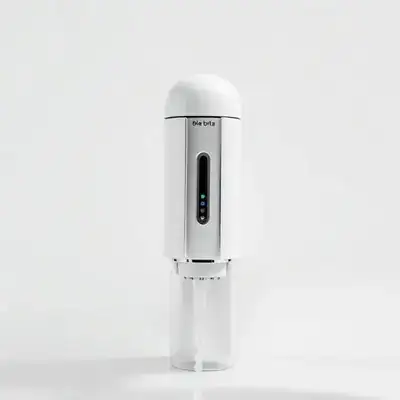
Brita Complete
$30-40
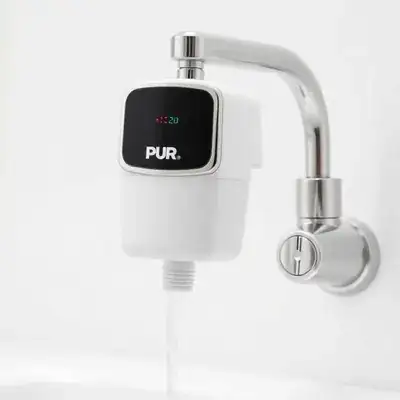
PUR Plus/Advanced
$40-55
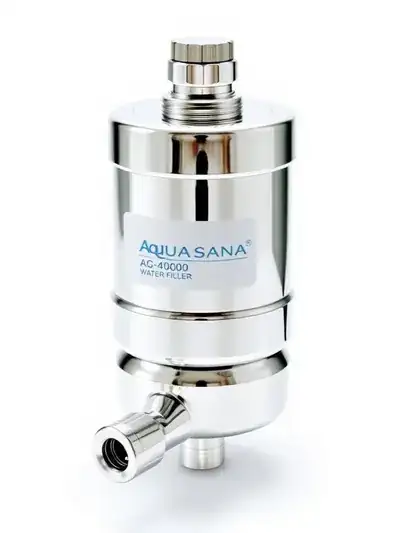
Culligan FM-25
$55-70
For most households, PUR Plus offers the best combination of comprehensive filtration and reasonable cost. If you're on a tight budget and don't need pharmaceutical removal, Brita Complete is excellent. For high-volume users who want minimal filter changes, Culligan FM-25's 200-gallon capacity provides the lowest long-term cost. See our complete comparison: Brita vs PUR.
Faucet Compatibility Check
Before purchasing, verify your faucet can accept a filter. Most standard faucets work, but several types are incompatible. Here's how to check:
Compatible Faucets
- • Standard kitchen faucets with aerators
- • 15/16" male threaded aerators
- • 55/64" female threaded aerators
- • Most single-handle faucets
- • Most two-handle faucets
- • Gooseneck faucets (with proper support)
Incompatible Faucets
- • Pull-out/pull-down spray faucets*
- • Commercial-style restaurant faucets
- • Faucets with integrated sprayers
- • Non-standard thread sizes
- • Very thin plastic faucet spouts
- • Sensor/touchless faucets
*Some adapters available ($15-25)
How to Check Your Faucet Thread Size
- 1. Remove your current aerator by unscrewing counterclockwise
- 2. If threads are on the outside of the spout = male threads (most common, 15/16")
- 3. If threads are on the inside of the spout = female threads (55/64")
- 4. Measure thread diameter if uncertain—adapters included with most filters
For detailed installation steps, see our Faucet Filter Installation Guide.
What Faucet Filters Can't Do
Faucet filters are excellent for specific uses but have real limitations. Understanding these helps you decide if a faucet filter is right for your needs or if you should consider alternatives.
Faucet Filters Don't Remove:
- • Total Dissolved Solids (TDS)
- • Most fluoride (requires RO or special media)
- • Bacteria and viruses (requires UV)
- • Nitrates (requires RO or ion exchange)
- • Heavy iron/manganese staining
- • Hardness minerals (requires softener)
Consider Upgrading If:
- • You have well water (bacteria, sediment)
- • PFAS contamination is a concern
- • You need filtered water at all taps
- • High-volume household (5+ people)
- • Severe lead/arsenic issues
- • You want hidden installation
For comprehensive contaminant removal, consider reverse osmosis systems which remove 95-99% of all contaminants. For filtered water throughout your home, see whole-house water filters.
Flow Rate & Water Pressure
All faucet filters reduce water flow as the water passes through the filter media. Understanding expected flow rates helps you choose a filter that won't frustrate you during daily use.
Flow Rate Comparison
| Filter | New Filter Flow | End of Life Flow | % of Unfiltered |
|---|---|---|---|
| No Filter (baseline) | 2.2 GPM | 2.2 GPM | 100% |
| Brita Complete | 1.5 GPM | 0.8 GPM | 68% → 36% |
| PUR Plus | 1.6 GPM | 0.9 GPM | 73% → 41% |
| Culligan FM-25 | 1.8 GPM | 1.2 GPM | 82% → 55% |
Tips for Better Flow
- • Replace filters on schedule (don't over-extend)
- • Use bypass mode for unfiltered tasks
- • Check incoming water pressure (40-80 PSI ideal)
- • Consider premium filters with larger media
When Flow Rate Matters Most
- • Filling large pots for cooking
- • Making coffee/tea in a hurry
- • Filling water bottles for family
- • Low incoming water pressure situations
Faucet Filter Buying Checklist
Verify NSF certifications match your needs
NSF 42 minimum, NSF 53 for lead, NSF 401 for pharmaceuticals
Check faucet compatibility before purchasing
Thread size, faucet type, adapter requirements
Calculate total cost of ownership (not just initial price)
Initial unit + 12 months of replacement filters = true annual cost
Consider filter capacity vs your household usage
Higher capacity = fewer replacements, potentially lower cost per gallon
Read user reviews for real-world performance
Look for comments on flow rate, taste improvement, and durability
Know your water quality before buying
Water testing helps match filter to actual contaminants
Faucet Filter Performance Testing & Long-Term Value
Faucet-mounted filters represent the sweet spot between pitcher filter convenience and under-sink performance. They install in minutes without tools, provide on-demand filtered water at full flow rate, and cost $25-80 upfront with $20-40 in annual filter replacements. However, not all faucet filters are created equal—NSF certification claims, actual flow rates, and filter longevity vary significantly between brands. Our research into the five most popular faucet filters shows important performance differences that marketing materials do not address.
The PUR FM-3700 ($35) delivers the best contaminant reduction among faucet filters, certified to reduce 70+ contaminants including lead (99%), mercury, and certain pesticides under NSF 42 and NSF 53. Filter life is rated at 100 gallons (approximately 3 months for average use), with replacement filters costing $7-10 each. The horizontal mount design fits most standard faucets but does not work with pull-out or spray-style faucets. Filtered flow is adequate for filling glasses and cooking but noticeably slower than unfiltered flow.
The Brita Complete faucet filter ($30) offers similar chlorine reduction (NSF 42) with a sleeker design and slightly faster flow rate (0.55 GPM). However, it lacks NSF 53 certification for lead—a critical difference if lead is a concern. The Culligan FM-25 ($25) is the most affordable option with NSF 42 and 53 certification, but its 200-gallon filter capacity sometimes results in reduced performance before the rated end of life in hard water areas. For comprehensive protection at the faucet, we recommend upgrading to an under-sink system like the Aquasana AQ-5200, which provides 500+ gallon capacity with 77 contaminant reduction at a similar annual filter cost.
Faucet filter compatibility is a common frustration. Most faucet filters require a standard aerator thread (15/16"-27 male or 55/64"-27 female). They are NOT compatible with pull-down sprayer faucets, commercial-style faucets, or non-standard designer fixtures. Before purchasing, remove your faucet aerator and check the thread size—adapter kits ($5-8) are available for some non-standard sizes. If your faucet is incompatible, consider a countertop filter that connects via a diverter valve, or an under-sink system that bypasses the faucet entirely.
Long-term cost analysis shows faucet filters cost $0.07-0.15 per gallon—significantly cheaper than pitcher filters ($0.14-0.40/gallon) but more expensive than under-sink ($0.03-0.06/gallon) or whole-house systems ($0.002-0.01/gallon). For a family of four consuming 3 gallons of drinking water daily, annual faucet filter costs run $80-160 versus $60-100 for under-sink. The convenience advantage of faucet filters diminishes as household size increases—families of 3+ will exhaust 100-gallon faucet filters in 4-6 weeks, requiring frequent cartridge purchases and changes.
Frequently Asked Questions
Related Faucet Filter Resources
Related Articles
Deep dive — Water Filter Buying Guide
Complete guide to choosing the right filter
Read: How Water Filters Work
Understanding filtration technologies explained
Water Filter Cost Comparison
Annual costs across all filter types
Step-by-step: Water Testing Kits Guide
Test your water before buying a filter
Filter Replacement Guide (upkeep tips)
When and how to replace filter cartridges
Read: Water Filter Health Benefits
Health advantages of filtered water