PFAS Forever Chemicals: What They Are, Why They're Dangerous & How to Remove Them
PFAS are in the blood of 98% of Americans. These indestructible synthetic chemicals contaminate drinking water nationwide, linked to cancer, thyroid disease, and immune suppression. The EPA just set the strictest limits ever—here's what you need to know and how to protect your family.
What Are PFAS (Forever Chemicals)?
PFAS—per- and polyfluoroalkyl substances—are a family of over 14,000 synthetic chemicals united by one defining feature: carbon-fluorine bonds that are among the strongest in organic chemistry. This bond makes PFAS incredibly useful (resistant to heat, water, oil, and stains) and incredibly persistent (they don't break down in nature, earning them the "forever chemicals" moniker).
First developed by 3M and DuPont in the 1930s-40s, PFAS became ubiquitous in modern life. PFOA (perfluorooctanoic acid, used in Teflon manufacturing) and PFOS (perfluorooctane sulfonate, the active ingredient in Scotchgard and firefighting foam) are the most studied and regulated, but thousands of replacement compounds are now in use— many with similar persistence and unknown health effects.
The scale of contamination is staggering. PFAS have been detected in the blood of 98% of Americans, in rainwater worldwide, in Arctic ice, and in the blood of polar bears. The USGS estimates at least 45% of U.S. tap water contains detectable PFAS. Understanding this contamination is essential for making informed decisions about your drinking water safety.
Common PFAS Compounds
| Compound | Common Use | EPA Limit (2024) | Half-Life in Body |
|---|---|---|---|
| PFOA | Teflon manufacturing | 4 ppt | ~3.8 years |
| PFOS | Firefighting foam, Scotchgard | 4 ppt | ~5.4 years |
| PFHxS | Metal plating, firefighting | 10 ppt | ~8.5 years |
| PFNA | Industrial surfactant | 10 ppt | ~2.5 years |
| GenX (HFPO-DA) | PFOA replacement | 10 ppt | Days-weeks |
How PFAS Contaminate Drinking Water
PFAS contamination is not random—it follows predictable patterns tied to industrial activity, military operations, and waste management. Understanding the sources helps you assess your own risk.
Military bases and airports are the largest point sources due to decades of AFFF (aqueous film-forming foam) use in firefighting training. The Department of Defense has identified over 700 installations with known or suspected PFAS contamination. Civilian airports with fire training facilities are also significant sources.
Manufacturing facilities that produce or use PFAS discharge contaminated wastewater. DuPont's Washington Works plant in West Virginia contaminated the drinking water of 70,000+ people—the subject of the film "Dark Waters" and the landmark C8 Health Project study.
Wastewater treatment plants concentrate PFAS from household and industrial sources. Standard treatment cannot break PFAS molecular bonds, so they pass through into treated water and biosolids. When biosolids are applied to agricultural land as fertilizer, PFAS enter soil and groundwater—creating a contamination loop.
Landfills containing PFAS-treated products leach these chemicals into groundwater as rain percolates through waste. Every product containing PFAS—from food wrappers to carpets—eventually ends up in a landfill, where the chemicals can migrate for decades.
Health Effects: What the Science Shows
PFAS health research has accelerated dramatically since the C8 Health Project (2005-2013) studied 69,000 people exposed to PFOA-contaminated water near DuPont's West Virginia plant. That study established "probable links" between PFOA exposure and six disease categories. Since then, hundreds of peer-reviewed studies have expanded our understanding.
Established Health Associations
Cancer
Kidney cancer (PFOA), testicular cancer (PFOA), bladder cancer (PFOS). IARC classified PFOA as "carcinogenic to humans" (Group 1) in 2023.
Thyroid Disease
Disrupts thyroid hormone regulation. Associated with hypothyroidism and thyroid cancer at elevated exposure levels.
Immune Suppression
Reduced vaccine antibody response in children. Studies show PFAS-exposed populations have weaker immune responses to routine vaccinations.
Cholesterol
Even low-level exposure associated with elevated total and LDL cholesterol, increasing cardiovascular disease risk.
Reproductive Effects
Reduced fertility, pregnancy-induced hypertension (preeclampsia), and lower birth weight in exposed populations.
Liver Effects
Elevated liver enzymes and non-alcoholic fatty liver disease linked to PFAS blood levels.
2024 EPA PFAS Drinking Water Standards
In April 2024, the EPA finalized the first-ever legally enforceable national PFAS drinking water standards— a watershed moment after decades of voluntary guidelines. These Maximum Contaminant Levels are among the strictest chemical standards the EPA has ever set.
EPA Final PFAS MCLs (April 2024)
| Compound | MCL | MCLG | Compliance |
|---|---|---|---|
| PFOA | 4.0 ppt | 0 (zero) | 2029 |
| PFOS | 4.0 ppt | 0 (zero) | 2029 |
| PFHxS | 10 ppt | 10 ppt | 2029 |
| PFNA | 10 ppt | 10 ppt | 2029 |
| GenX (HFPO-DA) | 10 ppt | 10 ppt | 2029 |
| Mixtures (2+) | Hazard Index ≤1 | — | 2029 |
These standards are strict but don't take full effect until 2029. In the meantime, your water quality report may not yet include PFAS data. Home filtration is the proactive approach while utilities upgrade their treatment. For our complete guide on PFAS treatment technologies, see our PFAS removal guide.
Is Your Water Affected?
Determining your PFAS exposure requires investigation, since most water systems haven't published PFAS testing results yet. Here's how to assess your risk:
1. Check Known Contamination Maps
The EWG's interactive PFAS contamination map shows known contamination sites, military installations, and affected water systems. The PFAS Project also maintains a comprehensive database. If you're within 10 miles of a known source, testing is strongly recommended.
2. Contact Your Water Utility
Ask your utility if they've tested for PFAS and request results. Some states (CA, MA, NJ, MI) already require PFAS monitoring. Federal requirements begin in 2027.
3. Test Your Water Independently
Services like Tap Score and Eurofins offer PFAS-specific testing panels ($250-400). For general water quality screening, start with our water testing kits guide. A TDS meter can't detect PFAS specifically but provides a baseline water quality reading.
How to Remove PFAS from Your Drinking Water
While waiting for utilities to meet the 2029 compliance deadline, point-of-use filtration is the most effective immediate protection. Here's what works—and what doesn't:
PFAS Removal by Filter Type
| Filter Type | PFAS Removal | Certification | Cost |
|---|---|---|---|
| Under-Sink RO | 90-99% | NSF 58 | $200-500 |
| Clearly Filtered Pitcher | 98%+ | NSF P473 | $70 |
| Aquasana Under-Sink | 95%+ | NSF P473 | $150 |
| Carbon Block (quality) | 60-90% | Varies | $100-200 |
| Standard Brita/PUR | 30-60% | Not P473 | $25-35 |
| Boiling | 0% | — | — |
For detailed filter recommendations, see our best PFAS removal filters and RO system reviews and under-sink filter reviews. Understanding the difference between filters and purifiers helps you choose the right approach. For cooking-specific concerns, our kitchen filter guide covers PFAS considerations. Also check common myths about boiling— it doesn't work for PFAS either. If you're a renter, pitcher filters are your best no-installation option.
The Bigger Picture: What's Being Done
PFAS contamination is arguably the largest environmental health crisis of the 21st century, and the response is accelerating. The EPA's 2024 standards are the most significant regulatory action to date. Major manufacturers (3M, DuPont/Chemours) have committed to phasing out PFAS by 2025-2026 and face over $10 billion in legal settlements.
The estimated cost of cleaning up PFAS contamination across the U.S. exceeds $400 billion. Water utilities will need to install advanced treatment (granular activated carbon, ion exchange, or high-pressure membrane systems) to meet the new standards. The EPA has allocated $9 billion in funding to help disadvantaged communities address PFAS contamination.
For individual protection, home filtration remains the most immediate and controllable action. Combined with checking your water supply through city water quality rankings, avoiding PFAS-containing products, and supporting regulatory action, you can significantly reduce your family's PFAS exposure while systemic solutions are implemented. For well water users facing additional contamination concerns, see our guide on well water safety. Also explore how microplastics interact with PFAS—both are emerging contaminants that effective filtration addresses simultaneously. Our pitcher filter reviews and whole-house filter roundup are good next reads.
Frequently Asked Questions
Recommended Products
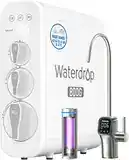
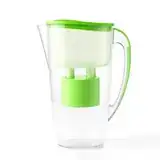
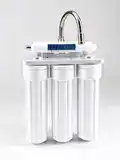
Explore Our Top Picks
Contaminant Health & Removal Guide
EPA Regulatory Framework
The EPA regulates 90+ contaminants under the Safe Drinking Water Act through Maximum Contaminant Levels (MCLs). However, MCLs represent legally enforceable limits, not necessarily health-optimal levels. Maximum Contaminant Level Goals (MCLGs) represent the level at which no known health effects occur - for carcinogens like lead and arsenic, the MCLG is zero. The 2024 PFAS rule established the first-ever MCLs for six PFAS compounds at 4 parts per trillion (ppt) for PFOA and PFOS individually, marking the strictest drinking water standard ever enacted. Utilities have until 2029 to comply, meaning many systems currently exceed these limits.
Emerging Contaminants of Concern
Beyond regulated contaminants, thousands of unregulated chemicals are present in drinking water. Microplastics, detected in 94% of US tap water samples, range from 0-61 particles per liter depending on location. Pharmaceutical residues including antibiotics, hormones, and antidepressants are found at nanogram-per-liter concentrations in most treated water supplies. Disinfection byproducts (THMs and HAAs), formed when chlorine reacts with organic matter, are associated with increased cancer risk at levels currently permitted by EPA regulations. These emerging contaminants are best addressed through activated carbon filtration (for organics) and reverse osmosis (for comprehensive removal).
Vulnerable Populations
Children, pregnant women, elderly individuals, and immunocompromised people face heightened risks from water contaminants. Lead exposure is particularly dangerous for children under 6, as even low levels (below the current 15 ppb action level) can cause irreversible neurological damage. Pregnant women should avoid water with nitrate levels above 10 mg/L due to risks of methemoglobinemia (blue baby syndrome). Individuals with weakened immune systems should consider UV treatment or boiling to eliminate Cryptosporidium, which resists standard chlorine disinfection. For these populations, point-of-use filtration with NSF 53 certification provides an important safety layer beyond municipal treatment.
Water Quality Science and Consumer Protection
The science of water treatment has evolved dramatically over the past two decades, driven by advances in analytical chemistry that can now detect contaminants at parts-per-trillion concentrations. This detection capability has revealed the presence of thousands of previously unidentified compounds in municipal water supplies, including pharmaceutical residues, endocrine-disrupting chemicals, microplastics, and per- and polyfluoroalkyl substances (PFAS). The EPA currently regulates 90 contaminants under the Safe Drinking Water Act, but the Environmental Working Group has documented over 300 additional pollutants in US tap water that have no legal limits.
Understanding the distinction between regulated and unregulated contaminants is essential for making informed filtration decisions. Regulated contaminants have Maximum Contaminant Levels (MCLs) that public water systems must meet, enforced through mandatory testing and public reporting via annual Consumer Confidence Reports. Unregulated contaminants, despite being detected in water supplies, have no enforceable limits, meaning your water utility is not required to treat for or even report their presence. This regulatory gap means that water meeting all federal standards may still contain compounds of health concern at levels that research suggests could pose long-term risks.
The health economics of water filtration present a compelling case for proactive treatment. A 2023 analysis by the Water Quality Research Foundation estimated that the lifetime healthcare cost savings from removing lead exposure alone average $5,600 per child. When factoring in reduced cancer risk from PFAS and disinfection byproduct removal, improved developmental outcomes from reducing prenatal contaminant exposure, and decreased gastrointestinal illness from pathogen removal, the total health-economic benefit of comprehensive home water filtration ranges from $8,000 to $25,000 per household over a 20-year period. These savings dwarf the $2,000-5,000 total cost of purchasing and maintaining a quality filtration system over the same timeframe.
Infrastructure Challenges and Future Outlook
Americas water infrastructure faces unprecedented challenges that directly impact household water quality. The American Society of Civil Engineers grades US drinking water infrastructure at C-minus, with an estimated $625 billion investment needed over 20 years to bring systems to adequate condition. Approximately 6 billion gallons of treated water are lost daily through 240,000 water main breaks annually. These infrastructure failures not only waste resources but create potential contamination pathways where soil, bacteria, and chemicals can enter the distribution system through pressure drops and pipe fractures.
Lead service lines remain the most pressing infrastructure concern, with an estimated 6-10 million lead pipes still delivering water to American homes. The EPA Lead and Copper Rule Revisions mandate replacement of all lead service lines within the coming decade, but the scale of the project ($3,000-8,000 per line) and limited workforce capacity mean many households will continue receiving water through lead pipes for years. During the replacement process itself, disturbance of existing pipes can temporarily increase lead levels by 10-100x above baseline. Point-of-use filtration certified to NSF 53 for lead provides the most reliable protection during this transition period.
Climate change introduces compounding water quality challenges that existing treatment infrastructure was not designed to address. Rising temperatures promote harmful algal blooms producing cyanotoxins that overwhelm conventional treatment processes. Increased wildfire frequency deposits ash-borne benzene and heavy metals into source watersheds. Extreme precipitation events cause combined sewer overflows that introduce untreated sewage into source water. Sea level rise threatens coastal aquifers with saltwater intrusion, increasing TDS and chloride levels beyond treatment capacity. These converging pressures reinforce the critical importance of residential water treatment as the final barrier between environmental challenges and family health.
Filtration Technology Comparison and Selection
Selecting the right water filtration technology requires matching your specific contaminant profile to the capabilities of available treatment methods. Activated carbon filtration, the most widely deployed residential technology, excels at removing chlorine, volatile organic compounds (VOCs), and taste and odor compounds through adsorption. Coconut shell-derived granular activated carbon (GAC) provides the optimal pore structure for drinking water applications, with one gram offering approximately 3,000 square meters of internal surface area for contaminant capture. Carbon block filters offer superior performance to GAC by compressing the carbon into a solid matrix that provides both chemical adsorption and mechanical filtration down to 0.5 microns.
Reverse osmosis (RO) represents the gold standard for comprehensive residential water purification, achieving 95-99% rejection of dissolved solids including heavy metals, PFAS, nitrates, fluoride, and virtually all chemical contaminants. Modern residential RO systems incorporate pre-filtration stages (sediment and carbon) to protect the semipermeable membrane, a pressurized storage tank for on-demand delivery, and post-filtration polishing stages including remineralization to restore beneficial minerals and optimize pH. The primary trade-off is water waste, with conventional systems producing 3-4 gallons of reject water per gallon of purified water, though modern permeate pump designs reduce this ratio to 1:1 or better.
Ion exchange technology addresses specific ionic contaminants through selective chemical swapping. Water softeners use strong acid cation (SAC) resin to exchange calcium and magnesium (hardness) for sodium, preventing scale formation that damages plumbing and appliances. Specialized anion exchange resins target nitrates, arsenic, perchlorate, and PFAS with high selectivity. Mixed-bed deionization produces ultrapure water by removing virtually all dissolved ions. KDF (Kinetic Degradation Fluxion) media uses copper-zinc granules to remove chlorine and heavy metals through electrochemical redox reactions, particularly effective in high-temperature applications like shower filtration where carbon performance diminishes.
Related Articles
Best Lead Removal Filters
NSF-certified filters proven to remove lead
Best PFAS Removal Filters
Filters certified to remove forever chemicals
Our picks for Budget Water Filters
Affordable filters under $50 that actually work
See the best Emergency Water Filters
Reliable filters for disaster preparedness
See the best Hard Water Filters
Top filters for calcium and magnesium removal
More on Sulfur Smell Removal Guide
Eliminate rotten egg smell from your water