Is Well Water Safe to Drink? What Every Well Owner Must Know
Over 43 million Americans drink private well water that receives zero government oversight or treatment. Studies show roughly 1 in 5 wells exceeds at least one health-based guideline. Here's exactly how to test, treat, and protect your family's well water supply.
Why Private Wells Carry Unique Risks
The fundamental difference between well water and city water is oversight. Municipal water systems are regulated by the EPA under the Safe Drinking Water Act, requiring continuous monitoring, treatment, and public reporting through annual Consumer Confidence Reports. Private wells have none of these protections—the well owner is solely responsible for water quality.
This creates a significant knowledge gap. A U.S. Geological Survey study found that about 21% of private domestic wells had at least one contaminant at concentrations exceeding human health benchmarks. The most common exceedances were for manganese (present in 5% of wells above health levels), arsenic, strontium, nitrate, and bacteria. Many well owners are unaware of these issues because they've never tested their water.
Unlike municipal tap water, which is treated with chlorine or chloramine to kill bacteria and goes through sediment removal, well water arrives at your faucet in essentially the same condition it exists underground—filtered only by the natural geology between the aquifer and your well casing.
Key Well Water Risk Factors
Shallow wells (<50 ft): Highest vulnerability to surface contamination
Near agriculture: Nitrate and pesticide runoff risk
Near septic systems: Bacterial contamination risk within 50 ft
Older wells: Deteriorating casings allow surface water entry
Flood-prone areas: Flooding can contaminate entire aquifer
Granite bedrock: Higher radon and arsenic risk
Common Well Water Contaminants
Well water contaminants fall into three categories: biological (bacteria, viruses, parasites), chemical (arsenic, nitrates, VOCs, PFAS), and physical (sediment, iron, manganese). Your region's geology and land use determine which contaminants are most likely.
Well Water Contaminant Reference
| Contaminant | Health Limit | Health Risk | Treatment |
|---|---|---|---|
| Coliform Bacteria | 0 (absent) | Gastrointestinal illness | UV, chlorination |
| Nitrate | 10 ppm | Blue baby syndrome | RO, ion exchange |
| Arsenic | 10 ppb | Cancer, organ damage | RO, adsorption media |
| Lead | 15 ppb (AL) | Neurological damage | RO, carbon block |
| Iron | 0.3 ppm (SMCL) | Staining, metallic taste | Oxidation filter |
| Manganese | 0.05 ppm (SMCL) | Neurological effects | Oxidation filter |
| Hydrogen Sulfide | None (odor) | Nausea at high levels | Air injection, chlorine |
| Hardness | None (nuisance) | Scale, dry skin/hair | Water softener |
| Radon | 300-4,000 pCi/L | Lung cancer (inhaled) | Aeration, GAC |
For detailed guides on specific contaminants, see our resources on lead removal, PFAS removal, sulfur smell elimination, and brown well water fixes.
How to Test Your Well Water
Testing is the essential first step—you can't treat what you haven't identified. Unlike city water, where you can read your annual water quality report, well owners must arrange their own testing.
1 Annual Basic Test ($50-150)
Bacteria (total coliform, E. coli), nitrates, pH, and TDS. Use a state-certified lab or comprehensive test kit. This is the minimum recommended by the EPA.
2 Comprehensive Panel ($150-400)
Adds arsenic, lead, copper, iron, manganese, hardness, fluoride, and VOCs. Recommended every 3-5 years or after any well modification. Services like Tap Score offer well-specific panels.
3 Quick Screening ($15-50)
Use a TDS meter for baseline readings and at-home test strips for bacteria and nitrates. Not a substitute for lab testing, but useful for monitoring between annual tests.
For comprehensive testing guidance, see our water testing kits guide. Your state health department may offer free or low-cost well water testing—check their website first.
Well Water Treatment Options
Well water treatment is almost always multi-stage because wells typically have multiple contaminant types. The correct system depends entirely on your water test results. Here's a typical treatment train for well water, from entry point to drinking water tap:
Stage 1: Sediment Pre-Filter
Removes sand, silt, and particles. Protects downstream equipment. 5-20 micron cartridge. Replace every 3-6 months.
Whole house filters →Stage 2: Iron/Manganese Removal
Air injection or oxidation filter for dissolved iron and manganese. Birm, Greensand, or AIO media. Backwashes automatically.
Iron removal guide →Stage 3: Water Softener
Ion exchange removes calcium and magnesium hardness. Essential if hardness exceeds 7 gpg. Prevents scale in plumbing.
How softeners work →Stage 4: UV Disinfection
Kills 99.99% of bacteria, viruses, and parasites. No chemicals added. Essential safety barrier for any well.
UV purifier guide →Stage 5: Drinking Water Filter
Under-sink RO or carbon block at the kitchen tap for maximum purity. Removes arsenic, nitrates, PFAS, and remaining contaminants.
Best RO systems →Not every well needs all five stages. A well with low iron, moderate hardness, and no bacteria might only need a softener and under-sink RO. A well with high iron, bacteria, and arsenic might need the full treatment train. Our best well water filters guide covers specific system recommendations by contaminant profile.
Well Water vs. City Water: Side-by-Side
| Factor | Well Water | City Water |
|---|---|---|
| Regulation | None (owner responsible) | EPA/state regulated |
| Testing | Owner-arranged | Continuous monitoring |
| Treatment | Owner-installed | Utility-provided |
| Chlorine | Not present | Added for disinfection |
| Monthly Cost | Electricity only (~$5-15) | Water bill ($30-80) |
| Common Issues | Iron, hardness, bacteria | Chlorine, lead, PFAS |
| Pros | No water bill, no chlorine | Monitored, treated at source |
For city water users concerned about quality, see our guide on whether tap water is safe and our worst tap water cities ranking. For a direct comparison of filtration and purification approaches, see filter vs. purifier.
Cost of Well Water Treatment
| Component | Equipment | Annual Maintenance |
|---|---|---|
| Sediment Pre-Filter | $50-150 | $30-60 |
| Iron/Manganese Filter | $800-2,000 | $50-100 |
| Water Softener | $600-2,500 | $100-150 (salt) |
| UV System | $300-800 | $30-60 (lamp) |
| Under-Sink RO | $200-500 | $60-100 (filters) |
| Full System | $2,000-5,000 | $270-470 |
For cost breakdowns across all filter types, see our water filter cost comparison. Understanding filter lifespans is especially important for well water systems with multiple stages.
Well Maintenance Checklist
Test water annually for bacteria, nitrates, pH, and TDS at minimum
Inspect well cap and casing annually for cracks, damage, or insect entry
Keep hazardous materials (fuel, pesticides, fertilizer) 100+ feet from well
Ensure surface water drains away from the well head
Replace UV lamp annually; check sleeve for mineral buildup
Backwash iron filter weekly (most systems auto-backwash)
Monitor salt levels in water softener brine tank monthly
Replace sediment pre-filter every 3-6 months based on water clarity
Schedule professional well inspection every 5 years
Well Water Treatment to Compare
Test first, then match treatment to the results. These are exact products we link to; check the current price and sizing before you buy.
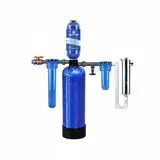
Aquasana Rhino Well Water with UV
Aquasana Rhino Well Water with UV
Whole-house filtration with UV disinfection for wells where bacteria is a concern. Iron, manganese or hardness may need separate pretreatment, so size it from your lab results.
Compare sizing, treatment options and ongoing costs in our best well water filters guide.

iSpring RCC7AK 6-Stage RO System
iSpring RCC7AK 6-Stage RO System
Under-sink reverse osmosis for drinking and cooking water when tests show nitrates, arsenic or high dissolved solids. It treats one tap, not the whole house.
Compare sizing, treatment options and ongoing costs in our best reverse osmosis systems guide.
Have iron, sulfur smell or hard water? Start with our iron guide, sulfur guide and water softener guide.
Frequently Asked Questions
Related Articles
Best Lead Removal Filters
NSF-certified filters proven to remove lead
See the best PFAS Removal Filters
Filters certified to remove forever chemicals
Top-rated Budget Water Filters
Affordable filters under $50 that actually work
See the best Emergency Water Filters
Reliable filters for disaster preparedness
Best Hard Water Filters
Top filters for calcium and magnesium removal
More on Sulfur Smell Removal Guide
Eliminate rotten egg smell from your water