Overview
Rust in well water comes from dissolved iron oxidizing in your pipes and fixtures. The fix depends on the iron concentration, the form (ferrous vs ferric), and whether iron bacteria is present. Here are seven proven methods, ranked by effectiveness for typical residential well water.
Step 1: Identify the Iron Type
Before choosing a treatment, determine which iron you have. Ferrous iron (clear when drawn, turns red after exposure to air) is dissolved and removable by ion exchange or oxidation. Ferric iron (red and cloudy when drawn) is already oxidized and removable by sediment filtration. Iron bacteria leaves a slimy red biofilm in tanks and toilets — requires shock chlorination.
Method 1: Air Injection (AIO) Filters
The dominant residential technology for iron 0.5–15 ppm. Air drawn into the tank oxidizes dissolved iron to ferric particles, which the Katalox or Filox media filters out and backwashes to drain. No chemicals, no salt. Cost: $1,200–2,500. Lasts 7–10 years. Maintenance: yearly head check, media replacement at 8–10 years.
Method 2: Chemical Oxidation + Contact Tank
For iron over 15 ppm, iron bacteria, or hydrogen sulfide present. Chlorine bleach or hydrogen peroxide is metered in ahead of a 40–80 gallon contact tank, where oxidation completes. A multimedia filter then removes the oxidized particles. Cost: $2,000–4,000. Requires monthly chemical refilling.
Method 3: Water Softeners (Up to 1 ppm)
Softeners exchange dissolved iron for sodium ions on resin beads. Effective only for ferrous iron under 1 ppm and only when no oxygen has reached the water (oxidized iron fouls resin permanently). Add a resin cleaner (Iron-Out) to the brine tank monthly. Cost: $700–2,500.
Method 4: Sediment Filters for Ferric Iron
If iron is already oxidized when it enters your home (red cloudy water from the well), 5-micron sediment filters or spin-down strainers remove it without chemistry. Cartridges clog quickly with high iron — backwashing sediment tanks are more practical. Cost: $200–800.
Method 5: Greensand Filters
Manganese-coated greensand oxidizes and filters iron, manganese, and hydrogen sulfide simultaneously. Requires periodic potassium permanganate regeneration. Effective for iron up to 10 ppm. Mostly replaced by AIO systems but still common in older installations. Cost: $1,000–2,500.
Method 6: Reverse Osmosis (Drinking Water Only)
RO removes iron at the kitchen tap but only after upstream pre-treatment. Sending high-iron water directly to RO destroys the membrane within weeks. Use as a final polish after whole-house iron removal, not as primary treatment. Cost: $200–800.
Method 7: Shock Chlorination for Iron Bacteria
For wells with iron bacteria (slimy red biofilm), follow well-specific guidance from a licensed well contractor or local health department. The dose depends on well dimensions, water volume and bleach concentration; do not use a fixed gallon dose. Protect treatment equipment, flush as directed and confirm microbiological results before drinking.
Treatment Options to Compare
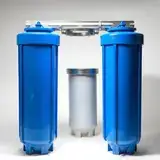
iSpring WGB32BM Whole House Filter
iSpring WGB32BM Whole House Filter
Compare this cartridge-based iron and manganese option against your lab results and the current manufacturer's feed-water limits. It is not a well disinfectant or a substitute for treatment of heavy iron loading.
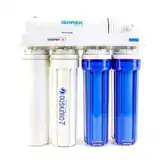
iSpring RCC7AK 6-Stage RO System
iSpring RCC7AK 6-Stage RO System
An optional kitchen drinking-water stage after adequate whole-house iron treatment. Do not feed iron-heavy water directly to an RO membrane.
Compare sizing, treatment options and ongoing costs in our best reverse osmosis systems guide.
Bottom Line
Find out which kind of iron you have before you buy anything. Particles need sediment filtration, dissolved iron needs oxidation (or a softener at low levels), and iron bacteria needs well-specific disinfection. Match the system to your lab results and to the maker's stated iron, manganese and pH limits.
Related Resources
- Iron in well water
- 10 types of well water filters
- Best well water filters
- Orange stains in bathtub
- Brown well water
- Best water softeners
- Best home water filters
- Best RO systems
- Best whole house filters
- Best water test kits
- Lead in water
- PFAS contamination
- Fluoride in water
- Chlorine in water
- How to choose a filter
- Local water quality