Iron Water Testing Guide
How to tell whether iron is behind orange stains, a metallic taste or cloudy water, how to test for it, and which treatment fits the type and amount of iron your test finds.
Do You Have Iron in Your Water?
Check these common visual signs before testing
Orange/brown stains on fixtures, sinks, toilets
Reddish-brown water when first turned on
Metallic taste in water
Orange staining on laundry
Slimy feel or film on water surface
Tank toilet water has rusty color
Types of Iron in Water
Ferrous Iron (Clear Water Iron)
Appearance:
Water looks clear when first drawn, turns orange/brown after sitting
Characteristics:
Dissolved in water - invisible until exposed to air
Best Removal:
Water softeners, oxidizing filters, chemical feeders
Ferric Iron (Red Water Iron)
Appearance:
Water is visibly orange/brown/red immediately
Characteristics:
Already oxidized - visible particles in water
Best Removal:
Sediment filters, oxidizing filters, cartridge filters
Iron Bacteria
Appearance:
Slimy orange/brown buildup, biofilm, may have petroleum smell
Characteristics:
Living organisms feeding on iron - creates thick slime
Best Removal:
Shock chlorination, UV sterilization, ongoing chemical treatment
Health & Safety Information
EPA Standard:
Secondary standard: 0.3 ppm (cosmetic/taste, not health-based)
Health Impact:
Iron is not toxic at levels typically found in water
Key Points:
- •Mostly a nuisance - staining and taste
- •Not harmful to drink in typical amounts
- •Can feed harmful bacteria
- •May indicate corroded pipes (check for lead too)
Iron Testing Methods
Iron Test Strips
Quick, affordable test strips provide instant readings for iron levels in water.
1 minute
Accuracy:
Detection Range:
0-5 ppm typically
Popular Brands:
JNW Direct, Industrial Test Systems, LaMotte
Step-by-Step:
- 1.Run cold water for 30 seconds
- 2.Dip test strip in water for specified time (usually 1 second)
- 3.Remove and shake off excess water
- 4.Wait 60 seconds for color to develop
- 5.Match strip color to chart on bottle
- 6.Record your ppm (parts per million) reading
Advantages:
- • Instant results
- • Very affordable
- • Easy to use
- • Reliable for screening
Limitations:
- • Less precise than lab
- • Doesn't distinguish iron types
- • Can't detect very low levels
Liquid Reagent Test Kit
Professional-grade drop testing with precise color matching for accurate readings.
5-10 minutes
Accuracy:
Detection Range:
0-10 ppm with precision
Popular Brands:
Taylor, LaMotte, Hach
Step-by-Step:
- 1.Fill test tube to marked line with water sample
- 2.Add drops of Iron Reagent #1 (count drops carefully)
- 3.Swirl to mix thoroughly
- 4.Add Iron Reagent #2 drops
- 5.Water will turn color based on iron content
- 6.Count total drops used or compare to color chart
Advantages:
- • Very accurate
- • Quantitative results
- • Can test multiple samples
- • Long shelf life
Limitations:
- • Takes longer
- • More expensive
- • Requires careful technique
Digital Iron Meter
Electronic meter provides digital readout - best for frequent testing or professionals.
1-2 minutes
Accuracy:
Detection Range:
0-15 ppm digital display
Popular Brands:
Hanna Instruments, Milwaukee, Apera
Step-by-Step:
- 1.Calibrate meter per manufacturer instructions
- 2.Collect fresh water sample in clean container
- 3.Insert probe into sample
- 4.Wait for reading to stabilize (30-60 seconds)
- 5.Read digital display for exact ppm
- 6.Clean probe after use
Advantages:
- • Most accurate
- • Digital display
- • Reusable
- • No color matching needed
Limitations:
- • Expensive upfront
- • Needs calibration
- • Requires maintenance
Laboratory Testing
Comprehensive lab analysis distinguishing between ferrous and ferric iron, plus other metals.
5-7 days
Accuracy:
Detection Range:
Can detect trace amounts
Popular Brands:
Tap Score, SimpleLab, National Testing Laboratories
Step-by-Step:
- 1.Order test kit online (Tap Score, SimpleLab, etc.)
- 2.Collect sample per instructions
- 3.Ship to laboratory
- 4.Receive detailed report showing iron type, concentration, other metals
- 5.Get professional interpretation
Advantages:
- • Most comprehensive
- • Identifies iron type
- • Tests other contaminants
- • Professional analysis
Limitations:
- • Most expensive
- • Takes time
- • May be overkill for simple iron
Iron Removal Solutions
Water Softener (Ion Exchange)
Best for: Clear water iron (ferrous)
Important Considerations:
- •Only removes dissolved (clear water) iron
- •Won't work on rusty/visible iron
- •Best when you also have hard water
- •Needs regular salt/maintenance
Oxidizing Filter (Manganese Greensand)
Best for: Moderate to high iron, both types
Important Considerations:
- •Oxidizes ferrous iron to ferric, then filters it
- •Works on both clear and rusty water
- •Requires periodic regeneration with chemicals
- •Best for well water with significant iron
Sediment/Cartridge Filters
Best for: Low-moderate ferric iron (already rusty)
Important Considerations:
- •Only catches particles - won't remove dissolved iron
- •Need frequent replacement with high iron
- •Use 5-10 micron filters for iron
- •Good pre-filter before other systems
Reverse Osmosis (Point of Use)
Best for: Drinking water only (after iron pre-treatment)
Important Considerations:
- •DO NOT use RO as primary iron filter - will clog membrane
- •Use after whole house iron filter
- •Perfect for drinking water
- •Expensive if used for all water
Top-Rated Iron Removal Systems
Based on our research into published specifications and owner costs, these systems deliver the best iron removal performance for well water applications. Choosing the right system depends on your iron type (ferrous vs ferric), concentration level, and whether you also need to address manganese, sulfur, or hardness.
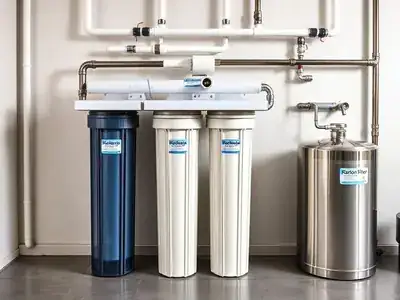
SpringWell Well Water System — Best Overall
Air injection oxidation system handles up to 7 ppm iron, 1 ppm manganese, and 8 ppm hydrogen sulfide. No chemicals required. Automatic backwash cleans the filter media every few days.
Iron Removal: Up to 7 ppm
Technology: Air injection oxidation
Maintenance: Automatic backwash, no chemicals
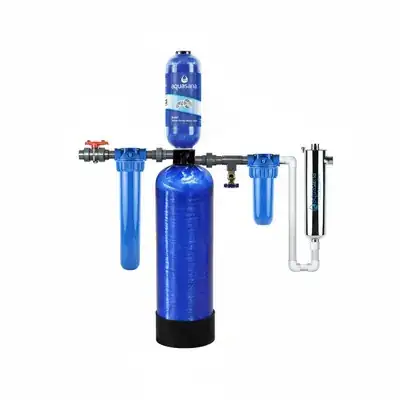
Aquasana Rhino Well Water — Best Value
Multi-stage system with dedicated iron and manganese pre-filter plus catalytic carbon for VOCs and chemicals. NSF certified for 77+ contaminants. 500,000-gallon capacity.
Iron Removal: Up to 3 ppm (with pre-filter)
Technology: Catalytic carbon + iron pre-filter
Maintenance: Pre-filter every 3-6 months
Stop Iron Staining Today
Iron problems are fixable! The right filter eliminates staining, improves taste, and protects your plumbing.
Iron in Water: Types, Testing Methods & Treatment Solutions
Iron is the most common water quality problem for well owners in the United States, affecting approximately 25% of all private wells. While iron in drinking water is not a direct health hazard at typical concentrations (the EPA secondary standard is 0.3 ppm), it causes significant aesthetic and practical problems: staining fixtures and laundry, clogging pipes and appliances, harboring iron bacteria, and giving water an unpleasant metallic taste. Understanding the three forms of iron in water—ferrous (clear water iron), ferric (red water iron), and bacterial iron—is essential for selecting effective treatment.
Ferrous iron (Fe²⁺) is dissolved iron that is invisible in freshly drawn water but oxidizes to visible rust particles when exposed to air. If your water runs clear from the tap but develops orange-brown color or sediment after sitting, you have ferrous iron. This form requires oxidation before physical filtration—technologies include air injection (chemical-free), chlorination, ozone injection, or potassium permanganate feed systems. The SpringWell Well Water System uses air injection oxidation followed by catalytic carbon filtration to remove up to 7 ppm of ferrous iron without chemicals.
Ferric iron (Fe³⁺) is already oxidized and appears as visible rust particles in water. If your water runs orange, brown, or red immediately from the tap, you have ferric iron. This form is removable through physical filtration—sediment filters, cartridge filters, and multimedia filters all work. Concentrations below 3 ppm can be addressed with a simple 5-micron sediment filter ($10-20 cartridge). Higher concentrations require dedicated iron filtration with birm, greensand, or catalytic carbon media.
Iron bacteria are microorganisms that feed on dissolved iron, creating slimy, rust-colored biofilms in pipes, toilets, and water softener tanks. Signs include: slimy deposits in toilet tanks, stringy or gelatinous material in water, and a strong musty or swamp-like odor. Iron bacteria are not a health hazard but are extremely difficult to eliminate once established. Treatment requires shock chlorination of the well (50-200 ppm chlorine for 12-24 hours), followed by continuous chlorination or UV treatment to prevent recolonization. Physical iron removal alone does not address iron bacteria—the organisms live in the well casing and plumbing.
Professional Laboratory Testing vs. Home Test Kits
Home iron test strips ($10-20) provide quick screening with accuracy within ±0.5 ppm—adequate for determining if you have an iron problem but not precise enough for treatment system sizing. For treatment design, professional laboratory testing ($30-75 for iron-specific panel) provides: total iron concentration to 0.01 ppm precision, iron speciation (ferrous vs. ferric ratio), pH and alkalinity (critical for treatment technology selection), manganese (often co-occurring with iron), hydrogen sulfide (frequently found alongside iron in wells), and bacterial iron presence.
When collecting samples for iron testing, collect immediately from the tap without running the water first—this captures the worst-case concentration including both dissolved and precipitated iron. Use laboratory-provided bottles with acid preservative to prevent iron precipitation during transit. Note the water appearance at collection time (clear, slightly tinted, visibly orange). This information helps the lab and your treatment provider interpret results accurately.
Treatment System Selection by Iron Level
0-3 ppm iron: A quality whole-house carbon filter with sediment pre-filtration handles this range. The SpringWell CF1 removes up to 3 ppm iron alongside chlorine and sediment. Cost: $800-1,200 installed. 3-7 ppm iron: Requires dedicated iron filtration. Air injection (AIO) systems oxidize ferrous iron to ferric, then filter through catalytic carbon or birm media. Chemical-free operation, automatic backwash. Cost: $1,500-2,500 installed. 7-15 ppm iron: High-capacity iron filtration with chemical oxidation (chlorination or ozone) followed by multimedia filtration. May require pH adjustment for optimal performance. Cost: $2,500-4,000 installed.
Above 15 ppm iron: Extreme iron requires a multi-stage approach: chemical oxidation, retention tank for reaction time, multimedia filtration, and polishing carbon filter. This level of iron typically indicates a well problem—consider well rehabilitation (hydrofracturing, acidizing) to reduce iron at the source. Treatment systems at this level cost $4,000-8,000 installed and require professional water treatment design.
Iron and Water Softeners: Common Misconceptions
Many homeowners attempt to use water softeners to remove iron, but this approach has serious limitations. Ion exchange resin can remove ferrous iron at concentrations below 2-3 ppm, but the iron fouls the resin over time, reducing softening capacity and creating maintenance headaches. Ferric iron particles physically clog the resin bed and cannot be removed through normal salt regeneration. Iron bacteria in a softener tank create persistent biofilm that is nearly impossible to eliminate without resin replacement ($200-400).
The correct approach is always to remove iron BEFORE the water softener. Install an iron-specific treatment system (AIO, birm, greensand, or catalytic carbon) upstream of the softener. This protects the softener resin, extends its life by 5-10 years, and ensures both iron removal and hardness treatment work optimally. For comprehensive well water testing, request a full minerals panel including iron, manganese, hardness, pH, and hydrogen sulfide to design the optimal multi-stage treatment sequence for your specific water chemistry.
Frequently Asked Questions
Explore Our Top Picks
Best RO Systems
Top-rated reverse osmosis systems compared
Best Under-Sink Filters
Under-sink filtration alternatives
Best Well Water Filters
Complete well water treatment systems
Best Countertop Filters
No-install countertop filtration
Best Water Pitchers
Budget-friendly filtered water
Water Test Kits
Verify your water quality
Related Resources
Related Articles
Deep dive — Water Filter Buying Guide
Complete guide to choosing the right filter
Read: How Water Filters Work
Understanding filtration technologies explained
Water Filter Cost Comparison
Annual costs across all filter types
Step-by-step: Water Testing Kits Guide
Test your water before buying a filter
Filter Replacement Guide (upkeep tips)
When and how to replace filter cartridges
Read: Water Filter Health Benefits
Health advantages of filtered water
Understanding Water Quality Science
Water quality is determined by a complex interplay of dissolved minerals, organic compounds, and potential contaminants that vary significantly by geographic region and water source. Municipal water treatment facilities use multi-stage processes including coagulation, sedimentation, sand filtration, and chemical disinfection to meet EPA Safe Drinking Water Act standards. However, these treatment processes can introduce disinfection byproducts such as trihalomethanes and haloacetic acids, which form when chlorine reacts with naturally occurring organic matter in the source water.
Private well water faces different challenges, as it bypasses municipal treatment entirely and may contain naturally occurring contaminants like arsenic, radon, and heavy metals that leach from surrounding geological formations. The Environmental Protection Agency recommends annual testing for coliform bacteria, nitrates, total dissolved solids, and pH levels for all private wells. Additional testing for volatile organic compounds, pesticides, and heavy metals should be conducted if you live near agricultural areas, industrial sites, or old mining operations. Understanding your specific water chemistry is the critical first step in selecting the most effective filtration system for your household needs.
Total dissolved solids (TDS) measurements provide a general indicator of water purity but should not be the sole basis for filtration decisions. Water with high TDS from beneficial minerals like calcium and magnesium may actually be healthier than ultra-purified water. The World Health Organization has noted that demineralized water may have adverse health effects due to the absence of essential minerals. This is why many advanced filtration systems, particularly reverse osmosis units, now include remineralization stages that add back beneficial minerals after removing contaminants. The ideal approach balances contaminant removal with mineral retention, targeting specific harmful substances identified through comprehensive water testing while preserving the natural mineral content that contributes to both taste and health benefits.