
Overview
Well water carries different contaminants than city water — iron, manganese, sulfur, bacteria, sediment, and elevated hardness are common. There are ten distinct filtration technologies built specifically for well water, each targeting a specific contaminant class.
1. Sediment Filters
Mechanical filtration that removes sand, silt, rust flakes, and turbidity. Available as cartridge (5–50 micron), spin-down (reusable mesh), or backwashing tank. Required as the first stage of any well water system to protect downstream equipment. Cost: $50–800.
2. Air Injection Iron Filters (AIO)
The standard for iron and manganese removal up to 15 ppm. Air injected into the tank oxidizes dissolved iron to filterable rust, which is captured by Katalox or Filox media and backwashed to drain. No chemicals required. Cost: $1,200–2,500. Best technology for typical well iron.
3. Chemical Oxidation + Filtration
For very high iron (over 15 ppm), iron bacteria, or hydrogen sulfide above 5 ppm. Injects chlorine or hydrogen peroxide ahead of a contact tank, then filters out oxidized particles. Requires chemical refilling monthly. Cost: $2,000–4,000.
4. Water Softeners (Ion Exchange)
Removes calcium, magnesium, and small amounts of dissolved iron (under 1 ppm) by exchanging them for sodium ions on resin beads. Worth adding when hardness is high enough to cause scale; many households start considering one around 7 grains per gallon. Backwashes with brine every 3–7 days. Cost: $700–2,500.
5. Acid Neutralizers (Calcite)
Raises pH of acidic well water (below 6.5) by passing it through calcite media. Prevents copper pipe corrosion and blue-green staining. Calcite slowly dissolves and must be topped off yearly. Cost: $700–1,500.
6. UV Disinfection Systems
Kills bacteria, viruses, and protozoa with 254nm UV light. A common choice when coliform or E. coli is found, after the source is investigated and the well is disinfected. Lamp lasts 12 months and costs $80–120 to replace. Cannot work on cloudy or iron-rich water — install after sediment and iron stages. Cost: $400–800.
7. Reverse Osmosis (Point-of-Use)
Final-stage drinking water polish for nitrates, arsenic, fluoride, PFAS, and any remaining trace contaminants. Installed under the kitchen sink. Requires fully pre-treated water (low iron, low sediment, soft) to function properly. Cost: $200–800.
8. Whole-House Carbon Filters
Backwashing tanks of catalytic carbon that remove chlorine, hydrogen sulfide (low ppm), pesticides, and improve taste throughout the home. Often paired with sediment pre-filters. Media lasts 5–7 years. Cost: $800–2,000.
9. Greensand Filters
Older but still effective technology for iron, manganese, and hydrogen sulfide using manganese-coated greensand media. Requires periodic potassium permanganate regeneration (manual or automatic). Cost: $1,000–2,500. Less common today as AIO has largely replaced it.
10. Combination All-in-One Systems
Single-tank systems combining sediment, iron, and softening in one cabinet. Convenient for moderate problems but compromises on each function. Not suitable for severe iron (over 5 ppm) or hardness (over 30 GPG). Cost: $1,500–3,500. Best for cottages and small homes.
Systems to Compare After Testing
Pick equipment only after your lab results are back. These two cover the most common well findings: bacteria risk and hard water. Iron, manganese and sulfur need their own stage first; see our best well water filters guide.
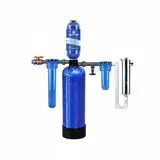
Aquasana Rhino Well Water with UV
Aquasana Rhino Well Water with UV
A whole-house well bundle that pairs carbon and sediment stages with a UV unit for microbiological concerns. UV needs clear water, so treat iron, manganese and heavy sediment first and confirm the flow rate suits your home.
Compare sizing, treatment options and ongoing costs in our best well water filters guide.
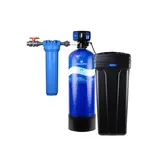
Aquasana SimplySoft 60,000 Grain Softener with LM Pre-Filter
Aquasana SimplySoft 60,000 Grain Softener with LM Pre-Filter
A salt-based softener for confirmed hardness. It removes calcium and magnesium by ion exchange; it is not an iron filter or a disinfection stage, so pair it with the treatment your test calls for.
Compare sizing, treatment options and ongoing costs in our best water softeners and conditioners guide.
Bottom Line
Most wells need two or three of these stages, not all ten. Test first, deal with sediment and iron before anything else, add UV if bacteria is a concern, soften only if hardness is high, and add a drinking-water filter only if your results call for it.
Related Resources
- Best well water filters
- Iron in well water
- Arsenic in well water
- Rotten egg smell
- How to remove rust from well water
- Best water softeners
- Best home water filters
- Best RO systems
- Best whole house filters
- Best water test kits
- Lead in water
- PFAS contamination
- Fluoride in water
- Chlorine in water
- How to choose a filter
- Local water quality