How to Remove Lead From Drinking Water
The complete guide to testing for, understanding, and eliminating lead contamination in your home's water supply.
Lead contamination remains one of the most serious drinking water threats in America. An estimated 9.2 million lead service lines still deliver water to U.S. homes, and the EPA confirms there is no safe level of lead exposure. Whether you live in an older home, rent an apartment, or simply want peace of mind, this guide walks you through everything you need to know about identifying and removing lead from your water. For a broader overview of water testing methods, see our home water testing guide.
How Lead Gets Into Your Drinking Water
Unlike most contaminants, lead doesn't come from the water source itself. Municipal treatment plants deliver water that meets EPA standards. The problem begins after water leaves the plant and travels through aging infrastructure to your tap.
Critical Risk Factor
Homes built before 1986 are at the highest risk. Congress banned lead solder in plumbing that year, but millions of older connections remain. The 2014 Flint, Michigan crisis showed that even cities with newer infrastructure can experience lead contamination when water chemistry changes.
The Four Primary Sources of Lead
Lead Service Lines
Pipes connecting the water main to your home. An estimated 9.2 million remain in use across the U.S. The EPA's Lead and Copper Rule Revisions (LCRR) mandates replacement within 10 years, but progress is slow.
Lead Solder
Used to join copper pipes until banned in 1986. Lead solder corrodes over time, leaching lead directly into water flowing through joints. Hot water and acidic water (low pH) accelerate this process significantly.
Brass Fixtures & Faucets
Before 2014, "lead-free" brass could contain up to 8% lead. The Reduction of Lead in Drinking Water Act lowered this to 0.25%. Older faucets, valves, and connectors remain a common source of lead at the tap.
Water Chemistry Changes
Changes in pH, chlorine, or chloramine levels can strip protective mineral coatings from pipes, causing sudden lead release. This is exactly what happened in Flint—a water source change dissolved the protective scale inside pipes.
The factors that increase lead leaching include:
- Stagnant water: Water sitting in pipes for 6+ hours (overnight) absorbs more lead
- Hot water: Dissolves lead 2-5x faster than cold water
- Acidic water: pH below 7.0 is more corrosive to lead-containing materials
- Soft water: Low mineral content means less protective scale buildup inside pipes
- New connections: Recently disturbed pipes release more lead until a new protective layer forms
Health Risks of Lead in Drinking Water
Lead is a cumulative neurotoxin—there is no safe level, and damage is often irreversible. The health effects vary by age and exposure level, but even trace amounts pose significant risks, particularly for children and pregnant women. Understanding these risks underscores why water safety during pregnancy is paramount.
Children (Most Vulnerable)
Children absorb 4-5 times more lead from their gastrointestinal tract than adults. Even blood lead levels below 5 µg/dL—once considered "safe"—are now associated with:
- Reduced IQ (each 1 µg/dL increase = 0.5-1.0 IQ point loss)
- Behavioral problems including ADHD-like symptoms
- Learning disabilities and developmental delays
- Hearing impairment and speech delays
- Reduced growth and bone development
- Kidney damage at higher exposures
Adults
Chronic lead exposure in adults affects multiple organ systems:
- Cardiovascular: Hypertension, increased heart disease and stroke risk
- Renal: Progressive kidney damage, reduced GFR
- Neurological: Cognitive decline, peripheral neuropathy
- Reproductive: Reduced fertility in both sexes, miscarriage risk
- Skeletal: Lead stored in bones can re-enter blood during pregnancy or osteoporosis
Pregnant Women
Lead crosses the placental barrier freely. Prenatal exposure causes premature birth, low birth weight, and developmental deficits that may not manifest until school age. Women who had childhood lead exposure can release stored bone lead during pregnancy, exposing the fetus even without current water contamination. This makes choosing safe water for baby formula critical.
How to Test Your Water for Lead
Testing is the only way to know if your water contains lead—you can't see, taste, or smell it. Here's a decision framework for choosing the right testing method. For complete testing guidance, see our TDS meter guide (note: TDS meters don't detect lead specifically).
Testing Method Comparison
| Method | Cost | Accuracy | Detection Limit | Best For |
|---|---|---|---|---|
| Certified Lab (Tap Score) | $30-50 | ±1-5% | 1 ppb | Definitive results |
| Utility Report (CCR) | Free | System-wide only | Varies | General awareness |
| Home Test Strips | $15-25 | ±30-50% | 10-15 ppb | Quick screening only |
| State Health Dept. | Free-$30 | ±1-5% | 1 ppb | Well water owners |
First-Draw vs. Flush Sampling
For lead testing, sample type matters enormously:
- First-draw sample: Collected after water sits 6+ hours (overnight). Reveals maximum lead levels from your home's plumbing. This is what the EPA requires utilities to test.
- Flush sample: Collected after running water 2-3 minutes. Shows lead levels from the service line and main. Lower than first-draw but still important.
- Sequential sampling: Collecting multiple samples at 30-second intervals. Maps where lead enters along your plumbing path. Most informative but most expensive.
Best Methods to Remove Lead From Water
Not all water filters remove lead. Many popular filters only reduce chlorine taste and odor. For verified lead removal, look for NSF/ANSI Standard 53 certification specifically for lead. Here's how the main filtration technologies compare:
1. Reverse Osmosis (Best Overall)
Lead: check the model's NSF/ANSI 58 or 53 listing
RO systems force water through a semipermeable membrane with pores 0.0001 microns—far too small for lead ions to pass. They're the most thorough option, also removing PFAS, arsenic, chromium-6, and virtually all dissolved contaminants. Best under-sink options include the Waterdrop G3P800 and iSpring RCC7AK. For a full analysis, see our RO pros and cons guide.
2. Activated Carbon Block (Best Value)
Lead: only models certified to NSF/ANSI 53 for lead
High-quality carbon block filters use extremely dense activated carbon that adsorbs lead as water passes through. Not all carbon filters are equal—only those certified to NSF 53 for lead are effective. The Clearly Filtered pitcher is marketed with lead-reduction certification; confirm the current listing. Under-sink carbon blocks offer higher capacity. Granular activated carbon (GAC) filters do NOT reliably remove lead.
3. Distillation (Most Thorough)
Water distillers heat water to steam, leaving lead behind. They can reduce lead effectively but are slow (4-6 hours per gallon) and energy-intensive. Best for small households with severe contamination. See our distiller vs. RO comparison.
4. KDF Media
KDF (Kinetic Degradation Fluxion) uses copper-zinc granules to reduce lead through electrochemical oxidation. Often used as a pre-filter stage in multi-stage systems. Effective but typically used in combination with carbon block rather than standalone.
Methods That Do NOT Remove Lead
- Boiling: Concentrates lead—makes it WORSE
- UV treatment: Only kills bacteria; no effect on dissolved metals
- Standard Brita/PUR filters: Basic models are NOT certified for lead (only Elite/Plus models)
- Sediment filters: Only remove particles; dissolved lead passes through
- Water softeners: Ion exchange for hardness minerals, not designed for lead. Learn more in our softener vs. filter comparison
Lead Filter Comparison Chart
| Filter Type | Lead Removal | Cost | Filter Life | Also Removes |
|---|---|---|---|---|
| Under-Sink RO | Check NSF/ANSI 53 or 58 lead claim | $200-500 | 2-3 years (membrane) | PFAS, arsenic, fluoride, TDS |
| Clearly Filtered Pitcher | Check NSF/ANSI 53 or 58 lead claim | $90-100 | 100 gallons (4 months) | PFAS, chromium-6, fluoride |
| Brita Elite Filter | Check NSF/ANSI 53 or 58 lead claim | $35-40 (pitcher) | 120 gallons (6 months) | Chlorine, mercury, cadmium |
| ZeroWater Pitcher | Check NSF/ANSI 53 or 58 lead claim | $40-50 (pitcher) | 20-40 gallons (2-8 weeks) | Virtually all TDS |
| Faucet Mount (PUR Plus) | Check NSF/ANSI 53 or 58 lead claim | $30-40 | 100 gallons (3 months) | Chlorine, some pesticides |
Immediate Steps If You Suspect Lead
Flush Before Use
Run cold water for 2+ minutes before drinking every morning. This clears standing water that absorbed lead overnight.
Use Cold Water Only
Never use hot tap water for drinking, cooking, or baby formula. Hot water leaches more lead from pipes and fixtures.
Get Tested
Order a certified lab test ($30-50) for definitive results. Don't rely on test strips for lead—they're not accurate enough at low concentrations.
Install a Certified Filter
Choose an NSF 53-certified filter for your most-used drinking water tap. A pitcher filter can provide immediate protection while you plan a permanent solution.
Contact Your Utility
Report your results. Many utilities offer free testing, filters, or participate in lead service line replacement programs funded by federal infrastructure investment.
Check Children's Blood Lead
If children live in the home, request a blood lead level test from your pediatrician. Early detection enables intervention and monitoring.
5-Year Cost Comparison for Lead Removal
Understanding long-term costs helps you make the right investment. Factor in filter replacements, not just the initial purchase price:
| Solution | Initial Cost | Annual Filters | 5-Year TCO | Cost/Gallon |
|---|---|---|---|---|
| Under-Sink RO | $300 | $60-80 | $600-700 | $0.03-0.04 |
| Clearly Filtered Pitcher | $100 | $150-180 | $850-1000 | $0.15-0.20 |
| Brita Elite Pitcher | $35 | $50-70 | $285-385 | $0.05-0.07 |
| Bottled Water | $0 | $600-1200 | $3000-6000 | $0.50-1.00 |
Special Considerations by Living Situation
Renters
If you rent, you likely can't replace plumbing. Portable solutions like pitchers, faucet mounts, and countertop filters require no installation. Your landlord is legally required to disclose known lead hazards (under HUD regulations). For more renter-specific advice, see our renter's filter guide.
Well Water Homes
Well water isn't regulated by the EPA's Lead and Copper Rule, so you're entirely responsible for testing. Old well pumps, fittings, and pressure tanks may contain lead components. Annual testing is essential. See our well water treatment guide for comprehensive advice.
Homes With Children
The AAP recommends water used by children contain less than 1 ppb lead. Install a point-of-use filter at the kitchen tap and any tap used for formula preparation. For children's water bottles, use filtered water exclusively. Schools should test every drinking fountain and kitchen tap.
Lead Service Line Replacement Programs
The 2021 Infrastructure Investment and Jobs Act allocated $15 billion for lead service line replacement. Many utilities now offer free or subsidized replacement programs. Contact your water utility or check the EPA's Lead Service Line Replacement Accelerators program to see if your area qualifies. Full replacement typically takes 1-2 days and eliminates the primary source of residential lead exposure permanently.
Until your service line is replaced, continue using a certified filter. Lead levels can actually spike temporarily during and after replacement work as pipes are disturbed. Monitor your water for 6-12 months after any plumbing work.
Lead-Reduction Filters to Compare
Confirm the lead claim before you buy
A filter only helps with lead if the exact cartridge is certified for lead reduction.
- Test first, or use your utility's lead results and service-line records.
- Look up the exact model and cartridge in the NSF or IAPMO listings.
- Replace cartridges on schedule; an expired cartridge may stop reducing lead.

iSpring RCC7AK 6-Stage RO System
iSpring RCC7AK 6-Stage RO System
An under-sink RO system for households that want one kitchen tap covering lead and other dissolved contaminants. Confirm the current listing covers lead for this exact model before relying on it.
Compare sizing, treatment options and ongoing costs in our best reverse osmosis systems guide.
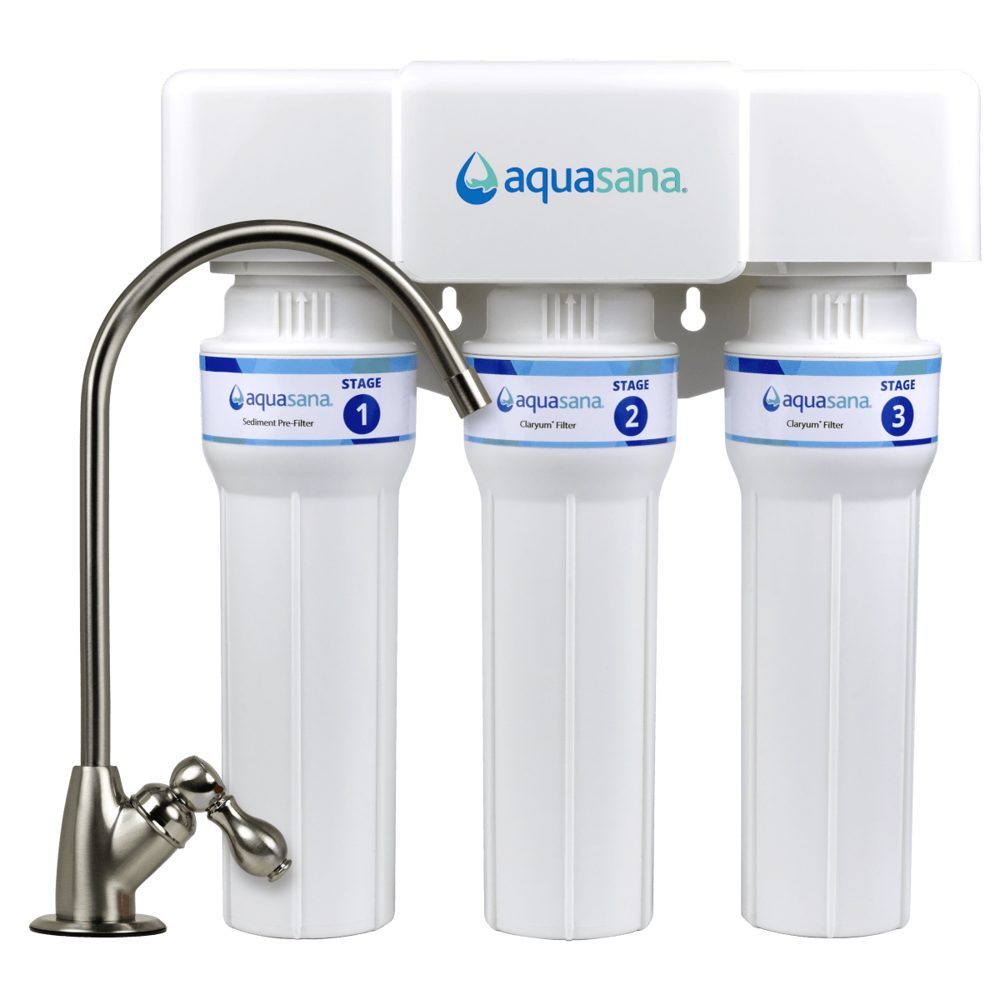
Aquasana 3-Stage Max Flow Under Sink Filter
Aquasana 3-Stage Max Flow Under Sink Filter
A carbon-based under-sink filter with no drain line or tank. Check Aquasana's current performance data sheet for lead reduction on this model before buying.
PUR PLUS Faucet Mount Filter
PUR PLUS Faucet Mount Filter
A faucet-mounted option for renters. Confirm the cartridge you buy is certified for lead and that it fits your faucet.
The Bottom Line
Lead in drinking water is a solvable problem. Test your water, install a certified filter, and take simple precautions like flushing and using cold water. For most households, an NSF 53-certified pitcher or under-sink RO system provides effective, affordable protection. Don't wait for symptoms—lead damage is cumulative and irreversible. The cost of a quality filter is trivial compared to the health consequences of inaction.
For help choosing the right filter for your situation, explore our complete filter selection guide or browse our under-sink filter reviews or pitcher filter reviews.
Frequently Asked Questions
Related Articles
See the best Lead Removal Filters
NSF-certified filters proven to remove lead
Our picks for PFAS Removal Filters
Filters certified to remove forever chemicals
Buying guide: Budget Water Filters
Affordable filters under $50 that actually work
Buying guide: Emergency Water Filters
Reliable filters for disaster preparedness
Buying guide: Hard Water Filters
Top filters for calcium and magnesium removal
Deep dive — Sulfur Smell Removal Guide
Eliminate rotten egg smell from your water