Well Water Treatment Guide: Complete System Planning
Everything private well owners need to know about testing, treating, and maintaining safe drinking water from a private well.
Over 43 million Americans rely on private wells for their drinking water. Unlike public water systems, private wells have no EPA oversight—you're the water utility. This guide helps you build the right treatment system for your well's specific needs. Start with our water testing guide to identify your contaminants before investing in treatment.
Why Well Water Needs Treatment
City water passes through a treatment plant where it's filtered, disinfected, and monitored continuously. Well water has none of these protections. It flows directly from underground aquifers through your pipes to your tap with whatever it picks up along the way.
The Private Well Risk
The CDC reports that private wells account for 30% of waterborne disease outbreaks despite serving only 15% of the U.S. population. Common causes include bacteria infiltration, nitrate contamination from agriculture, and naturally occurring arsenic. Annual testing is the minimum recommended standard.
Groundwater quality varies dramatically by region, geology, depth, and surrounding land use. A deep well in bedrock may produce naturally clean water, while a shallow well near farmland might contain nitrates, pesticides, and bacteria. The only way to know what's in your water is comprehensive laboratory testing.
Step 1: Test Before You Treat
Never buy a treatment system without testing first. Random filter purchases waste money and may leave dangerous contaminants untreated. A comprehensive well water lab test ($150-300) identifies exactly what you need to address.
Recommended Testing Panel for Well Water
| Contaminant | Why Test | Frequency | EPA Limit |
|---|---|---|---|
| Total Coliform / E. coli | Indicates sewage/animal contamination | Annually | 0 (absent) |
| Nitrates | Fertilizer/septic runoff; deadly for infants | Annually | 10 mg/L |
| pH | Affects corrosion and treatment effectiveness | Annually | 6.5-8.5 |
| Iron & Manganese | Staining, taste, bacterial growth | Annually | 0.3 / 0.05 mg/L |
| Hardness | Scale buildup, appliance damage | Annually | No MCL (aesthetic) |
| Arsenic | Natural geology, especially western U.S. | Every 3-5 years | 10 ppb |
| Lead | Old pump components, brass fittings | Every 3-5 years | 15 ppb (action level) |
| Radon | Granite geology areas | Once + after changes | No MCL (proposed 300-4000 pCi/L) |
For a detailed walkthrough of testing methods, read our water quality report interpretation guide.
Step 2: Build Your Treatment System
Well water treatment works best as a multi-stage system. Each stage targets specific contaminants. Here's the recommended order from well to tap:
Sediment Pre-Filter (5-20 micron)
Removes sand, silt, and rust particles. Protects downstream filters from clogging. Use a spin-down filter for heavy sediment or a cartridge filter for moderate levels. Replace every 3-6 months. Cost: $50-150.
Iron/Manganese Filter (if needed)
For iron above 0.3 ppm or manganese above 0.05 ppm. Options include air injection (chemical-free), greensand (potassium permanganate), or birm media. Backwash-style systems are self-cleaning. Cost: $800-2,000 installed.
Water Softener (if hard)
Ion exchange removes calcium and magnesium that cause scale. Necessary for hardness above 7 gpg. Salt-based systems are most effective. Size based on hardness level × daily water use. Learn more in our water softener vs. filter guide. Cost: $800-2,500 installed.
Carbon Filtration
Activated carbon removes chlorine (if you chlorinate), VOCs, pesticides, herbicides, taste, and odor. Use a whole-house carbon tank for comprehensive treatment. Catalytic carbon also removes hydrogen sulfide. Cost: $500-1,500.
UV Disinfection
Ultraviolet light kills 99.99% of bacteria, viruses, and parasites without chemicals. Essential for all well water systems. Must be installed after sediment filtration (turbid water blocks UV). Replace the lamp annually. Cost: $200-600 installed.
Point-of-Use RO (kitchen tap)
Reverse osmosis at the kitchen sink provides the highest purity drinking water. Removes arsenic, lead, PFAS, nitrates, and virtually all dissolved contaminants. Best combined with whole-house pre-treatment. See our RO pros and cons guide. Cost: $200-500.
Common Well Water Problems & Solutions
Bacterial Contamination
The most dangerous well water issue. Total coliform bacteria indicate surface contamination pathways; E. coli specifically indicates fecal contamination. Immediate action: stop drinking the water, shock chlorinate the well, install UV disinfection, and investigate the contamination source (cracked casing, damaged well cap, nearby septic failure).
High Iron & Staining
Iron above 0.3 ppm causes orange/brown staining on fixtures, laundry, and appliances. Three types require different treatment: ferrous (clear water iron) needs oxidation + filtration, ferric (red water iron) needs filtration only, and iron bacteria needs shock chlorination + specialized filtration. Get your iron typed before buying a system.
Hardness & Scale
Most well water is hard (7+ grains per gallon). Hard water causes scale buildup in water heaters (reducing efficiency 25-40%), damages appliances, leaves soap scum, and dries skin. A properly sized water softener eliminates these problems. For a comparison of treatment options, see our water hardness guide.
Hydrogen Sulfide (Rotten Egg Smell)
That sulfur smell makes water unpleasant but isn't typically dangerous at levels found in wells. Low levels (<1 ppm) respond to carbon filtration. Moderate levels (1-5 ppm) need aeration or air injection. High levels (5+ ppm) require chemical oxidation. Always test to confirm it's hydrogen sulfide—some dangerous contaminants also produce odors.
Nitrate Contamination
Nitrates from fertilizer and septic systems are especially dangerous for infants (blue baby syndrome). Levels above 10 mg/L require treatment. Reverse osmosis and ion exchange are the most effective removal methods. Boiling concentrates nitrates—never boil as treatment. If you have infants, use bottled water until an RO system is installed.
Arsenic
Naturally occurring in certain geologies, especially the western U.S. The EPA limit is 10 ppb, but many health experts recommend lower. Point-of-use reverse osmosis is the most practical removal method for drinking water. Whole-house arsenic-specific media systems (adsorptive media) are available for higher concentrations. Learn more about arsenic and other contaminants in our contaminant guides.
Sizing Your Well Water System
| Home Size | Bathrooms | Peak Flow Needed | System Class | Estimated Budget |
|---|---|---|---|---|
| Small (1-2 people) | 1-2 | 5-7 GPM | Standard | $2,000-4,000 |
| Medium (3-4 people) | 2-3 | 7-10 GPM | Mid-Range | $3,500-6,000 |
| Large (5+ people) | 3-4 | 10-15 GPM | High-Flow | $5,000-10,000 |
| Estate/Farm | 4+ | 15+ GPM | Commercial | $8,000-15,000+ |
Maintenance Schedule
A well water system is only as good as its maintenance. Neglected filters become breeding grounds for bacteria and lose effectiveness. Follow this schedule for optimal performance:
| Component | Frequency | Cost | DIY Difficulty |
|---|---|---|---|
| Sediment pre-filter | Every 3-6 months | $10-20 | Easy |
| Carbon filter/media | Every 6-12 months | $30-80 | Easy |
| UV lamp | Annually | $50-100 | Easy |
| UV quartz sleeve | Every 2 years | $30-60 | Moderate |
| Softener salt | Monthly | $5-10 | Easy |
| Iron filter backwash | Automatic (daily) | Included | N/A |
| RO membrane | Every 2-3 years | $30-60 | Moderate |
| Water quality testing | Annually | $100-300 | Mail-in kit |
For filter replacement reminders and best practices, see our filter replacement guide.
Top Recommended Well Water Systems
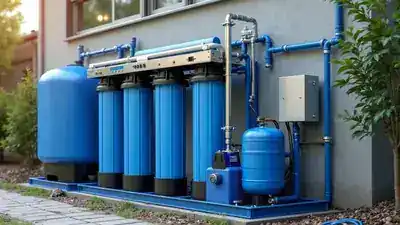
SpringWell Ultra Well Water Filter
Complete multi-stage system for well water: iron/manganese filter + carbon + UV. Handles up to 7 ppm iron. Bluetooth monitoring, lifetime warranty. Best all-in-one solution.
- • Removes iron, manganese, sulfur, bacteria
- • UV disinfection included
- • Lifetime warranty
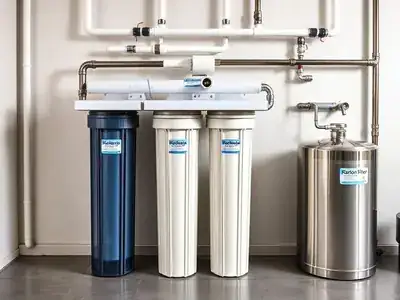
SpringWell WS1 Iron Filter
Air injection oxidation system that removes up to 7 ppm iron, 1 ppm manganese, and 8 ppm hydrogen sulfide. Chemical-free, automatic backwash. Perfect for iron-heavy wells.
- • Chemical-free iron removal
- • Up to 7 ppm iron capacity
- • Automatic backwash
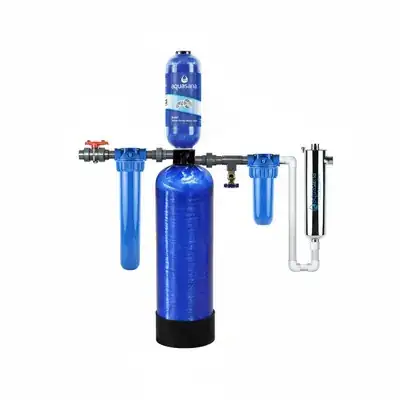
Aquasana Rhino Well Water Pro+UV
Comprehensive well water system with UV disinfection, carbon filtration, and salt-free conditioner. Excellent for wells with chemical contaminants and bacteria risk.
- • UV disinfection + carbon filtration
- • Salt-free conditioner included
- • 500,000 gallon capacity
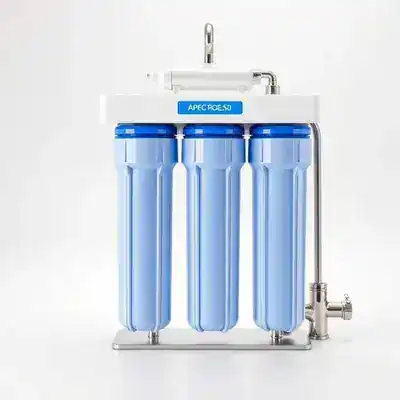
APEC ROES-50 Under-Sink RO
Add a point-of-use RO at the kitchen tap for the purest drinking water. Removes arsenic, nitrates, lead, and virtually all dissolved contaminants. Ideal paired with a whole-house well system.
- • 99% contaminant removal
- • Budget-friendly at ~$200
- • Easy DIY installation
The Bottom Line
Well water treatment isn't one-size-fits-all. Test first, then build a multi-stage system that addresses your specific contaminants. Prioritize UV disinfection for biological safety, pair with an under-sink RO for drinking water, add treatment stages for your detected contaminants, and maintain a strict replacement schedule. The investment pays for itself in health protection, appliance longevity, and peace of mind. For help choosing specific equipment, browse our well water filter reviews, whole-house filter reviews, or our filter selection guide.
Frequently Asked Questions
Water Quality Science and Consumer Protection
The science of water treatment has evolved dramatically over the past two decades, driven by advances in analytical chemistry that can now detect contaminants at parts-per-trillion concentrations. This detection capability has revealed the presence of thousands of previously unidentified compounds in municipal water supplies, including pharmaceutical residues, endocrine-disrupting chemicals, microplastics, and per- and polyfluoroalkyl substances (PFAS). The EPA currently regulates 90 contaminants under the Safe Drinking Water Act, but the Environmental Working Group has documented over 300 additional pollutants in US tap water that have no legal limits.
Understanding the distinction between regulated and unregulated contaminants is essential for making informed filtration decisions. Regulated contaminants have Maximum Contaminant Levels (MCLs) that public water systems must meet, enforced through mandatory testing and public reporting via annual Consumer Confidence Reports. Unregulated contaminants, despite being detected in water supplies, have no enforceable limits, meaning your water utility is not required to treat for or even report their presence. This regulatory gap means that water meeting all federal standards may still contain compounds of health concern at levels that research suggests could pose long-term risks.
The health economics of water filtration present a compelling case for proactive treatment. A 2023 analysis by the Water Quality Research Foundation estimated that the lifetime healthcare cost savings from removing lead exposure alone average $5,600 per child. When factoring in reduced cancer risk from PFAS and disinfection byproduct removal, improved developmental outcomes from reducing prenatal contaminant exposure, and decreased gastrointestinal illness from pathogen removal, the total health-economic benefit of comprehensive home water filtration ranges from $8,000 to $25,000 per household over a 20-year period. These savings dwarf the $2,000-5,000 total cost of purchasing and maintaining a quality filtration system over the same timeframe.
Infrastructure Challenges and Future Outlook
Americas water infrastructure faces unprecedented challenges that directly impact household water quality. The American Society of Civil Engineers grades US drinking water infrastructure at C-minus, with an estimated $625 billion investment needed over 20 years to bring systems to adequate condition. Approximately 6 billion gallons of treated water are lost daily through 240,000 water main breaks annually. These infrastructure failures not only waste resources but create potential contamination pathways where soil, bacteria, and chemicals can enter the distribution system through pressure drops and pipe fractures.
Lead service lines remain the most pressing infrastructure concern, with an estimated 6-10 million lead pipes still delivering water to American homes. The EPA Lead and Copper Rule Revisions mandate replacement of all lead service lines within the coming decade, but the scale of the project ($3,000-8,000 per line) and limited workforce capacity mean many households will continue receiving water through lead pipes for years. During the replacement process itself, disturbance of existing pipes can temporarily increase lead levels by 10-100x above baseline. Point-of-use filtration certified to NSF 53 for lead provides the most reliable protection during this transition period.
Climate change introduces compounding water quality challenges that existing treatment infrastructure was not designed to address. Rising temperatures promote harmful algal blooms producing cyanotoxins that overwhelm conventional treatment processes. Increased wildfire frequency deposits ash-borne benzene and heavy metals into source watersheds. Extreme precipitation events cause combined sewer overflows that introduce untreated sewage into source water. Sea level rise threatens coastal aquifers with saltwater intrusion, increasing TDS and chloride levels beyond treatment capacity. These converging pressures reinforce the critical importance of residential water treatment as the final barrier between environmental challenges and family health.
Filtration Technology Comparison and Selection
Selecting the right water filtration technology requires matching your specific contaminant profile to the capabilities of available treatment methods. Activated carbon filtration, the most widely deployed residential technology, excels at removing chlorine, volatile organic compounds (VOCs), and taste and odor compounds through adsorption. Coconut shell-derived granular activated carbon (GAC) provides the optimal pore structure for drinking water applications, with one gram offering approximately 3,000 square meters of internal surface area for contaminant capture. Carbon block filters offer superior performance to GAC by compressing the carbon into a solid matrix that provides both chemical adsorption and mechanical filtration down to 0.5 microns.
Reverse osmosis (RO) represents the gold standard for comprehensive residential water purification, achieving 95-99% rejection of dissolved solids including heavy metals, PFAS, nitrates, fluoride, and virtually all chemical contaminants. Modern residential RO systems incorporate pre-filtration stages (sediment and carbon) to protect the semipermeable membrane, a pressurized storage tank for on-demand delivery, and post-filtration polishing stages including remineralization to restore beneficial minerals and optimize pH. The primary trade-off is water waste, with conventional systems producing 3-4 gallons of reject water per gallon of purified water, though modern permeate pump designs reduce this ratio to 1:1 or better.
Ion exchange technology addresses specific ionic contaminants through selective chemical swapping. Water softeners use strong acid cation (SAC) resin to exchange calcium and magnesium (hardness) for sodium, preventing scale formation that damages plumbing and appliances. Specialized anion exchange resins target nitrates, arsenic, perchlorate, and PFAS with high selectivity. Mixed-bed deionization produces ultrapure water by removing virtually all dissolved ions. KDF (Kinetic Degradation Fluxion) media uses copper-zinc granules to remove chlorine and heavy metals through electrochemical redox reactions, particularly effective in high-temperature applications like shower filtration where carbon performance diminishes.
Explore Our Top Picks
Making an Informed Decision
Choosing the right water treatment approach requires balancing several factors: your specific water quality concerns (identified through testing), household size and water consumption patterns, budget constraints for both initial investment and ongoing maintenance, installation complexity and available space, and long-term operating costs. The most common mistake consumers make is purchasing a filtration system based on marketing claims rather than matching the technology to their documented contaminant profile. A $30 pitcher filter may provide all the protection a household needs if the primary concern is chlorine taste, while a family with confirmed lead contamination requires NSF 53-certified filtration regardless of cost.
We recommend a three-step decision process: First, test your water (either through your utility CCR or independent laboratory analysis) to identify which contaminants are present and at what concentrations. Second, research which filtration technologies effectively address your specific contaminants and verify performance through NSF certifications. Third, compare products within the appropriate technology category based on capacity, maintenance requirements, flow rate, and total cost of ownership. This systematic approach prevents overspending on unnecessary technology while ensuring adequate protection against documented threats.
The water filtration industry continues to evolve rapidly, with new technologies emerging that offer improved performance, reduced waste, and lower costs. Tankless reverse osmosis systems eliminate the storage tank while delivering purified water on demand at 400-800 GPD production rates. Smart filtration systems with WiFi connectivity monitor water quality in real-time and alert homeowners to filter replacement needs based on actual performance degradation rather than arbitrary timelines. Nano-filtration membranes bridge the gap between ultrafiltration and reverse osmosis, selectively removing contaminants while preserving beneficial minerals. These innovations make home water treatment increasingly accessible, effective, and convenient for every household.
Related Articles
Read: Water Filter Buying Guide
Complete guide to choosing the right filter
Deep dive — How Water Filters Work
Understanding filtration technologies explained
More on Water Filter Cost Comparison
Annual costs across all filter types
Water Testing Kits Guide: complete how-to
Test your water before buying a filter
Keep it running: Filter Replacement Guide
When and how to replace filter cartridges
Deep dive — Water Filter Health Benefits
Health advantages of filtered water