Best Budget Water Filtration Systems: Under-Sink and RO Picks
Ready to move beyond a pitcher without paying for a whole-house system? Compare low-cost under-sink carbon filters and reverse osmosis: what each removes, what fitting one involves, what they cost to run, and which one suits your water.
Pick the system your water report calls for
Carbon and reverse osmosis solve different problems; the cheaper one is only a bargain if it fits yours.
- Check your water report or test for the contaminants you care about.
- Confirm cabinet space, a cold-water line and, for RO, a drain.
- Price a year of replacement cartridges for each option.
Quick answer
For chlorine taste and certified contaminants such as lead on city water, a carbon under-sink filter is the best-value system: simple to fit and cheap to run. If your test shows fluoride, nitrate, arsenic or high dissolved solids, a budget reverse osmosis system is worth the extra cost and the drain connection. Renters who cannot plumb anything in should look at countertop options instead.
Carbon under-sink filter vs reverse osmosis
| Carbon under-sink | Reverse osmosis | |
|---|---|---|
| Good for | Chlorine taste, plus contaminants named in its certification | Dissolved contaminants such as fluoride, nitrate and arsenic, when certified |
| Keeps minerals | Yes | Removes most; some systems add them back |
| Fitting | Cold line, plus a faucet on some models | Cold line, drain connection, faucet and often a tank |
| Wastewater | None | Some water goes to the drain |
| Upkeep | One or two cartridges | Several stages on different schedules |
Unsure whether RO is right for you? Read reverse osmosis pros and cons.
Budget system picks
Prices change often, so open each deal for today's price, and check the current certification listing for the exact model.
Simplest fit: keeps your faucet
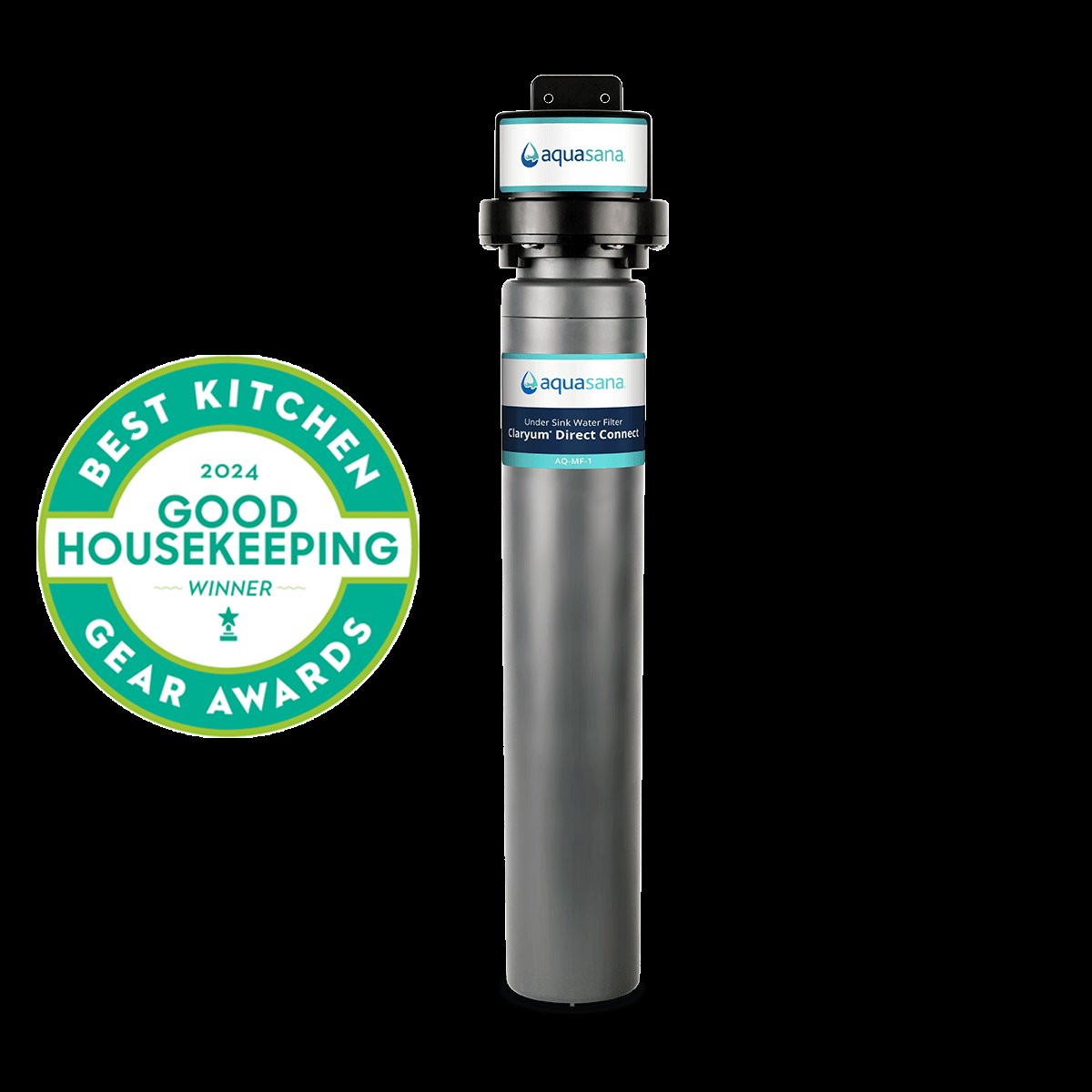
Aquasana Claryum Direct Connect (AQ-MF-1)
Aquasana Claryum Direct Connect (AQ-MF-1)
A compact under-sink filter that connects to your existing cold line, so there is no extra faucet to fit. A good first system for chlorine taste and certified contaminant reduction on city water.
Compare sizing, treatment options and ongoing costs in our best under-sink water filters guide.
Dedicated filtered-water faucet
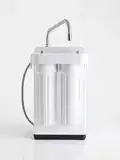
Aquasana AQ-5200 Claryum 2-Stage Under-Sink Filter
Aquasana AQ-5200 Claryum 2-Stage Under-Sink Filter
Two twist-off cartridges under the sink, typically changed about every six months depending on use. Its dedicated faucet keeps filtered and unfiltered water separate; you will need to fit the faucet in a sink or countertop hole.
When you need reverse osmosis

iSpring RCC7AK 6-Stage RO System
iSpring RCC7AK 6-Stage RO System
A six-stage under-sink RO system with a remineralization stage for households whose test shows dissolved contaminants carbon does not handle. It needs a drain connection and room for a storage tank.
Compare sizing, treatment options and ongoing costs in our best reverse osmosis systems guide.
What fitting a budget system involves
- Check the cabinet. Measure the space and find the cold water shut-off valve. RO systems also need room for a tank and access to the sink drain.
- Connect the water. Most kits include an adapter that fits between the shut-off valve and the faucet line.
- Fit the faucet, if there is one. Use a spare sink hole or soap-dispenser hole; otherwise the countertop may need drilling.
- Flush and check. Run water as the instructions say and check every joint for drips over the next day.
For a step-by-step RO install, see our RO installation guide.
What they cost to run
For any system, the yearly cost is mostly replacement filters: the price of each cartridge times how often it needs changing. Carbon under-sink systems usually have one or two cartridges. RO systems have pre-filters and post-filters on shorter schedules and a membrane that lasts longer, and some water goes to the drain.
Before you buy, look up the current price and schedule for every replacement filter the system uses. Our budget filter cost guide shows how to work out a year of filters.
Who should choose what
- City water, taste is the main issue: a carbon under-sink filter.
- Older home with lead concerns: a filter certified to NSF/ANSI 53 for lead; see the lead guide.
- Fluoride, nitrate, arsenic or high TDS: reverse osmosis; see the fluoride guide.
- Renters: a pitcher, faucet filter or countertop unit; see countertop filters.
- Private well: test and treat the whole supply first; start with the well water filter guide.
Bottom line
A budget filtration system is the right upgrade when a pitcher is not keeping up. Pick carbon for taste and certified contaminants on city water, and RO when your test shows dissolved contaminants carbon cannot handle. Then check the space under your sink and the yearly filter cost before you order.