Pitcher Filter Replacement
Match the replacement cartridge to your pitcher, follow its real service limits and fix slow flow, without relying on taste or a one-size-fits-all schedule.
Identify the cartridge before buying a replacement
A similar-looking cartridge or a normal-tasting glass does not establish correct fit or treatment performance.
- Read the pitcher and cartridge model numbers; compare the manufacturer’s compatibility list.
- Track the exact cartridge’s volume and time limits and follow the earlier applicable trigger.
- Use model-specific rinsing, priming and cleaning instructions rather than one soaking recipe.
Quick answer
Replace according to the exact filter’s rated volume, time limit and indicator instructions. Cartridge type matters more than the pitcher brand alone. Slow flow or returning taste warrants investigation, but neither taste nor a TDS meter establishes drinking-water safety.
Use the exact cartridge’s replacement schedule
Brands often sell several cartridges with different capacities, reduction claims and compatibility. Read the filter package or manufacturer support page instead of assuming all Brita, PUR, ZeroWater or Clearly Filtered products share one schedule.
Time and usage
Record the installation date and monitor usage if the cartridge has a volume limit. Follow the earlier applicable trigger and any source-water conditions in the instructions.
Indicators and meters
An indicator may track time or estimated use rather than directly measuring contaminants. A TDS replacement trigger applies only to a product whose instructions specify one; it is not a universal pitcher rule.
A cartridge used beyond its rating may no longer deliver its claimed reductions. Do not assume every overdue filter automatically releases concentrated contaminants or has a predictable bacteria count; replace it and clean the pitcher according to the instructions.
Replace and prime without a universal soak
- Identify the exact pitcher and compatible cartridge. Check seals, packaging and the supplier.
- Remove the used cartridge and clean the pitcher, lid and reservoir as the maker directs. Do not put a cartridge in the dishwasher or wash its media with soap.
- Rinse, soak, flush or prime only as specified for the new cartridge. Some require no soaking.
- Seat or thread the filter correctly and check for unfiltered water bypass.
- Discard initial fills only as directed, reset the indicator and record the installation date.
For example, Brita’s support instructions distinguish its Standard and Elite cartridges. Do not transfer their preparation directions to PUR, ZeroWater or another design. Keep the package instructions for the cartridge actually installed.
Investigate flow, particles and returning taste
| Observation | What to check | Next step |
|---|---|---|
| Slow flow | Seating, priming, air lock or clogging | Follow model-specific troubleshooting; replace if required |
| Particles after installation | Flushing directions and cartridge damage | Do not assume every particle is harmless carbon; contact the maker if persistent |
| Taste returns | Rated limits and source-water change | Replace as directed; investigate the source if the issue continues |
| Visible slime or residue | Cleaning and storage conditions | Stop using it, clean as directed and contact the maker about replacement |
Do not taste suspected unsafe water to diagnose a filter problem. During a water advisory, follow health-department instructions; installing a fresh pitcher cartridge is not a substitute for disinfection or a safe supply.
Compare fit and verified claims, not just a brand
A compatible shape does not establish equivalent performance. For original or third-party cartridges, check the exact model’s fit, seals, certified reduction claims and installation instructions. A certification standard number alone is not proof that every contaminant is reduced.
Buy from a traceable supplier and confirm the package includes the cartridge type you expect. A pitcher bundle may contain a basic filter rather than the longer-life or contaminant-specific cartridge shown elsewhere.
Store unused replacements according to the packaging. Do not assume every unopened cartridge has the same shelf life or that a wet used cartridge can be stored indefinitely.
Compare replacement costs before switching systems
Use current cartridge prices, pack size and realistic household usage to estimate annual costs. Divide the pack price by the number of cartridges, then multiply by the expected replacements. Shipping and subscription terms can change the result.
Do not replace a working pitcher solely because a whole-system deal looks attractive. Compare actual cartridge costs first. If repeated refilling is impractical, an approved countertop or under-sink option may be worth comparing, provided its exact claims match your water.
For bacteria or an unsafe-water notice, seek testing and health guidance rather than assuming a larger filter solves the problem.
Clean and store according to the maker
Use cold water when the manufacturer specifies it. Follow cleaning instructions for the pitcher and reservoir, and keep the cartridge separate from soap or harsh cleaners. Refrigerate or store as directed, away from sunlight and contaminants.
Check the manufacturer’s current recycling program and local rules instead of assuming every filter has a free mail-back option. Do not cut open cartridges unless a program explicitly requests it.
Brita pitcher support and Brita replacement-filter support illustrate why cartridge-specific instructions matter. For other brands, use the support instructions matching your exact model.
Product options to compare
These are complete-system alternatives, not replacement cartridges. No verified cartridge-specific deal is saved for your particular pitcher; match the cartridge through the maker first. Saved system deals show current price and availability.
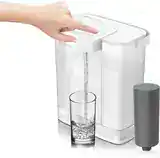
Philips Electric Pitcher
Philips Electric Pitcher
Compare only if you need a new pitcher rather than a replacement cartridge. Confirm the exact model, supported replacement filter, treatment claims and any charging needs. This deal is for the pitcher, not a universal refill.
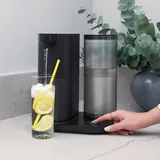
Aquasana Clean Water Machine, Black
Aquasana Clean Water Machine, Black
A no-plumbing format to compare if repeated pitcher fills no longer suit your routine. Check the current bundle, footprint, power needs and actual cartridge costs. It does not disinfect unsafe source water.
Explore Our Top Picks
Frequently Asked Questions
Related Articles
Water Filter Buying Guide
Complete guide to choosing the right filter
More on How Water Filters Work
Understanding filtration technologies explained
Deep dive — Water Filter Cost Comparison
Annual costs across all filter types
Walkthrough — Water Testing Kits Guide
Test your water before buying a filter
Maintenance guide — Filter Replacement Guide
When and how to replace filter cartridges
More on Water Filter Health Benefits
Health advantages of filtered water