Best Budget Water Filters: Pitcher vs Faucet vs Under-Sink
Which low-cost filter is cheapest to live with? Compare pitchers, faucet filters and small under-sink filters by what they cost to run each year, what they need to fit, and what they are certified to reduce, then pick the one that suits your kitchen.
Compare a year of filters, not the box price
Replacement cartridges are where most of the money goes.
- Estimate how many gallons your household filters a day.
- Divide by each cartridge's gallon rating to count changes.
- Confirm the exact cartridge is certified for your concern.
Quick answer
A pitcher is cheapest to buy and needs no fitting, but its small cartridges need changing most often. A faucet filter gives filtered water on demand from a standard faucet and suits most renters. A small under-sink filter costs more at first but usually needs the fewest changes, which makes it the best long-term value for households that drink and cook with a lot of filtered water.
The three budget formats compared
| Format | Setup | Filter changes | Best for |
|---|---|---|---|
| Pitcher or dispenser | None; fill and wait | Most often (small cartridge) | One or two people, renters, cold drinking water |
| Faucet mount | Screws onto a standard faucet | Less often than most pitchers | Renters who also cook with filtered water |
| Small under-sink | Connects to the cold line; adds a faucet | Least often (larger cartridges) | Homeowners and busy kitchens |
For a deeper look at each format, see pitcher vs faucet vs under-sink filters.
How to work out the yearly cost
- Estimate your use. Count the filtered water you drink and cook with each day. Many households land around one to two gallons.
- Count the changes. Multiply your daily gallons by 365, then divide by the cartridge's gallon rating. Check the maker's month limit too, and use whichever gives more changes.
- Price a year. Multiply the number of changes by the current price of one replacement cartridge. Multi-packs often cost less per filter.
- Add the starting cost. The pitcher, faucet unit or under-sink kit is a one-off; spread it over the years you expect to use it.
An example with round numbers: at 1.5 gallons a day, a 40-gallon cartridge needs about 14 changes a year, while a 500-gallon cartridge needs about one or two (the maker's month limit may call for more). That is why a filter that costs more to buy can still be the cheaper one to own. Our cost calculator compares filtered and bottled water.
Budget picks by format
Prices change often, so open each deal for today's price and the current replacement-filter cost.
Pitcher or dispenser
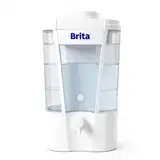
Brita UltraMax Dispenser
Brita UltraMax Dispenser
A large-capacity Brita dispenser for families who want plenty of cold filtered water with no installation. Pair it with an Elite filter if you want the lead claim; the Standard filter has none.
Faucet mount
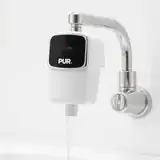
PUR FM-3700 Faucet Mount Filter
PUR FM-3700 Faucet Mount Filter
Filtered water on demand from a standard kitchen faucet in a few minutes, with no plumbing. Check that your faucet is compatible first (pull-out and sprayer faucets usually are not).
Small under-sink filter
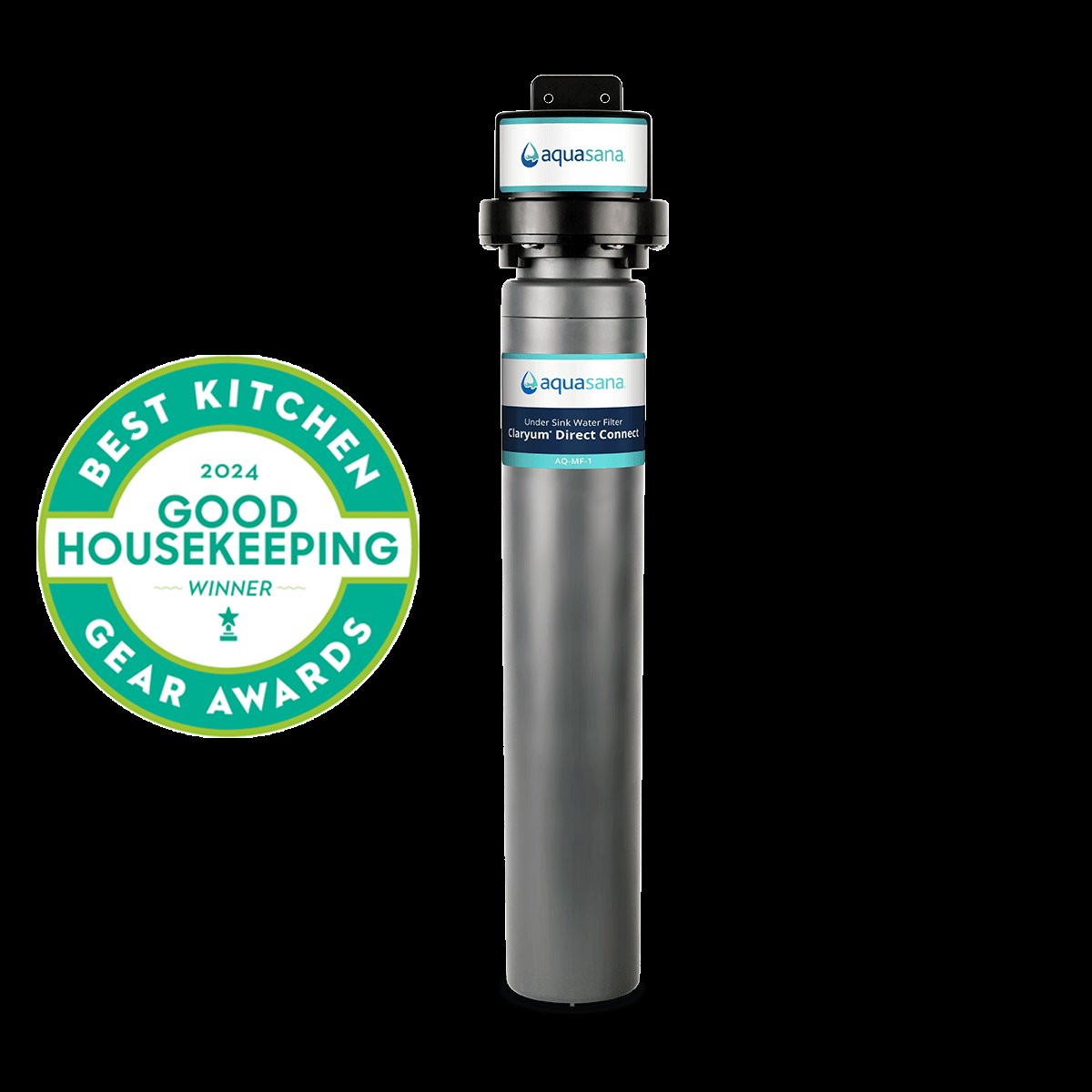
Aquasana Claryum Direct Connect (AQ-MF-1)
Aquasana Claryum Direct Connect (AQ-MF-1)
A compact under-sink filter that connects to your existing cold line, so you keep your faucet. It costs more up front than a pitcher, and fits households that want fewer cartridge changes; confirm the current certification listing and replacement-filter price before buying.
Compare sizing, treatment options and ongoing costs in our best under-sink water filters guide.
What is inside a budget filter
Granular activated carbon is loose carbon granules. It is inexpensive and good at improving chlorine taste, which is why it is common in basic pitchers. Water can find paths around the granules, so it is less consistent for health-related claims.
Carbon block packs carbon into a solid block, so water spends longer in contact with it and fine particles are trapped. Many filters certified for lead use carbon block or carbon combined with lead-reducing media.
Ion exchange swaps dissolved ions for others. Some pitchers use it to lower dissolved solids, but the resin gets used up faster in hard water, so filters may need changing sooner.
Matching a budget filter to your water
Chlorine taste on city water
The ideal job for a budget filter. Any pitcher or faucet filter certified to NSF/ANSI 42 for chlorine taste and odor will help. Chloramine is harder; see our chloramine guide.
Older home with possible lead
Test first, then choose a cartridge certified to NSF/ANSI 53 for lead. Our lead guide explains testing and other steps.
Hard water
Pitchers and faucet filters do not soften water. Scale on fixtures needs a softener or conditioner; see hard water solutions.
Fluoride, nitrate, arsenic or a well
Beyond what carbon can do. Look at reverse osmosis, and for wells start with the well water filter guide.
Waste and recycling
Any filter creates far less plastic waste than drinking bottled water, but spent cartridges still add up. Filters that last longer mean fewer cartridges in the bin. Some brands run take-back or mail-in recycling schemes; check the maker's current program before you buy if that matters to you.
Bottom line
For the lowest cost of ownership, choose the format that fits how much filtered water you use: a pitcher for light use, a faucet filter for renters who cook with filtered water, and a small under-sink filter for busy kitchens. Then check that the exact cartridge is certified for what is in your water.