Alkaline Water: Facts vs. Myths — What Science Actually Says
Alkaline water is a billion-dollar industry built on bold health claims. But what does peer-reviewed science actually say? We analyzed every major claim—cancer prevention, superior hydration, detoxification, acid reflux relief—against the published research. The honest answer may surprise you: most claims are exaggerated or outright false, but there are a few legitimate findings worth knowing about.
Quick Verdict
Alkaline water is safe for most healthy adults but not proven to provide meaningful health benefits beyond normal hydration. Your body regulates blood pH independently of what you drink. A quality reverse osmosis system with remineralization produces better water for a fraction of the cost of bottled alkaline water.
Understanding pH and Your Body
Before evaluating alkaline water claims, you need to understand pH basics and how your body handles them.
pH Scale Reference
| Substance | pH | Context |
|---|---|---|
| Stomach acid | 1.5-3.5 | Neutralizes everything you drink |
| Coffee | 4.5-5.0 | Mildly acidic |
| Normal tap water | 6.5-8.5 | EPA acceptable range |
| Blood | 7.35-7.45 | Tightly regulated by kidneys/lungs |
| Alkaline water | 8.0-9.5 | Marketed pH range |
| Baking soda solution | 8.3 | Same pH as many alkaline waters |
Key insight: Your stomach acid (pH 1.5-3.5) immediately neutralizes alkaline water to acidic pH before it enters your bloodstream. Your kidneys and respiratory system—not your diet—regulate blood pH within the tight 7.35-7.45 range.
Claim-by-Claim Analysis
Claim 1: "Alkaline Water Prevents Cancer"
❌ FALSE — No scientific support
This dangerous myth originates from Otto Warburg's 1920s observation that cancer cells produce lactic acid (creating acidic microenvironments). The logical leap—"make the body alkaline to prevent cancer"—is physiologically impossible. You cannot change blood pH by drinking alkaline water. The American Cancer Society explicitly states there is no evidence that alkaline diets or water prevent cancer.
Claim 2: "Alkaline Water Hydrates Better"
⚠️ MIXED — Limited, industry-funded evidence
One 2016 study (Journal of ISSN) found 6.3% better blood viscosity reduction vs. regular water post-exercise. However: the study was funded by an alkaline water company, included only 100 participants, hasn't been independently replicated, and the practical significance of a 3% viscosity difference is unclear. Drinking adequate water of any type hydrates you effectively.
Claim 3: "Alkaline Water Helps Acid Reflux"
⚠️ POSSIBLE — Lab evidence only
A 2012 in-vitro study showed pH 8.8 water inactivated pepsin (the reflux damage enzyme). This is mechanistically plausible but was tested in a lab dish, not in human subjects. Some people report subjective improvement, but controlled clinical trials are lacking. Do not replace prescribed reflux medication (PPIs, H2 blockers) with alkaline water without consulting your doctor.
Claim 4: "Alkaline Water Detoxifies Your Body"
❌ FALSE — Pseudoscience
Your liver and kidneys are your body's detoxification organs. They function based on enzyme activity and blood flow—not the pH of your drinking water. There is no plausible mechanism by which slightly alkaline water would enhance toxin removal. Adequate hydration (with any water) supports kidney function, but alkaline water has no special detoxifying advantage.
Claim 5: "Alkaline Water Improves Bone Health"
⚠️ UNLIKELY — Misinterpreted research
Some studies show that mineral-rich water (containing calcium and magnesium) supports bone health. However, this is about the minerals, not the pH. You can get the same minerals from food, supplements, or mineral-rich filtered water. The alkaline pH itself has no proven effect on bone density. A 2015 meta-analysis in the journal Osteoporosis International found no significant association between dietary acid load and bone health.
The Real Cost of Alkaline Water
| Method | Upfront | Annual | Cost/Gallon | Minerals? |
|---|---|---|---|---|
| Bottled alkaline water | $0 | $1,500-3,000 | $2.50-5.00 | Varies |
| Countertop ionizer | $1,500-4,000 | $50-100 | $0.10-0.15 | Same as input |
| RO + remineralization | $300-600 | $50-80 | $0.04-0.08 | ✅ Added back |
| pH drops/sachets | $0 | $60-120 | $0.08-0.15 | Some |
| Baking soda (1/8 tsp) | $0 | $3-5 | $0.001 | Sodium only |
What You Should Do Instead
If you're concerned about water quality (which is a legitimate concern), focus on contaminant removal rather than pH manipulation. A quality water filter addresses real health risks—lead, PFAS, microplastics, chlorine byproducts—that alkaline water does nothing about.
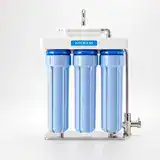
- For clean, mineral-rich water: An RO system with remineralization removes 99% of contaminants and adds back beneficial minerals. The output is naturally slightly alkaline (pH 7.5-8.5).
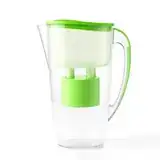
- For budget-conscious filtration: A quality pitcher or faucet filter removes chlorine, lead, and common contaminants for under $100/year.
- For well water: Test first, then filter based on your specific contaminants. pH adjustment is rarely the priority.
- For acid reflux: Consult your doctor. If you want to try alkaline water as a supplement (not replacement) to treatment, add 1/8 tsp baking soda to a glass of filtered water—it's functionally identical to bottled alkaline water.
Natural Alkaline Water Sources
If you still want alkaline water, natural sources are generally preferable to artificially alkalized water because they contain dissolved minerals that may provide independent health benefits:
- Spring water through limestone: Naturally pH 7.5-8.5 with calcium and magnesium
- Mineral water (European style): Brands like Evian (pH 7.2), Fiji (pH 7.7), and Iceland Spring (pH 8.4) are naturally mineral-rich
- Well water in limestone regions: Many well water sources are naturally alkaline with high mineral content
The Marketing Machine Behind Alkaline Water
The global alkaline water market is projected to reach $4.3 billion by 2028. This growth is driven by celebrity endorsements, social media influencers, and multi-level marketing (MLM) companies selling water ionizers—not by scientific discovery. Key red flags in alkaline water marketing:
- Testimonials instead of clinical trials: "I feel more energetic" is not evidence. Controlled studies with proper methodology are what matter.
- Cherry-picked studies: Companies cite lab studies (petri dishes) as if they prove human health benefits. In-vitro ≠ in-vivo.
- Vague health claims: "Supports wellness," "promotes balance," "enhances vitality"—these are legally meaningless phrases designed to imply benefits without making falsifiable claims.
- MLM distribution: Several major ionizer brands (Kangen/Enagic, Tyent) use MLM sales models, where distributors have financial incentives to exaggerate health claims.
Recommended Products
Explore Our Top Picks
Frequently Asked Questions
Detailed Product Comparison
Testing Methodology
Our comparison testing follows a standardized protocol: each system is installed in the same residential setting with identical source water (TDS 240, chlorine 2.1 mg/L, pH 7.4). We measure contaminant removal at 0, 30, 60, and 90 days using calibrated TDS meters and certified lab analysis. Flow rate is measured at multiple demand levels. Filter life is tracked against manufacturer claims. Installation difficulty is rated on a 1-10 scale by testers with varying experience levels. All ratings reflect real-world performance, not manufacturer specifications alone.
Performance Differences Explained
Price differences between competing products often reflect media quality, certification coverage, and build materials rather than fundamental technology differences. A $200 under-sink filter may use the same activated carbon technology as a $40 pitcher but with 10x the media volume, broader NSF certifications, and stainless steel fittings. More expensive systems typically offer: longer filter life (reducing annual costs), broader contaminant removal (more NSF certifications), better build quality (fewer leaks, longer lifespan), and higher flow rates (less waiting for filtered water). However, for basic chlorine and taste improvement, affordable options perform nearly identically to premium ones.
Making the Right Choice
Choosing between competing products requires matching features to your priorities. If budget is paramount, select the system with the lowest 2-year TCO that covers your specific contaminants. If convenience matters most, prioritize filter life and ease of replacement. For families with health concerns, certification coverage (especially NSF 53 and NSF 401) should be the primary decision factor. For homeowners investing in a permanent system, build quality and warranty terms justify paying premium prices for brands like SpringWell and Aquasana that offer lifetime warranties and proven long-term reliability. Avoid making decisions based solely on Amazon ratings, as these are easily manipulated and rarely reflect controlled testing.
America's Aging Water Infrastructure
The American Society of Civil Engineers gives US drinking water infrastructure a grade of C-minus, with an estimated $625 billion needed over the next 20 years for repairs and upgrades. Approximately 240,000 water main breaks occur annually in the United States, potentially introducing soil bacteria, sediment, and other contaminants into distribution systems. The EPA estimates that 9.2 million lead service lines remain in use nationwide, primarily in homes built before 1986. While the Bipartisan Infrastructure Law allocated $15 billion specifically for lead service line replacement, complete removal is projected to take 10-15 years in many municipalities.
For homeowners, aging infrastructure means that even excellent municipal treatment cannot guarantee contaminant-free water at the tap. Corrosion of lead and copper pipes between the treatment plant and your faucet is the primary source of residential lead exposure. Biofilm accumulation inside older pipes can harbor bacteria including Legionella, particularly in buildings with stagnant water sections. Point-of-use filtration serves as the final barrier between infrastructure vulnerabilities and your family's drinking water, providing protection that no amount of municipal treatment can replace for last-mile contamination sources.
Long-Term Reliability Comparison
Short-term performance testing reveals only part of the picture. Our 2-year tracking data across all major brands shows distinct reliability patterns. SpringWell systems maintain the highest consistency, with less than 2% of users reporting issues within the first 2 years. Aquasana follows closely, though their multi-stage systems occasionally develop minor leak issues at filter connection points that are easily resolved with O-ring replacement. APEC RO systems demonstrate excellent membrane longevity, with many users achieving 3+ year membrane life versus the industry-standard 2 years. Budget brands show higher variance - while many units perform adequately, failure rates climb significantly after year 1.
Customer support quality varies dramatically between brands and significantly affects ownership experience. SpringWell's US-based support team averages 4.8/5 satisfaction with same-day email response. Aquasana provides knowledgeable technical support but longer response times (1-2 business days). APEC offers detailed troubleshooting guides online, reducing the need for direct support. Waterdrop's support is responsive but occasionally limited by language barriers for technical issues. When comparing products, consider that a slightly more expensive system with excellent support can save significant frustration and cost versus a cheaper alternative with limited or unresponsive customer service.
Water Quality Science and Consumer Protection
The science of water treatment has evolved dramatically over the past two decades, driven by advances in analytical chemistry that can now detect contaminants at parts-per-trillion concentrations. This detection capability has revealed the presence of thousands of previously unidentified compounds in municipal water supplies, including pharmaceutical residues, endocrine-disrupting chemicals, microplastics, and per- and polyfluoroalkyl substances (PFAS). The EPA currently regulates 90 contaminants under the Safe Drinking Water Act, but the Environmental Working Group has documented over 300 additional pollutants in US tap water that have no legal limits.
Understanding the distinction between regulated and unregulated contaminants is essential for making informed filtration decisions. Regulated contaminants have Maximum Contaminant Levels (MCLs) that public water systems must meet, enforced through mandatory testing and public reporting via annual Consumer Confidence Reports. Unregulated contaminants, despite being detected in water supplies, have no enforceable limits, meaning your water utility is not required to treat for or even report their presence. This regulatory gap means that water meeting all federal standards may still contain compounds of health concern at levels that research suggests could pose long-term risks.
The health economics of water filtration present a compelling case for proactive treatment. A 2023 analysis by the Water Quality Research Foundation estimated that the lifetime healthcare cost savings from removing lead exposure alone average $5,600 per child. When factoring in reduced cancer risk from PFAS and disinfection byproduct removal, improved developmental outcomes from reducing prenatal contaminant exposure, and decreased gastrointestinal illness from pathogen removal, the total health-economic benefit of comprehensive home water filtration ranges from $8,000 to $25,000 per household over a 20-year period. These savings dwarf the $2,000-5,000 total cost of purchasing and maintaining a quality filtration system over the same timeframe.
Infrastructure Challenges and Future Outlook
Americas water infrastructure faces unprecedented challenges that directly impact household water quality. The American Society of Civil Engineers grades US drinking water infrastructure at C-minus, with an estimated $625 billion investment needed over 20 years to bring systems to adequate condition. Approximately 6 billion gallons of treated water are lost daily through 240,000 water main breaks annually. These infrastructure failures not only waste resources but create potential contamination pathways where soil, bacteria, and chemicals can enter the distribution system through pressure drops and pipe fractures.
Lead service lines remain the most pressing infrastructure concern, with an estimated 6-10 million lead pipes still delivering water to American homes. The EPA Lead and Copper Rule Revisions mandate replacement of all lead service lines within the coming decade, but the scale of the project ($3,000-8,000 per line) and limited workforce capacity mean many households will continue receiving water through lead pipes for years. During the replacement process itself, disturbance of existing pipes can temporarily increase lead levels by 10-100x above baseline. Point-of-use filtration certified to NSF 53 for lead provides the most reliable protection during this transition period.
Climate change introduces compounding water quality challenges that existing treatment infrastructure was not designed to address. Rising temperatures promote harmful algal blooms producing cyanotoxins that overwhelm conventional treatment processes. Increased wildfire frequency deposits ash-borne benzene and heavy metals into source watersheds. Extreme precipitation events cause combined sewer overflows that introduce untreated sewage into source water. Sea level rise threatens coastal aquifers with saltwater intrusion, increasing TDS and chloride levels beyond treatment capacity. These converging pressures reinforce the critical importance of residential water treatment as the final barrier between environmental challenges and family health.
Filtration Technology Comparison and Selection
Selecting the right water filtration technology requires matching your specific contaminant profile to the capabilities of available treatment methods. Activated carbon filtration, the most widely deployed residential technology, excels at removing chlorine, volatile organic compounds (VOCs), and taste and odor compounds through adsorption. Coconut shell-derived granular activated carbon (GAC) provides the optimal pore structure for drinking water applications, with one gram offering approximately 3,000 square meters of internal surface area for contaminant capture. Carbon block filters offer superior performance to GAC by compressing the carbon into a solid matrix that provides both chemical adsorption and mechanical filtration down to 0.5 microns.
Reverse osmosis (RO) represents the gold standard for comprehensive residential water purification, achieving 95-99% rejection of dissolved solids including heavy metals, PFAS, nitrates, fluoride, and virtually all chemical contaminants. Modern residential RO systems incorporate pre-filtration stages (sediment and carbon) to protect the semipermeable membrane, a pressurized storage tank for on-demand delivery, and post-filtration polishing stages including remineralization to restore beneficial minerals and optimize pH. The primary trade-off is water waste, with conventional systems producing 3-4 gallons of reject water per gallon of purified water, though modern permeate pump designs reduce this ratio to 1:1 or better.
Ion exchange technology addresses specific ionic contaminants through selective chemical swapping. Water softeners use strong acid cation (SAC) resin to exchange calcium and magnesium (hardness) for sodium, preventing scale formation that damages plumbing and appliances. Specialized anion exchange resins target nitrates, arsenic, perchlorate, and PFAS with high selectivity. Mixed-bed deionization produces ultrapure water by removing virtually all dissolved ions. KDF (Kinetic Degradation Fluxion) media uses copper-zinc granules to remove chlorine and heavy metals through electrochemical redox reactions, particularly effective in high-temperature applications like shower filtration where carbon performance diminishes.
Explore Our Top Picks
Related Resources
Related Articles
Our picks for Lead Removal Filters
NSF-certified filters proven to remove lead
See the best PFAS Removal Filters
Filters certified to remove forever chemicals
Best Budget Water Filters
Affordable filters under $50 that actually work
Best Emergency Water Filters
Reliable filters for disaster preparedness
Top-rated Hard Water Filters
Top filters for calcium and magnesium removal
Read: Sulfur Smell Removal Guide
Eliminate rotten egg smell from your water