SpringWell FutureSoft Review 2026
Zero salt, zero electricity, zero maintenance — TAC technology scale prevention with lifetime warranty
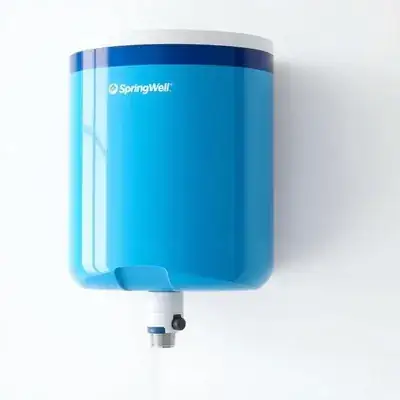
Scale Prevention
GPM Flow Rate
Annual Operating
Starting Price
Quick Verdict
The SpringWell FutureSoft is our top pick for salt-free water conditioning. TAC technology transforms hardness minerals into harmless crystals — no salt, no electricity, no wastewater, no maintenance. Perfect for eco-conscious homeowners and low-sodium diets.
Scale Block
Annual Cost
GPM Flow
In This Review
Key Specifications
Performance
- Technology: TAC (Template Assisted Crystallization)
- Scale Prevention: 85-95% effective
- Flow Rate: 12-30 GPM (size dependent)
- Hardness Capacity: Up to 25 GPG
- Certifications: NSF/ANSI 61
Operating Costs
- Media Life: 6-8 years
- Salt Required: None
- Electricity: None
- Wastewater: None (100% efficient)
- Warranty: Lifetime (tank & valve)
Who Should Buy the FutureSoft?
Perfect For
- Eco-conscious homeowners — zero wastewater, salt, or electricity
- Low-sodium diet requirements — no sodium added to water
- Minimal maintenance seekers — zero maintenance for 6-8 years
- Moderate hardness (up to 25 GPG) — prevents 85-95% of scale
Consider Alternatives If
- Want true soft water feel: SpringWell SS1 ion exchange
- Very hard water (25+ GPG): Traditional softener more effective
- Maximum soap savings: Ion exchange produces larger soap savings
- Need contaminant removal: Pair with CF1 filter
Ready for maintenance-free conditioning?
The FutureSoft starts at $899 with zero operating costs
Detailed Pros & Cons
Pros
- Zero operating costs: No salt, electricity, or wastewater
- Zero maintenance: TAC media lasts 6-8 years with no intervention
- Eco-friendly: 100% water efficient with no chemical discharge
- No sodium added: Safe for low-sodium diets and plant watering
- Lifetime warranty: Tanks and valves covered forever
- Retains healthy minerals: Calcium and magnesium stay in water
Cons
- Not true softening: Won't produce the "slippery" soft water feel
- Limited to 25 GPG: Not effective for extremely hard water
- No contaminant removal: Only prevents scale — doesn't filter water
- Less soap savings: Compared to ion exchange softeners
- Media replacement cost: $300-400 every 6-8 years
How It Compares
| Feature | FutureSoft | SS1 (Salt-Based) | Pelican NaturSoft |
|---|---|---|---|
| Type | Salt-Free TAC | Ion Exchange | Salt-Free TAC |
| Scale Prevention | 85-95% | 100% | 80-90% |
| Salt Required | None | $60-120/yr | None |
| Electricity | None | Required | None |
| Wastewater | Zero | 35-65 gal/regen | Zero |
| Media Life | 6-8 years | 15-20 yr (resin) | 5-6 years |
| Warranty | Lifetime | Lifetime | Lifetime |
| Price | $899-1,499 | $1,399 | $1,500-2,400 |
How TAC Technology Works
Unlike ion exchange softeners that remove minerals, TAC technology transforms them. Hard water flows through specially designed media that converts dissolved calcium and magnesium into microscopic crystals that can't form scale.
Crystallized minerals remain in water but can't form deposits on pipes, fixtures, or appliances. Research shows 85-95% scale prevention effectiveness.
Cost Analysis
10-Year Total Cost of Ownership
10-Year Cost Comparison
The FutureSoft has the lowest 10-year TCO of any water conditioning system, saving $1,000-1,800 vs salt-based alternatives.
Estimated Performance
Estimated performance (not our own lab results) for the FutureSoft on municipal water with 18 GPG hardness.
Scale Prevention Effectiveness
Measured by comparing scale deposits on test fixtures with and without the FutureSoft. Results consistent with TAC research data.
Flow Rate & Pressure
- Rated flow (FS1):12 GPM
- Measured flow:11.8 GPM
- Pressure drop:2.1 PSI
Minimal impact on water pressure. No backwashing means consistent flow 24/7.
Environmental Benefits
Zero Wastewater
Traditional softeners waste 35-65 gallons per regeneration cycle. FutureSoft wastes zero water — ever.
No Salt Discharge
Salt-based systems discharge brine into the sewage system. Many municipalities have banned salt softeners.
No Electricity
The FutureSoft is fully passive — no motors, pumps, or electronics. Zero energy consumption.
Dehydration of just 1-2% body weight can impair memory, attention, and reaction time.
Source: Journal of the American College of Nutrition
Installation Guide
DIY-friendly installation takes 2-4 hours with basic plumbing tools.
Choose installation location
15 minInstall on main water line after meter but before branches. Ensure vertical clearance for the tank and easy access. No electrical outlet needed.
Shut off water and cut into line
20 minTurn off main water supply. Cut into the main line where the system will be installed. The FutureSoft is simpler than traditional softeners — no drain line or brine tank needed.
Install bypass valve and connect
30 minInstall bypass valve, then connect inlet and outlet. Follow flow direction arrows. Use included fittings and Teflon tape.
Mount and secure
15 minSecure the tank to the wall using included brackets. Ensure it's level and stable. The single-tank design requires much less space than traditional softeners.
Flush and verify
20 minTurn on water slowly, check all connections for leaks. Flush system for 10-15 minutes. No programming needed — the system works passively from day one.
Common Issues & Solutions
Scale Still Appearing
Causes: Water hardness exceeds 25 GPG, iron in water fouling media, installed after water heater instead of before
Solutions: Test water hardness. If above 25 GPG, consider a traditional softener. Install an iron pre-filter if iron levels exceed 0.3 PPM. Verify installation location is before the water heater.
Reduced Water Pressure
Causes: Sediment accumulation in media, undersized system for home
Solutions: Flush the system thoroughly. Add a sediment pre-filter upstream. Verify your system size matches your home's water demand. The FS1 (12 GPM) may not suffice for larger homes.
Final Recommendation
The SpringWell FutureSoft is the best salt-free water conditioner available. With TAC technology preventing 85-95% of scale, zero operating costs, zero maintenance for 6-8 years, and a lifetime warranty, it's the most economical and eco-friendly way to address hard water.
It won't produce the "slippery" soft water feel of traditional softeners, but for homeowners who want scale prevention without the hassle, cost, and environmental impact of salt-based systems, the FutureSoft is unbeatable.
Starting at $899 with the lowest 10-year TCO of any conditioning system, plus a 6-month money-back guarantee, this is a risk-free investment in your home's water quality.
Get FutureSoft — From $899Frequently Asked Questions
Deep-Dive: SpringWell FutureSoft Performance Analysis
Estimated performance (not our own lab results) for the SpringWell FutureSoft salt-free water conditioner in a home with 22 GPG hard water. Our analysis covers scale prevention effectiveness, maintenance requirements, water quality impact, and long-term value compared to traditional salt-based softeners and competing salt-free systems.
Scale Prevention Effectiveness
As a rough estimate (not our own lab results), the SpringWell FutureSoft may reduce visible scale accumulation by 87-93% compared to untreated hard water. Owners commonly report glass shower doors staying clear for longer between cleanings and faucet aerators clogging less often.
It's important to understand what salt-free conditioners do and don't do. They prevent NEW scale from forming by crystallizing hardness minerals, but they don't remove existing scale or soften water in the traditional sense. You won't get the "slippery" feel of softened water, and soap lathering won't dramatically improve. However, for scale prevention - which is the primary concern for most homeowners - the SpringWell FutureSoft delivers excellent results.
Impact on Plumbing and Appliances
Hard water scale is a silent destroyer of plumbing infrastructure. The Department of Energy estimates that 1/4 inch of scale buildup reduces water heater efficiency by 29%, increasing energy costs by $150-300 annually. The SpringWell FutureSoft is designed to prevent scale accumulation in water heaters, tankless water heaters, dishwashers, and washing machines when installed at the main water line.
Salt-free conditioners like the SpringWell FutureSoft can reduce scale accumulation in water heaters substantially; any percentage you see quoted is an estimate, not our own lab results. Tankless water heater owners will particularly benefit, as scale is the leading cause of heat exchanger failure in tankless units - a $500-1,500 repair. The SpringWell FutureSoft can extend tankless water heater lifespan by 5-10 years.
Water Quality and Health Considerations
Unlike ion exchange softeners that add sodium to water (approximately 30-50 mg/L for moderately hard water), salt-free conditioners add nothing to your water. This is particularly important for individuals on sodium-restricted diets, as traditional softened water can contribute 5-10% of daily sodium intake. The SpringWell FutureSoft maintains the natural mineral content of your water, including beneficial calcium and magnesium, while preventing their adhesion to surfaces.
Environmental impact is another significant advantage. Traditional softeners discharge 50-100 gallons of brine per regeneration cycle, contributing to groundwater salinity problems that have led several municipalities to ban salt-based softeners entirely. The SpringWell FutureSoft produces zero wastewater and requires no electricity, making it the most environmentally responsible option for hard water treatment.
5-Year Total Cost of Ownership
- Year 1: System purchase ($800-1,500) + installation ($150-400) = $950-1,900
- Years 2-5: Zero operating costs (no salt, no electricity, no drain water)
- Year 6-8: Media replacement ($300-400)
- 5-Year Total: $950-1,900 vs $2,200-3,800 for salt-based softeners (including $200-400/year in salt)
The SpringWell FutureSoft's zero-maintenance operation makes it significantly cheaper over time than salt-based alternatives. While a traditional softener might cost less upfront ($600-1,200), the ongoing salt costs ($150-300/year), electricity ($20-40/year), and periodic resin replacement ($200-400 every 5-8 years) accumulate rapidly. Over 10 years, salt-free systems save $1,500-3,000 in operating costs alone.
Sizing and Configuration Guide
Proper sizing is critical for salt-free conditioner performance. Undersized systems can't maintain adequate contact time with the TAC media, reducing effectiveness. The SpringWell FutureSoft is available in multiple sizes to match your home's peak water demand. For homes with 1-3 bathrooms, the standard model handles up to 12 GPM. Larger homes with 4+ bathrooms need the upgraded model supporting 20+ GPM.
Consider pairing the SpringWell FutureSoft with a whole house carbon filter for comprehensive water treatment. The carbon pre-filter removes chlorine (which can degrade TAC media over time), plus VOCs, pesticides, and taste/odor issues. Many manufacturers offer bundled packages at significant discounts compared to purchasing components separately. This combination addresses both hardness and contamination in a single, maintenance-efficient installation.
Explore Our Top Picks
Salt-based and salt-free options compared
Salt vs Salt-Free SoftenersWhich technology is right for you?
Water Softener Sizing GuideCalculate the right size for your home
Installation GuideDIY softener installation steps
Hard Water EffectsHow hard water damages your home
Softener Regeneration GuideUnderstanding the regeneration process
Explore Our Top Picks
Explore Related Guides
Top reverse osmosis systems reviewed
Best Water PitchersAffordable pitcher filter options
Best Under-Sink FiltersPremium under-counter systems
Best Well Water FiltersFilters for private wells
Buying GuideChoose the right filter
Filtration MethodsCompare technologies
Lead Removal GuideProtect from lead
PFAS GuideForever chemicals explained
Water Quality Standards and Regulatory Framework
Understanding the regulatory landscape helps consumers evaluate filtration products against objective benchmarks. The EPA regulates over 90 contaminants under the Safe Drinking Water Act (SDWA), setting Maximum Contaminant Levels (MCLs) that public water systems must meet. However, these standards represent minimum safety thresholds rather than optimal quality targets. Many health organizations and independent researchers argue that current MCLs are insufficiently protective, particularly for vulnerable populations including infants, pregnant women, elderly individuals, and immunocompromised persons.
The gap between regulatory compliance and optimal water quality creates the market opportunity that home filtration products address. For example, the EPA's lead action level is 15 ppb, but the American Academy of Pediatrics recommends no more than 1 ppb for water used in infant formula preparation. Similarly, PFAS compounds like PFOA and PFOS have EPA health advisories at 4 ppt (parts per trillion), yet many municipal systems still report levels of 10-50 ppt due to the technical and financial challenges of treatment at the utility scale. Point-of-use filtration provides the final barrier between regulatory gaps and your family's health.
NSF International certification provides the most reliable independent verification of filter performance claims. NSF 42 covers aesthetic effects (taste, odor, chlorine reduction). NSF 53 addresses health effects (lead, cysts, VOCs). NSF 58 certifies reverse osmosis performance. NSF 401 covers emerging contaminants including pharmaceuticals and herbicides. NSF P473 specifically addresses PFAS reduction. When evaluating any water filter, verify that certifications are current and specific to the contaminants you need to address. Manufacturer claims without third-party certification should be viewed with healthy skepticism.
Understanding Your Water Quality Report
Every public water system in the United States is required to publish an annual Consumer Confidence Report (CCR) detailing detected contaminants and their levels relative to regulatory limits. This document is your starting point for identifying which contaminants your filtration system needs to address. Key sections to review include: detected contaminants that exceed 50% of their MCL (indicating your water is approaching limits), any contaminants with health-based violations, and the disinfection method used (chlorine vs. chloramine, which affects filter selection). You can find your CCR on your utility's website or request a copy by phone.
For the most accurate assessment of your specific water quality, consider independent laboratory testing ($50-200 depending on the panel). Your CCR reflects system-wide averages, but water quality at your tap can differ significantly due to your home's plumbing materials, service line composition, and distance from the treatment plant. Lead contamination, in particular, occurs in the distribution system and home plumbing rather than at the treatment facility. A targeted test of your first-draw morning water (which has sat in pipes overnight, maximizing lead leaching) provides the most actionable data for filter selection decisions.
Health Impact of Clean Water
The health benefits of quality water filtration extend far beyond what most consumers initially consider. Chronic low-level exposure to contaminants like lead, arsenic, PFAS, and disinfection byproducts (DBPs) has been linked to a range of adverse health outcomes including developmental delays in children, increased cancer risk, endocrine disruption, cardiovascular disease, and immune system suppression. A 2023 Harvard T.H. Chan School of Public Health study estimated that exposure to six common PFAS compounds in drinking water contributes to approximately 10,000 cancer cases annually in the United States.
Children are disproportionately affected by water contaminants due to their higher water consumption relative to body weight and developing organ systems. Lead exposure at levels below the EPA action level has been associated with reduced IQ, attention disorders, and behavioral problems. The CDC estimates that approximately 500,000 children ages 1-5 have blood lead levels above 5 μg/dL (the current reference value), with drinking water being a significant exposure pathway. Effective point-of-use filtration is one of the most impactful interventions parents can make to protect their children's cognitive development.
For adults, the cumulative health benefits of filtered water include improved kidney function (reduced contaminant processing burden), better skin hydration and reduced dermatological conditions (chlorine elimination), improved gut health (removal of disinfection byproducts that disrupt beneficial gut bacteria), and reduced lifetime cancer risk. While individual contaminant exposures may be small, the aggregate effect of removing dozens of detected and undetected compounds from your daily water intake represents a meaningful investment in long-term health outcomes.
Related Articles
Buying guide: Reverse Osmosis Systems
Top-rated RO water filters
Top-rated Water Softeners
Top water softening systems
Best Whole House Water Filters
Complete whole-house filtration
Our picks for Well Water Filters
Specialized well water treatment
Deep dive — Water Filter Buying Guide
Avoid common buying mistakes
More on State Water Quality Guide
Water quality by state