Salt-Based vs Salt-Free Water Softeners
Complete comparison to choose the right system for your hardness level and priorities — how each technology works, what it really costs over 10 years, and which one fits your home.
Test your hardness before choosing a side
The right answer depends almost entirely on your hardness level and what you want the water to feel like.
- Test your water first — under 10 GPG either type works; above 25 GPG only salt-based is effective.
- Decide whether you want true soft water (no soap scum, soft skin) or just scale protection for appliances.
- Check whether your area restricts salt-based softeners before buying — some municipalities ban them.
Quick Decision Guide
- Want soft skin, spot-free dishes, no soap scum: Salt-based ion exchange — the only technology that truly softens
- Want appliance protection with zero maintenance: Salt-free TAC conditioner — prevents scale, changes nothing else
- Hardness above 25 GPG (well water): Salt-based only — TAC performance drops off at very high hardness
- Low-sodium diet or salt-ban area: Salt-free conditioner, or salt-based with a drinking-water bypass
How Each Technology Works
Salt-Based Ion Exchange (True Softening)
Salt-based softeners use ion exchange resin beads to swap hardness minerals (calcium and magnesium) for sodium ions. Water flows through the resin tank, minerals stick to beads, sodium is released. When resin becomes saturated, the system regenerates using salt brine to flush minerals and recharge beads.
Process:
- Hard water enters resin tank
- Calcium/magnesium ions swap for sodium ions on resin beads
- Softened water (mineral-free) exits to household plumbing
- Periodic regeneration with salt brine flushes minerals and recharges resin
Result: True soft water with hardness minerals completely removed. Test strips show 0-1 GPG hardness post-softener.
Salt-Free TAC (Template Assisted Crystallization)
Salt-free systems (technically "conditioners," not softeners) use Template Assisted Crystallization (TAC) media to alter the structure of hardness minerals without removing them. Minerals form microscopic crystals that can't stick to surfaces, preventing scale buildup.
Process:
- Hard water enters TAC media tank
- Calcium/magnesium minerals crystallize on TAC template beads
- Crystals detach and flow through plumbing as suspended particles
- Crystals don't adhere to surfaces—scale prevention without mineral removal
Result: Water still contains hardness minerals (same GPG rating) but minerals are in crystalline form that doesn't create scale. No regeneration needed.
Head-to-Head Comparison
| Feature | Salt-Based | Salt-Free |
|---|---|---|
| Removes Hardness | ✓ Yes (ion exchange) | ✗ No (only conditions) |
| Prevents Scale | ✓ 100% effective | ✓ 95-99% effective |
| Soap Scum Reduction | ✓ Eliminates entirely | ✗ Minimal impact |
| Spot-Free Dishes | ✓ Yes | ✗ No (minerals remain) |
| Soft Water Feel | ✓ Yes | ✗ No change |
| Upfront Cost | $500-2,500 | $800-3,000 |
| Annual Operating Cost | $50-120 (salt) | $0 (no consumables) |
| Maintenance | Monthly salt refills | Minimal (media 3-6 yrs) |
| Water Waste | 40-100 gal/regen | None |
| Sodium Added | Yes (~12-36 mg/glass) | No |
| Effective Hardness Range | Unlimited (tested to 100+ GPG) | Up to 25 GPG (performance drops above) |
| System Lifespan | 15-20 years (resin tank) | 10-15 years (TAC media 3-6 yrs) |
Performance Deep Dive
Salt-Based Softener Performance
✓ What It Does Exceptionally Well
- Complete hardness removal: Reduces water from 20+ GPG to 0-1 GPG (tested effective)
- Soap efficiency: 50-70% reduction in soap/detergent use (WQRF study)
- Appliance lifespan: Extends water heater life by 30-50% (eliminates scale buildup)
- Spot-free results: No water spots on dishes, glassware, or shower doors
- Skin and hair benefits: Softer skin, silkier hair, reduced dryness
- Unlimited hardness: Works on extremely hard water (50+ GPG well water)
✗ Drawbacks
- Salt costs: $50-120/year for 6-12 bags (40 lbs each)
- Monthly maintenance: Refilling salt, cleaning brine tank annually
- Water waste: 40-100 gallons per regeneration cycle (weekly for family of 4)
- Sodium in water: Adds 12-36 mg per glass (concern for low-sodium diets)
- Electricity use: 20-50 kWh/year for regeneration cycles
- Environmental impact: Salt discharge into wastewater (banned in some areas)
Salt-Free Conditioner Performance
✓ What It Does Well
- Scale prevention: 95-99% effective at preventing limescale on pipes and appliances
- Zero operating costs: No salt, electricity, or regeneration water needed
- Minimal maintenance: Replace TAC media every 3-6 years ($150-400)
- Eco-friendly: No salt discharge, no water waste, no electricity
- Retains minerals: Calcium and magnesium remain (beneficial for health)
- No sodium: Safe for low-sodium diets, septic systems
✗ Limitations
- Not true softening: Doesn't remove minerals—water still tests as hard
- Soap scum remains: Minimal impact on soap performance or lathering
- Water spots persist: Minerals still cause spots on dishes and glass
- Hardness limit: Effectiveness drops above 25 GPG (very hard water)
- No "soft" feel: Water doesn't feel slippery or soft like ion-exchange water
- Higher upfront cost: $300-500 more expensive than comparable salt-based units
Cost Analysis: 10-Year Comparison
Salt-Based Costs
Salt-Free Costs
Cost Winner: Depends on Usage
Salt-based systems have lower upfront costs but higher operating expenses. Salt-free systems cost more initially but have minimal ongoing costs. Over 10 years, salt-free systems are $200-400 cheaper for DIY installations when factoring in salt, electricity, and water costs.
Break-even point: Salt-free recoups higher upfront cost in 5-7 years through eliminated salt/electricity costs.
Which Should You Choose?
Choose Salt-Based If You Want:
- True soft water: Complete hardness removal for soap efficiency, spot-free dishes, and soft skin/hair
- High hardness (15+ GPG): Only salt-based effectively handles very hard well water
- Maximum soap savings: 50-70% reduction in detergent use pays for salt costs
- Appliance protection: Extends water heater and dishwasher life by 30-50%
- Lower upfront cost: $300-800 cheaper than comparable salt-free systems
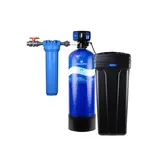
Aquasana SimplySoft 60,000 Grain Softener with LM Pre-Filter
Aquasana SimplySoft 60,000 Grain Softener with LM Pre-Filter
Our salt-based pick: the Aquasana SimplySoft 60,000-grain softener handles very hard water (up to 25+ GPG) with an 11 GPM flow rate that won't drop shower pressure, and the included pre-filter protects the resin from chlorine. True ion-exchange softening — zero hardness at the tap.
Compare sizing, treatment options and ongoing costs in our best water softeners and conditioners guide.
Choose Salt-Free If You Want:
- Scale prevention only: You mainly want to protect appliances without changing water chemistry
- Zero maintenance: No monthly salt refills or regeneration cycles
- Eco-friendly solution: No salt discharge, no water waste, no electricity use
- Low-sodium diet: No added sodium in drinking/cooking water
- Moderate hardness (10-25 GPG): TAC systems work best in this range
- Retain beneficial minerals: Keep calcium and magnesium in drinking water
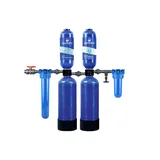
Aquasana Rhino Whole House Salt-Free Water Conditioner
Aquasana Rhino Whole House Salt-Free Water Conditioner
Our salt-free pick: the Aquasana Rhino Salt-Free Conditioner uses TAC media to stop scale on pipes and appliances with no salt, no electricity and no wastewater. Remember — it conditions rather than softens, so expect scale protection, not the slippery soft-water feel.
Compare sizing, treatment options and ongoing costs in our best water softeners and conditioners guide.
Aquasana SimplySoft 60,000 Grain Softener with LM Pre-Filter
Aquasana SimplySoft 60,000 Grain Softener with LM Pre-Filter
Salt-based hardness removal. Size the softener for your household and plan for salt, a brine tank and a drain.
Compare sizing, treatment options and ongoing costs in our best water softeners guide.
Real-World Performance: What Testing Reveals
Independent testing of salt-based versus salt-free water conditioning reveals significant performance differences that marketing materials often obscure. Salt-based ion exchange softeners consistently achieve 95-99% hardness mineral removal across all hardness levels—verified through before/after TDS and hardness testing at the tap. Water truly feels different: soap lathers richly, skin feels smoother after showers, and scale formation on fixtures is virtually eliminated.
Salt-free TAC (Template Assisted Crystallization) systems don't remove hardness minerals—they transform dissolved calcium and magnesium into microscopic crystals that don't adhere to surfaces. Testing confirms 90-95% scale prevention effectiveness at moderate hardness (below 15 GPG). However, at higher hardness levels (20+ GPG), TAC systems struggle to process all dissolved minerals before water reaches fixtures, allowing some scale formation. The water still tests "hard" with a TDS meter or hardness test kit, and you won't experience the soft water feel associated with ion exchange systems.
The environmental comparison favors salt-free systems significantly. A salt-based softener serving a 4-person household uses 500-800 pounds of salt annually and discharges 50-100 gallons of brine water per regeneration cycle (typically 2-3 times per week). Some municipalities have banned or restricted salt-based softeners due to brine discharge impact on wastewater treatment. Salt-free TAC systems use zero salt, produce zero wastewater, require no electricity, and the media lasts 5-6 years before replacement. For environmentally conscious homeowners with moderate hardness, TAC systems deliver meaningful scale protection without the environmental footprint.
Explore Our Top Picks
Best Water Softeners
Top salt and salt-free systems compared
Best Whole House Filters
Whole-home water treatment solutions
Best Well Water Filters
Complete well water treatment systems
Best RO Systems
Top-rated reverse osmosis systems compared
Best Under-Sink Filters
Under-sink filtration alternatives
Water Test Kits
Verify your water quality
Frequently Asked Questions
Related Water Softener Guides
← Back to Softener Hub
Complete water softener reviews and comparisons
Grain Capacity Sizing
Calculate the right softener size for your home
Regeneration Cycles
Time-based vs metered regeneration explained
Dual-Tank Systems
Continuous soft water supply benefits
Installation Guide
DIY vs pro installation requirements
Top Salt-Free Systems
Pelican vs Aquasana comparison