Water Softener Sizing Guide
Recommended Water Softeners by Size
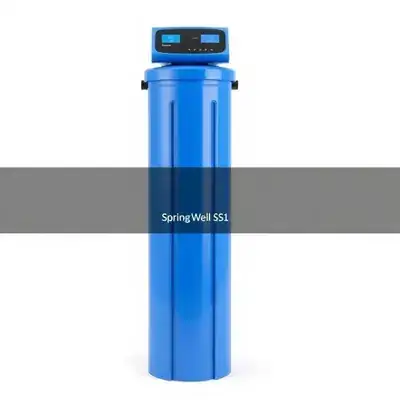
SpringWell SS1 Water Softener
Available in 32,000, 48,000, and 80,000 grain capacities to match any household size. The SS1 features metered regeneration that tracks actual water usage, reducing salt consumption by 40% compared to timer-based systems. Bluetooth app control, lifetime warranty on tanks, and 6-month money-back guarantee.
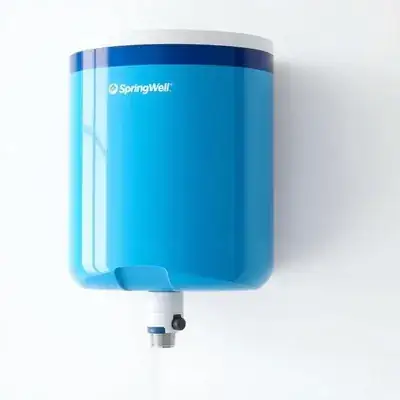
SpringWell FutureSoft
Salt-free water conditioner using Template Assisted Crystallization (TAC) technology. Prevents scale without removing beneficial minerals. No salt, no electricity, no drain required, and zero water waste. Sized by flow rate rather than grain capacity — available in 1-3 bathroom and 4-6 bathroom configurations.
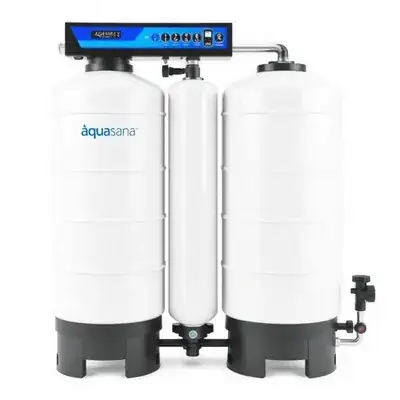
Aquasana SimplySoft
Aquasana's salt-free conditioner naturally reduces scale buildup without chemicals or electricity. Uses SLOW (Scale Limiting Oxidation Whisperer) technology to prevent hard water damage. Often bundled with Aquasana's Rhino whole house filter for comprehensive water treatment at a competitive price.
Water softener sizing isn't about physical dimensions — it's about grain capacity: the amount of hardness minerals the resin can remove before requiring regeneration. Undersized softeners regenerate too frequently (wasting salt and water), while correctly sized systems operate efficiently, regenerating every 7-10 days for optimal salt usage and resin longevity.
This comprehensive sizing guide covers the three critical factors: daily water usage (based on household size), water hardness level (measured in grains per gallon), and desired regeneration frequency. You'll learn to calculate exact grain capacity requirements, interpret manufacturer specifications, and avoid common sizing mistakes that cost homeowners hundreds in wasted salt and premature system replacement.
Interactive Sizing Calculator
Test your water to find hardness level
Understanding Grain Capacity
What is Grain Capacity?
Grain capacity measures the total amount of hardness minerals (calcium and magnesium) the softener resin can remove before requiring salt regeneration. Think of it like a sponge that can absorb only so much water before needing to be wrung out.
Hardness Levels & Softener Needs
| Hardness Level | GPG | ppm | Softener Impact |
|---|---|---|---|
| Soft | 0-3.5 | 0-60 | No softener needed |
| Slightly Hard | 3.5-7 | 61-120 | Small softener or salt-free conditioner |
| Moderately Hard | 7-10.5 | 121-180 | Standard sizing applies |
| Hard | 10.5-14 | 181-240 | Size up one level |
| Very Hard | 14-20 | 241-340 | Size up two levels or add pre-treatment |
| Extremely Hard | 20+ | 340+ | Largest capacity or dual-tank system |
To convert ppm to GPG: ppm divided by 17.1 equals GPG
Common Household Sizing Scenarios
Small (1-3 People)
Water Usage:
80-240 gallons/day
Recommended by Hardness:
- • Soft-Moderate (5-10 GPG): 24,000 grain
- • Hard (10-20 GPG): 32,000 grain
- • Very Hard (20+ GPG): 48,000 grain
Medium (3-5 People)
Water Usage:
240-400 gallons/day
Recommended by Hardness:
- • Soft-Moderate (5-10 GPG): 32,000 grain
- • Hard (10-20 GPG): 48,000 grain (SpringWell SS1)
- • Very Hard (20+ GPG): 64,000 grain
Large (5-7 People)
Water Usage:
400-560 gallons/day
Recommended by Hardness:
- • Soft-Moderate: 48,000 grain
- • Hard: 64,000 grain
- • Very Hard: 80,000 grain (SpringWell SS1 80K)
Very Large (7+ People)
Water Usage:
560+ gallons/day
Recommended Solutions:
- • Single 80,000-100,000 grain unit
- • Dual-tank system (continuous soft water)
- • Commercial-grade softener
Special Sizing Considerations
When to Size Up
Very Hard Water (20+ GPG)
Size up 1-2 levels. Hard water exhausts resin faster than calculations suggest.
High Iron Content (Above 0.3 ppm)
Iron fouls resin faster. Add 3-5 GPG per 1 ppm iron. Or install iron filter first.
Frequent Guests
Size 30-50% above calculated need for usage spikes.
Well Water
Typically harder with iron and manganese. Test comprehensively and size up 20-30%.
Common Sizing Mistakes to Avoid
Mistake #1: Relying on House Size Instead of People Count
Wrong: "I have a 2,000 sq ft house, so I need a 32,000 grain softener"
Right: "I have 4 people using 320 gallons/day with 15 GPG hardness = 48,000 grain softener needed"
Mistake #2: Not Testing Water Hardness First
Guessing hardness leads to undersizing or oversizing. Always test before buying. Hardness test kits cost $10-20. Municipal water reports are free online.
Mistake #3: Extreme Oversizing
Buying 80,000 grain for 2 people backfires. Resin sitting unused for 3-4 weeks develops bacterial growth. Target 7-10 day regeneration cycles, not 30+ days.
Explore Our Top Picks
Related Resources
Water Softener Sizing: Complete Calculation Guide
Properly sizing a water softener is the single most important factor in long-term performance and efficiency. An undersized system regenerates too frequently—wasting salt, water, and shortening resin life. An oversized system wastes money upfront and may not regenerate often enough, allowing bacterial growth in stagnant resin beds. The correct size depends on three variables: your water hardness (GPG or ppm), daily water consumption (gallons), and whether iron is present (which consumes additional softening capacity).
Step 1: Determine your water hardness. Test your water using a hardness test strip ($8-15) or request your water utility's CCR. Hardness is measured in grains per gallon (GPG) or parts per million (ppm). Convert ppm to GPG by dividing by 17.1 (e.g., 250 ppm ÷ 17.1 = 14.6 GPG). Classification: 0-3.5 GPG = soft, 3.5-7 GPG = slightly hard, 7-10.5 GPG = moderately hard, 10.5-14 GPG = hard, 14-21 GPG = very hard, 21+ GPG = extremely hard. Most US homes fall in the 7-17 GPG range.
Step 2: Calculate daily softening demand. Multiply household members by average daily water usage (75 gallons per person per day) by hardness in GPG. Example: 4 people × 75 gallons × 15 GPG = 4,500 grains per day. If iron is present, add 5 GPG equivalent per 1 ppm of iron: 4 people × 75 gallons × (15 + 5) GPG = 6,000 grains per day. This daily demand determines how large your resin tank needs to be to achieve a 7-day regeneration cycle—the optimal interval for efficiency and resin health.
Step 3: Select grain capacity. Multiply daily demand by 7 (days between regeneration) to get the required grain capacity. From our example: 4,500 × 7 = 31,500 grains. Common residential softener sizes: 24,000 grains (1-2 people, moderate hardness), 32,000 grains (2-3 people or higher hardness), 48,000 grains (3-4 people, the most popular residential size), 64,000 grains (4-6 people or very hard water), and 80,000+ grains (large families or extremely hard water). For our 4-person household at 15 GPG, a 32,000-grain system provides a comfortable 7-day cycle. The SpringWell SS1 is available in 32K, 48K, and 80K configurations.
Salt-free conditioner sizing is simpler because these systems do not have regeneration capacity to calculate. TAC (Template Assisted Crystallization) conditioners are sized purely by flow rate—match the system's rated GPM to your home's peak demand. The SpringWell FutureSoft is available in 1-3 bathroom (12 GPM) and 4-6 bathroom (20 GPM) configurations. For homes with high peak demand (multiple simultaneous showers), choose the larger size to prevent flow restriction. TAC conditioners do not remove hardness minerals—they modify crystal structure to prevent scale formation—so sizing is less critical than with ion exchange softeners.
Dual-tank vs. single-tank systems: Standard single-tank softeners cannot soften water during regeneration (typically 60-90 minutes, usually scheduled at 2-3 AM). For households needing 24/7 soft water—shift workers, commercial applications, or large families with overnight water usage—a dual-tank system provides uninterrupted softening by alternating between tanks. Dual-tank systems cost 40-60% more than single-tank but eliminate any period of hard water delivery. For most residential applications, a properly timed single-tank system regenerating at 2 AM provides effectively uninterrupted soft water.
Common sizing mistakes to avoid: (1) Using manufacturer marketing capacity instead of salt-efficient capacity—a "48,000 grain" softener may only deliver 32,000 grains at efficient salt dosing. (2) Ignoring iron contribution to hardness demand—each 1 ppm of iron consumes capacity equivalent to 5 GPG of hardness. (3) Oversizing dramatically—a system that regenerates less than once every 14 days allows bacterial growth in the stagnant resin bed. (4) Undersizing for peak demand—during regeneration, undersized systems deliver partially softened water. The optimal system regenerates every 5-8 days using 6-8 lbs of salt per regeneration cycle, delivering consistent soft water while minimizing salt and water waste.
Softener Efficiency Settings & Salt Optimization
Modern demand-initiated softeners allow you to adjust the salt dosing per regeneration cycle to balance efficiency and capacity. At maximum salt dose (15-18 lbs per regeneration), a 48,000-grain system delivers its full rated capacity. At efficient salt dose (6-8 lbs), the same system delivers approximately 32,000 grains—67% capacity but uses 60% less salt. The optimal setting depends on your daily demand: if your calculated 7-day demand is well below the system's full capacity, use efficient settings to minimize salt usage and environmental impact. If your demand approaches the system's limit, use higher salt dosing to prevent hard water breakthrough between regeneration cycles. Most quality systems like the SpringWell SS1 and Fleck 5600SXT allow you to adjust this setting through the control valve programming menu—consult the manual for your specific model's adjustment procedure.
Frequently Asked Questions
Related Articles
Best Water Softeners 2026
Top-rated salt-based and salt-free systems
See the best Salt-Free Water Conditioners
Scale prevention without salt or drain
Salt-Based or Salt-Free Softeners? Full breakdown
Which technology is right for your home?
Walkthrough — Water Softener Sizing Guide
Calculate grain capacity for your household
Water Softener Installation
DIY installation step-by-step
Water Softener Maintenance (upkeep tips)
Salt refills, resin cleaning, and care schedule
Understanding Water Quality Science
Water quality is determined by a complex interplay of dissolved minerals, organic compounds, and potential contaminants that vary significantly by geographic region and water source. Municipal water treatment facilities use multi-stage processes including coagulation, sedimentation, sand filtration, and chemical disinfection to meet EPA Safe Drinking Water Act standards. However, these treatment processes can introduce disinfection byproducts such as trihalomethanes and haloacetic acids, which form when chlorine reacts with naturally occurring organic matter in the source water.
Private well water faces different challenges, as it bypasses municipal treatment entirely and may contain naturally occurring contaminants like arsenic, radon, and heavy metals that leach from surrounding geological formations. The Environmental Protection Agency recommends annual testing for coliform bacteria, nitrates, total dissolved solids, and pH levels for all private wells. Additional testing for volatile organic compounds, pesticides, and heavy metals should be conducted if you live near agricultural areas, industrial sites, or old mining operations. Understanding your specific water chemistry is the critical first step in selecting the most effective filtration system for your household needs.
Total dissolved solids (TDS) measurements provide a general indicator of water purity but should not be the sole basis for filtration decisions. Water with high TDS from beneficial minerals like calcium and magnesium may actually be healthier than ultra-purified water. The World Health Organization has noted that demineralized water may have adverse health effects due to the absence of essential minerals. This is why many advanced filtration systems, particularly reverse osmosis units, now include remineralization stages that add back beneficial minerals after removing contaminants. The ideal approach balances contaminant removal with mineral retention, targeting specific harmful substances identified through comprehensive water testing while preserving the natural mineral content that contributes to both taste and health benefits.
Filtration Technology Comparison
Modern water filtration leverages several distinct technologies, each with unique strengths for addressing specific water quality challenges. Activated carbon filtration, the most common residential method, uses adsorption to capture chlorine, volatile organic compounds, and taste-affecting chemicals. Granular activated carbon (GAC) filters provide good flow rates but may allow channeling, while carbon block filters compress carbon particles for more consistent contact time and finer filtration down to 0.5 microns. Catalytic carbon represents the latest advancement, specifically engineered to break down chloramines through a catalytic reaction rather than simple adsorption.
Reverse osmosis systems force water through a semipermeable membrane with pore sizes as small as 0.0001 microns, effectively removing dissolved solids, heavy metals, and most microorganisms. Modern RO systems achieve 95-99 percent rejection rates for contaminants like lead, arsenic, fluoride, and PFAS compounds. The primary considerations for RO systems include water waste ratios (typically 3:1 to 4:1 for standard systems, improved to 1:1 in premium tankless models), storage tank requirements, and the need for pre-filtration to protect the delicate membrane from sediment and chlorine damage.
Ion exchange technology, used in both water softeners and specialized contaminant removal systems, swaps problematic ions in the water with benign alternatives. Water softeners exchange calcium and magnesium ions for sodium ions, preventing scale buildup in plumbing and appliances. Specialized ion exchange resins can target specific contaminants like lead, nitrates, or perchlorate. Ultraviolet purification provides chemical-free disinfection by disrupting the DNA of bacteria, viruses, and protozoa at wavelengths around 254 nanometers. UV systems are particularly valuable for well water and as a final treatment stage in multi-barrier systems, though they do not remove chemical contaminants or improve taste.
Long-Term Cost Analysis
When evaluating water filtration costs, the total cost of ownership over five years provides a much more accurate picture than initial purchase price alone. A budget pitcher filter at thirty dollars may seem economical, but replacement filters at forty dollars every two months add up to over twelve hundred dollars in five years. Meanwhile, an under-sink system costing two hundred dollars upfront with sixty-dollar annual filter changes totals just five hundred dollars over the same period, delivering superior filtration at less than half the long-term cost.
Whole house filtration systems represent a larger initial investment of eight hundred to two thousand dollars including professional installation, but they protect all water fixtures and appliances simultaneously. When you factor in the extended lifespan of water heaters, dishwashers, and washing machines that no longer process unfiltered water, the return on investment often exceeds the system cost within three to four years. Water softener savings are particularly dramatic: the Water Quality Association estimates that soft water can reduce water heating costs by up to twenty-nine percent and extend appliance lifespans by thirty to fifty percent.
For households currently purchasing bottled water, any home filtration system provides massive savings. The average family spending twenty dollars per week on bottled water spends over five thousand dollars in five years. Even the most premium whole house filtration system with annual maintenance costs less than two thousand dollars over the same period, saving over three thousand dollars while eliminating hundreds of plastic bottles from landfills annually. The environmental and financial case for home filtration is compelling at every price point.
Health and Safety Considerations
The health implications of water contaminants vary significantly based on exposure levels and duration. Lead exposure, even at low levels, can cause developmental delays in children, cardiovascular problems in adults, and reproductive issues. The EPA has set the maximum contaminant level goal for lead at zero, acknowledging that no level of lead exposure is considered safe. Homes built before 1986 are at particular risk due to lead solder in copper pipes and lead service lines connecting to municipal water mains.
PFAS compounds, known as forever chemicals due to their environmental persistence, have been detected in drinking water supplies serving over one hundred million Americans. These synthetic chemicals, used in nonstick cookware, food packaging, and firefighting foam, have been linked to cancer, thyroid disease, immune system effects, and reproductive problems. The EPA established enforceable maximum contaminant levels for six PFAS compounds in 2024, driving increased demand for filtration systems capable of removing these persistent pollutants.
Microbiological contaminants including bacteria, viruses, and parasitic cysts present acute health risks, particularly for immunocompromised individuals, elderly people, infants, and pregnant women. Cryptosporidium and Giardia cysts are resistant to chlorine disinfection and require physical removal through filtration at one micron or smaller. UV purification provides an additional barrier against biological threats without adding chemicals to the water. For comprehensive protection, the Centers for Disease Control recommends a multi-barrier approach combining physical filtration, chemical or UV disinfection, and regular testing to verify system performance and identify emerging contaminant threats in your water supply.
Expert Insights and Industry Trends
The residential water filtration industry continues to evolve rapidly, driven by increasing awareness of water quality issues, advancing filtration technologies, and tightening regulatory standards. Industry analysts project the global residential water treatment market will exceed twenty-five billion dollars by 2028, with point-of-use systems showing the fastest growth segment. Smart filtration systems with WiFi connectivity and app-based monitoring are emerging as the premium segment, offering real-time filter life tracking, water quality alerts, and automatic reorder functionality that simplifies maintenance for homeowners.
Certification standards continue to play a critical role in consumer protection and product differentiation. NSF International and the Water Quality Association maintain rigorous testing protocols that verify manufacturer claims for contaminant reduction. NSF Standard 42 covers aesthetic effects like taste and odor, while NSF Standard 53 addresses health-related contaminants including lead, cysts, and volatile organic compounds. The newer NSF Standard 401 specifically targets emerging contaminants like pharmaceuticals and over-the-counter medications, while NSF P473 was developed specifically for PFAS compounds. Consumers should always verify certifications through the NSF product database rather than relying solely on manufacturer marketing materials.
Environmental sustainability is increasingly influencing product development and consumer purchasing decisions. Single-use plastic water bottle consumption generates over sixty billion bottles annually in the United States alone, with less than thirty percent being recycled. Home filtration systems eliminate this waste stream entirely while providing superior water quality at a fraction of the cost. Manufacturers are responding to environmental concerns by developing longer-lasting filter media, recyclable cartridge programs, and water-efficient designs that minimize wastewater production. Some premium systems now achieve wastewater ratios as low as one-to-one, compared to the traditional three-to-one or four-to-one ratios of older reverse osmosis systems, representing a significant improvement in water conservation.