Water Softener Regeneration: Complete Cycle Guide
How a softener's regeneration cycle works, the difference between metered and timer settings, how to use less salt, and how to fix the most common regeneration problems.
Before you change any settings
Most regeneration problems come down to one of three things.
- Test your hardness (and iron, if you are on a well) so the valve setting matches your water.
- Check the brine tank for salt, a salt bridge or mushy salt at the bottom.
- Look for leaks: a running toilet makes a metered softener regenerate too often.
Quick answer
Regeneration is how a salt-based softener cleans its resin: it backwashes, rinses the resin with brine to strip out the hardness it has caught, rinses again and refills the brine tank. Most cycles run overnight and take a couple of hours. If your softener regenerates every day, or you still get hard water, check the hardness setting, the salt tank and for leaks before anything else.
The four stages of regeneration
Most single-tank softeners follow the same order. The length of each stage is set in the control valve, and your manual lists the values for your model.
Backwash
Water flows up through the resin tank in reverse. It loosens and lifts the resin bed and flushes out sediment and fine particles that collected between cycles.
Brine draw and slow rinse
The valve pulls salty brine from the brine tank and passes it slowly through the resin. Sodium (or potassium) in the brine pushes the trapped calcium and magnesium off the beads, and both go down the drain. A slow rinse then pushes the last of the brine through the bed.
Fast rinse
Fresh water flows quickly through the resin to wash out the remaining brine and settle the bed, so the next water you draw is soft and not salty.
Brine tank refill
The valve sends a measured amount of water back into the brine tank, where it dissolves salt for the next regeneration. Some valves refill before the cycle instead of after it.
On most single-tank softeners, water drawn during the cycle bypasses the resin and is not softened, which is why regeneration is normally set for the middle of the night. For the bigger picture, read how water softeners work.
How often should it regenerate?
That depends on three numbers: how many grains of hardness the softener can hold between cycles at its salt setting, how hard your water is, and how much water you use. A rough way to estimate it:
Days between regenerations ≈ usable capacity (grains) ÷ (hardness in grains per gallon × gallons used per day)
Example only: a softener with 24,000 usable grains, water at 10 grains per gallon and 300 gallons a day removes 3,000 grains a day, so it would last about eight days. Metered valves also keep a reserve, so they regenerate a little sooner.
Many homes land somewhere between every few days and about once a week. If yours is far outside that, the settings or the size are worth a second look. If you are on a well with iron, many makers suggest raising the hardness setting to allow for it; follow your manual. Our softener sizing guide walks through the numbers in more detail.
Metered vs timer regeneration
| Question | Metered (demand-initiated) | Timer (time clock) |
|---|---|---|
| When it regenerates | When the meter shows the resin is nearly full | On a fixed schedule |
| Salt and water use | Lower when use varies | Same every cycle, needed or not |
| Running out of soft water | Less likely after busy weeks | Possible if you use more than planned |
| Settings to get right | Hardness, capacity, reserve | Days between cycles |
| Suits | Most homes, especially with changing use | Very steady, predictable use |
If you are buying a new softener, a metered valve is the better default. If your current one is timer-based and works well, there is no need to replace it; just make sure the schedule fits how much water you really use.
How to use less salt and water
- Match the hardness setting to a real test. Setting it higher "to be safe" makes the softener regenerate more than it needs to. Learn how hardness is measured.
- Fix leaks. A running toilet or dripping tap counts as use on a metered valve.
- Review the salt dose. Many valves let you choose a lower salt setting, which softens more water per pound of salt in exchange for slightly more frequent cycles. Check the options in your manual.
- Use clean salt. Evaporated or solar pellets leave less residue in the brine tank than rock salt, so the tank needs cleaning less often.
- Keep the brine tank healthy. Break up salt bridges, do not overfill in damp spaces and clean out sludge when it builds up.
- Size it right. A softener that is too small regenerates constantly. See twin-tank softeners if you need soft water around the clock.
Some areas restrict salt-based softeners because of the brine they send to the sewer. If that applies to you, or you mainly want less scale rather than soft water, compare salt and salt-free options.
Fixing common regeneration problems
Hard water even after a regeneration
Check that there is salt in the tank and no salt bridge or mush at the bottom. Then check the brine line, injector and screen for blockages, and make sure the bypass valve is set to service. If all of that is fine, the resin may be worn out.
Regenerating far too often
Check the hardness setting against a fresh hardness test, look for leaks (turn off every tap and see if the meter still counts) and confirm the clock and day settings. A softener that is too small for the household will also cycle often.
Not regenerating at all
Check that the valve has power and the correct time; a power cut can reset it. Try a manual regeneration. If the valve does not move, the motor or control board may need service.
Too much water in the brine tank
Some water is normal in most brine tanks. If it keeps rising, the softener may not be drawing brine, often because of a blocked injector, drain line or brine valve.
Salty taste
Brine is not being rinsed out. Check for a kinked drain line, an overfilling brine tank and rinse settings that do not match the manual.
If none of these fixes work, contact the softener maker or a water treatment professional, especially for valve, motor or resin problems.
Softeners to compare
One salt-based softener and one salt-free option for homes that would rather skip regeneration altogether. Open each deal for the current price and check the sizing for your household.
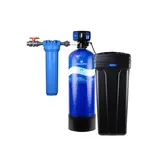
Aquasana SimplySoft 60,000 Grain Softener with LM Pre-Filter
Aquasana SimplySoft 60,000 Grain Softener with LM Pre-Filter
A salt-based softener for homes that want truly soft water, sold with a prefilter. It needs a drain, an outlet and regular salt refills; check its grain capacity against your hardness and water use, and the regeneration settings in Aquasana's manual.
Compare sizing, treatment options and ongoing costs in our best water softeners and conditioners guide.
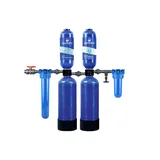
Aquasana Rhino Whole House Salt-Free Water Conditioner
Aquasana Rhino Whole House Salt-Free Water Conditioner
A whole-house filter paired with a salt-free conditioner, for city-water homes that mainly want less scale. It has no brine tank and no regeneration cycle, but it does not remove hardness, so water will still test hard. Confirm your hardness and any iron are within Aquasana's stated limits.
Compare sizing, treatment options and ongoing costs in our best water softeners and conditioners guide.
Bottom line
A healthy softener regenerates quietly overnight, every few days to about once a week for most homes. Keep the hardness setting matched to a real test, keep salt in the tank without letting it bridge, and fix leaks. Those three habits solve most regeneration problems and keep salt and water use down.