Water Softener Troubleshooting Guide: 15 Common Problems & Expert Fixes
Fix the 15 most common water softener problems yourself with our step-by-step diagnostic guide. Covers salt bridges, hard water breakthrough, overflow emergencies, regeneration failures, and resin degradation. Save $150-300 on professional service calls.
EMERGENCY: Water Softener Leaking or Overflowing?
How Water Softeners Work: Understanding Ion Exchange
Before troubleshooting, understanding the ion exchange process helps you diagnose problems faster. Water softeners use a bed of sulfonated polystyrene resin beads charged with sodium ions. As hard water passes through the resin tank, calcium (Ca²⁺) and magnesium (Mg²⁺) ions are attracted to the negatively charged resin beads and swap places with sodium (Na⁺) ions. This is why softened water contains slightly more sodium than the source water.
When the resin bed becomes saturated with hardness minerals (typically after processing 20,000-80,000 grains depending on tank size), the softener must regenerate. During regeneration, a concentrated salt brine solution (approximately 26% NaCl) is drawn from the brine tank and flushed through the resin bed in reverse. The high concentration of sodium ions displaces the accumulated calcium and magnesium, which are flushed down the drain. The cycle consists of five phases: backwash (10-15 minutes), brine draw (30-60 minutes), slow rinse (30-60 minutes), fast rinse (5-10 minutes), and refill (8-12 minutes).
Understanding these phases is critical because most softener problems occur during regeneration. A clogged injector prevents brine draw, a stuck piston skips cycles, and a failed motor can halt regeneration entirely. The total regeneration cycle takes 90-120 minutes and typically runs at 2:00 AM to minimize household water use during the process.
Softener Sizing: Is Your System Too Small?
An undersized softener is one of the most common root causes of persistent hard water. The unit exhausts its capacity before the next regeneration cycle, allowing hard water to pass through. Use this capacity formula to verify your softener is correctly sized:
Daily Softening Demand = Household Members × Daily Gallons × Water Hardness (GPG)
Example: 4 people × 80 gal/day × 15 GPG = 4,800 grains/day
Required Capacity (7-day regen): 4,800 × 7 = 33,600 grains → 32,000-grain softener minimum
| Household Size | 5-10 GPG (Moderate) | 10-20 GPG (Hard) | 20-40 GPG (Very Hard) | 40+ GPG (Extreme) |
|---|---|---|---|---|
| 1-2 people | 24,000 grain | 32,000 grain | 48,000 grain | 64,000 grain |
| 3-4 people | 32,000 grain | 48,000 grain | 64,000 grain | 80,000+ grain |
| 5-6 people | 48,000 grain | 64,000 grain | 80,000 grain | Dual-tank system |
| 7+ people | 64,000 grain | 80,000 grain | Dual-tank system | Commercial unit |
Iron compensation: Add 3 GPG equivalent for every 1 PPM of dissolved iron in your water. For example, if your water tests at 12 GPG hardness with 2 PPM iron, calculate as 12 + (2 × 3) = 18 GPG effective hardness.
Quick Diagnosis: What's Wrong with My Softener?
→ Check salt level → Check bypass valve → Check hardness setting → Run manual regeneration
→ Check for salt bridge → Check for salt mushing → Inspect brine line → Test injector/venturi
→ Check float assembly → Clear drain line → Inspect valve seals → Verify brine refill setting
→ Check valve position sensor → Reset control head → Replace valve motor → Inspect cam gear
→ Clean injector/venturi → Check drain flow → Verify rinse cycle completes → Test brine concentration
→ Check bypass valve position → Test resin bed for channeling → Verify sizing matches flow demand → Inspect sediment pre-filter
Common Problems & Step-by-Step Fixes
Advanced: Regeneration Cycle Diagnostics
If basic troubleshooting hasn't resolved your issue, the problem likely lies within the regeneration cycle itself. Each phase can fail independently, and understanding what each phase does helps isolate the failure point. Here is a detailed breakdown of the five regeneration phases, what can go wrong in each, and how to diagnose and repair the failure.
1Backwash Phase (10-15 minutes)
Purpose: Reverses water flow through the resin bed to lift and separate compacted resin, flush out sediment, iron precipitates, and broken resin fines. Flow rate: 2-4 GPM per square foot of resin bed area.
Failure symptoms: Resin bed channeling (water finds shortcuts through packed resin instead of contacting all beads), iron fouling accumulation, increasingly hard water despite proper salt levels and settings.
Diagnostic: Listen during backwash—you should hear strong water flow to drain. If no flow, check the drain line for obstructions. If resin appears in the drain discharge, your upper distributor basket is cracked or missing, allowing resin beads to escape during backwash.
Fix: Clear drain line obstructions. Replace cracked upper distributor ($15-30 part). If resin is severely compacted with iron, use a resin bed cleaner like Res-Up or Iron Out ($10-15) before running a manual regeneration cycle.
2Brine Draw Phase (30-60 minutes)
Purpose: Draws concentrated salt brine (26% NaCl solution) from the brine tank through an injector/venturi that creates suction via the Bernoulli effect. The brine then flows through the resin bed, displacing accumulated calcium and magnesium ions with sodium ions.
Failure symptoms: Salt level never drops, water remains hard after regeneration, no brine draw sound (typically a subtle sucking/hissing noise from the injector area).
Diagnostic: Check the injector/venturi assembly for clogs. Remove the injector cap (usually 2 screws), extract the injector screen and nozzle, and inspect for sediment or salt crystal blockage. Also verify the brine line from the brine tank to the valve head is not kinked, disconnected, or cracked.
Fix: Soak the injector assembly in warm white vinegar for 30 minutes, then clean with a soft brush. Replace the injector screen ($5-10). Check that the brine float is set to the correct water level (typically 10-12 inches of water in the brine tank before refill). Verify the brine line connection is secure and airtight—an air leak prevents proper suction.
3Slow Rinse Phase (30-60 minutes)
Purpose: Continues drawing remaining brine through the resin while simultaneously beginning to rinse excess brine out. This phase ensures all resin beads contact the brine solution for thorough regeneration. Water flows in the same direction as service (downflow).
Failure symptoms: Salty taste in treated water after regeneration. Incomplete regeneration (only part of the resin bed is refreshed). Excessive salt consumption without improved softening.
Diagnostic: If the slow rinse phase is cut short (timer or motor issue), brine remains in the resin bed and enters your household water. Test softened water immediately after regeneration—if it tastes salty, the rinse cycle is incomplete.
Fix: Check timer/motor operation. Reset the control head and run a manual regeneration while monitoring each phase. If the motor skips phases, the cam gear or piston may be damaged. Verify the drain flow rate is adequate (minimum 0.5 GPM for residential units).
4Fast Rinse Phase (5-10 minutes)
Purpose: High-flow water flushes remaining brine and displaced hardness minerals from the resin bed and down the drain. Packs the resin bed for service. Flow rate: 1.5-2.5 GPM per square foot of bed area.
Failure symptoms: Persistent salty taste. Resin fines (tiny beads) in water. Poor flow rate during normal operation.
Diagnostic: Check drain flow during fast rinse—it should be strong and steady. Weak flow indicates a drain restriction. If resin fines appear in water after this phase, the lower distributor or riser tube may have a crack or gap allowing resin to bypass the screen.
Fix: Clear drain restrictions. Replace damaged distributor components. If the rinse consistently fails to remove salty taste, increase the rinse time setting on the control head (if adjustable) or check water pressure—low pressure (<20 PSI) prevents effective rinsing.
5Brine Refill Phase (8-12 minutes)
Purpose: Refills the brine tank with a measured amount of water to dissolve salt before the next regeneration. The refill amount is controlled by a flow meter or timed fill. Typical refill: 3-6 gallons depending on softener capacity.
Failure symptoms: Brine tank overfilling (overflow), brine tank remaining empty (no regeneration possible), inconsistent salt consumption.
Diagnostic: Mark the water level in the brine tank before regeneration. After regeneration completes, check that water has been added to the correct level (typically controlled by the brine float or refill flow control). If the level is too high, the refill timer/flow control is set incorrectly. If no water is added, the refill valve or flow control is stuck closed.
Fix: Adjust the brine refill setting on the control head. Clean or replace the brine refill flow control ($10-20). Verify the brine float is set correctly—it should stop water fill at the appropriate level for your softener capacity. For most residential units, 10-12 inches of water in the brine tank is standard.
Salt-Based Softeners vs. Salt-Free Conditioners
If your troubleshooting reveals that your salt-based softener needs replacement, you may be considering a salt-free alternative. Understanding the fundamental differences helps you make an informed decision about whether to replace or upgrade your current system.
| Feature | Salt-Based Ion Exchange | TAC/Template Assisted | Electronic/Magnetic |
|---|---|---|---|
| Actually removes hardness? | Yes — exchanges Ca/Mg for Na | No — prevents scale only | No — temporary effect |
| Scale prevention | 99%+ | 90-95% (on pipes/appliances) | 30-50% (disputed) |
| Soap lather improvement | Dramatic — silky water feel | Minimal — minerals remain | None |
| Annual operating cost | $100-200 (salt + water) | $0-50 (media replacement) | $5-10 (electricity) |
| Water waste | 50-100 gal/regen cycle | None | None |
| Best for | Hard water 10+ GPG, well water | Moderate hardness, eco-conscious | Very light hardness only |
| Upfront cost | $500-2,000 | $800-2,500 | $200-600 |
For a detailed comparison, see our salt-based vs. salt-free softener guide. If you're dealing with well water containing iron, manganese, or hydrogen sulfide, a traditional ion exchange softener remains the best choice. Review our top-rated water softeners for 2026.
10-Year Total Cost of Ownership: Repair vs. Replace
When your softener needs significant repairs, the decision between repairing and replacing depends on the system's age, the cost of the specific repair, and the expected remaining lifespan. Use this analysis to determine the most cost-effective approach for your situation.
| Repair Type | DIY Cost | Pro Cost | Extends Life By | Worth It If System Is... |
|---|---|---|---|---|
| Salt bridge removal | $0 | $75-100 | N/A (maintenance) | Any age |
| Injector/venturi cleaning | $0-10 | $100-150 | N/A (maintenance) | Any age |
| Resin replacement | $150-300 | $400-800 | 8-15 years | Under 12 years old |
| Control valve rebuild | $50-150 | $200-400 | 5-10 years | Under 10 years old |
| Motor/timer replacement | $80-150 | $200-350 | 5-8 years | Under 10 years old |
| Complete brine tank replace | $100-200 | $250-450 | 10+ years | Under 8 years old |
Rule of Thumb: Replace if repair cost exceeds 50% of a new softener and your unit is 10+ years old.
A quality new water softener costs $500-1,500 installed and lasts 15-20 years. If your current unit is over 12 years old and needs a $300+ repair, replacement is almost always more cost-effective. Newer models also offer 20-40% salt savings through metered demand regeneration, better flow rates, and smart connectivity features for monitoring performance.
US Water Hardness by Region
Water hardness varies dramatically by geography, which directly impacts your softener's workload and maintenance frequency. Understanding your region's typical hardness helps you set realistic expectations for salt consumption and regeneration frequency.
Hardest Water Regions (20-100+ GPG)
• Central Texas: 40-80 GPG (limestone aquifers)
• Arizona/New Mexico: 25-60 GPG (Colorado River)
• Indiana/Ohio: 20-40 GPG (glacial deposits)
• Kansas/Nebraska: 20-50 GPG (Ogallala Aquifer)
These regions require larger capacity softeners, more frequent regeneration (every 2-4 days), and higher salt consumption (40-80 lbs/month).
Moderate to Soft Water (0-15 GPG)
• Pacific Northwest: 2-8 GPG (snowmelt sources)
• New England: 1-5 GPG (granite bedrock)
• Southeast coastal: 3-10 GPG (sandy aquifers)
• Hawaii: 1-7 GPG (volcanic rock)
These regions may not need a softener at all, or can use a smaller unit with weekly regeneration and minimal salt consumption (10-20 lbs/month).
Not sure about your water hardness? Test it yourself with a home water testing kit or check your city's annual Consumer Confidence Report. Well water users should test at least annually since groundwater hardness can change seasonally.
When to Call a Professional
While most water softener problems are DIY-fixable, some situations require professional expertise to avoid further damage, warranty voiding, or safety hazards. Call a licensed water treatment professional if you encounter any of the following scenarios:
Call a Pro Immediately
- • Electrical issues (motor sparking, burning smell)
- • Major plumbing leaks at supply connections
- • Control valve body cracked or corroded through
- • Contamination concerns (bacteria in resin bed)
- • System installed on untreated well water with bacteria
Consider a Pro For
- • Full resin bed replacement (heavy lifting + disposal)
- • Control valve rebuild (complex internal parts)
- • System relocation or re-plumbing
- • Adding pre-treatment for iron or sediment
- • Warranty service (DIY may void coverage)
Professional service calls typically cost $75-150 for diagnostics plus parts/labor. Get quotes from at least two WQA-certified technicians. Avoid companies that immediately recommend replacement without trying repairs—a reputable technician will diagnose before selling.
Preventive Maintenance Schedule
Monthly:
Quarterly:
Annually:
Recommended Replacement Softeners
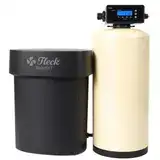

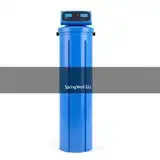
Explore Our Top Picks
Related Guides
Frequently Asked Questions
Hard Water Solutions
Understanding Water Hardness Levels
Water hardness is measured in grains per gallon (GPG) or parts per million (PPM). Slightly hard water (1-3.5 GPG) rarely causes issues, but moderately hard (3.5-7 GPG) water begins showing scale buildup on fixtures. Hard water (7-10.5 GPG) causes significant scaling, soap inefficiency, and appliance damage. Very hard water (10.5+ GPG) requires immediate treatment to protect plumbing infrastructure. The USGS reports that 85% of American homes have some degree of hard water, with the hardest water concentrated in the Midwest, Southwest, and Great Plains regions.
Impact on Home Plumbing Systems
Hard water deposits calcium and magnesium carbonate inside pipes, gradually reducing internal diameter and restricting water flow. A study by the Water Quality Research Foundation found that showerheads lost 75% of flow rate within 18 months when exposed to hard water. Water heaters are particularly vulnerable - just 1/4 inch of scale reduces heating efficiency by 29%, according to the Department of Energy. Over a water heater's 10-year lifespan, hard water can increase energy costs by $1,500-3,000 through reduced efficiency and eventual premature failure requiring $800-2,000 replacement.
Comparing Treatment Technologies
Ion exchange softeners remain the gold standard for hard water treatment, achieving near-complete hardness removal (0-1 GPG output). Salt-free conditioners using TAC (Template Assisted Crystallization) technology prevent scale formation without removing minerals, achieving 85-95% scale prevention effectiveness. Electromagnetic descalers represent the most affordable option ($30-200) but scientific evidence for their effectiveness remains limited and inconsistent. For homes with 15+ GPG hardness, ion exchange is the recommended solution. Moderate hardness (7-15 GPG) can often be managed with salt-free conditioning. Below 7 GPG, many homeowners find treatment optional unless they have sensitive skin or hair concerns.
Water Quality Science and Consumer Protection
The science of water treatment has evolved dramatically over the past two decades, driven by advances in analytical chemistry that can now detect contaminants at parts-per-trillion concentrations. This detection capability has revealed the presence of thousands of previously unidentified compounds in municipal water supplies, including pharmaceutical residues, endocrine-disrupting chemicals, microplastics, and per- and polyfluoroalkyl substances (PFAS). The EPA currently regulates 90 contaminants under the Safe Drinking Water Act, but the Environmental Working Group has documented over 300 additional pollutants in US tap water that have no legal limits.
Understanding the distinction between regulated and unregulated contaminants is essential for making informed filtration decisions. Regulated contaminants have Maximum Contaminant Levels (MCLs) that public water systems must meet, enforced through mandatory testing and public reporting via annual Consumer Confidence Reports. Unregulated contaminants, despite being detected in water supplies, have no enforceable limits, meaning your water utility is not required to treat for or even report their presence. This regulatory gap means that water meeting all federal standards may still contain compounds of health concern at levels that research suggests could pose long-term risks.
The health economics of water filtration present a compelling case for proactive treatment. A 2023 analysis by the Water Quality Research Foundation estimated that the lifetime healthcare cost savings from removing lead exposure alone average $5,600 per child. When factoring in reduced cancer risk from PFAS and disinfection byproduct removal, improved developmental outcomes from reducing prenatal contaminant exposure, and decreased gastrointestinal illness from pathogen removal, the total health-economic benefit of comprehensive home water filtration ranges from $8,000 to $25,000 per household over a 20-year period. These savings dwarf the $2,000-5,000 total cost of purchasing and maintaining a quality filtration system over the same timeframe.
Infrastructure Challenges and Future Outlook
Americas water infrastructure faces unprecedented challenges that directly impact household water quality. The American Society of Civil Engineers grades US drinking water infrastructure at C-minus, with an estimated $625 billion investment needed over 20 years to bring systems to adequate condition. Approximately 6 billion gallons of treated water are lost daily through 240,000 water main breaks annually. These infrastructure failures not only waste resources but create potential contamination pathways where soil, bacteria, and chemicals can enter the distribution system through pressure drops and pipe fractures.
Lead service lines remain the most pressing infrastructure concern, with an estimated 6-10 million lead pipes still delivering water to American homes. The EPA Lead and Copper Rule Revisions mandate replacement of all lead service lines within the coming decade, but the scale of the project ($3,000-8,000 per line) and limited workforce capacity mean many households will continue receiving water through lead pipes for years. During the replacement process itself, disturbance of existing pipes can temporarily increase lead levels by 10-100x above baseline. Point-of-use filtration certified to NSF 53 for lead provides the most reliable protection during this transition period.
Climate change introduces compounding water quality challenges that existing treatment infrastructure was not designed to address. Rising temperatures promote harmful algal blooms producing cyanotoxins that overwhelm conventional treatment processes. Increased wildfire frequency deposits ash-borne benzene and heavy metals into source watersheds. Extreme precipitation events cause combined sewer overflows that introduce untreated sewage into source water. Sea level rise threatens coastal aquifers with saltwater intrusion, increasing TDS and chloride levels beyond treatment capacity. These converging pressures reinforce the critical importance of residential water treatment as the final barrier between environmental challenges and family health.
Explore Our Top Picks
Related Resources
Related Articles
Our picks for Water Softeners
Top-rated salt-based and salt-free systems
Top-rated Salt-Free Water Conditioners
Scale prevention without salt or drain
How Salt-Based compares to Salt-Free Softeners
Which technology is right for your home?
Step-by-step: Water Softener Sizing Guide
Calculate grain capacity for your household
Step-by-step: Water Softener Installation
DIY installation step-by-step
Maintenance guide — Water Softener Maintenance
Salt refills, resin cleaning, and care schedule