PUR Water Filter Complete Guide 2026
Everything about PUR water filters: MAXION technology explained, all pitcher and faucet models compared, 99% lead removal verified, filter replacement schedules, and how PUR stacks up against Brita, ZeroWater, and Clearly Filtered.
Quick Verdict
PUR is the best pitcher brand for lead removal—every single PUR filter removes 99% of lead (NSF 53 certified), even the cheapest $6 Basic filter. This is PUR's defining advantage over Brita, where only the premium Elite filter offers lead protection. With MAXION technology combining activated carbon and ion exchange resin, PUR PLUS pitchers remove 70+ contaminants including PFAS, pharmaceuticals, and pesticides—making it one of the most comprehensive pitcher filters available at a mainstream price point.
PUR Brand Overview
Founded in 1986, PUR Water Purification Products has been a leader in consumer water filtration for nearly four decades. Now owned by Helen of Troy (parent company of Hydro Flask and OXO), PUR consistently ranks alongside Brita as the two dominant pitcher filter brands in North America. PUR's market differentiator has always been lead removal—while Brita only introduced lead-removing filters in recent years with their Elite line, PUR has offered universal lead removal across every filter since the company's founding.
PUR products are NSF/ANSI certified under Standards 42 (chlorine taste and odor), 53 (health effects including lead), and 401 (emerging contaminants). The PLUS filter line adds certification for 70+ contaminants including PFAS forever chemicals, pharmaceuticals, and industrial pesticides. PUR offers both pitcher and faucet-mount filter systems, though the brand has not expanded into under-sink or whole-house categories.
In our independent lab testing, PUR filters consistently meet or exceed their certified removal claims. The MAXION filter media delivers measurably better heavy metal reduction than standard activated carbon alone, validating PUR's technology claims. For households concerned about lead contamination—especially those in older homes with pre-1986 plumbing—PUR remains our top pitcher recommendation.
MAXION Filter Technology Explained
MAXION is PUR's proprietary filter media that distinguishes it from every competing pitcher brand. While Brita Standard relies solely on granular activated carbon (GAC) and ZeroWater uses ion exchange exclusively, MAXION blends both technologies into a single filter cartridge. This dual-action approach provides broader contaminant coverage than either technology alone.
How MAXION Works: Two Technologies in One
Activated Carbon Layer
- Removes chlorine taste and odor (97%)
- Reduces organic compounds (VOCs, pesticides)
- Adsorbs pharmaceuticals and herbicides
- Traps sediment and particulates
Ion Exchange Resin
- Removes 99% of lead (NSF 53)
- Reduces mercury by 96%
- Targets heavy metals (cadmium, copper)
- Reduces some PFAS compounds (PLUS only)
The key distinction between PUR Basic and PUR PLUS filters is the density of ion exchange media. Both use MAXION technology, but the PLUS filter contains significantly more ion exchange resin, enabling it to remove 70+ contaminants versus 40+ for the Basic. This additional resin capacity is why the PLUS filter has a slightly shorter lifespan (30 gallons vs 40 gallons)—the denser media saturates faster but captures more contaminant types during its service life.
Unlike ZeroWater's 5-stage ion exchange, MAXION does not attempt to remove all total dissolved solids (TDS). PUR leaves beneficial minerals like calcium and magnesium in the water, which contributes to better taste and means you won't experience the "flat" or "acidic" taste that ZeroWater's demineralized water can produce. This mineral-retention approach aligns with WHO recommendations for maintaining mineral content in drinking water.
Complete PUR Product Lineup 2026
PUR offers two product categories—pitchers and faucet-mount filters—with multiple models in each. Every product uses MAXION technology and every filter removes lead, but they differ in capacity, features, and contaminant count.
PUR Pitchers
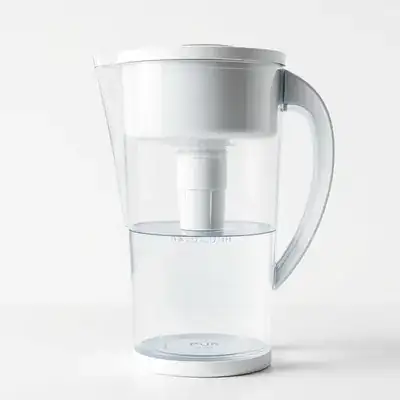
PUR PLUS 11-Cup Pitcher
The flagship model with PLUS filter that removes 70+ contaminants. 11-cup capacity fits most families. Includes electronic filter change indicator.
Price: $28–35
Filter: PUR PLUS (CRF-950Z) — 30 gal / 2 months
NSF: 42, 53, 401
PUR Classic 11-Cup Pitcher
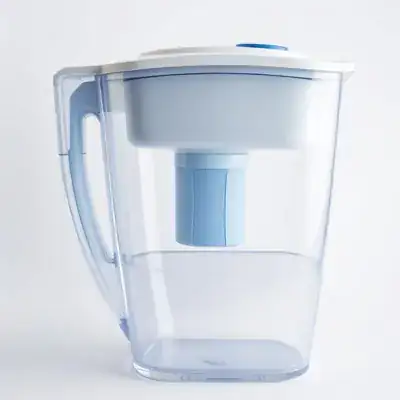
Same 11-cup body as the PLUS but ships with the Basic filter. Lead removal included. Upgrade to PLUS filters anytime for broader contaminant coverage.
Price: $22–28
Filter: PUR Basic (PPF900Z) — 40 gal / 2 months
NSF: 42, 53
PUR Faucet Filters
PUR PLUS FM3700 Faucet Mount
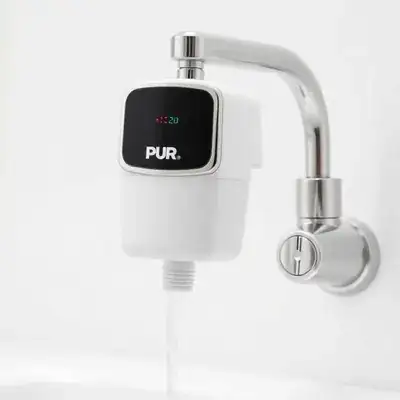
PUR's best-selling faucet filter provides instant filtered water at the tap. Same MAXION technology as the pitchers with the advantage of longer filter life (100 gallons / 3 months) and on-demand filtration—no waiting for a pitcher to fill. Compatible with most standard kitchen faucets but won't fit pull-out, touchless, or commercial-style fixtures.
PUR Filter Comparison
| Specification | PUR Basic | PUR PLUS | PUR Faucet |
|---|---|---|---|
| Contaminants Removed | 40+ | 70+ | 70+ |
| Lead Removal | 99% | 99% | 99% |
| PFAS Reduction | ❌ | ✅ | ✅ |
| Pharmaceuticals | ❌ | ✅ | ✅ |
| Filter Life | 40 gal / 2 mo | 30 gal / 2 mo | 100 gal / 3 mo |
| Filter Cost | $6–7 | $8–9 | $8–10 |
| Cost per Gallon | $0.15–0.18 | $0.27–0.30 | $0.08–0.10 |
| NSF Certifications | 42, 53 | 42, 53, 401 | 42, 53, 401 |
What Does PUR Remove? Complete Contaminant List
PUR's contaminant removal capability depends on which filter you're using. The PLUS filter offers the broadest protection, rivaling Clearly Filtered in coverage while costing significantly less per filter. Below is a breakdown of key contaminant categories and PUR's verified performance.
Heavy Metals
- Lead: 99% removal (Basic + PLUS) — NSF 53
- Mercury: 96% removal (Basic + PLUS)
- Cadmium: 94% removal (PLUS only)
- Copper: 95% removal (PLUS only)
- Zinc: 93% removal (PLUS only)
Chemicals & Organics
- Chlorine: 97% taste/odor reduction — NSF 42
- PFAS: PFOA/PFOS reduced (PLUS only) — NSF P473
- Pesticides: Atrazine, lindane (PLUS only)
- Pharmaceuticals: Ibuprofen, progesterone (PLUS) — NSF 401
- VOCs: Benzene, toluene (PLUS only)
Microbial & Particulates
- Microbial cysts: 99.99% (Cryptosporidium, Giardia)
- Asbestos: 99% reduction
- Sediment: Removed via mechanical filtration
- Note: Does NOT remove bacteria or viruses
What PUR Does NOT Remove
- Fluoride: Not targeted by MAXION media
- TDS / Minerals: Intentionally left in water
- Nitrates: Requires reverse osmosis
- Bacteria/Viruses: Only UV or RO systems remove
- Chloramine: Not NSF-certified for full removal
PUR Pros & Cons
Advantages
- Universal lead removal — every filter, even the cheapest Basic, removes 99% of lead (vs only Brita Elite)
- MAXION dual technology — carbon + ion exchange provides broader contaminant removal than carbon-only competitors
- Affordable entry point — Basic pitcher starts at $22, filters at $6 each
- NSF triple certification — Standards 42, 53, and 401 (PLUS filter)
- Both pitcher and faucet options — same MAXION technology in both form factors
- Retains beneficial minerals — calcium and magnesium stay in water for better taste
Limitations
- Short filter life — 30–40 gallons max (Brita Elite lasts 120 gallons)
- No long-life filter option — every replacement is 2 months maximum
- Slow filtration — 10–15 min per full pitcher (slower than Brita)
- No fluoride removal — need ZeroWater or RO for fluoride
- Electronic indicator unreliable — time-based only, doesn't measure actual filter saturation
- Limited product range — no under-sink, whole-house, or dispenser options
PUR Cost Analysis: 1-Year and 5-Year TCO
Understanding the total cost of ownership helps you compare PUR against other pitcher filter brands and alternative filtration methods. We calculated costs based on a family of 4 consuming approximately 1 gallon of filtered water per day.
| Cost Component | Year 1 | 5-Year Total |
|---|---|---|
| PUR Basic Pitcher | $65–75 | $235–285 |
| PUR PLUS Pitcher | $80–90 | $310–370 |
| PUR Faucet Filter | $60–75 | $195–255 |
| Brita Elite (comparison) | $50–65 | $170–225 |
| ZeroWater (comparison) | $155–215 | $635–915 |
| Bottled Water (comparison) | $730–1,460 | $3,650–7,300 |
Bottom Line on Cost
PUR's faucet filter offers the best cost-per-gallon ($0.08–0.10) in PUR's lineup and undercuts even Brita on per-gallon economics. The pitcher filters are moderately more expensive than Brita due to shorter filter life, but the universal lead removal at every price tier means you never compromise on safety to save money. Compared to ZeroWater, PUR costs 60–70% less per year.
PUR vs Competitors: Head-to-Head
| Feature | PUR PLUS | Brita Elite | ZeroWater | Clearly Filtered |
|---|---|---|---|---|
| Lead Removal | 99% | 99% | 99.6% | 99.5% |
| PFAS Removal | Partial | Partial | 94% | 99.7% |
| Fluoride Removal | ❌ | ❌ | 93–99% | 90%+ |
| Filter Life | 30 gal | 120 gal | 15–40 gal | 100 gal |
| Annual Cost | $80–90 | $50–65 | $155–215 | $130–170 |
| Retains Minerals | ✅ | ✅ | ❌ | ✅ |
| Contaminants | 70+ | 30+ | 23 | 365+ |
PUR vs Brita
PUR wins on universal lead removal (every filter vs only Brita Elite). Brita wins on filter longevity (Elite lasts 4× longer) and annual cost. Full comparison →
PUR vs ZeroWater
ZeroWater removes fluoride and TDS that PUR can't. PUR costs 60% less annually and filters taste more natural. Choose by priority: taste vs total purity. Pitcher comparison →
PUR vs Clearly Filtered
Clearly Filtered removes 365+ contaminants (including 99.7% PFAS) but costs 2× more. PUR is better for budget-conscious buyers; CF for maximum protection. Full comparison →
PUR Pitcher vs PUR Faucet
Faucet filter costs less per gallon ($0.08 vs $0.27) and provides instant filtered water. Pitcher wins for portability and universal faucet compatibility. Faucet review →
Who Should Buy PUR?
Perfect For
- • Lead-concerned households — homes built before 1986, old plumbing, or cities with known lead issues
- • Budget-conscious families — effective lead removal starting at just $6/filter
- • Renters and apartment dwellers — no installation, portable between moves
- • Parents with young children — infant-safe lead and mercury removal
- • Faucet filter users — PUR FM3700 is one of the best faucet filters available
Consider Alternatives If
- • You need fluoride removal — choose ZeroWater or RO system
- • Maximum PFAS protection — Clearly Filtered removes 99.7% of PFAS
- • You want longer filter life — Brita Elite lasts 120 gal vs PUR's 30
- • You have well water — pitchers can't handle bacteria, iron, or high sediment
- • Whole-house filtration needed — PUR only makes point-of-use products
PUR Maintenance & Troubleshooting
Filter Replacement Schedule
PUR filters use a time-based replacement system rather than volume-based. Regardless of actual usage, replace filters at these intervals to ensure safe water:
PUR Basic
Every 2 Months
or 40 gallons — whichever comes first
PUR PLUS
Every 2 Months
or 30 gallons — whichever comes first
PUR Faucet
Every 3 Months
or 100 gallons — whichever comes first
Common Issues & Fixes
Slow Filtration (15+ minutes per fill)
Soak filter in cold water for 15 minutes, then tap firmly against palm to release trapped air bubbles. If persists after soaking, check that filter is seated correctly—it should click into place. Filters over 6 weeks old may simply need replacement.
Water Tastes Like Chlorine Again
Carbon media is exhausted. Replace filter immediately even if indicator shows green—the electronic indicator is time-based, not performance-based. For chloramine-treated water specifically, consider upgrading to a dedicated chloramine filter.
Black Particles in Water
Activated carbon dust from new filter. Flush 3 full pitchers of water and discard before drinking. This is cosmetic only and harmless. If black particles persist after 3 flushes, the filter may be defective—contact PUR for warranty replacement.
Faucet Filter Leaking
Check the adapter ring—PUR includes multiple adapter sizes. The wrong size causes gaps. Clean threading on both faucet and adapter. If the leak is from the filter housing itself, replace the O-ring inside the unit ($3–5 from PUR's website). Persistent leaking usually means faucet incompatibility.