Best Chloramine Water Filters: Catalytic Carbon & RO Systems (2026)
Chloramine is a disinfectant used by over 30% of U.S. water utilities—serving 68 million+ Americans in cities like Washington DC, San Francisco, Phoenix, Denver, and Philadelphia. Unlike chlorine, chloramine cannot be removed by standard carbon filters, doesn't evaporate by letting water sit, and isn't eliminated by boiling. This guide covers the specific filtration technologies proven to remove chloramine, with detailed product recommendations and cost analysis for under-sink, whole-house, and point-of-use solutions.
Quick Answer
Best chloramine filter: Catalytic carbon under-sink system ($150-250) for drinking water, or catalytic carbon whole-house system ($800-2,000) for entire home. Standard carbon pitchers and faucet filters are NOT effective for chloramine. RO systems work but are overkill if chloramine is your only concern.
Why Chloramine Is Harder to Remove Than Chlorine
Understanding the chemistry explains why your existing carbon filter isn't enough. Chloramine (NH₂Cl) is formed by bonding chlorine to ammonia. This molecular bond makes it significantly more stable than free chlorine—which is precisely why utilities prefer it. Chloramine persists throughout the distribution system, providing disinfection from the treatment plant to your tap without the rapid decay that chlorine experiences.
Standard activated carbon (the type used in Brita pitchers, faucet filters, and basic whole-house systems) removes chlorine through a fast catalytic reaction at the carbon surface. The same carbon can adsorb chloramine, but the reaction is 4-6 times slower, requiring much longer contact time. At typical faucet flow rates, standard carbon achieves only 50-70% chloramine removal—insufficient for taste elimination or health protection.
Catalytic carbon is specifically engineered with a modified surface structure that accelerates the chloramine decomposition reaction. It breaks the chlorine-ammonia bond efficiently at normal flow rates, achieving 90-95% chloramine removal. This is why catalytic carbon costs more than standard carbon but is the only carbon-based technology that reliably handles chloramine.
Does Your Water Have Chloramine?
Over 1 in 5 Americans receive chloraminated water, but many don't know it because chloramine has minimal taste or odor compared to chlorine. While chlorine produces the familiar "pool smell," chloramine is nearly odorless at regulated concentrations, making it harder to detect without testing.
Major U.S. cities using chloramine:
- Washington, DC
- San Francisco, CA
- Phoenix, AZ
- Denver, CO
- Philadelphia, PA
- Indianapolis, IN
- Louisville, KY
- Portland, OR
- Tampa, FL
- Minneapolis, MN
- Raleigh, NC
- Austin, TX
To confirm your water's disinfectant: check your utility's annual Consumer Confidence Report (CCR). If it lists "chloramine" or "monochloramine" as the disinfectant, you need a chloramine-specific filter. You can also purchase chloramine test strips ($10-15) for instant verification at your tap.
Effective Chloramine Removal Methods Compared
| Method | Removal Rate | Coverage | Cost | Best For |
|---|---|---|---|---|
| Catalytic Carbon (Under-Sink) | 90-95% | Single tap | $150-300 | Drinking water only |
| Catalytic Carbon (Whole-House) | 90-95% | Entire home | $800-2,000 | Shower, skin, appliances |
| Reverse Osmosis | 95-99% | Single tap | $200-500 | Maximum purification |
| Vitamin C Shower Filter | 85-90% | Shower only | $30-60 | Skin/hair protection |
| Standard Carbon (Brita/PUR) | 50-70% | Pitcher/faucet | $20-40 | NOT recommended |
Top Chloramine Filter Recommendations
Best Under-Sink: Aquasana AQ-5300+ (Clariflow)
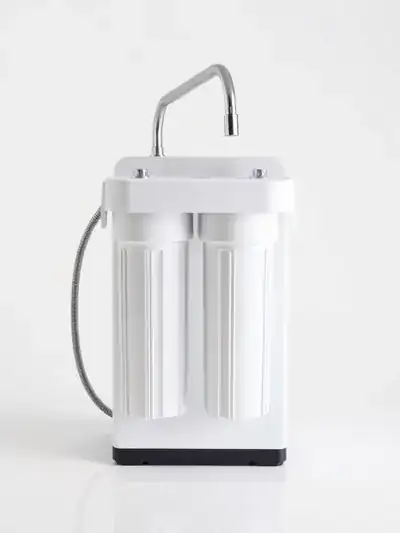
The Aquasana AQ-5300+ uses a combination of catalytic carbon and ion exchange media specifically designed for chloramine removal. NSF certified under Standards 42, 53, and 401, it removes 97% of chlorine, 95% of chloramine, plus lead, PFAS, pharmaceuticals, and 77 other contaminants. The Clariflow technology maintains consistent flow rate even as the filter approaches end of life.
- Capacity: 800 gallons (6 months for family of 4)
- Flow rate: 0.5 GPM (adequate for drinking/cooking)
- Annual filter cost: ~$130 (2 replacements)
- Installation: Under-sink with dedicated faucet
Best Whole-House: Aquasana Rhino with Catalytic Carbon
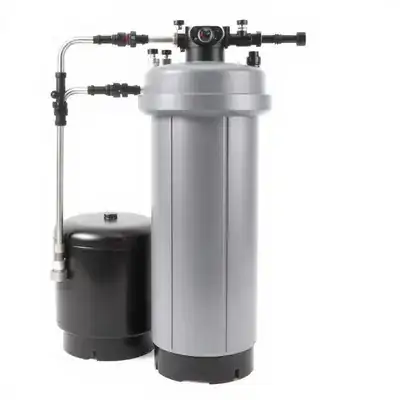
For whole-home chloramine protection—including showers, laundry, and all taps—the Aquasana Rhino with catalytic carbon upgrade is the gold standard. It handles up to 1,000,000 gallons or 10 years of filtration, removing chloramine from every water source in your home. This eliminates chloramine exposure from showering (which accounts for more chemical absorption than drinking).
- Capacity: 1,000,000 gallons / 10 years
- Flow rate: 7 GPM (no pressure drop)
- Includes: Pre-filter + catalytic carbon + post-filter
- Installation: Main water line (professional recommended)
What Doesn't Work for Chloramine
Misinformation about chloramine removal is widespread. Many products marketed as "chlorine and chloramine" filters use standard activated carbon that simply doesn't have the contact time or catalytic properties needed for effective chloramine decomposition. Here's what to avoid:
- Standard carbon pitchers/faucet filters: Brita, PUR, and similar products use standard activated carbon optimized for chlorine. They may reduce chloramine taste slightly (50-70%) but are not certified for chloramine removal and shouldn't be relied upon.
- Boiling: Does not remove chloramine. Boiling evaporates water while chloramine remains, actually increasing its concentration in the remaining water.
- Letting water sit: Unlike chlorine, which dissipates in 24-48 hours in an open container, chloramine remains stable in water indefinitely. It does not evaporate or break down on its own.
- Vitamin C tablets (for drinking): While ascorbic acid neutralizes chloramine chemically, it changes the water's taste and pH. Suitable for bathing (shower filters) but not ideal for drinking water. The reaction produces dehydroascorbic acid and ammonia.
- Basic KDF shower filters: KDF (copper-zinc) media is designed for chlorine, not chloramine. It reduces chloramine minimally. Vitamin C shower filters are more effective for bathing.
Health Concerns with Chloramine
The EPA considers chloramine safe at regulated levels (maximum 4 mg/L). However, emerging research and anecdotal reports raise several concerns worth understanding:
- Skin and respiratory irritation: Chloramine can irritate skin conditions like eczema, psoriasis, and dermatitis. Shower exposure is a common complaint in chloraminated water districts. A vitamin C shower filter can help.
- Lead pipe corrosion: In 2001, Washington DC switched to chloramine and experienced a lead crisis—chloramine's different chemistry increased lead leaching from aging pipes. This led to lead levels 20-80x above EPA limits in some homes.
- Disinfection byproducts: While chloramine produces fewer THMs than chlorine, it creates its own byproducts including iodinated THMs and N-nitrosodimethylamine (NDMA), a probable carcinogen. These emerging contaminants are not yet fully regulated.
- Toxic to aquatic life: Chloramine is lethal to fish, amphibians, and reptiles even at concentrations safe for humans. Aquarium owners must use dechloraminator products or catalytic carbon filters before adding tap water to tanks.
- Dialysis risk: Chloramine must be completely removed from water used in kidney dialysis. Even trace amounts can cause hemolytic anemia in dialysis patients. Dialysis facilities use specialized multi-stage carbon filtration.
Chloramine Filter Sizing Guide
Proper system sizing ensures effective chloramine removal. Undersized systems can't provide adequate contact time between water and catalytic carbon, resulting in chloramine breakthrough.
| Household Size | Daily Water Use | Recommended System | Filter Life |
|---|---|---|---|
| 1-2 people (drinking only) | 1-2 gallons | Under-sink catalytic carbon | 6-12 months |
| 1-2 people (whole house) | 80-100 gallons | Small whole-house (1 cu ft) | 12-18 months |
| 3-4 people (whole house) | 150-250 gallons | Medium whole-house (1.5 cu ft) | 12-18 months |
| 5+ people (whole house) | 300+ gallons | Large whole-house (2 cu ft) | 12-18 months |
5-Year Cost Comparison
| System | Upfront | Annual Filters | 5-Year Total |
|---|---|---|---|
| Under-sink catalytic carbon | $150-250 | $100-150 | $650-1,000 |
| Whole-house catalytic carbon | $800-2,000 | $100-200 | $1,300-3,000 |
| Under-sink RO | $200-500 | $60-120 | $500-1,100 |
| Bottled water (comparison) | $0 | $600-1,200 | $3,000-6,000 |
Choosing the Right System for Your Situation
- Drinking water only: Under-sink catalytic carbon ($150-250) is the most cost-effective solution. Provides chloramine-free water at one tap for cooking and drinking.
- Whole house (homeowner): Whole-house catalytic carbon ($800-2,000) eliminates chloramine from showers, laundry, and all taps. Protects appliances and reduces skin irritation from bathing.
- Budget/renters: A countertop RO system ($200-350) is portable, effective, and requires no permanent installation. The Waterdrop G3P800 removes 99%+ of chloramine.
- Shower protection only: Vitamin C shower filter ($30-60) neutralizes chloramine for skin and hair benefits without whole-house installation.
- Aquarium owners: Use a dedicated catalytic carbon filter on your fill line, or treat water with dechloraminator (Seachem Prime) before adding to tanks. Never use untreated chloraminated water for fish.
Chloramine vs Chlorine: Why Standard Filters Fail
Chloramine (a combination of chlorine and ammonia) is significantly more difficult to remove than free chlorine. Standard activated carbon filters rated for chlorine removal may only reduce chloramine by 50-60%, leaving enough residual to affect taste, irritate skin during showers, and damage rubber seals in appliances over time. This is because chloramine bonds are more stable than free chlorine, requiring longer contact time with catalytic carbon media for complete breakdown.
Catalytic carbon—the gold standard for chloramine removal—has a modified surface structure that accelerates the chemical decomposition of chloramine into harmless nitrogen gas and chloride ions. Systems using catalytic carbon, like the SpringWell CF1 and Aquasana Rhino, achieve 95-99% chloramine reduction when properly sized for household flow rates. The key sizing factor is Empty Bed Contact Time (EBCT): water must remain in contact with catalytic carbon for at least 5-7 minutes for complete chloramine breakdown, compared to just 2-3 minutes needed for free chlorine removal.
Municipal water systems serving over 60 million Americans now use chloramine instead of chlorine for disinfection. If you notice a persistent chemical taste that standard Brita or PUR filters don't eliminate, your utility likely uses chloramine. Check your annual Consumer Confidence Report or contact your water provider directly to confirm your disinfectant type before selecting a filtration system.
Related Resources
Understanding Water Quality Science
Water quality is determined by a complex interplay of dissolved minerals, organic compounds, and potential contaminants that vary significantly by geographic region and water source. Municipal water treatment facilities use multi-stage processes including coagulation, sedimentation, sand filtration, and chemical disinfection to meet EPA Safe Drinking Water Act standards. However, these treatment processes can introduce disinfection byproducts such as trihalomethanes and haloacetic acids, which form when chlorine reacts with naturally occurring organic matter in the source water.
Private well water faces different challenges, as it bypasses municipal treatment entirely and may contain naturally occurring contaminants like arsenic, radon, and heavy metals that leach from surrounding geological formations. The Environmental Protection Agency recommends annual testing for coliform bacteria, nitrates, total dissolved solids, and pH levels for all private wells. Additional testing for volatile organic compounds, pesticides, and heavy metals should be conducted if you live near agricultural areas, industrial sites, or old mining operations. Understanding your specific water chemistry is the critical first step in selecting the most effective filtration system for your household needs.
Total dissolved solids (TDS) measurements provide a general indicator of water purity but should not be the sole basis for filtration decisions. Water with high TDS from beneficial minerals like calcium and magnesium may actually be healthier than ultra-purified water. The World Health Organization has noted that demineralized water may have adverse health effects due to the absence of essential minerals. This is why many advanced filtration systems, particularly reverse osmosis units, now include remineralization stages that add back beneficial minerals after removing contaminants. The ideal approach balances contaminant removal with mineral retention, targeting specific harmful substances identified through comprehensive water testing while preserving the natural mineral content that contributes to both taste and health benefits.
Filtration Technology Comparison
Modern water filtration leverages several distinct technologies, each with unique strengths for addressing specific water quality challenges. Activated carbon filtration, the most common residential method, uses adsorption to capture chlorine, volatile organic compounds, and taste-affecting chemicals. Granular activated carbon (GAC) filters provide good flow rates but may allow channeling, while carbon block filters compress carbon particles for more consistent contact time and finer filtration down to 0.5 microns. Catalytic carbon represents the latest advancement, specifically engineered to break down chloramines through a catalytic reaction rather than simple adsorption.
Reverse osmosis systems force water through a semipermeable membrane with pore sizes as small as 0.0001 microns, effectively removing dissolved solids, heavy metals, and most microorganisms. Modern RO systems achieve 95-99 percent rejection rates for contaminants like lead, arsenic, fluoride, and PFAS compounds. The primary considerations for RO systems include water waste ratios (typically 3:1 to 4:1 for standard systems, improved to 1:1 in premium tankless models), storage tank requirements, and the need for pre-filtration to protect the delicate membrane from sediment and chlorine damage.
Ion exchange technology, used in both water softeners and specialized contaminant removal systems, swaps problematic ions in the water with benign alternatives. Water softeners exchange calcium and magnesium ions for sodium ions, preventing scale buildup in plumbing and appliances. Specialized ion exchange resins can target specific contaminants like lead, nitrates, or perchlorate. Ultraviolet purification provides chemical-free disinfection by disrupting the DNA of bacteria, viruses, and protozoa at wavelengths around 254 nanometers. UV systems are particularly valuable for well water and as a final treatment stage in multi-barrier systems, though they do not remove chemical contaminants or improve taste.
Long-Term Cost Analysis
When evaluating water filtration costs, the total cost of ownership over five years provides a much more accurate picture than initial purchase price alone. A budget pitcher filter at thirty dollars may seem economical, but replacement filters at forty dollars every two months add up to over twelve hundred dollars in five years. Meanwhile, an under-sink system costing two hundred dollars upfront with sixty-dollar annual filter changes totals just five hundred dollars over the same period, delivering superior filtration at less than half the long-term cost.
Whole house filtration systems represent a larger initial investment of eight hundred to two thousand dollars including professional installation, but they protect all water fixtures and appliances simultaneously. When you factor in the extended lifespan of water heaters, dishwashers, and washing machines that no longer process unfiltered water, the return on investment often exceeds the system cost within three to four years. Water softener savings are particularly dramatic: the Water Quality Association estimates that soft water can reduce water heating costs by up to twenty-nine percent and extend appliance lifespans by thirty to fifty percent.
For households currently purchasing bottled water, any home filtration system provides massive savings. The average family spending twenty dollars per week on bottled water spends over five thousand dollars in five years. Even the most premium whole house filtration system with annual maintenance costs less than two thousand dollars over the same period, saving over three thousand dollars while eliminating hundreds of plastic bottles from landfills annually. The environmental and financial case for home filtration is compelling at every price point.
Related Resources
Sources, risks, and removal
PFAS Forever ChemicalsUnderstanding PFAS in water
Arsenic in WaterTesting and treatment options
Chlorine Removal GuideMunicipal water treatment chemicals
Fluoride in WaterFacts and filtration options
Iron ContaminationWell water iron solutions
EPA Water StandardsFederal drinking water regulations
Contaminant GuideComplete water contaminant reference
Frequently Asked Questions
Related Articles
Buying guide: Reverse Osmosis Systems
Top-rated RO water filters
See the best Water Softeners
Top water softening systems
Best Whole House Water Filters
Complete whole-house filtration
Our picks for Well Water Filters
Specialized well water treatment
More on Water Filter Buying Guide
Avoid common buying mistakes
Deep dive — State Water Quality Guide
Water quality by state