RO Water Remineralization: Should You Add Minerals Back?
Should you add minerals back to reverse osmosis water? Learn what remineralization changes in taste and pH, the main ways to do it, how to add it to your system, and why it is a taste choice rather than a health requirement.
Choose remineralization for taste, not health promises
Adding minerals is optional; output varies with the cartridge, water and flow.
- Confirm the cartridge fits your RO system's tubing and flow direction.
- Install it after the membrane and tank, just before the faucet.
- Replace it on the maker's schedule; a TDS reading does not prove safety.
Quick answer
Remineralization is worth it if you find RO water flat or slightly sour and want it to taste more like good spring water. The easiest way is an inline cartridge after the RO membrane, or an RO system that already includes one. It adds a small amount of calcium (and sometimes magnesium) and usually raises the pH a little. It is not needed for safe water, and it does not replace the minerals you get from food.
Why RO water tastes flat
A reverse osmosis membrane holds back most dissolved substances, including the calcium, magnesium and bicarbonate that give tap and spring water their taste. What comes out is very low in minerals. With nothing to buffer it, the water also picks up carbon dioxide from the air, which can make it slightly acidic. Many people describe the result as flat, thin or a little sour, especially next to the water they grew up drinking.
A remineralization stage dissolves a small amount of mineral media back into the water after the membrane. That adds some hardness and alkalinity, which is what gives water a rounder taste, and usually moves the pH closer to neutral. If you want the background first, see how reverse osmosis works.
Health: what is known and what is hype
What is reasonably clear
- Food, not water, supplies most of the calcium and magnesium in a typical diet.
- The World Health Organization has discussed possible concerns with long-term drinking of very low-mineral water, which is a fair reason to consider adding some back.
- Remineralization changes taste and usually raises pH slightly; the amounts added are small.
What is not supported
- Claims that RO water "leaches minerals from your body."
- Claims that alkaline or mineral water detoxes, prevents disease or changes your blood pH.
- Using a cartridge to treat a mineral deficiency. Talk to a clinician about diet or supplements instead.
In short: remineralize because you like the taste, not because a label promises health benefits.
Ways to add minerals back
| Method | How it works | Effort | Good for |
|---|---|---|---|
| Inline cartridge | Push-fit cartridge between the RO system and faucet | Fit once, replace on schedule | Adding it to an RO you already own |
| Built-in stage | Remineralization is one of the system's own filters | Replaced with the other filters | Buying a new RO system |
| Mineral drops | Liquid concentrate added to a glass or pitcher | Every time you pour | Trying it out, or fine-tuning taste |
Inline cartridges are the most common choice. They are inexpensive to replace and add minerals to every glass without any effort. The trade-off is that you cannot adjust how much they add.
Built-in stages come with some RO systems, so there is nothing extra to fit and the replacement filters are sold as a set. Check whether the stage can be swapped for a plain carbon filter if you ever change your mind.
Mineral drops suit people who want to experiment first or who only remineralize water for drinking, not for cooking. Use products made for drinking water and follow the label. Table or pink salt is not a substitute: it is mostly sodium chloride, not the calcium and magnesium that change taste.
Adding a cartridge to an existing RO system
Most inline cartridges take about half an hour to fit with no special tools. Read your cartridge's instructions first, because fittings and flushing steps differ.
- Shut off the water. Close the RO feed valve and the tank valve, then open the RO faucet to release pressure. Keep a towel under the sink.
- Find the line to the faucet. It runs from the last filter (usually the post-carbon) to the RO faucet.
- Cut in the cartridge. Cut the tubing square, push the end from the RO system into the cartridge's inlet and the faucet side into its outlet. Follow the flow arrow.
- Secure it. Clip or strap the cartridge to the cabinet wall so the tubing is not under strain.
- Flush and check. Open the valves, run the faucet as the instructions say (cloudy water at first is common) and check every joint for drips over the next day.
For a full under-sink setup from scratch, see our RO installation guide.
Checking it works
- Taste: the simplest test. Remineralized water should taste less flat than water straight from the membrane.
- TDS meter: a reading after the cartridge will usually be a little higher than before it. If the two readings become the same, the cartridge may be spent. TDS shows how much is dissolved, not whether water is safe.
- pH strips: optional. They will usually show a small rise after the cartridge, but the number varies and is not a health measure.
- Schedule: replace the cartridge on the maker's time or gallon limit, whichever comes first, and keep the rest of the system on its maintenance schedule.
RO systems with remineralization built in
If you are buying a new system, these two already include a stage that adds minerals back after the membrane. Open each deal for the current price.
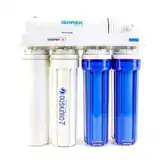
iSpring RCC7AK 6-Stage RO System
iSpring RCC7AK 6-Stage RO System
A six-stage under-sink RO system whose last stage adds minerals back after the membrane. It needs a drain connection and room for a storage tank; check iSpring's specifications for the replacement schedule.
Compare sizing, treatment options and ongoing costs in our best reverse osmosis systems guide.
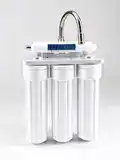
Aquasana OptimH2O Reverse Osmosis + Claryum
Aquasana OptimH2O Reverse Osmosis + Claryum
An under-sink RO system with a separate remineralizer stage after filtration. A good fit if you want RO for dissolved contaminants and prefer water with some minerals for taste; confirm replacement filter availability before buying.
Compare sizing, treatment options and ongoing costs in our best reverse osmosis systems guide.
Bottom line
Remineralizing RO water is a comfort choice. If you like the taste of your RO water, you do not need it. If it tastes flat, an inline cartridge or a system with a built-in stage is the easy fix, and mineral drops let you try the idea first. Be wary of any product that promises health benefits beyond taste.