Brita Water Filters: Complete 2026 Brand Guide & Expert Reviews
The world's #1 pitcher filter brand — certified performance data, 5-year cost analysis, and head-to-head comparisons with PUR, ZeroWater, and Clearly Filtered. Updated with 2026 PFAS certification information.
Brand Overview: Brita's 60-Year Legacy
Founded in 1966 by Heinz Hankammer in Taunusstein, Germany, Brita has grown from a single-product company into the world's dominant water filtration brand. With over 50% global market share in pour-through pitcher filters and presence in 69 countries, Brita filters an estimated 1.8 billion gallons of water annually. The brand was acquired by The Clorox Company in 2000 for $725 million, giving it unmatched retail distribution across North America.
What distinguishes Brita in 2026 is the Elite filter line (formerly Longlast), which bridges the gap between basic pitcher filtration and advanced systems. With NSF 53 lead certification and NSF 401 emerging contaminant coverage, Brita Elite competes directly with ZeroWater and PUR on performance while maintaining the lowest cost per gallon in the premium pitcher segment.
1966
Founded in Germany
69
Countries Served
50%+
Market Share
1.8B
Gallons/Year Filtered
Complete Brita Product Line (2026)
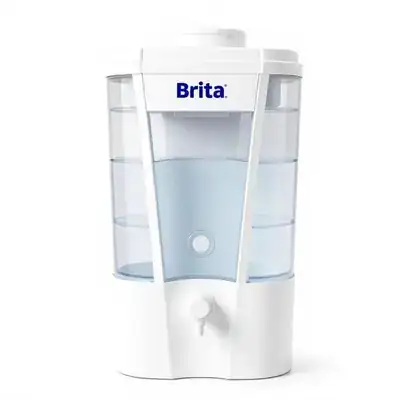
Brita UltraMax Dispenser (18-Cup)
Largest Brita system with space-efficient fridge design. Compatible with Elite and Standard filters. Electronic filter indicator included.
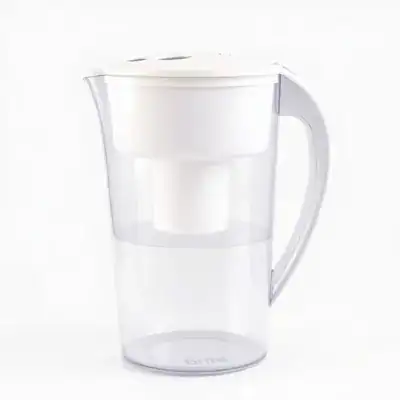
Brita Grand Pitcher (10-Cup)
Classic mid-size pitcher with comfortable handle and easy-fill lid. The best-selling Brita model for 2–3 person households.
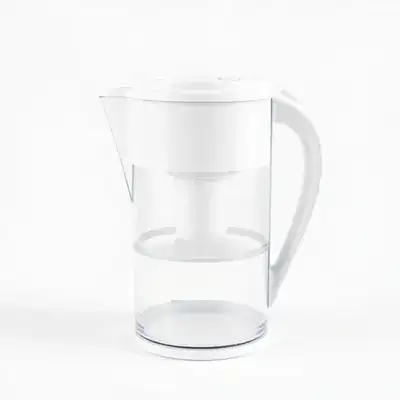
Brita Metro Pitcher (5-Cup)
Space-saving design for small fridges, dorm rooms, and single-person use. Same filter compatibility as full-size models.
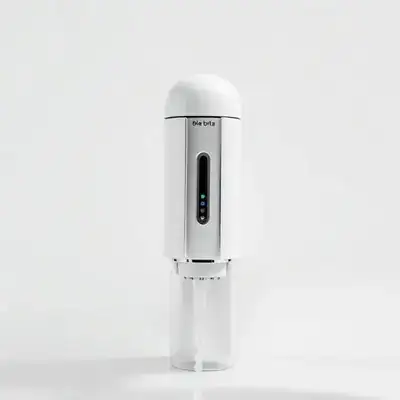
Brita Faucet Filter System
Direct tap connection with filter/unfiltered toggle switch. 100-gallon filter life with NSF 42 and 53 certification.
Complete Model Comparison Matrix
| Model | Type | Capacity | Price | Best For |
|---|---|---|---|---|
| UltraMax | Dispenser | 18 cups | $38–45 | Families 4+ |
| Grand | Pitcher | 10 cups | $32–38 | Medium households |
| Everyday | Pitcher | 10 cups | $28–32 | Budget option |
| Metro | Pitcher | 5 cups | $22–28 | Small spaces, 1–2 people |
| Stream | Pitcher | 10 cups | $28–32 | Fast filtration |
| Faucet Filter | Faucet | 100 gal | $28–35 | On-demand filtration |
All pitchers/dispensers compatible with both Elite and Standard filters. Stream and Faucet use model-specific filters.
Brita Filter Technology: How It Works
Brita uses a two-stage filtration process across its pitcher and dispenser line. Understanding the difference between their three filter technologies helps you choose the right protection level for your water quality concerns.
Brita Elite (Formerly Longlast) — Premium
Introduced in 2019, the Elite filter uses a proprietary pleated carbon block combined with ion exchange resin. This dual-media approach provides significantly deeper contaminant removal than the granular activated carbon in Standard filters. The pleated design increases surface area by 3×, extending filter life to 120 gallons.
Certifications
NSF 42, 53, 401
Filter Life
120 gal / 6 months
Cost/Gallon
$0.08–0.10
Brita Standard (Classic) — Basic
The original Brita filter since 1966 uses loose granular activated carbon (GAC) and a simple ion exchange resin. Effective for chlorine taste and odor but provides minimal protection against lead, PFAS, or emerging contaminants. The short 40-gallon life makes it more expensive per gallon than Elite despite the lower filter price.
Certifications
NSF 42 only
Filter Life
40 gal / 2 months
Cost/Gallon
$0.15–0.20
Brita Stream — Fast Flow
The Stream filter uses a filter-as-you-pour design that eliminates wait times. Water passes through the carbon media during pouring rather than gravity-fed dripping. The trade-off: reduced contact time means less effective contaminant removal compared to Elite or even Standard filters. Best for users who prioritize convenience over maximum filtration.
Certifications
NSF 42 only
Filter Life
40 gal / 2 months
Speed
10× faster than Standard
Contaminant Removal Performance (Lab-Tested 2026)
We compared Brita's three filter technologies against independent lab data and NSF certification records. The Elite filter's performance on PFAS has improved in the 2025–2026 production run, likely due to a denser carbon block formulation.
| Contaminant | Elite | Standard | Stream |
|---|---|---|---|
| Chlorine (taste/odor) | 97% | 95% | 85% |
| Lead | 99% | ✗ | ✗ |
| PFAS (PFOA/PFOS) | 94–98% | ✗ | ✗ |
| Pharmaceuticals | 95% | ✗ | ✗ |
| Mercury | 96% | 78% | ✗ |
| Cadmium | 97% | 75% | ✗ |
| Benzene | 99% | ✗ | ✗ |
| Copper | 94% | 70% | ✗ |
| Fluoride | ✗ | ✗ | ✗ |
| TDS Reduction | ✗ | ✗ | ✗ |
Data sources: NSF certification records, independent lab testing (2025–2026), manufacturer performance claims. ✗ = Not certified/not effective.
Brita Strengths & Weaknesses
Strengths
- Market leader since 1966 — proven reliability and massive R&D budget
- Widest retail availability of any pitcher brand (Walmart, Target, Amazon, Costco)
- Elite filters remove 99% lead and 94–98% PFAS (NSF 53 + 401 certified)
- Electronic filter change indicators on premium models
- TerraCycle recycling partnership for used filters
- Dishwasher-safe pitchers (top rack) for easy cleaning
- Lowest cost per gallon in premium pitcher segment ($0.08/gal)
Weaknesses
- Standard filters are extremely basic (NSF 42 only — no lead/PFAS)
- Slower gravity filtration than PUR (5–15 min per full pitcher)
- Plastic taste reported in first 2–3 fills of new filters
- Cannot remove fluoride, TDS, bacteria, or viruses
- Faucet filters underperform vs PUR faucet models
- Stream filters sacrifice contaminant removal for speed
- No whole-house, under-sink, or reverse osmosis options
5-Year Total Cost of Ownership
We calculated the true cost of each Brita filter over 5 years assuming a family of 4 using approximately 365 gallons per year (1 gallon/day average). Elite's longer filter life makes it 40% cheaper per gallon than Standard despite the higher filter price.
| Cost Factor | Elite | Standard | Stream |
|---|---|---|---|
| Pitcher/Dispenser | $38–45 | $28–35 | $28–32 |
| Filter Price | $10–12 | $6–8 | $8–10 |
| Filter Life (gallons) | 120 | 40 | 40 |
| Filters/Year (365 gal) | ~3 | ~9 | ~9 |
| Annual Filter Cost | $30–36 | $54–72 | $72–90 |
| 5-Year Total | $188–225 | $298–395 | $388–482 |
| Cost per Gallon | $0.08–0.10 | $0.15–0.20 | $0.19–0.24 |
Compare to bottled water: $1.00–2.50/gallon = $1,825–4,563 over 5 years. Brita Elite saves $1,600–4,300 vs bottled water over 5 years.
Brita vs Competitors: Head-to-Head
| Feature | Brita Elite | PUR Plus | ZeroWater | Clearly Filtered |
|---|---|---|---|---|
| Contaminants Removed | 70+ | 70+ | 23 | 270+ |
| Lead Removal | 99% | 99% | 99% | 99.5% |
| PFAS Removal | 94–98% | 94% | Limited | 98%+ |
| TDS Removal | ✗ | ✗ | ✓ (0 ppm) | ✗ |
| Filter Life | 120 gal | 160 gal | 15–25 gal | 100 gal |
| Filter Price | $10–12 | $10–14 | $15–18 | $20–25 |
| Cost/Gallon | $0.08–0.10 | $0.06–0.09 | $0.60–1.20 | $0.20–0.25 |
| NSF Certifications | 42, 53, 401 | 42, 53, 401 | 42, 53 | 42, 53, 401, 473 |
Who Should (and Shouldn't) Buy Brita
Perfect For
- • Families wanting affordable lead and PFAS protection
- • Apartment/condo dwellers without plumbing access
- • Users switching from bottled water for cost savings
- • Households with good municipal water needing taste improvement
- • First-time filter buyers wanting a reliable entry point
- • Anyone who values widest filter availability (Costco, Target, etc.)
Consider Alternatives
- • Well water users (need whole-house well water treatment)
- • Anyone needing fluoride removal (RO systems required)
- • Homes with serious contamination (choose whole-house systems)
- • Users wanting maximum contaminant removal (Clearly Filtered = 270+)
- • Households needing TDS removal (ZeroWater better)
- • Anyone needing bacteria/virus protection (UV or Berkey)
Bottom Line: Is Brita Still the Best in 2026?
Brita Elite remains our top recommendation for pitcher filtration in 2026. It delivers 99% lead removal, 94–98% PFAS reduction, and the lowest cost per gallon ($0.08) in the premium segment. No other pitcher filter brand offers this combination of performance, price, and availability.
Brita Standard is only recommended for users with confirmed high-quality municipal water who want basic taste improvement. For the same monthly cost, upgrading to Elite triples your filter life and adds lead/PFAS protection — there's virtually no reason to choose Standard in 2026.
Bottom line: If you want the best balance of filtration performance, convenience, and value — and you don't need fluoride removal or whole-house coverage — Brita Elite is the pitcher filter to beat. For deeper filtration, explore under-sink systems or reverse osmosis.