How to Remove Bacteria from Water: Complete Treatment Guide
Comprehensive guide to killing and removing bacteria, E. coli, Giardia, Cryptosporidium, and waterborne pathogens from well water and municipal supplies
Waterborne bacteria contamination affects an estimated 7.2 million Americans annually, with private well owners at highest risk since well water is not regulated or treated by any government agency. The CDC reports that approximately 45 million Americans rely on private wells, and studies show that up to 40% of private wells contain coliform bacteria at any given time. Bacterial contamination can cause severe gastrointestinal illness, hospitalization, and in rare cases involving vulnerable populations (infants, elderly, immunocompromised), death.
This guide covers every aspect of bacteria removal—from identifying the type of contamination and understanding health risks to selecting the right treatment system and maintaining long-term water safety. We compare UV sterilization, reverse osmosis, chlorination, and submicron filtration with real-world performance data, cost analysis, and expert recommendations for different water sources and contamination levels.
Whether you are dealing with a positive coliform test, preparing for well water treatment, or building a multi-barrier defense system, this resource provides the technical depth and practical guidance needed to ensure safe drinking water for your household.
Common Waterborne Bacteria & Health Risks
E. coli (Fecal Coliform)
Source: Human/animal feces, septic system leaks, agricultural manure runoff, sewage overflow
Symptoms: Severe diarrhea (often bloody), vomiting, abdominal cramps lasting 2-8 days. E. coli O157:H7 strain can cause hemolytic uremic syndrome (HUS), leading to kidney failure
Risk Level: High—indicates recent fecal contamination and possible presence of more dangerous pathogens
Infectious dose: As few as 10-100 organisms can cause illness in healthy adults; even fewer in children
Total Coliform Bacteria
Source: Naturally present in soil, vegetation, and surface water. Enters wells through cracked casings, inadequate grout seals, or surface water intrusion
Symptoms: Most coliform species are non-pathogenic and cause no illness. Their significance is as indicator organisms
Risk Level: Moderate—coliform presence indicates a contamination pathway exists, meaning dangerous pathogens could enter the water supply at any time
EPA Standard: Zero total coliforms allowed in public water systems. Private wells should target the same standard
Giardia & Cryptosporidium (Protozoa)
Source: Animal waste (especially beavers, cattle, wildlife), contaminated surface water entering wells, municipal treatment failures
Symptoms: Chronic watery diarrhea, severe dehydration, abdominal cramping, nausea lasting 1-4 weeks. Cryptosporidium is particularly dangerous for immunocompromised individuals (AIDS patients, transplant recipients)
Risk Level: High—Cryptosporidium is chlorine-resistant, meaning standard disinfection does not protect against it
Critical: Crypto cysts can survive months in water and are not killed by standard chlorination levels
Other Waterborne Pathogens
Legionella: Grows in warm water systems (water heaters, cooling towers). Causes Legionnaires' disease (severe pneumonia) and Pontiac fever. Killed by maintaining water heater temperature above 140°F and UV treatment
Salmonella: Enters wells through sewage contamination or animal waste. Causes typhoid-like symptoms with 12-72 hour onset. Killed by UV, chlorination, and RO
Hepatitis A: Viral pathogen spread through fecal-contaminated water. Causes liver inflammation with 2-6 week incubation period. Removed by UV and RO; chlorine is moderately effective
Campylobacter: Most common cause of bacterial gastroenteritis worldwide. Found in animal waste, particularly poultry. Very low infectious dose (500 organisms)
Bacteria Removal Methods Compared
| Method | Effectiveness | Pros | Cons | Cost |
|---|---|---|---|---|
| UV Sterilization | 99.99% | Instant kill, no chemicals, whole house, kills Crypto | Requires electricity, annual lamp change, needs pre-filtration | $300-800 |
| Reverse Osmosis | 99.9% | Removes bacteria + chemicals + minerals + viruses | Slow flow, drinking water only, wastes water, requires pre-filters | $200-600 |
| Chlorination | 95-99% | Whole house, continuous residual, inexpensive chemicals | Chemical taste, ineffective vs Crypto/Giardia, creates DBPs | $500-1,500 |
| Boiling | 100% | No equipment needed, guaranteed kill of all organisms | Impractical for daily volume, energy intensive, doesn't remove chemicals | $0 (energy cost) |
| Submicron Filter | 99%+ | Physical removal, no electricity, no chemicals needed | Slow flow, clogs quickly in dirty water, frequent replacement | $50-300 |
UV Sterilization: The Gold Standard for Well Water
UV (ultraviolet) sterilization is the most widely recommended bacteria treatment for private wells. UV-C light at 254 nanometers wavelength disrupts the DNA of microorganisms, preventing them from reproducing and rendering them harmless. Unlike chemical disinfection, UV treatment adds nothing to the water, produces no byproducts, and works instantly as water flows through the chamber.
How UV Sterilization Works
Water flows through a stainless steel chamber containing a UV lamp enclosed in a quartz glass sleeve. The UV-C light penetrates cell walls and damages nucleic acids, destroying the organism's ability to replicate. Contact time is measured in seconds at normal household flow rates. The quartz sleeve protects the lamp from water contact while transmitting 90%+ of UV energy.
Critical Requirements for UV Effectiveness
Pre-Filtration (Essential)
- Install 5-micron sediment filter before UV—particles shield bacteria from UV light
- Water turbidity must be below 1 NTU for effective disinfection
- Iron above 0.3 ppm, manganese above 0.05 ppm, and tannins reduce UV transmittance
- Carbon filter before UV removes chemicals that can coat the quartz sleeve
Sizing & Certification
- NSF/ANSI 55 Class A certification guarantees 99.99% kill rate at rated flow
- Class A delivers 40 mJ/cm² dose—required for health protection
- Class B (reduced dose) is only for supplemental treatment, NOT primary disinfection
- Size system for peak flow: 8-12 GPM for most homes (2-4 bathrooms)
UV Lamp Maintenance Schedule
| Component | Replace/Service | Cost | Notes |
|---|---|---|---|
| UV Lamp | Annually (9,000 hrs) | $50-120 | Replace even if glowing—UV output degrades below effective dose |
| Quartz Sleeve | Clean every 3 months | $30-60 (replacement) | Clean with citric acid or vinegar; replace every 2-3 years or if cracked |
| Sediment Pre-Filter | Every 3-6 months | $8-15 | Replace when flow drops or filter appears saturated |
| O-Rings & Seals | At each lamp change | $5-15 | Inspect for cracks; lubricate with food-grade silicone |
Step-by-Step Bacteria Treatment Plan
1Test Your Water
Order a bacteria test kit ($20-50) or use a certified laboratory ($50-100 for comprehensive panel). Test for:
- Total coliform bacteria: Indicator of contamination pathway existence
- E. coli: Specific indicator of fecal contamination—requires immediate action
- Heterotrophic plate count (HPC): Measures overall bacterial load in your water
Important: If E. coli is detected, do NOT drink the water until treated and retested negative. Use bottled water or boil all water for drinking and cooking.
Recommended testing: SimpleLab Tap Score provides certified laboratory analysis with detailed recommendations.
2Identify Contamination Source
- Inspect well cap and casing for cracks, gaps, or missing grout that allow surface water entry
- Verify minimum 50-foot separation from septic system (100 feet recommended by many states)
- Check for recent flooding, heavy rain, construction, or well maintenance that could introduce contamination
- Examine nearby animal operations, manure storage, or agricultural fields for potential runoff
- Test again after shock chlorination—if bacteria returns within 2-4 weeks, ongoing contamination requires permanent treatment
3Shock Chlorinate Well (Immediate Treatment)
Kills existing bacteria in well and plumbing system as a first response:
- Calculate chlorine dosage: typically 1 gallon unscented bleach per 1,000 gallons of well water
- Pour chlorine solution directly into well casing through the access port
- Recirculate for 30 minutes by running a garden hose from an outdoor faucet back into the well
- Run every indoor and outdoor faucet until you smell chlorine (2-3 minutes each)
- Let the entire system sit for 12-24 hours (no water use during this period)
- Flush the system completely—run all taps until chlorine smell is gone (may take 1-2 hours)
- Retest for bacteria after 1-2 weeks to confirm elimination
Note: Shock chlorination is a temporary fix. If bacteria returns after chlorination, you need a permanent treatment system. See our well maintenance guide for ongoing protection.
4Install Permanent Treatment System
Recommended multi-barrier treatment sequence for well water:
- Sediment pre-filter (5 micron): Removes particles that shield bacteria from UV light—essential for UV effectiveness
- Carbon filter: Removes chlorine residual, chemicals, taste, and odor compounds
- UV sterilizer (NSF 55 Class A): Kills 99.99% of bacteria, protozoa, and viruses instantly
- Point-of-use RO (optional): Provides additional drinking water protection at the kitchen faucet
This sequence ensures each stage protects the next. Pre-filtration extends UV lamp life and effectiveness. Carbon prevents chemical damage to UV components. UV provides the primary disinfection barrier.
5Maintain & Monitor
- Replace UV lamp annually at 9,000 hours (mark your calendar—do not wait for lamp failure)
- Clean quartz sleeve every 3 months with citric acid or white vinegar solution
- Change sediment pre-filter every 3-6 months based on sediment load
- Test water for bacteria annually (quarterly if you've had recurring contamination)
- Monitor UV lamp intensity indicator—most quality units include an alarm for low output
- Inspect well cap seal annually, especially after severe weather events
Recommended Bacteria Removal Systems
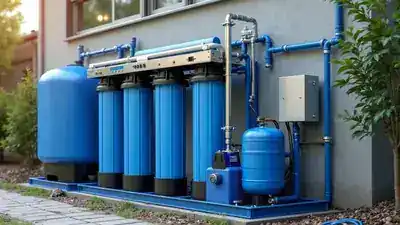
SpringWell Ultra Well Water Filter System
Complete 4-stage well water treatment system combining sediment filtration, carbon block, UV sterilization, and sub-micron filtration. Handles bacteria, iron, sulfur, manganese, and chemical contaminants in a single integrated system. The UV chamber delivers NSF Class A equivalent dosage for 99.99% pathogen elimination. Lifetime warranty and 6-month money-back guarantee.
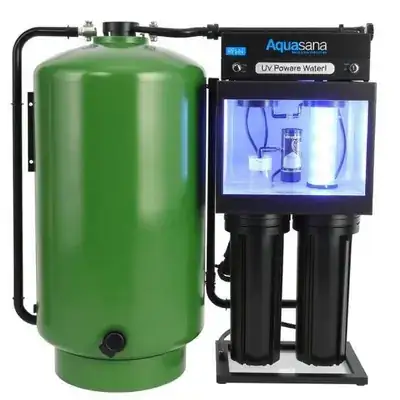
Aquasana Rhino with UV (EQ-WELL-UV)
Aquasana's premium whole-house system with integrated Sterilight UV sterilizer. Removes 97% of chlorine plus 77 other contaminants through multi-stage carbon and KDF media, then kills bacteria and viruses with UV-C light. The 500,000-gallon capacity means filter changes only every 5 years on the main tank. Ideal for homes that want both chemical filtration and pathogen protection.
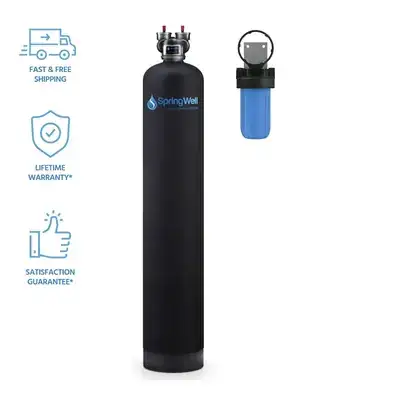
SpringWell WS1 + UV Add-On
The SpringWell WS1 air injection iron filter paired with a UV sterilizer add-on provides comprehensive well water treatment for homes with both iron/manganese contamination and bacteria concerns. The AIO system handles up to 7 ppm iron and 1 ppm manganese, while the UV chamber provides Class A pathogen elimination. Chemical-free operation with automatic backwash.
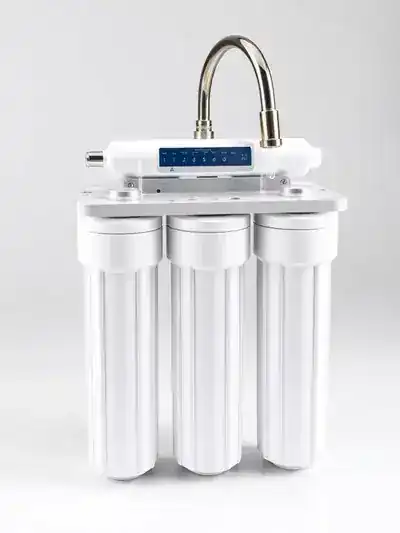
Aquasana OptimH2O Reverse Osmosis
Under-sink RO system that physically removes 99.99% of bacteria plus 88 contaminants including lead, PFAS, and pharmaceuticals. The Claryum filtration stage adds selective mineral retention so water doesn't taste flat. NSF certified under Standards 42, 53, 58, 401, and P473. Ideal as a point-of-use drinking water barrier in addition to whole-house UV treatment.
Emergency Bacteria Treatment (No Equipment)
Boil Water Advisory Response
Boiling Method (Most Reliable)
Bring water to a rolling boil for 1 minute (3 minutes above 6,500 ft elevation). Cool before drinking. Kills all bacteria, viruses, and parasites including chlorine-resistant Cryptosporidium. Store boiled water in clean, covered containers. Boiled water is safe for drinking, cooking, brushing teeth, and preparing formula.
Bleach Disinfection (Emergency Only)
Add 8 drops (1/8 teaspoon) of unscented household bleach (5.25-8.25% sodium hypochlorite) per gallon of clear water. For cloudy water, use 16 drops per gallon. Mix thoroughly and wait 30 minutes before drinking. Water should smell faintly of chlorine—if not, repeat the dose and wait another 30 minutes. This method does NOT kill Cryptosporidium.
Portable Filter Backup
Keep a Sawyer Mini (0.1 micron absolute, 100,000-gallon capacity, $25) or LifeStraw on hand for emergencies. These filters physically remove bacteria and protozoa instantly. Essential backup for power outages (when UV systems don't work), camping, natural disasters, and boil water advisories. See our portable filter guide for complete options.
5-Year Treatment Cost Comparison
| System | Equipment | Install | Annual Cost | 5-Year Total |
|---|---|---|---|---|
| UV + Pre-Filters | $300-600 | $100-200 | $80-150 | $800-1,550 |
| SpringWell Ultra | $1,200-1,800 | $200-400 | $100-150 | $1,900-2,950 |
| Chlorination System | $500-1,500 | $200-500 | $100-200 | $1,200-3,000 |
| RO (Drinking Only) | $200-600 | $50-150 | $50-100 | $500-1,250 |
Explore Our Top Picks
Best Well Water Filters
Complete systems for iron, bacteria, and sediment
Best RO Systems
Maximum contaminant and bacteria removal
Best Whole House Filters
Every-tap protection for your entire home
Best Portable Filters
Emergency and travel bacteria removal
Water Test Kits
Test for bacteria, E. coli, and coliforms
Best Water Softeners
Hard water treatment for well owners
Related Resources
Frequently Asked Questions
Related Articles
Deep dive — Chlorine Taste Removal
Eliminate chlorine taste and odor with carbon filters
Metallic Taste Fix
Diagnose and remove iron, copper, and zinc tastes
Rotten Egg Smell Removal
Treat hydrogen sulfide and sulfur odors in well water
Deep dive — Brown Water Solutions
Fix discolored water from iron, rust, or sediment
Read: Hard Water Stain Removal
Stop blue-green and white scale buildup
More on Sediment & Sandy Water Fix
Remove sand, silt, and sediment with filtration