International Travel Water Safety: The Complete Guide to Drinking Safe Water Abroad
How to protect yourself from waterborne illness in every region of the world—with purifier recommendations, country risk levels, and expert prevention strategies.
Match your water protection to your destination
The right setup depends on where you're going — a filter that works fine in Europe won't protect you in South Asia.
- High-risk regions (most of Asia, Africa, Latin America) need a purifier with virus protection, not just a filter.
- Western Europe, Japan, Australia, and New Zealand have safe tap water — a purifier is only needed for backcountry trips there.
- Visit a travel clinic 4-8 weeks before departure for destination-specific vaccinations like Hepatitis A and typhoid.
Traveler's diarrhea is the most common illness for visitors to developing countries, and untreated or poorly treated water is a leading source. Standard home filters like Brita or PUR are built for already-treated municipal water and offer no protection against the bacteria, viruses, and parasites you can encounter abroad. This guide explains the filter-versus-purifier distinction, region-by-region risk levels, and the practical habits that keep travelers healthy.
For the gear side, our portable water filter rankings cover the full market; here we focus on what international travel specifically requires — including why virus protection changes the answer for most destinations.
The #1 Travel Health Mistake
Traveler's diarrhea affects an estimated 30-70% of travelers to developing countries, with contaminated water and food the primary causes. Standard home filters (Brita, PUR) do not protect against travel waterborne pathogens. You need a purifier—not just a filter—for international travel.
2B+
People lack safely managed drinking water globally (WHO/UNICEF)
~485,000
Annual diarrheal deaths linked to unsafe drinking water (WHO estimate)
$75-100
Cost of a press-style purifier bottle for the whole trip
Filter vs. Purifier: The Critical Difference for Travel
This distinction can literally save your trip. Understanding what each technology removes—and what it doesn't—is essential for choosing the right travel water treatment.
| Pathogen Type | Size | Examples | Filter (0.2μm) | Purifier |
|---|---|---|---|---|
| Protozoa | 1-300 μm | Giardia, Crypto, Amoeba | Yes | Yes |
| Bacteria | 0.2-10 μm | E. coli, Cholera, Typhoid | Yes | Yes |
| Viruses | 0.02-0.3 μm | Hepatitis A, Norovirus, Rotavirus | No | Yes |
| Chemicals | Molecular | Pesticides, heavy metals | No | Some models |
Bottom line: For international travel, choose a purifier that handles viruses. Filters alone are appropriate for backcountry use in developed countries (US, Canada, Europe) where viral contamination risk is low. Learn more about the technologies in our how water filters work guide.
Water Safety by Region: Risk Levels & Recommendations
Water safety varies dramatically across the globe. Use this region-by-region guide to plan your water strategy before departure.
High Risk: South & Southeast Asia
India, Nepal, Bangladesh, Vietnam, Cambodia, Laos, Myanmar, Indonesia, Philippines. These regions have the highest rates of traveler's diarrhea (40-70% of visitors affected). Municipal treatment is often inadequate or inconsistent, and infrastructure failures are common.
- Primary risk: Bacteria (E. coli, Vibrio), viruses (Hepatitis A, Rotavirus), protozoa (Giardia)
- Required protection: Full purifier with virus capability
- Extra caution: Avoid ice, raw produce washed in tap water, street vendor drinks
High Risk: Sub-Saharan Africa
Most of sub-Saharan Africa faces significant water quality challenges. Even in major cities, municipal water may not meet safe drinking standards consistently. Rural areas often rely on untreated surface water or shared wells.
- Primary risk: Bacteria (Cholera, Typhoid), protozoa (Giardia, Amoeba), viruses
- Required protection: Full purifier plus backup chemical treatment
- Additional: Carry oral rehydration salts; medical access may be limited in remote areas
Moderate Risk: Latin America & Caribbean
Risk varies widely: Mexico, most of Central America, Peru, Bolivia, and Ecuador require water purification. Chile, Uruguay, and parts of Argentina and Brazil (major cities) have generally safe municipal water, but purification is still recommended as a precaution.
- Primary risk: Bacteria, some parasites, variable water treatment
- Recommended: Purifier for Mexico, Central America, and Andean countries; optional for the Southern Cone
- Tip: In Mexico, "agua purificada" from garrafones (5-gallon jugs) is widely available
Low Risk: Western Europe, Japan, Australia, New Zealand
These regions have safe municipal water comparable to or exceeding US/Canadian standards. Tap water is drinkable throughout. A travel purifier is not necessary for urban travel, but a filter is useful for wilderness and backcountry activities.
- Tap water: Safe to drink throughout
- Taste: Mineral content may differ from home — a carbon filter bottle can improve taste
- Backcountry: Use a filter for hiking and camping water sources
Best Travel Water Purifiers and Filters
If your trip includes any high-risk regions, these three cover the main travel styles. For virus-prone destinations, the purifier is the non-negotiable pick; the filter options below suit low-risk regions and backcountry use.
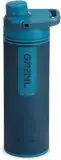
GRAYL UltraPress Purifier Bottle
GRAYL UltraPress Purifier Bottle
A press-style purifier that removes viruses, bacteria, protozoa, particulates, many chemicals, and heavy metals in about 10 seconds — no batteries, pumps, or waiting. The 16.9 oz bottle works for daily city use, and replacement cartridges last roughly 300 presses. It does not desalinate and needs pre-filtering in very silty water.
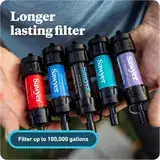
Sawyer Mini Water Filter
Sawyer Mini Water Filter
A 2-ounce 0.1-micron hollow fiber filter rated for 100,000 gallons that removes bacteria and protozoa from clear water. It does not remove viruses, so pair it with chlorine dioxide drops or tablets for high-risk countries. Backflush to keep the flow rate up.
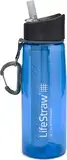
LifeStraw Go Filter Bottle
LifeStraw Go Filter Bottle
A two-stage bottle (hollow fiber membrane plus carbon capsule) that removes bacteria, parasites, and improves taste — a convenient pick for low-risk regions, day trips, and as a secondary bottle. It is a filter, not a purifier, so it is not sufficient on its own in virus-risk countries.
Compare all models side by side in our best portable water filters guide, or add chemical backup with the options in our emergency filtration guide.
Travel Water Safety Packing Checklist
Essential Items
- Water purifier (press-style bottle or equivalent)
- Backup treatment (chlorine dioxide drops or tablets)
- Replacement cartridge/filter for extended trips
- Oral rehydration salts (3-5 packets)
- Hand sanitizer (60%+ alcohol)
- Collapsible water container (for hotel room use)
Optional but Recommended
- Portable water test strips (bacteria, pH)
- UV purifier pen as backup purification
- Electrolyte powder packets
- Anti-diarrheal medication
- Pre-filter bandana for very turbid water
- Travel insurance covering medical evacuation
Beyond Drinking: Hidden Water Risks While Traveling
Contaminated drinking water is the obvious risk, but travelers often get sick from these less-obvious exposure routes:
Ice in Drinks
Ice is the #1 hidden water risk for travelers. In many developing countries, ice is made from untreated tap water — even at some upscale restaurants. Ask for drinks without ice, or verify the ice is commercially produced (cylindrical ice with a center hole is usually safe; irregular chunks are not).
Brushing Teeth
Always use purified water for brushing teeth. Even a small amount of contaminated water swallowed during brushing can cause illness. Keep your purifier bottle next to the bathroom sink as a reminder — this is the most commonly overlooked exposure route.
Raw Produce & Street Food
Salads, fruit cut by vendors, and raw vegetables washed in tap water are common illness vectors. Eat fruits you peel yourself (bananas, oranges, mangoes), avoid pre-cut street fruit, and favor cooked food served hot. "Cook it, peel it, or leave it" is the traveler's mantra.
Swimming & Showering
Avoid swallowing water while swimming in pools, lakes, or oceans in high-risk areas, and shower with your mouth closed where water quality is very poor. Freshwater swimming in parts of Africa carries additional schistosomiasis risk, and tropical rivers and lakes carry leptospirosis risk. Properly treated hotel pools are generally safe.
Cost Comparison: Purification Methods for Travel
| Method | Upfront Cost | Cost per Liter | Virus Protection | Speed |
|---|---|---|---|---|
| Press purifier bottle | $75-100 | ~$0.10 | Yes | ~10 seconds |
| Filter + chemical drops | $45-55 | ~$0.04 | Yes (combo) | 15-30 min |
| UV purifier pen | $80-100 | ~$0.02 | Yes | 90 seconds |
| Bottled water | $0 | $0.50-3.00 | Yes | Instant |
| Boiling | $0 | Fuel cost | Yes | 20+ min (incl. cooling) |
For a 2-week trip drinking 3L/day, bottled water costs roughly $21-126 versus a few dollars with a purifier bottle after the initial purchase — and a bottle eliminates single-use plastic waste for future trips.
Related Travel Water Resources
Best Portable Water Filters
Complete rankings of filters and purifiers
Best UV Water Purifiers
Portable UV pens and sterilizers
Best Water Bottles with Filters
Filtered bottles for everyday travel
Backpacking Water Treatment
Backcountry systems and techniques
Best Countertop Filters
For long-term stays abroad
Best Water Test Kits
Verify water quality on the road
Frequently Asked Questions
Related Articles
Our picks for Portable Water Filters
Complete rankings of portable filters and purifiers for travel and outdoor use
Deep dive — Emergency Water Filtration
Emergency preparedness water treatment methods and equipment
Buying guide: UV Water Purifiers
UV sterilization technology including portable UV pens for travel
Read: How Water Filters Work
Understanding filtration vs purification technologies for informed travel decisions
Our picks for Water Bottles with Filters
Filtered water bottles including travel-grade purifier bottles
More on Bacteria in Water
Understanding bacterial contamination in water sources worldwide