Emergency Water Purification
Choose emergency drinking-water treatment by the actual risk. Review boiling, disinfection, portable filters, safe sources and storage limits.
By Jason Carter, Home Water Guide Writer
Use known safe water before trying a treatment workaround
An emergency filter is not permission to drink from any source.
- Read the local advisory: boil-water and do-not-drink notices are different.
- Avoid floodwater and water suspected of fuel or chemical contamination.
- Verify what your portable filter cannot treat and carry a backup.
Quick answer
Use sealed bottled water or another known safe supply whenever possible. For a microbial boil-water advisory, follow official boiling or disinfection directions. Fuel, toxic chemicals and radioactive contamination require another water source, not an ordinary filter, boiling or bleach.
Choose a safer water source
Start with stored known safe water. Follow local instructions when the supply is disrupted; a do-not-drink notice may involve chemicals that cannot be removed by boiling.
Avoid floodwater, swimming pools, hot tubs and sources near fuel spills or chemical runoff. Clear, flowing water is not necessarily safe. Do not taste suspect water to decide whether to treat it.
Boiling for microbial emergencies
- Let cloudy water settle and pass it through a clean cloth or coffee filter when possible.
- Bring water to a rolling boil for 1 minute; above 6,500 feet, boil for 3 minutes.
- Allow it to cool naturally and store in a clean covered container.
These CDC directions address germs, not toxic chemicals. Prevent recontamination by keeping untreated water and collection equipment separate from the clean container.
Chemical disinfection: follow the exact instructions
Household bleach directions depend on the sodium-hypochlorite concentration and whether the water is clear or cloudy. Use fresh, plain unscented bleach only as specified by the official directions; never use scented, gel, splashless or cleaner-added products.
For tablets, follow the exact product label for volume, temperature and contact time. Chlorine, iodine and chlorine dioxide are not interchangeable, and not every disinfectant addresses every parasite.
EPA emergency drinking-water disinfection instructions provide concentration-specific dosing and waiting times. Keep the instructions with your kit rather than using a single recipe for every bottle of bleach.
Filters, purifiers and treatment limits
Many hollow-fiber portable filters reduce bacteria and protozoa but do not remove viruses or dissolved chemicals. A carbon taste stage does not establish protection against a chemical spill.
Choose the exact model for the risk. Virus-capable purification must be supported by model-specific evidence and used within the label’s limits. UV requires suitable clear water, adequate power and the prescribed treatment cycle; it leaves no residual protection.
Keep a backup such as an appropriate labeled disinfectant or boiling equipment. Protect filters from damage and freezing according to their instructions.
Store water before an emergency
CDC recommends at least 1 gallon per person per day for 3 days and trying for a two-week supply if possible. Add water for pets and special needs. Use purpose-made food-grade containers; a recycling code alone does not prove suitability.
Label self-filled containers and replace the water every 6 months. Observe commercial bottled-water dates and storage instructions. Keep supplies cool and away from fuel and cleaning chemicals.
CDC emergency water supply guidance covers container cleaning, filling and rotation.
Build a practical emergency kit
- Stored known safe drinking water and clean food-grade transport containers.
- A cooking pot and safe heat source for boiling where appropriate.
- An exact-model portable filter suitable for the expected source.
- A labeled backup disinfectant with its instructions and expiry date.
- Clean cloth or coffee filters for visible sediment, not as a disinfectant.
- A plan for local notices, replacement cartridges and power needs.
Check your kit regularly. After a flood or suspected well contamination, involve the health department or well contractor and arrange appropriate testing before returning the system to use.
Recommended options
Compare the exact model and its limitations before buying. Open the deal for current price and availability.
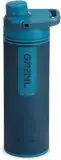
GRAYL UltraPress
GRAYL UltraPress
Compare a press-style purifier for travel or emergency use within its exact cartridge limits. It is not a desalination system or a remedy for floodwater, fuel spills or unknown chemical pollution.
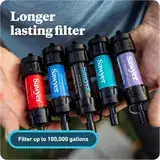
Sawyer Mini
Sawyer Mini
A compact bacteria and protozoa filtration option where suitable. It does not remove viruses or dissolved toxic chemicals; use appropriate additional disinfection when needed.
Explore Our Top Picks
Frequently Asked Questions
Related Articles
More on Water Filter Buying Guide
Complete guide to choosing the right filter
How Water Filters Work
Understanding filtration technologies explained
Read: Water Filter Cost Comparison
Annual costs across all filter types
Water Testing Kits Guide
Test your water before buying a filter
Filter Replacement Guide
When and how to replace filter cartridges
Water Filter Health Benefits
Health advantages of filtered water