Best Water Filters for Apartments: No-Install Options for Renters (2026)
Living in an apartment doesn't mean settling for unfiltered water. Whether you're dealing with chlorine taste, lead from old building pipes, or hard water spots on everything, there's a renter-friendly solution that requires zero modifications to your unit. This guide covers every apartment-compatible filter type—from $20 pitchers to high-performance countertop RO systems—with honest recommendations based on your specific water quality concerns.
Quick Answer
Best overall for apartments: PUR Plus Faucet Mount ($28) — removes 70+ contaminants, installs in 5 minutes, no tools needed. For serious contamination (lead, PFAS, arsenic), upgrade to the Waterdrop G3P800 countertop RO or an under-sink system.
Why Apartment Water Is Different
Apartment water faces unique challenges that single-family homes don't. Your water travels through the building's internal plumbing—potentially decades-old pipes that add contaminants the city's treatment plant never intended. Understanding these apartment-specific risks helps you choose the right filter.
Apartment-Specific Water Risks
Filter Types Ranked for Apartments
Not every filter type works in a rental. Here's a practical ranking based on installation requirements, performance, cost, and portability—the factors that matter most to renters.
1. Faucet-Mount Filters — Best Overall for Most Renters
Faucet-mount filters screw onto your kitchen faucet's aerator in under 5 minutes with zero tools. They provide on-demand filtered water without wasting counter space or requiring you to remember to fill a pitcher. Most include a bypass switch so you can use unfiltered water for dishes.
✅ Pros
- • No tools or modifications needed
- • On-demand filtered water (no waiting)
- • Removes 70+ contaminants (PUR Plus)
- • $20-35 upfront, $15-20/filter replacement
- • Completely portable when you move
❌ Cons
- • Doesn't fit pull-out or spray faucets
- • Slows water flow slightly (0.5 GPM vs 2.2 GPM)
- • Filters need replacing every 2-3 months
- • Can feel bulky on small faucets
- • Not effective for whole-apartment filtration
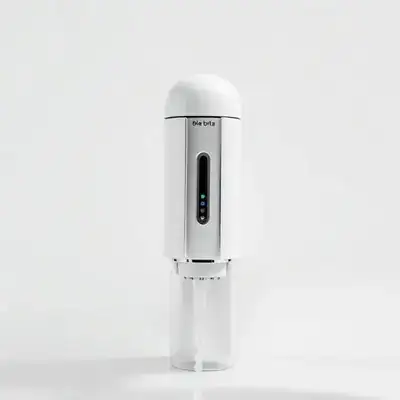
Top Pick: PUR Plus Faucet Mount
NSF certified to remove 70+ contaminants including lead, mercury, and certain pesticides. Installs in minutes on standard faucets. The best value for apartment renters who want real contaminant removal, not just taste improvement.
View on Amazon2. Water Filter Pitchers — Simplest & Cheapest
The zero-commitment option. Fill, wait, pour. No faucet compatibility issues, no installation, works anywhere. The tradeoff is capacity (you're constantly refilling) and filtration depth (standard pitchers only remove basic contaminants). For deeper filtration, look at Clearly Filtered or ZeroWater pitchers.
Pitcher Performance Comparison
| Pitcher | Contaminants | Filter Life | Annual Cost | Lead Removal |
|---|---|---|---|---|
| Brita Standard | 5 | 40 gal | $50-70 | ❌ |
| Brita Elite | 30+ | 120 gal | $55-75 | ✅ 99% |
| PUR Plus | 30+ | 40 gal | $65-85 | ✅ 99% |
| ZeroWater | 23 | 15-25 gal | $120-180 | ✅ 99% |
| Clearly Filtered | 365+ | 100 gal | $90-110 | ✅ 99.5% |
| Epic Pure | 200+ | 150 gal | $70-90 | ✅ 99.9% |
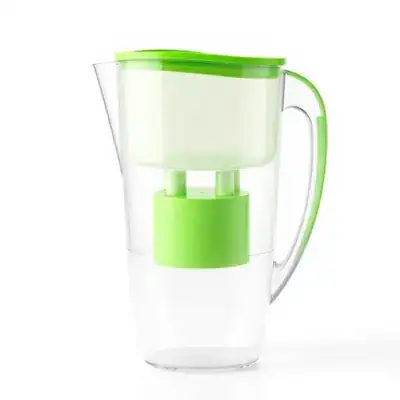
Best Pitcher: Clearly Filtered
Removes 365+ contaminants including PFAS, lead, and fluoride—more than any other pitcher on the market. NSF-tested, 100-gallon filter life. The best pitcher for apartments with serious water quality concerns.
View on Amazon3. Countertop RO Systems — Best Performance Without Installation
If your water has serious contamination—lead above 15 ppb, PFAS, arsenic, or high TDS—a countertop reverse osmosis system provides near-laboratory-grade water without any permanent installation. These systems either connect to your faucet aerator (removable) or fill manually like a kettle.
Top picks: Waterdrop G3P800 ($300-350, best tankless RO), AquaTru ($400-450, fills manually), and Philips Countertop RO ($250-300, budget option). All remove 99%+ of TDS, lead, PFAS, and virtually all other dissolved contaminants.
4. Under-Sink Systems — Best Long-Term Investment
Despite the "under-sink" name, most connect with a simple T-adapter to your cold water line—no drilling into pipes. The only permanent modification is drilling a small hole for the dispenser faucet, which some landlords may not allow. Check your lease first. If approved, under-sink systems like the Aquasana AQ-5200 or APEC ROES-50 provide the best ongoing value.
5. Gravity-Fed Countertop Filters — Off-Grid Capable
Gravity filters like the Zenwater or ProOne systems need no electricity, no water pressure, and no faucet connection. Pour water in the top chamber, gravity pulls it through ceramic/carbon filters into the lower chamber. Great for apartments with incompatible faucets, but they're slower (1-2 gallons per hour) and take significant counter space.
Apartment Water Filter Decision Matrix
| Your Situation | Best Filter Type | Why | Budget |
|---|---|---|---|
| Taste/odor only | Brita/PUR pitcher | Cheapest, simplest | $22-35 |
| General improvement | PUR faucet mount | Best value, 70+ contaminants | $28-35 |
| Lead concern | Clearly Filtered pitcher | 99.5% lead, no install | $70-90 |
| PFAS/arsenic/serious | Countertop RO | 99%+ removal, portable | $250-450 |
| Landlord says yes | Under-sink system | Best long-term value | $150-400 |
| No counter space | Brita Metro pitcher | Slim, fridge-door fit | $22-28 |
How to Test Your Apartment Water
Before buying any filter, know what you're filtering. Your city's annual Consumer Confidence Report (CCR) shows what's in the municipal supply, but it doesn't reflect your building's plumbing. To test what actually comes out of your tap:
- Check your CCR first (free): Search "[your city] water quality report" or call your utility. Identifies city-wide issues like PFAS, chloramine, or hardness.
- Test at your tap ($15-30 for strips): Basic test strips check pH, hardness, chlorine, lead, and bacteria. Good for screening.
- Lab test for lead ($30-50): If your building was built before 1986, send a first-draw sample (water that sat in pipes overnight) to a certified lab. This is the only accurate way to measure lead from your specific plumbing.
- Use a TDS meter ($15-20): A TDS meter gives you an instant reading of total dissolved solids. Not diagnostic, but useful for comparing before/after filtration.
Common Apartment Faucet Compatibility Issues
The #1 frustration for apartment renters is buying a faucet-mount filter that doesn't fit. Modern apartment faucets increasingly use pull-down sprayers, integrated sprays, or non-standard aerators that won't accept screw-on filters. Before buying:
- Check your faucet type: Standard threaded aerators work. Pull-down, pull-out, and spray faucets typically don't.
- Measure the aerator thread: Most faucet filters fit 15/16" male or 55/64" female threads. Some include adapters for non-standard sizes.
- If your faucet is incompatible: Switch to a pitcher, gravity filter, or countertop RO that fills manually. Don't try to force-fit a faucet mount.
Cost Comparison: 1-Year Apartment Filter Costs
| Filter Type | Upfront | Yearly Filters | Total Year 1 | Cost/Gallon |
|---|---|---|---|---|
| Brita Standard Pitcher | $25 | $42 | $67 | $0.11 |
| PUR Faucet Mount | $30 | $60 | $90 | $0.10 |
| Clearly Filtered Pitcher | $80 | $65 | $145 | $0.18 |
| Countertop RO (AquaTru) | $450 | $70 | $520 | $0.07 |
| Under-Sink (Aquasana) | $160 | $65 | $225 | $0.06 |
| Bottled water (comparison) | $0 | $1,100 | $1,100 | $1.50 |
Based on average 2-person apartment consuming 1.5 gallons of drinking water per day (548 gallons/year).
Renter's Rights: What Your Landlord Must Provide
Understanding your rights helps you know when filtration is your responsibility versus your landlord's obligation. Key points:
- Implied warranty of habitability: All states require landlords to provide safe, potable water. If water tests show health-threatening contamination, the landlord must act.
- Lead disclosure: For buildings built before 1978, landlords must disclose known lead-based paint hazards (federal law). Some cities extend this to lead in water.
- Water quality complaints: Document everything. If your water is visibly discolored, has an odor, or tests positive for concerning contaminants, put your complaint in writing to create a record.
- Filter installation rights: Most standard leases don't prohibit removable filters (pitchers, faucet mounts). Under-sink installations that require drilling typically need landlord approval.
Best Filters by Apartment Type
Studio Apartments (Under 500 sq ft)
Space is the primary constraint. Avoid bulky dispensers and gravity filters. Best options: Brita Metro pitcher (6-cup, fits fridge door), PUR faucet mount, or a slim water filter bottle for single-person use.
1-Bedroom Apartments
The sweet spot for faucet-mount filters. A PUR Plus or Brita faucet mount handles a couple's daily drinking water easily. If you cook frequently with filtered water, consider upgrading to a countertop system for higher flow.
Multi-Bedroom / Family Apartments
Larger households go through pitcher water too fast. An under-sink system (with landlord permission) or a high-capacity countertop RO is the best investment. The SpringWell Ultra RO produces enough for a family of 4-5 without constant refilling.
Pre-1986 Buildings (Lead Risk)
Lead is your top priority. Get a lab test first. If lead is confirmed, use an NSF 53-certified filter specifically rated for lead: Clearly Filtered pitcher (99.5%), PUR faucet mount (99%), or any certified lead-removal system. Standard Brita pitchers do NOT remove lead—you need the Brita Elite or Longlast filter.
Installation Tips for Renters
Faucet Mount Install
- 1. Unscrew existing aerator (save it!)
- 2. Check thread size against included adapters
- 3. Screw filter housing onto faucet
- 4. Run water for 5 minutes to flush
- 5. Test bypass switch works
Time: 3-5 minutes. Tools: none.
Under-Sink Install
- 1. Turn off cold water valve under sink
- 2. Disconnect cold water supply line
- 3. Install T-adapter (included with most systems)
- 4. Mount filter bracket inside cabinet
- 5. Drill dispenser hole (landlord approval needed)
Time: 30-60 minutes. Tools: wrench, drill (for dispenser).
Moving Out Checklist
When you leave your apartment, restore the kitchen to its original condition:
- Remove faucet-mount filter and reattach the original aerator you saved
- For under-sink systems: close the T-adapter valve, disconnect tubing, remove the filter bracket, and reconnect the original supply line
- Cap the dispenser hole if you drilled one (stainless steel hole cap, $5-10)
- Take all filters and tubing with you—they're reusable at your next apartment
- Clean any water stains or mineral buildup around the faucet area
Hard Water in Apartments: Your Options
If you live in a hard water area (above 7 GPG or 120 ppm), your options as a renter are more limited than homeowners. You can't install a whole-house water softener, but you can:
- Shower filter: A shower head filter ($25-40) reduces chlorine and some hardness minerals that dry out skin and hair. Not a true softener, but noticeable improvement.
- Magnetic/electronic descaler: Controversial effectiveness, but some renters report reduced scale buildup. Clips onto the incoming pipe without modification ($30-80).
- Vinegar for appliances: Regular vinegar rinses prevent scale buildup in coffee makers, kettles, and humidifiers. Free solution.
- Countertop RO: RO systems remove hardness minerals completely from drinking water, though they don't help with shower or appliance water.
Environmental Impact: Apartments & Bottled Water
The average apartment dweller using bottled water generates 300-500 plastic bottles per year. Even with recycling, only 30% of PET bottles are actually recycled in the US. Switching to any home filter eliminates this waste entirely. A single Brita pitcher filter replaces approximately 300 plastic bottles. Over a 2-year apartment lease, that's 600-1,000 fewer bottles in landfills.
For more on bottled vs. filtered environmental impact, see our bottled water vs. tap comparison.
Explore Our Top Picks
Understanding Water Quality Science
Water quality is determined by a complex interplay of dissolved minerals, organic compounds, and potential contaminants that vary significantly by geographic region and water source. Municipal water treatment facilities use multi-stage processes including coagulation, sedimentation, sand filtration, and chemical disinfection to meet EPA Safe Drinking Water Act standards. However, these treatment processes can introduce disinfection byproducts such as trihalomethanes and haloacetic acids, which form when chlorine reacts with naturally occurring organic matter in the source water.
Private well water faces different challenges, as it bypasses municipal treatment entirely and may contain naturally occurring contaminants like arsenic, radon, and heavy metals that leach from surrounding geological formations. The Environmental Protection Agency recommends annual testing for coliform bacteria, nitrates, total dissolved solids, and pH levels for all private wells. Additional testing for volatile organic compounds, pesticides, and heavy metals should be conducted if you live near agricultural areas, industrial sites, or old mining operations. Understanding your specific water chemistry is the critical first step in selecting the most effective filtration system for your household needs.
Total dissolved solids (TDS) measurements provide a general indicator of water purity but should not be the sole basis for filtration decisions. Water with high TDS from beneficial minerals like calcium and magnesium may actually be healthier than ultra-purified water. The World Health Organization has noted that demineralized water may have adverse health effects due to the absence of essential minerals. This is why many advanced filtration systems, particularly reverse osmosis units, now include remineralization stages that add back beneficial minerals after removing contaminants. The ideal approach balances contaminant removal with mineral retention, targeting specific harmful substances identified through comprehensive water testing while preserving the natural mineral content that contributes to both taste and health benefits.
Filtration Technology Comparison
Modern water filtration leverages several distinct technologies, each with unique strengths for addressing specific water quality challenges. Activated carbon filtration, the most common residential method, uses adsorption to capture chlorine, volatile organic compounds, and taste-affecting chemicals. Granular activated carbon (GAC) filters provide good flow rates but may allow channeling, while carbon block filters compress carbon particles for more consistent contact time and finer filtration down to 0.5 microns. Catalytic carbon represents the latest advancement, specifically engineered to break down chloramines through a catalytic reaction rather than simple adsorption.
Reverse osmosis systems force water through a semipermeable membrane with pore sizes as small as 0.0001 microns, effectively removing dissolved solids, heavy metals, and most microorganisms. Modern RO systems achieve 95-99 percent rejection rates for contaminants like lead, arsenic, fluoride, and PFAS compounds. The primary considerations for RO systems include water waste ratios (typically 3:1 to 4:1 for standard systems, improved to 1:1 in premium tankless models), storage tank requirements, and the need for pre-filtration to protect the delicate membrane from sediment and chlorine damage.
Ion exchange technology, used in both water softeners and specialized contaminant removal systems, swaps problematic ions in the water with benign alternatives. Water softeners exchange calcium and magnesium ions for sodium ions, preventing scale buildup in plumbing and appliances. Specialized ion exchange resins can target specific contaminants like lead, nitrates, or perchlorate. Ultraviolet purification provides chemical-free disinfection by disrupting the DNA of bacteria, viruses, and protozoa at wavelengths around 254 nanometers. UV systems are particularly valuable for well water and as a final treatment stage in multi-barrier systems, though they do not remove chemical contaminants or improve taste.
Frequently Asked Questions
Related Articles
Our picks for Reverse Osmosis Systems
Top-rated RO water filters
Our picks for Water Softeners
Top water softening systems
See the best Whole House Water Filters
Complete whole-house filtration
See the best Well Water Filters
Specialized well water treatment
More on Water Filter Buying Guide
Avoid common buying mistakes
Deep dive — State Water Quality Guide
Water quality by state